What the ranking is built on
Armor is the one category on this site where the spec sheet answers the question almost completely, because the European standards are specific and the levels are numbers rather than adjectives. So the criteria below are applied in order, and that order produced the ranking.
1. A named standard, then a level
There are three standards in play on this page and they are not interchangeable. EN 1621-1 covers limb protectors — elbows, shoulders, knees, hips. EN 1621-2 covers back protectors specifically, with its own test rig and its own pass thresholds. EN 17092 covers the garment: the jacket or pant as a whole, for abrasion, tear and seam strength, graded AAA, AA, A, B or C. A pant can publish an EN 17092 class and tell you nothing about the armor in it; a knee guard can publish EN 1621-1 Level 2 and tell you nothing about the fabric around it. You need both numbers, and almost no product under $200 gives you both.
Then the level. Level 1 and Level 2 are not marketing tiers — they are different maximum transmitted forces in the same test. Level 2 permits roughly half the force Level 1 does. Four of the six picks here publish a level against a named standard, and the two Bionic Pro Plasma guards publish EN 1621-1:2012 Level 2, the higher of the two limb ratings, which in our registry only twelve pieces of any kind do.
2. Whether it fits what you already own
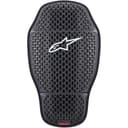
This is where cheap armor is quietly wasted. An insertis cut to drop into a jacket’s existing back pocket — the Nucleon Flex Pro and the Nucleon KR-Celli both are, and the KR-Celli only fits jackets with an Alpinestars-compatible pocket, which is on its card because it is the most common returns reason in the category. A strap-on guard needs no host garment at all, which is why the Bionic Pro Plasma pieces work under a hoodie or over a base layer and the inserts do not. Measure your jacket’s pocket before you buy an insert; our back-insert page covers the fitment question in detail.
3. Hard shell or soft, and the thing the rating does not measure
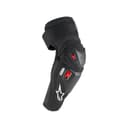
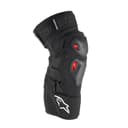
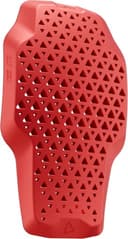
Both Bionic Pro Plasma guards put thermoplastic shells over a viscoelastic Nucleon Plasma insert, and that outer shell does a job the EN 1621 test does not score: hard plastic slides on tarmac where foam and fabric grip it. Soft Level 2 armor and hard-shelled Level 2 armor pass the same impact test and behave differently in a slide. The cost is comfort — a hard shell is noticeable under a close-fitting jacket sleeve or jeans, which is exactly why the soft Leatt 3DF and the Alpinestars cell-structure plates exist and why they are on this page too.
4. Price per published rating, which is the whole point of a band page
Run the arithmetic the way a buyer does rather than the way a catalogue does. The cheapest Level 2 anything we track is the Leatt 3DF back insert — soft 3DF impact foam that stiffens under load, two sizes, EN 1621-2 Level 2. Add the Bionic Pro Plasma elbow guards and you have Level 2 at the two most commonly struck points on a rider for comfortably under this page’s ceiling. Do the same exercise with garments and you are buying one item, in Level 1, with no spare budget. Both routes are legitimate; only one of them is cheap.
Buy in this order, not in catalogue order
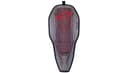
First, the back. Most jackets ship with a foam pad in the back pocket that is not armor and is not certified to anything. Take it out and read it: if there is no CE mark, no “EN 1621-2” and no level, it is a comfort pad. Do I need a back protector? walks that 90-second test, and this page gives you three ways to fix it — the Nucleon Flex Pro at Level 2 if your pocket takes it, the KR-Celli at Level 1 if a Level 2 plate is too stiff or too hot to live with, and the Leatt 3DF if the budget is the constraint.
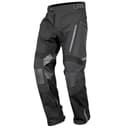
Second, the legs. Knees and hips take the impact in a low-side and jeans do nothing for either. The cheapest honest fix is strap-on EN 1621-1 knee armor worn under your own trousers — our knee-guard ranking covers that whole route. The better fix, if you can spend it in one go, is the Tourmaster pant at the top of this page: a laminated 420D waterproof shell, a published A class to EN 17092-4, and Armanox Level 1 armor at the hip and the knee. Hip armor is the piece budget pants leave out most often, and how to choose riding pants counts how few publish anything for it.
Third, elbows and shoulders. If your jacket’s elbow pockets are empty or hold uncertified foam, the Bionic Pro Plasma elbow is the highest published rating on this page. If the budget has run out, the elbow-guard page has certified Level 1 options for under fifty dollars, which is a real upgrade over nothing.
What $200 does not buy
Three things, and the page is better for naming them. It does not buy an airbag vest: the cheapest in our registry is several times this ceiling, and the airbag page is explicit about what the tether and electronic systems cost. Airbag vest versus back protector is the honest version of that decision at this budget, and its answer is the back protector.
It does not buy chest protection with an impact rating. Exactly two of our thirty-six armor pieces publish an EN 1621-3 chest rating and neither is under $200. The roost deflectors that look like chest armor are certified to EN 14021, which is a stone-and-debris shield test and not an impact standard at all — our chest-protector guide and the off-road armor ranking both state that plainly rather than letting the CE mark do the implying.
And it does not buy a Level 2 garment. The pants in our registry that publish EN 17092 class AA with Level 2 armor included are all several times this line. Our riding-pants ranking shows the full ladder, and EN 17092 explained counts how few garments at any price publish a class — which is the real scandal of the category, and the reason a $160 pant that publishes one outranks better-known names here.
If your budget is tighter than $200, start with our best motorcycle armor ranking, which ranks across every position in buying order and includes options under fifty dollars. If it is looser, the back-protector page and the riding-pants page both run well above this ceiling.