Gauntlet vs Short-Cuff Motorcycle Gloves
The cuff is the only structural difference between the two glove styles most riders choose between — and it decides wrist coverage, jacket compatibility and whether you'll actually put them on.
How this is funded: we earn a commission if you buy through our links, at no extra cost to you. It never changes which gear we recommend, and we’ll tell you plainly when to skip a pick. Full disclosure.
Almost every motorcycle glove is one of two shapes. A gauntlet extends past the wrist and flares over the jacket cuff, closing with a strap at the wrist and usually a second closure at the top. A short cuff stops at or just past the wrist bone and closes with a single strap, sitting under the jacket sleeve or level with it.
That is the entire structural difference, and riders argue about it far out of proportion to what it is. It is worth getting right, though, because the cuff decides two things that matter — how much of your wrist is covered, and how reliably the glove stays on your hand — and one thing that matters more than either: whether you find them annoying enough to leave in the top box.
What the cuff is actually for
When a hand hits the road and slides, friction drags the glove forward, towards the fingertips. If nothing anchors it behind the wrist bone, the glove can roll off and the hand finishes the slide unprotected. That is the failure mode every wrist strap on every motorcycle glove exists to prevent, and it is why a glove with no wrist closure at all — a work glove, a ski glove, a fashion leather glove — is not a motorcycle glove regardless of how thick it is.
A gauntlet does this job with more material and usually two points of closure: a strap that cinches tight below the wrist, and a wider closure at the top of the flare. A short cuff does it with one strap. Both work if you actually do them up. Neither works if you leave the strap loose because it is quicker, which is a genuinely common habit and a bad one.
Where the gauntlet wins
Wrist and forearm coverage
The wrist is a joint full of small bones and it is one of the first things to hit in an instinctive hands-out fall. A gauntlet covers the joint and a few inches of forearm above it; a short cuff leaves most of that to your jacket sleeve, which may or may not be where you think it is once your arms are forward on the bars.
Weather sealing
This is the underrated one. A gauntlet worn over the jacket cuff sheds rain down the sleeve and past the glove rather than into it, and it stops cold air being forced up your sleeve at speed. In winter this is not a marginal difference — it is most of the reason winter gloves are overwhelmingly gauntlets. Our winter glove picks are almost entirely long-cuff for exactly this reason.
No gap, whatever your jacket does
Jacket sleeves ride up. Adventure jackets have wide cuffs, summer mesh jackets have elastic ones, and both move around. A gauntlet removes the question by overlapping generously in every position.
Where the short cuff wins
Getting them on and off
This sounds trivial and is the single most decisive factor in practice. A short-cuff glove goes on in a couple of seconds without disturbing the jacket sleeve. A gauntlet needs the sleeve managed, the flare pulled over, and two closures done up. Multiply that by every fuel stop, every phone check, every time you buy a coffee, and it explains why a lot of riders own gauntlets and wear short cuffs.
Heat
A short cuff leaves the wrist open to airflow and does not trap heat under a sleeve. On a hot day it is dramatically more comfortable, and a vented short-cuff glove with a hard knuckle is the standard hot-weather answer for good reason.
Feel and bulk
Less material around the wrist generally means a less restricted wrist, which some riders strongly prefer for control feel. It is also easier to get a watch, a jacket adjuster or a heated-grip switch to coexist with a short cuff.
What the cuff does not decide
Everything else. Palm construction, knuckle armor, finger reinforcement, seam placement and whether the glove has sliders are all independent of cuff length, and they matter at least as much. A well-built short-cuff glove with a doubled leather palm, a hard knuckle and external seams protects your hand better than a cheap gauntlet with a single-layer palm and everything stitched on the inside where it will abrade first.
So do not use the cuff as a proxy for quality. Use it to answer “how much wrist coverage do I want and will I actually wear these,” then judge the glove itself on the palm, the knuckle and the closure. Our glove buying guide goes through each of those in order.
One of each
Here is what the two answers look like in practice: a CE gauntlet built to be worn most of the year, and a short-cuff glove designed to be the one a rider will actually keep putting on.
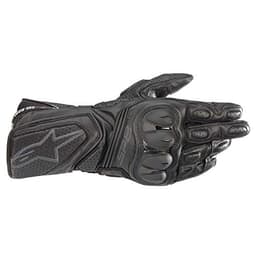
The gauntlet answer
Alpinestars SP-8 V3
The best all-around leather gauntlet here: a full-gauntlet cuff, a hard knuckle, and CE certification, with enough airflow to run three seasons. The default do-everything sport-touring glove.
Compare all the glove picks →Price as of October 19, 2026. #ad How we’re funded
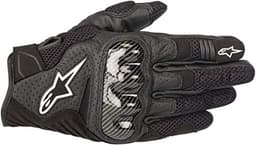
The short-cuff answer
Alpinestars SMX-1 Air V2
The glove we point new riders at first: leather and mesh construction with knuckle protection and a touchscreen fingertip, from a maker that builds MotoGP gloves, at under $100.
Compare the beginner picks →Price as of October 19, 2026. #ad How we’re funded
The practical recommendation
If you are buying one pair to cover most of the year, buy a gauntlet — it handles weather, it covers more, and the convenience cost is real but survivable. If you are buying a second pair, or you ride somewhere hot, or you are honest with yourself that a two-closure glove will end up unworn on short trips, buy a short cuff and make sure the wrist strap is a proper one you tighten every time.
Most riders who have been at it a while end up with both: a gauntlet for cold and wet, a short cuff for summer and errands. Given how little gloves cost relative to the rest of the kit, that is not an extravagant outcome — and hands are the part of you most likely to hit the ground first.
Frequently asked questions
Are gauntlet gloves safer than short-cuff gloves?
For the wrist, yes — a gauntlet covers the forearm and the wrist joint, which a short cuff leaves partly exposed, and it seals under or over a jacket sleeve so there is no gap for the glove to be pulled off through. That said, the palm, knuckle and finger protection is decided by the glove's construction, not its cuff length, and there are short-cuff gloves with far better palms than some gauntlets. The cuff decides retention and wrist coverage. Everything else is the rest of the glove.
Can a motorcycle glove come off in a crash?
It can, and it is the specific failure the cuff closure exists to prevent. When a hand slides along tarmac the friction drags the glove towards the fingertips; if the wrist strap is loose or absent, the glove can roll off and the hand finishes the slide bare. This is why every serious glove — gauntlet or short — has a wrist strap that cinches below the wrist bone, and why doing it up properly matters more than which style you bought.
Do gauntlet gloves go over or under the jacket sleeve?
Over, in almost every case. The gauntlet is shaped to flare over the jacket cuff so water and air run off the sleeve and past the glove rather than into it, and so the jacket sleeve cannot ride up and expose the wrist. Some riders tuck a gauntlet under a very wide adventure-jacket cuff for airflow in summer; it works, but you lose the weather seal that is the main reason to wear a gauntlet.
Are short-cuff gloves okay for the highway?
They are legal and they are widely used, including by riders on fast roads. What you are accepting is less wrist coverage and a shorter, less positive closure. If your jacket has a long, close-fitting sleeve with a good cuff adjuster, the gap is small. If your sleeve rides up on the bars, it is not. Ride the roads you ride, look at where your sleeve actually sits at speed, and decide from that rather than from the category name.
Do motorcycle gloves have a safety rating?
There is a European standard, EN 13594, that covers motorcycle gloves. It is not required in the US, so the majority of gloves sold into this market publish no rating at all — which is why our spec tables mostly say 'Check current listing' in that field rather than inventing a level. Where a maker does publish CE certification for a specific glove we quote it. In its absence, judge the glove on what you can see: palm material and sliders, knuckle protection, seam placement and the cuff closure.
Which style is better in summer?
Short-cuff, generally. It leaves the wrist open to airflow, it does not trap heat under a jacket sleeve, and it is far quicker to get on and off at every stop — which on a hot day is the difference between wearing gloves and carrying them. A vented or mesh short-cuff glove with a hard knuckle is the standard hot-weather answer. Our summer glove picks cover that category properly.
Sources
- MotoCAP — Independent Motorcycle Clothing & Helmet Assessment — Independent Australian lab rating protective clothing and helmets for protection and comfort (accessed July 21, 2026)
- NHTSA — Traffic Safety Facts 2023: Motorcycles (DOT HS 813 732) — 2023 motorcyclist fatality, injury and helmet-use statistics (accessed July 21, 2026)
Keep reading
Best motorcycle gloves
Our top all-round picks, from CE gauntlets to value leather short-cuffs, compared on palm construction and knuckle armor.
See the glove picksBest summer motorcycle gloves
Vented and mesh gloves that keep their protection when it's genuinely hot — where short cuffs earn their place.
See the summer picksHow to choose motorcycle gloves
Cuff length, palm construction, knuckle armor and sizing — the gear people skimp on and shouldn't.
Read the guideBest winter motorcycle gloves
Waterproof, insulated and heated gloves — the category where the gauntlet argument is not really an argument.
See the winter picks