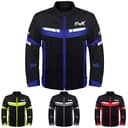
What a first jacket actually needs
1. Armor that is already in it
The single biggest trap in cheap riding jackets is the armor pocket with nothing in it, or with a shaped foam pad that carries no rating at all. It looks and feels like armor. It is packaging. Read the listing for “CE” and “EN 1621” specifically: EN 1621-1 covers the shoulder and elbow armor, EN 1621-2 covers a back protector. A jacket that ships with rated shoulder and elbow armor and an empty back pocket is a normal, reasonable product — you just need to know that, and budget an insert. Our armor inserts page covers what to put in it, and our CE armor ratings guide explains what Level 1 and Level 2 actually measure.
2. More than one season of use
A pure mesh jacket is superb in August and useless in November. A pure winter jacket is unwearable in July. As a first jacket, a mesh or vented shell with a removable rain and/or thermal liner covers far more of the year than either extreme, which is why three of the five picks here have a liner. It is the difference between a jacket you wear all year and one you wear for eight weeks.
3. Adjusters, because your fit will change
Armor only works if it is over the joint it is protecting. On a new rider that is genuinely difficult, because the jacket is sized for a standing body and you are sat on a bike leaning forward, and because what you wear underneath changes with the weather. Look for adjusters at the biceps, forearms and waist. A jacket with straps you can pull in keeps the shoulder armor on your shoulder; a jacket without them lets it slide down your arm every time you drop a layer.
4. Visibility, which nobody budgets for
Motorcyclists are over-represented in crash statistics involving another vehicle turning across them, and a large share of those involve a driver who did not register the bike. Reflective panels on a jacket cost the manufacturer almost nothing and cost you nothing extra. They are worth actively looking for on a first jacket, when you are also least likely to be riding defensively out of habit.
How much should a first jacket cost?
Less than you think, and not as little as the cheapest thing on the marketplace. The bottom of this list is genuinely usable gear from makers who sell to riders; below that you get into unbranded jackets with unrated foam and single-stitched seams, where the money saved is not a saving. The middle of this list is where the jump in construction happens — better shell fabric, better armor, real liners — and it is the level most riders end up wishing they had started at.
Our advice on sequencing is simple: buy the helmet properly, buy gloves properly, then buy the best jacket the remaining budget allows. The beginner gear guide lays out the whole head-to-toe order with one pick per category.
Getting the fit right the first time
Try the jacket on the way you will ride in it: zipped, over whatever you wear underneath, arms forward as if on the bars. Then check three things.
- Shoulder armor sits on the point of your shoulder with your arms forward, not behind it. If it slips back when you reach, the jacket is too big or needs the bicep straps pulled in.
- Elbow armor stays over the elbow when you bend your arm. Sleeves that ride up on the bars are the most common fit failure in a first jacket.
- The back is long enough seated. A jacket that covers you standing up can leave your lower back exposed in a riding position. Sit down in it if you can.
Sizing across brands is not consistent, and several of the jackets here have their own quirks — some run large, some are cut snug. The spec tables above carry each maker’s own fit note rather than a generic one.
Mesh, textile or leather for a first jacket?
For most new riders, textile or mesh with a liner. It handles more weather, it is cheaper for equivalent protection, it washes, and it usually comes with armor included where budget leather often does not. Leather is the better abrasion material and a well-made leather jacket lasts far longer, but a cheap leather jacket is not automatically better than a good textile one — and it will be unwearable on a hot day, which is when a lot of new riders quietly stop wearing a jacket. We have laid the whole trade-off out on leather vs textile.
The exception is if you ride a cruiser in a dry climate and you know you want leather. In that case buy leather with armor included rather than a leather jacket you plan to add armor to later, because “later” frequently does not happen.
What to upgrade first, once you know you’re staying
A CE Level 2 back protector, if your jacket shipped with foam or an empty pocket. It is the cheapest genuine step up in protection you can buy, it fits the jacket you already own, and it does not require replacing anything. After that, a second jacket for the season your first one does not cover — usually a mesh jacket if you started with a three-season, or a laminate touring shell if you started with mesh.
Before either of those, though, check the jacket you have. Armor only protects the joint it is sitting over, and a first jacket bought a size up “for layers” frequently puts the elbow pad on the forearm the moment you reach for the bars — how gear should fit has the checks, and they take five minutes.