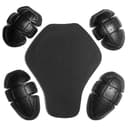
How to buy the right insert
1. Measure the pocket, not the jacket
Armor pockets are not standardized. Turn the jacket inside out, measure the pocket’s height and width, and compare against the insert’s dimensions rather than trusting an S/M/L label. An insert that’s too big won’t seat flat and will fold; one that’s too small slides around and leaves your spine uncovered where it matters. Brand-matched inserts (an Alpinestars insert in an Alpinestars jacket) are the safe route if you can find one.
2. Level 2 is not automatically the right answer
This surprises people. A Level 2 protector transmits less force, but it is usually thicker, stiffer and hotter, and it may not sit flat in a jacket designed around a thinner insert. A Level 1 protector you leave in the jacket every ride protects you far more than a Level 2 protector you took out in July because it was uncomfortable. Buy the highest level you will genuinely tolerate.
3. Back first, then shoulders and elbows
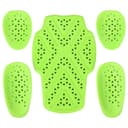
If your jacket already has CE armor at the shoulders and elbows — and most do — the back is the gap. If your jacket has empty pockets everywhere, a complete set is better value than three separate purchases, and the two sets on this list exist for exactly that case. Prioritize in that order. If your jacket has no armor provision at all, or you want a hard shell an insert cannot give, our elbow guard roundup covers the strap-on alternative and its published EN 1621-1 levels.
4. Watch the materials
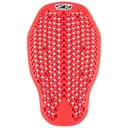
- Impact foams (Leatt 3DF, D3O and similar) are soft and flexible at rest and stiffen under sudden load. Very comfortable; tend to retain more heat.
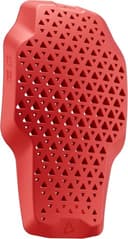
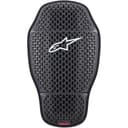
- Lattice and cell structures (Alpinestars Nucleon and similar) are rigid-ish plates with ventilation channels engineered through them. Cooler; slightly less conforming.
- Plain closed-cell foam with no rating is the thing you are replacing.
5. Replace armor after an impact
Impact armor is single-use in the same way an EPS helmet liner is. After a genuine impact, the protector has done its job by deforming, and it will not perform the same way twice. If you go down, replace the armor even if it looks fine.
Reading listings honestly
Three of the products here carry certifications published by established protective-gear manufacturers. Two are marketplace listings that state a CE level in the product description. Those are not equivalent evidence, and we’ve labeled each one for what it is: where the claim comes only from the listing, our spec table says “(listing)” rather than presenting it as a manufacturer certification we’ve seen documented. A CE claim in a marketplace listing with no standard number, no level and no test house is worth very little — ask for all three.
What this page doesn’t cover
Standalone strap-on back protectors and armored vests that you wear instead of putting an insert in a jacket are a different product; see our back protectors roundup. Chest protection is covered separately on chest protectors, where the distinction between roost deflectors and impact protectors matters a lot.