Apex & Armor

Best Beginner Motorcycle Gloves

Protective gloves a new rider will actually keep wearing — knuckle armor, real palms and prices that don't sting, with an honest read on what each one gives up.

By Stephen V.Last updated How we research

Gloves are the piece of gear new riders skip most often and regret skipping first. The reason is simple physics: when you come off a bike, your hands go out. Every rider who has gone down at any speed without gloves has the same story about the palms of their hands, and it is not a story about a bruise. Hands are also disproportionately expensive to injure — the nerve and tendon damage from a gravel abrasion takes months and doesn’t always fully resolve.

The good news is that gloves are the cheapest real protection you can buy. A pair that will genuinely save your palms costs less than a tank of gas on most bikes, and the gap between a $30 glove and a $150 glove is narrower here than in any other category — it is mostly about feel, materials and cuff length rather than about whether the glove works.

What we’ve ranked on: palm construction (the surface that actually contacts the road), knuckle protection, cuff length, and whether the glove is comfortable enough that a new rider keeps wearing it in July. That last one matters more than the spec sheet suggests — a glove in a drawer protects nothing.

How this is funded: we earn a commission if you buy through our links, at no extra cost to you. It never changes which gear we recommend, and we’ll tell you plainly when to skip a pick. Full disclosure.

Quick picks

Ranked on certification, spec and buyer fit. Select a row to jump to the full write-up. We haven’t crash-tested this gear — here is exactly what we do instead.

#GearBest forPrice
1
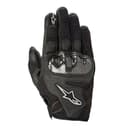
Alpinestars SMX-1 Air V2

Alpinestars SMX-1 Air V2

The glove we point new riders at first: leather and mesh construction with knuckle protection and a touchscreen fingertip, from a maker that builds MotoGP gloves, at under $100.

Best overall
$71.95 · View on Amazon

$79.9510% off

Price as of September 4, 2026. #ad How we’re funded

2
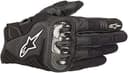
Alpinestars SP-8 V3

Alpinestars SP-8 V3

The best all-around leather gauntlet here: a full-gauntlet cuff, a hard knuckle, and CE certification, with enough airflow to run three seasons. The default do-everything sport-touring glove.

Best all-round protection
$124.95 · View on Amazon

Price as of September 4, 2026. #ad How we’re funded

3
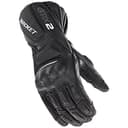
Joe Rocket GPX 2.0 Leather

Joe Rocket GPX 2.0 Leather

A goatskin-leather glove with a hard knuckle at a genuinely low price — real abrasion resistance for riders who don't want to spend gauntlet money. The value leather short-cuff.

Best value leather
$42.18 · View on Amazon

Price as of September 4, 2026. #ad How we’re funded

4
Alpinestars Stella SMX-1 Air V2

Alpinestars Stella SMX-1 Air V2

The women's-block version of the SMX-1 Air V2 — same leather-and-mesh construction and CE certification, cut on a narrower hand pattern so the fingers aren't swimming.

Best women's fit
$71.95 · View on Amazon

$79.9510% off

Price as of September 4, 2026. #ad How we’re funded

5

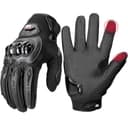
Kemimoto Summer Touchscreen Gloves

A sub-$20 vented glove with hard knuckle protection and touchscreen fingers. It won't out-protect a leather glove, but it's a real armored summer glove for spare-change money.

Best budget

The picks in full

#1Best overall

Alpinestars SMX-1 Air V2

The glove we point new riders at first: leather and mesh construction with knuckle protection and a touchscreen fingertip, from a maker that builds MotoGP gloves, at under $100.

Strengths

  • Leather palm with a ventilated mesh back — protection without cooking your hands
  • Knuckle protection and reinforced palm from a serious safety brand
  • Touchscreen fingertip so you're not removing a glove at every stop

Trade-offs

  • Short cuff leaves a gap between glove and jacket sleeve
  • Alpinestars doesn't publish a CE glove certification level for this model
Safety standardCheck current listing
ConstructionLeather palm with mesh back
Key featureLeather/mesh, knuckle protection
Fit / sizingShort cuff; runs true to size
Best forNew riders who want a protective short-cuff glove they'll actually wear

Specs and certification read from the manufacturer and retailer listing, on August 11, 2026. “Check current listing” means the maker doesn’t publish that figure — we won’t guess it.

#2Best all-round protection

Alpinestars SP-8 V3

The best all-around leather gauntlet here: a full-gauntlet cuff, a hard knuckle, and CE certification, with enough airflow to run three seasons. The default do-everything sport-touring glove.

Strengths

  • CE-certified full-grain leather with a hard knuckle protector
  • Full-gauntlet cuff seals under a jacket sleeve
  • Touchscreen fingertip and a secure dual closure

Trade-offs

  • Gauntlet cut is warm at the height of summer
  • Stiff out of the box — needs a break-in period
Safety standardCheck current listing
ConstructionFull-grain leather, hard knuckle
Key featureCE-certified gauntlet, hard knuckle
Fit / sizingTrue to size; snug when new
Best forRiders who want one CE gauntlet glove for most of the year

Specs and certification read from the manufacturer and retailer listing, on July 21, 2026. “Check current listing” means the maker doesn’t publish that figure — we won’t guess it.

#3Best value leather

Joe Rocket GPX 2.0 Leather

A goatskin-leather glove with a hard knuckle at a genuinely low price — real abrasion resistance for riders who don't want to spend gauntlet money. The value leather short-cuff.

Strengths

  • Goatskin leather palm and back for abrasion resistance
  • Hard knuckle protector
  • Low price for a real leather glove

Trade-offs

  • Short cuff and basic wrist closure
  • Warmer than a mesh glove in peak summer
Safety standardCheck current listing
ConstructionGoatskin leather, hard knuckle
Key featureLeather short-cuff, hard knuckle
Fit / sizingTrue to size
Best forValue buyers who want leather over mesh without spending much

Specs and certification read from the manufacturer and retailer listing, on July 21, 2026. “Check current listing” means the maker doesn’t publish that figure — we won’t guess it.

#4Best women's fit

Alpinestars Stella SMX-1 Air V2

The women's-block version of the SMX-1 Air V2 — same leather-and-mesh construction and CE certification, cut on a narrower hand pattern so the fingers aren't swimming.

Strengths

  • CE-certified, on a women's hand pattern rather than a scaled-down men's glove
  • Full-grain leather and 3D mesh for airflow with abrasion coverage
  • Touchscreen-compatible fingertips

Trade-offs

  • Short cuff — no wrist coverage under a jacket sleeve
  • Summer-weight construction; too airy for cold mornings
Safety standardCheck current listing
ConstructionLeather and 3D mesh
Key featureCE-certified, women's fit
Fit / sizingWomen's short cuff; narrower hand pattern
Best forWomen who keep finding men's small gloves too long in the fingers

Specs and certification read from the manufacturer and retailer listing, on August 11, 2026. “Check current listing” means the maker doesn’t publish that figure — we won’t guess it.

#5Best budget

Kemimoto Summer Touchscreen Gloves

A sub-$20 vented glove with hard knuckle protection and touchscreen fingers. It won't out-protect a leather glove, but it's a real armored summer glove for spare-change money.

Strengths

  • Hard knuckle protection and palm padding
  • Breathable, touchscreen-compatible
  • Extremely cheap

Trade-offs

  • Budget materials — abrasion coverage is limited
  • Fit and durability are entry-level
Safety standardCheck current listing
ConstructionTextile/synthetic, hard knuckle
Key featureVented, knuckle armor, touchscreen
Fit / sizingRuns small; size up
Best forThe tightest budget or a backup pair

Specs and certification read from the manufacturer and retailer listing, on July 21, 2026. “Check current listing” means the maker doesn’t publish that figure — we won’t guess it.

What to look for in a first pair of gloves

1. The palm is the whole point

Look at the palm before anything else. You want leather — goatskin or cowhide — across the whole contact surface, ideally with a second layer or a reinforcement patch over the heel of the hand, which is where you land. A mesh or textile palm is a comfort glove, not a riding glove. Palm sliders (small hard pucks on the heel) are a genuine upgrade because they let your hand skid rather than catch and roll your wrist, but they’re a nice-to-have on a first pair.

2. Knuckle protection

A hard or semi-hard knuckle protector spreads impact and keeps the back of your hand off the road. Nearly every riding glove has one; what varies is whether it’s a molded hard shell (better in an impact, warmer and stiffer) or a padded insert (more comfortable, less protective). For street riding either is acceptable.

3. Cuff length

Short-cuff gloves stop at the wrist and are cooler and easier to put on. Gauntlet gloves extend over the jacket sleeve and protect the wrist and lower forearm, and — more importantly — can’t be pulled off your hand in a slide the way a short cuff can. A short-cuff glove with a proper wrist strap is a reasonable compromise and is what most beginners actually buy. If you ride fast roads or track, go gauntlet.

4. The retention strap is not optional

A glove that comes off in the first half-second of a slide has protected nothing. Whatever the cuff length, the glove needs a wrist closure that actually cinches — usually a hook-and-loop strap. Check that it tightens enough that you cannot pull the glove off without undoing it. This single test rules out a lot of cheap gloves.

5. Fit

Snug, with the fingertips just touching the end. Too loose and the glove bunches under the grip, which causes hot spots and reduces control feel; too tight and your hands go numb on a long ride. Leather gloves stretch a little with use; textile gloves do not. Women’s hands are typically narrower relative to finger length, which is why the women’s-pattern option on this list is worth the same money rather than being a marketing exercise.

CE certification for gloves — and why most listings are silent

There is a European standard for motorcycle gloves (EN 13594) with Level 1 and Level 2 ratings covering abrasion, cut and seam strength. Almost no glove sold into the US market publishes it, because it isn’t required here. That means the CE cell in our spec tables reads “Check current listing” for most gloves, including good ones. That blank is honest rather than damning — it means the maker hasn’t published a figure, not that the glove failed a test. Where a maker does publish a CE rating, we list it.

Building out from here

A first pair of gloves usually becomes a summer pair. Most riders who keep riding end up with two or three: a vented summer glove, a waterproof or insulated winter glove, and eventually a proper gauntlet for fast roads. Start with one pair that fits and covers the palm properly — the rest can wait until you know how you ride. Our glove buying guide goes deeper on the materials and construction.
Frequently asked questions

Do I really need motorcycle gloves?

Yes, and they're the cheapest genuinely protective item you can buy. When you come off a bike your hands go out reflexively — that's not a choice you get to make. Palm and finger abrasion on gravel causes nerve and tendon damage that takes months to heal and doesn't always fully resolve. A $40 pair of gloves with a leather palm is one of the highest-value protective purchases in motorcycling.

Short cuff or gauntlet gloves for a beginner?

Short cuff is what most beginners buy and it's a reasonable choice: cooler, easier to get on and off, and less bulk under a jacket sleeve. A gauntlet extends over the jacket cuff, protects the wrist and lower forearm, and — importantly — is much harder to pull off your hand in a slide. Whatever you pick, the wrist strap must cinch tight enough that you can't pull the glove off without undoing it.

How much should I spend on my first motorcycle gloves?

$40 to $80 buys a glove with a full leather palm, knuckle protection and a proper retention strap from an established brand — which is genuinely everything a new rider needs. Above that you're paying for feel, materials, palm sliders and cuff design rather than for whether the glove works. Below about $25 you're usually into textile palms and weak retention straps, which is a false economy on the one item that will definitely contact the road.

Are motorcycle gloves CE certified?

Some are, most sold in the US don't publish it. EN 13594 is the European standard for motorcycle gloves, with Level 1 and Level 2 ratings covering abrasion, cut and seam strength. It isn't a US requirement, so many good gloves simply don't state a rating. A missing CE figure means the maker hasn't published one — not that the glove failed. Where a rating exists, it's a useful signal; where it doesn't, judge the palm construction and the strap.

Should women buy women's-specific motorcycle gloves?

Usually yes. Women's hands are typically narrower across the palm relative to finger length, so a men's glove that's long enough in the fingers is often loose across the palm — which bunches under the grip, causes hot spots and reduces control feel. Several makers cut a genuine women's hand pattern rather than just scaling down, and it's worth seeking out. It costs the same as the men's version.

Sources

Keep reading

More in Gloves