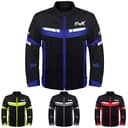
Where a budget jacket saves the money
Fabric weight and quality
The single biggest cost in a jacket is the shell textile. A premium jacket uses branded high-tenacity fabrics with reinforcement panels placed where abrasion happens; a budget jacket uses generic 600D polyester or a lighter mesh. The practical consequence is service life and slide distance rather than a binary pass or fail — but it is a real difference, and it is why we point riders toward independent testing where it exists. MotoCAP in Australia is the only program routinely putting numbers on protective clothing, and it is worth checking a garment there before assuming a price tag equals protection.
Armor level and coverage
Budget jackets typically ship CE Level 1 shoulder and elbow armor and a foam pad at the back. The Level 1 shoulders and elbows are fine; the foam back pad is not armor at all, and swapping it for a CE Level 2 back insert is the single highest-value upgrade you can make to any jacket on this page. It costs a fraction of the jacket.
Fit and finish
Cheaper zips, less adjustment, boxier cut, fewer sizes. This is where the money most visibly went, and it is also the least important of the three — with one exception. A jacket that fits badly holds its armor in the wrong place, and armor in the wrong place does nothing. Take the adjustment straps seriously.
The armor question, in detail
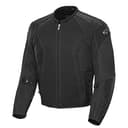
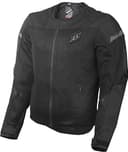
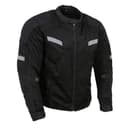
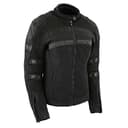
Three of the jackets above ship with CE armor included and two are armor-ready. That distinction is worth more than $40 of difference in sticker price. If you buy an armor-ready jacket:
- Order the inserts at the same time. A jacket with empty pockets is worn with empty pockets.
- Check the pocket dimensions. Most budget jackets take standard-size CE inserts, but not all, and an insert that does not sit flat will not stay where it needs to be.
- Buy a back insert even if the jacket came with a foam pad. Foam is comfort padding. EN 1621-2 armor is protection.
Mesh, textile or leather on a budget?
Mesh, if you ride in heat
Three of the picks above are mesh, and that is not accidental — mesh is the construction where budget hurts least. A cheap mesh jacket flows nearly as much air as an expensive one, because the airflow comes from the holes rather than from engineering. What you lose is abrasion resistance in the mesh panels themselves, which is why the better ones put solid fabric on the shoulders and elbows. Our mesh jacket roundup covers the category properly.
Textile with a liner, if you ride year-round
A budget textile jacket with a zip-out rain liner is the most versatile single purchase on this page. It will not be a laminate and it will soak through the outer in sustained rain — see waterproof jackets for why that matters — but for a commuter it covers three seasons for the price of one jacket.
Leather, if you want it to last
Budget leather is the surprise value in this category. Cowhide is cowhide: a $180 leather jacket with CE armor gives you genuine abrasion resistance and a garment that will outlive three textile jackets. What you give up is weight, heat, and any pretense of weather protection. The full leather ranking is on best leather motorcycle jackets, and leather vs textile covers the choice.
What we would not buy at any price
- A jacket with no armor pockets. Not a motorcycle jacket, whatever it is styled to look like.
- Fashion leather sold as riding leather. Thin garment-weight hide with decorative zips gives you very little slide resistance. If a listing does not mention armor or abrasion at all, it is a fashion jacket.
- Anything that only fits with the liner in. A jacket sized around its winter liner is too loose in summer, and loose armor is armor in the wrong place.
How to spend the next $50
If you have a budget jacket and $50 spare, the order is not another jacket. It is a CE Level 2 back insert first, then upgraded shoulder and elbow inserts if the jacket shipped Level 1. Both are cheap, both go into the jacket you already own, and both move you further up the protection scale than another $150 of shell fabric would. That is the same logic behind our beginner gear guide: spend on the thing that is missing, not the thing that is merely cheaper than it could be.