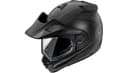
How we ranked these
The list came first and the ranking came second. On 27 August 2026 we read the Snell Memorial Foundation’s M2020D certified-helmet list and its M2025D list, and cross-referenced every helmet in our registry against them. Anything that did not appear was cut, whatever its retail listing claimed. What survived was then ordered on the things that genuinely differ between them: price band, shell material, published weight, head shape and what the helmet is built to do.
One consequence is worth stating plainly. This is a short list, and it is short on purpose. Snell certification costs a manufacturer money to hold and most premium helmets never submit for it — not because they would fail, but because ECE 22.06 already sells the helmet in Europe and DOT already sells it here. A missing SNELL sticker is not evidence of a weak helmet. It is usually evidence of a business decision.
What SNELL certification actually is
The Snell Memorial Foundation is an independent non-profit that writes its own helmet standards and certifies helmets against them. Snell describes DOT and ECE as government minimum standards that “rely mostly on helmet manufacturers to police themselves,” and describes its own standards as voluntary and more demanding than the current national and international motorcycle helmet standards. That is Snell’s characterization of the difference and it is worth reading as such — but the structural points behind it are checkable, and they are why the sticker means something:
- The manufacturer pays. Snell puts the cost of certification at roughly two dollars per helmet unit, covering the certification sticker, the testing fee and follow-up random sample tests. A maker who does not want that scrutiny simply does not enter.
- The testing does not stop at launch. Snell buys certified helmets randomly from retailers afterward and re-tests them, so the rating covers the helmets that actually reach customers rather than a hand-finished pre-production sample.
- It is model- and size-specific. The certified list names a model and then names the sizes. That granularity is the whole reason to go to the source, and it is exactly where listing copy oversells.
The generation labels are simple once they are written out. The letter is the market, not the strength: M2020D and M2025D are tuned for DOT markets, M2020R and M2025R for ECE markets. M2025 is the current generation and M2020 is the previous one, and helmets move across as makers re-certify them. A helmet on the M2020D list is not expired — it is certified to the standard it was certified to, and it stays that way.
The sizes nobody mentions
This is the finding worth the page. Snell certifies a model in named sizes, and on several helmets those sizes stop short of the full size run the maker sells. Read from Snell’s M2020D list on 27 August 2026:
| Helmet | SNELL-certified sizes | On the current M2025D list? |
|---|
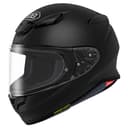
| Shoei RF-1400 | XS, S, M, L, XL, XXL, XXXL | Yes |
| HJC i10 | XS, S, M, L, XL, XXL | No — the i11 is listed instead |
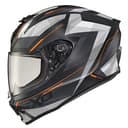
| ScorpionEXO R420 | XS, S, M, L, XL, XXL | No — the EXO-R430 is listed instead |
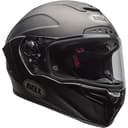
| Bell Race Star DLX Flex | XS, S, M, L, XL, XXL | No |
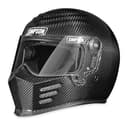
| Simpson Outlaw Bandit (family) | XS, S, M, L, XL, XXL, XXXL | Yes — 3.0 and 3.0 Carbon both listed |
| Arai XD-5 | XXS/XS, S, M/L, XL, XXL | Yes |
Snell’s list carries an explicit note against the HJC i10 that the model in XXXL is not Snell certified, and Scorpion publishes the same shape of caveat for the R420 in its largest sizes. In both cases the helmet that arrives is still a DOT-certified, road-legal lid built on the same tooling — it simply is not the SNELL helmet you thought you were buying. If you wear XXL or above and the rating is your reason for buying, check the size against Snell’s list before you check out. Our helmets for big heads page covers the wider problem of which makers build shells above XL at all.
There is no SNELL modular helmet
Snell’s M2020D list has a helmet-type column, and across the whole list it holds exactly two values: Full Face and Open Face. Not one modular or flip-up helmet appears on it. That is not a gap in our reading — it is the state of the list.
The reason is structural. A modular helmet’s chin bar is a separate assembly on a hinge with a latch, and Snell’s protocol tests the chin bar the way it tests the rest of the shell. Makers generally take that trade rather than engineer a latch to clear it, which is why the flagship flip-fronts carry DOT and ECE 22.06 and stop there. If you want a modular you are choosing convenience over this particular rating — modular vs full-face sets out what else that trade involves, and our modular picks are ranked on the certifications those helmets do carry.
The open-face entries, by contrast, are real: Snell lists a run of Arai open-face models plus Shoei’s RJ Platinum-R. A SNELL-certified three-quarter helmet is a genuine thing to buy — it just still has no chin bar, which remains the biggest gap in an open-face helmet’s coverage no matter what the shell is certified to.
Do you actually need SNELL?
No. Nothing about street riding requires it, and treating it as a hard filter will cut helmets that are excellent by every other measure. The AGV K6 S on our lightest helmets page carries DOT and ECE 22.06 and weighs 385 grams less than the Shoei at the top of this list. Whether the certification or those 385 grams matters more to you is a real question, and the answer is not automatically the sticker. If a second independent standard is what you are after and SNELL is not it, we did the same exercise for the current European homologation — the helmets that publish ECE 22.06 are listed there, separated from the ones that publish only an unversioned “ECE”.
Here is the order we would actually put it in:
- Fit. A helmet that does not match your head shape cannot do its job and will not stay on your head all day. Start at helmet sizing and head shapes before you shortlist anything.
- DOT. Non-negotiable and legally required for on-road use in the US. Everything on this page has it.
- A second, independent standard. SNELL or ECE 22.06. Both mean the helmet cleared testing beyond the federal floor. They test different things, and neither is a strict upgrade on the other.
- Weight, noise and features. The comfort factors that decide whether you ride 400 miles in the helmet or 40.
Where SNELL earns its keep most clearly is the budget end. A helmet in the sub-$200 bracket that carries the rating — the HJC i10 and the ScorpionEXO R420 both do — is buying you third-party scrutiny at a price where you would normally be trusting the manufacturer’s own homework and nothing else. At the premium end it matters less, because a flagship Shoei or Arai has plenty of other evidence behind it. If your budget is a couple of hundred dollars, SNELL is the most useful filter on this site. Our safest budget helmets page ranks that end of the market without the certification filter applied, for comparison.
A note on the Simpson listing
Simpson is the one pick here whose paperwork needs a sentence. Snell’s M2020D list carries the Outlaw Bandit in XS through XXXL; the current M2025D list carries the Outlaw Bandit 3.0 and the Outlaw Bandit 3.0 Carbon across a set of size splits. The retail listing for the carbon version states DOT and Snell M2020, which is the label our spec table records, because our rule is to record what the maker publishes. Snell-certified either way — the only genuinely open question is which generation label belongs on the carbon shell specifically, so we have recorded the maker’s claim and shown you the Foundation’s lists rather than picking one and calling it settled. The rest of the range is on our Simpson helmets page, where the certification differences across the Bandit line are the whole story.
Before you buy
Two things to do with the sticker once the helmet arrives. First, check it is physically there — a genuine SNELL certification is a label inside the helmet, not a claim on a web page. Second, note the date. Snell recommends replacing a helmet after about five years of normal use, because the liner and shell materials degrade with sweat, UV and handling, while adding that an unused helmet stored in good condition does not automatically expire on a five-year timer. A helmet that has taken a significant impact is finished immediately regardless of age — the EPS liner crushes once and does not recover. We cover the whole question on when to replace a motorcycle helmet.