12V bike-powered vs 7.4V battery
Bike-powered (12V)
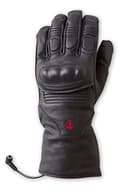
A lead runs from each glove, usually up the sleeve to a jacket connector and then to the bike’s electrical system. The Gyde Vanguard above works this way.
The advantage is total: the heat lasts as long as the ride does, at full output, in any temperature. There is no runtime calculation, no dimming as the pack drains, and no cold hands at hour four. For long-distance winter riding this is not a preference, it is the only system that works.
The cost is the tether. You are physically connected to the motorcycle. Getting off means unplugging; forgetting to unplug means a tug at the sleeve. You also need to wire a lead to the battery with an appropriate fuse, which is a twenty-minute job but is a job. And your bike has to have the electrical headroom — heated grips plus a heated jacket plus heated gloves is a real load on a small alternator. The published figures make that concrete: on our heated jackets, liners and vestspage the 12V garments draw between 3.1 and 6.4 amps on their makers’ own numbers, before the gloves get a share. A Gerbing jacket liner is also the connector a Gerbing glove plugs into, so if you are going bike-powered it is worth choosing the two together.
Battery-powered (7.4V rechargeable)
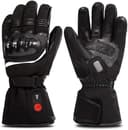
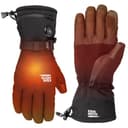
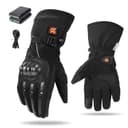
A small lithium pack in each cuff. Three of the four gloves above use this format, generally 7.4 V with a 3,000 mAh cell.
The advantage is that they just work, on any bike, and off the bike as well. No wiring, no fuse, no connectors dangling from your sleeve.
The cost is runtime, and it is worse than the box says. Published runtime figures are quoted on the lowest heat setting at room temperature. Lithium cells lose capacity in the cold, and the cold is the only time you use them, so real runtime on high in freezing conditions is a fraction of the headline number. Plan on the low end of whatever range is claimed, carry the charger, and consider a second set of packs if your rides are long.
What to check before you buy
- Where the heating elements run. The good ones run along the back of each finger and across the back of the hand. Cheaper gloves heat the back of the hand only, which warms your hand but not your fingertips — and fingertips are the part that goes numb.
- Waterproofing. Cold and wet is the combination that actually ends rides. Every glove above states a waterproof windproof construction on the listing. A heated glove that soaks is a heated glove that stops being warm.
- Bulk at the cuff. Battery gloves have a pack sitting where your wrist bends. Check the gauntlet is long enough to go over your jacket sleeve, and expect less dexterity than a summer glove.
- Controls you can work in gloves. A single button that cycles through three settings is what you want, and you want to be able to find it without looking.
- The protection question. Look for a hard knuckle and a reinforced palm. Nothing here publishes a CE rating, so those construction features are the only protection signal available.
The cheaper things to try first
Heated gloves are not the first move for most riders, and we would be doing you a disservice not to say so.
- Heated grips. Cheaper than heated gloves, wired once and forgotten, and they warm your palms — which is where the blood vessels are that feed your fingers. They do nothing for the back of your hand in the wind, which is why the combination of heated grips and a good windproof winter glove beats either alone.
- Bar muffs. Ugly, unfashionable, and the single most effective cold-hands solution per dollar ever invented. They remove the wind, which is the actual problem.
- A proper windproof winter glove. If your current gloves are wet or not windproof, fix that before adding electricity. Our winter glove ranking covers it.
- Warm core, warm hands. When your torso is cold your body restricts blood flow to the extremities to protect the core. Heated gloves fight that; a warm jacket and base layer prevent it. See motorcycle gear for cold weather for the full layering argument.
If you have done all of that and your hands are still numb at 20 °F an hour in, heated gloves are the answer and they work. Just do them in that order.
Living with them
Charge the packs the night before, every time — a heated glove with a flat battery is a mediocre winter glove. Turn them on before you get cold rather than after: reheating a cold hand takes far longer than keeping a warm one warm. Store them with the batteries out and part-charged over summer, because lithium cells degrade fastest sitting full or empty. And check the leads on bike-powered sets where they exit the cuff, which is where the flexing happens and where they eventually fail.