Motorcycle Gear for Cold Weather
Wind chill at 60 mph, why waterproof matters more than insulation, and the layering system that keeps you riding into December without looking like a duvet.
How this is funded: we earn a commission if you buy through our links, at no extra cost to you. It never changes which gear we recommend, and we’ll tell you plainly when to skip a pick. Full disclosure.
Cold riding is a solved problem, and the solution is not “a thicker jacket.” It is a system: block the wind, stay dry, trap air in the right places, and pay disproportionate attention to your hands, because your hands are what operate the controls and they will fail before the rest of you does.
Here is how the system works and what goes in it, head to toe.
Wind chill is the whole problem
Standing still at 40 degrees is pleasant. Sitting in 40-degree air moving past you at 60 mph is not, and the difference is entirely about how fast moving air strips heat off you compared with still air. This is why the single most valuable property of a winter riding garment is not insulation — it is being genuinely windproof.
A fleece is warm on a walk and nearly useless on a bike, because the wind goes straight through it and takes the trapped air with it. Put the same fleece under a windproof shell and it becomes excellent. That is the entire principle of layering, and it explains most of what follows.
Wet is worse than cold
Insulation works by trapping still air. Water displaces that air and conducts heat away from you far faster than air does, so wet insulation is not reduced insulation — it is close to no insulation, plus weight. This is why a waterproof shell over a modest thermal layer beats a thick unlined jacket on a wet winter day by a wide margin.
The distinction that matters when shopping: a drop liner is a separate waterproof membrane zipped inside the shell, so the outer fabric soaks first and stays wet; a laminate bonds the membrane to the outer, so the shell itself stops water. Laminates cost more and are noticeably better over several hours or several days. Our adventure and touring jackets are where the laminate constructions live.
The three-layer system
Base: move sweat, add no bulk
A snug synthetic or merino layer against the skin. Its job is to move moisture away from you, because sweat that stays on your skin will chill you badly the moment you slow down or stop. Cotton does the opposite — it holds water and stays wet — and is the one thing not to wear.
Mid: trap air
Fleece, a light down or synthetic gilet, or the thermal liner your jacket came with. This is where the actual warmth comes from, and it needs a little room around it: compressed insulation does not insulate, which is why over-layering into a tight jacket makes you colder rather than warmer. It is also the layer to replace rather than add to when insulation stops being enough: a heated liner or heated vestmakes its own heat instead of trying to trap yours, and because it is thin it leaves the room your armor needs. None of them is protective gear — no heated garment publishes a CE rating — so it swaps in for the fleece, never for the shell.
Shell: block wind and water
The riding jacket, with the armor. It has to be windproof and it should be waterproof. It also has to be cut with room for the two layers under it — touring and adventure jackets are sized for this, sport jackets generally are not.
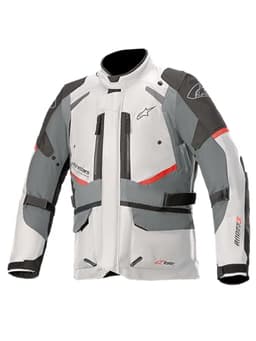
Cold-weather shell
Alpinestars Andes V3 Drystar
The adventure-touring value benchmark: a Drystar waterproof membrane, a removable thermal liner and CE armor at shoulders and elbows, for roughly a quarter of what the GORE-TEX flagships cost.
Compare the touring jackets →Price as of October 19, 2026. #ad How we’re funded
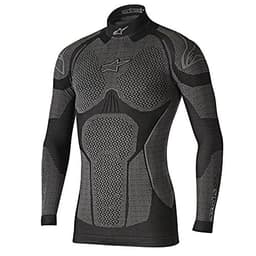
Thermal base layer
Alpinestars Ride Tech Winter Long Sleeve Top
The cold-weather half of the base-layer question: a brushed thermal compression top that adds warmth without adding the bulk that stops a jacket's armor sitting where it should.
Compare the base layers →Price as of October 19, 2026. #ad How we’re funded
Hands: where cold actually stops you
Fingers lose heat fastest, sit directly in the airflow, and are what operate every control on the bike. Losing fine motor control in your hands is the point at which cold stops being uncomfortable and starts being a safety problem, and it happens sooner than most riders expect.
The options, cheapest first:
- Handguards or bar muffs. The most effective money you can spend, because they remove the wind rather than fighting it. Muffs look unfashionable and work extraordinarily well.
- Heated grips. Warm the palm side only. Useful, permanent, and they do nothing for the back of the hand where the wind hits.
- Insulated waterproof gauntlets. The baseline. A gauntlet worn over the jacket cuff keeps cold air from being forced up your sleeve, which is why winter gloves are almost universally long-cuffed.
- Heated gloves.The complete answer for genuinely cold riding — whole hand including fingers — at the cost of charging them or wiring them to the bike.
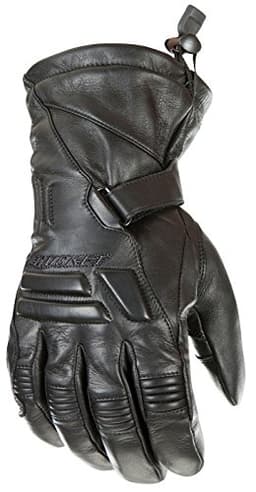
Insulated gauntlet
Joe Rocket Windchill Leather Winter
A leather winter glove that trades some warmth for real abrasion resistance and a hard knuckle. The pick for riders who won't give up leather protection when it gets cold.
Compare the winter gloves →Price as of October 19, 2026. #ad How we’re funded
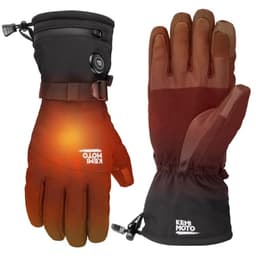
When insulation isn't enough
Kemimoto Heated Gloves
Battery-heated gloves for riders who commute through genuine winter. When insulation alone stops working, an active heating element is the difference between riding and driving.
See where it ranks →Neck, head and the gap nobody plans for
The gap between helmet and jacket collar is where a startling amount of cold air gets in, and closing it with a neck tube or balaclava is the cheapest comfort upgrade in winter riding. A thin windproof neck tube that tucks into the collar does more for perceived warmth than another mid-layer.
In the helmet itself, the two winter items that matter are a Pinlock or equivalent anti-fog insert and a chin curtain. The insert creates an insulating air gap so the inner shield surface stays warm enough not to condense your breath; the chin curtain stops cold air rolling up inside the helmet. A drop-down sun visor also earns its keep in winter, when the sun sits low for most of the afternoon.
Legs and feet
Thermal riding bottoms under armored jeans or textile trousers do the same job as a base layer up top and take up no room. For feet, the order of operations is dry first, then warm: a waterproof boot with a normal sock beats a leaky boot with a thick one, every time. Resist the urge to cram an extra pair of socks into a boot that fits — compressing your foot restricts circulation and makes it colder, not warmer.
Our waterproof boots pagegoes through membrane versus treated leather and why most “leaking” boots are actually filling from the top.
The road, not just you
Gear solves your temperature. It does not solve grip. Below roughly 40 degrees, standard motorcycle tires take considerably longer to reach working temperature and offer less grip even on dry tarmac, and anywhere near freezing you have to ride as though shaded corners, bridges and overpasses might be icy — because they routinely are when the open road is not. Salt and grit on winter roads reduce grip further and eat your bike.
Practical version: leave more space, brake earlier and in a straight line, take corners with less lean and more patience, and assume the first few miles have almost no grip at all.
A short winter checklist
- Windproof, waterproof outer shell cut with room for layers
- Wicking base layer top and bottom — not cotton
- A mid-layer you can add or remove without unpacking
- Insulated waterproof gauntlets, plus handguards or muffs if you can
- Neck tube or balaclava to close the helmet-to-collar gap
- Anti-fog insert and chin curtain in the helmet
- Waterproof boots that still fit with a normal sock
- Somewhere warm to stop every hour, and the willingness to use it
How to read our safety notes. We have not crash-tested any of this gear — nobody honestly can on a review budget. Every helmet and armor pick names the certification the maker publishes (DOT, ECE 22.06, SNELL, or a CE level), which we read from the listing on a dated visit. Certification is the floor, not a guarantee; fit and condition matter as much as the sticker. What the standards actually mean.
Frequently asked questions
What temperature is too cold to ride?
There is no single number, because what matters is the combination of air temperature, wind chill at your speed, how long you are out and how well you are dressed — a well-equipped rider is comfortable in conditions that would be genuinely dangerous in the wrong gear. The harder limit is the road rather than you: below about 40 degrees, standard motorcycle tires take much longer to reach working temperature and grip is reduced even on dry tarmac, and anywhere near freezing you have to assume shaded corners and bridges may be icy.
Is a waterproof jacket more important than an insulated one in winter?
Usually yes, and it surprises people. Insulation works by trapping air; wet insulation traps water instead and conducts heat away from you many times faster than dry air does. A waterproof, windproof shell over a modest thermal layer will keep you far warmer on a wet 40-degree day than a thick unlined jacket that soaks through. Buy the shell first, then add insulation underneath it.
Do heated grips or heated gloves work better?
Heated grips warm your palms — the side of the hand that touches the bar — and do nothing for the back of your hand, which is what the wind hits. Heated gloves warm the whole hand including the fingers, which is where cold actually stops you operating the controls. Grips are cheaper, permanently installed and useless off that bike; gloves cost more, need charging or a wiring loom, and work on anything. Riders who do serious winter mileage often end up with both, and with handguards or muffs, which are the cheapest single upgrade of the three.
How do I stop my visor fogging in the cold?
A Pinlock or equivalent anti-fog insert is the actual solution: it is a second lens sealed to the shield that creates an insulating air gap, so the inner surface stays close to your breath temperature rather than close to the outside temperature. Anti-fog sprays and coatings help temporarily and wear off. A chin curtain and a breath deflector direct your exhaled air downwards and out rather than up onto the shield, and closing the top vents while leaving the chin vent open feeds cool dry air across the inside of the shield. Do not ride with the visor cracked in freezing rain — you get a clear shield and streaming eyes.
Can I just wear more layers under my summer jacket?
Only up to a point, and past that point it becomes counterproductive. Armor works when it sits over the joint it protects, and stuffing a summer jacket full of bulk pushes the shoulder and elbow armor out of position and compresses the very air that is supposed to be insulating you. A jacket that is tight with layers underneath is also colder than one with a little air space in it. If you are cramming, the answer is a shell cut for layering, not more layers.
What are the first signs I'm getting too cold to ride safely?
Losing fine motor control in your hands is the important one — if operating the clutch, brake or turn signals is getting clumsy, stop. Shivering that will not stop, a persistent ache in the fingers or toes, and any sense that your thinking has slowed or that you have stopped caring about the cold are all reasons to get off the bike and get warm indoors. Cold degrades reaction time and judgment well before it feels dangerous, which is exactly why it is dangerous.
Sources
- MotoCAP — Independent Motorcycle Clothing & Helmet Assessment — Independent Australian lab rating protective clothing and helmets for protection and comfort (accessed July 21, 2026)
- NHTSA — Traffic Safety Facts 2023: Motorcycles (DOT HS 813 732) — 2023 motorcyclist fatality, injury and helmet-use statistics (accessed July 21, 2026)
- NHTSA — How to Choose the Right Motorcycle Helmet — NHTSA consumer guidance on DOT certification and spotting novelty helmets (accessed July 21, 2026)
Keep reading
Heated gear explained: 12V vs battery
The published wattage of every heated garment we rank, and what a controller actually changes.
Read the guideBest winter motorcycle gloves
Waterproof, insulated and heated gloves for riding through the cold.
See the winter picksBest adventure & touring jackets
Laminate shells and zip-out liners — the jackets built for weather rather than around it.
See the jacket picksBest motorcycle base layers
Thermal tops and bottoms that add warmth without bulking a fitted jacket out of shape.
See the base-layer picksMotorcycle gear for hot weather
The other end of the year — mesh, cooling layers and staying covered at 100 degrees.
Read the hot-weather guide