Motorcycle Helmet Head Shapes Explained
The right size in the wrong shape still hurts after an hour. How to work out whether your head is round, intermediate or long oval — and what to do once you know.
How this is funded: we earn a commission if you buy through our links, at no extra cost to you. It never changes which gear we recommend, and we’ll tell you plainly when to skip a pick. Full disclosure.
Riders who have never heard of head shape usually discover it the same way: they buy a helmet in the size the chart says, it feels fine in the shop, and forty minutes into the first proper ride there is a specific, insistent ache in the middle of the forehead. They conclude the helmet is too small, exchange it for the next size up, and end up with a helmet that still presses at the front and now moves at the sides.
That is a shape problem wearing a size problem’s clothes, and it is the single most common fitting failure in motorcycling. Circumference tells you what size shell you need. It says nothing about the outline of your skull, and the outline is what decides where the pressure lands.
The three shapes
Viewed from directly above, the human skull is an oval of varying eccentricity. The industry sorts that continuum into three bins.
Round oval
Front-to-back length is close to ear-to-ear width; the outline looks nearly circular. Round-oval riders in a standard helmet get pressure at the sides, above the ears, with a gap they can slide a finger into at the forehead. Historically associated with some Asian-market helmet lines, which is where the term “Asian fit” came from.
Intermediate oval
Slightly longer front-to-back than side-to-side. This is most people, and it is the shape almost every helmet on the market is built to. If a helmet in your size feels evenly snug all the way round with no single hot spot, you are intermediate oval and you can shop the whole market.
Long oval
Noticeably longer front-to-back than ear-to-ear. Long-oval riders get the classic forehead ache, sometimes with matching pressure at the back of the skull, and loose space at the sides. This is the shape that causes the most trouble, because the pressure and the looseness are both real and they point in opposite directions.
How to work out which one you are
The overhead photograph is the reliable method, and it takes thirty seconds. Flatten your hair, have someone stand above you with the camera level and centered, and look at the outline. You are comparing two distances: forehead to the back of the skull, and ear to ear. A ratio close to 1:1 is round; distinctly elongated is long; slightly elongated is intermediate.
The second method uses a helmet you already own, and it is more useful because it tells you what to do next. Put the helmet on, fasten it, and wear it for twenty minutes indoors. Then map the pressure:
- Forehead and/or back of skull sore, sides loose. Your head is longer than the helmet. Long oval, or an intermediate head in a rounder-than-average helmet.
- Sides sore above the ears, gap at the forehead. Your head is rounder than the helmet. Round oval.
- Even, firm pressure everywhere, no single hot spot. The shape is right. If it is uncomfortably tight, the size is one down from where it should be.
- No pressure anywhere, helmet moves easily. Too big. Go down a size — see the roll-off test in our sizing guide.
Why this is a safety issue, not a comfort one
A helmet works by holding a crushable EPS liner in contact with your skull so it can crush against it during an impact. That requires the helmet to stay put — NHTSA’s consumer guidance on choosing a helmet leads with fit for exactly this reason.
A wrong-shape helmet fails that in a specific way. The pressure points create the impression of a snug fit while the loose axis lets the helmet rotate. A long-oval head in an intermediate shell is gripped at two points and free everywhere else; twist the helmet with both hands and it will move more than it should, even though it feels tight. That is the condition to avoid, and it is why “it feels tight so it must fit” is unreliable reasoning.
The other failure is behavioural and just as consequential: a helmet that gives you a headache in an hour is a helmet you stop wearing on short trips. The safest helmet is the one that goes on every time.
What to do about it
1. Shop by the maker’s stated shape
Every helmet on this site records the fit and head shape the manufacturer publishes, in the spec table on the product card. It is the first thing to check before the certification, the weight or the price, because a helmet in the wrong shape is not a candidate at any spec.
2. Ask about alternative crown pads
Several makers sell crown padding in different thicknesses or profiles for the same shell. Thinning the crown relieves forehead pressure without touching the EPS or the shell — the parts that do the protecting. This is the same interior-adjustment route we recommend to riders in glasses, and it can convert a near-miss into a good fit.
3. Do not size up
Sizing up trades a pressure point for a loose helmet. If the shape is wrong, the larger size is wrong in the same way with more room to rotate. The fix is a different shell or different padding, never a bigger number.
4. Try before you commit where you can
Head shape is the one specification that genuinely rewards putting the helmet on. If you have a dealer within reach, twenty minutes in the shop is worth more than any amount of reading — including this page.
Three helmets and the shapes they fit
Every helmet we recommend records its published fit notes on the product card. Three worth knowing, all intermediate oval — which is the honest state of the market rather than a limitation of our picks:
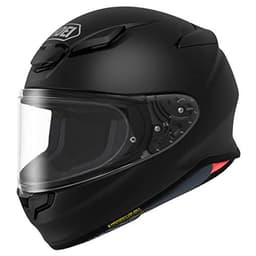
Intermediate oval, premium
Shoei RF-1400
DOT + SNELL M2020DThe full-face most experienced riders land on: Shoei's hand-laid AIM+ shell, DOT plus a SNELL M2020 rating, and a quiet, refined fit. You're paying for finish and certification, and it shows.
See the full helmet rankingPrice as of October 19, 2026. #ad How we’re funded
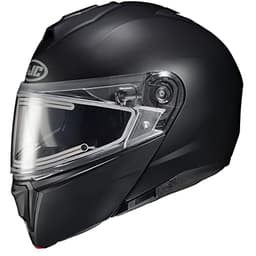
Intermediate oval, roomy cheek pads
HJC i90
DOT + ECE 22.05The value modular that gets the important things right: DOT and ECE 22.05 certification, a drop-down sun visor, and comms-ready ear pockets, for a fraction of a premium flip-front's price.
See the modular rankingPrice as of October 19, 2026. #ad How we’re funded
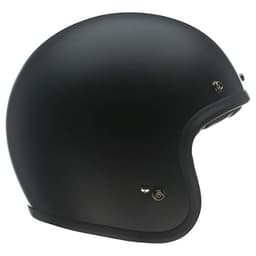
Low-profile oval, five shell sizes
Bell Custom 500
DOTThe 1954 silhouette that started the category, still built properly: a fiberglass composite shell in five sizes and a genuinely low-profile fit at about 982 g. It is DOT-certified, and it leaves your face completely exposed — that trade is the whole point of the helmet.
See the open-face rankingPrice as of October 19, 2026. #ad How we’re funded
A note on “Asian fit”
You will see the phrase on listings and it usually means a rounder interior — a shell built for a head with less front-to-back elongation. The label is a market description rather than a technical specification, and head shape varies far more between individuals than between populations. If a round-oval helmet fits your head, buy it regardless of what the listing calls it. Judge the interior, not the name.
The order to do this in
- Measure your circumference with a tape. That is the size.
- Photograph the top of your head. That is the shape.
- Filter helmets by shape first, then check certification — see DOT vs ECE vs SNELL.
- Fit-check the helmet that arrives: even pressure, no rotation, no hot spots after twenty minutes.
- Adjust the interior padding if it is close. Return it if it is not.
How to read our safety notes. We have not crash-tested any of this gear — nobody honestly can on a review budget. Every helmet and armor pick names the certification the maker publishes (DOT, ECE 22.06, SNELL, or a CE level), which we read from the listing on a dated visit. Certification is the floor, not a guarantee; fit and condition matter as much as the sticker. What the standards actually mean.
Frequently asked questions
What are the three motorcycle helmet head shapes?
Round oval, intermediate oval and long oval. They describe the outline of your skull viewed from above. A round-oval head is nearly circular; a long-oval head is noticeably longer front-to-back than it is wide ear-to-ear; an intermediate-oval head is slightly longer than it is wide, which describes the majority of people. Helmet makers build their interiors to one of these shapes — overwhelmingly intermediate oval, because it fits the most heads.
How do I know what shape my head is?
Flatten your hair and have someone photograph the top of your head from directly overhead. Compare the front-to-back length against the ear-to-ear width in the photo. Nearly circular is round oval, noticeably longer is long oval, and slightly longer is intermediate oval. You can also read it from a helmet you already own: forehead and rear pressure with loose sides means your head is longer than the helmet, and side pressure with front-to-back gaps means it is rounder.
What happens if I wear the wrong head shape helmet?
You get localized pressure points that turn into a headache after 30 to 60 minutes, and loose space somewhere else — which is the more serious half. A helmet that is tight front-to-back but loose at the sides can rotate on your head, and a helmet that rotates cannot hold its EPS liner against your skull to crush against it. Most riders respond by sizing up, which fixes the pressure and makes the looseness worse.
Which helmet brands fit long oval heads?
Head shape is a per-model property rather than a per-brand one, so the reliable approach is to check the fit notes for the specific helmet — every product on this site records the shape the maker publishes. What we can say is that intermediate oval is the industry default and dominates the market, so long-oval and round-oval riders have a genuinely smaller range to choose from. Some makers also sell crown pads in alternative shapes for the same shell, which is worth asking a dealer about.
Can you change a helmet's head shape with different padding?
Partly. Most makers sell cheek pads and crown padding in several thicknesses for the same shell, and some sell shape-specific crown pads. That can take a helmet that is close and make it correct — for example, thinning the crown to relieve forehead pressure. What padding cannot do is change the shell: a genuinely long-oval head in an aggressively round shell will press at the front and back no matter what goes inside it.
Is head shape the same as helmet size?
No, and confusing the two is the most common fitting mistake we see. Size is circumference — a number in centimeters you get with a tape measure. Shape is the outline of your skull from above. You need both to be right. A helmet in the correct size but the wrong shape will have pressure points and gaps at the same time, and no change of size resolves that, because it is not a size problem.
Sources
- NHTSA — How to Choose the Right Motorcycle Helmet — NHTSA consumer guidance on DOT certification and spotting novelty helmets (accessed July 21, 2026)
- 49 CFR 571.218 — FMVSS No. 218, Motorcycle helmets — The US federal helmet standard: peak-acceleration, penetration and retention requirements; applies to all on-road motorcycle helmets (accessed July 21, 2026)
- Snell Memorial Foundation — FAQ — How Snell certification works and how it differs from DOT (accessed July 21, 2026)
- UNECE — Vehicle Regulations (UN Regulation No. 22 / ECE 22.06) — The UN regulation behind ECE 22.06, which added rotational/oblique-impact testing over 22.05 (accessed July 21, 2026)
Keep reading
Helmet shell sizes explained
Why a size small on a two-shell helmet is the big shell padded down, and the 9 helmets that publish a count.
Read the guideMotorcycle helmet sizing guide
The other half of the fit question — measuring your head, reading a chart and running the fit checks.
Read the sizing guideBest motorcycle helmets for big heads
Which makers actually build shells above XL — for when the problem really is circumference.
See the picksBest motorcycle helmets for glasses
The other fit problem cheek pads solve, and why sizing up is the wrong answer there too.
See the picksBest motorcycle helmets
Our top picks across every style, each with the head shape the maker publishes in the spec table.
See the helmet picks