Motorcycle Helmet Shell Sizes Explained
Two helmets in the same size box can be very different objects. The number of shells a maker builds is the spec that decides whether a small head gets a small helmet or a small lining inside a big one — and only 9 of the 37 helmets we track publish it.
How this is funded: we earn a commission if you buy through our links, at no extra cost to you. It never changes which gear we recommend, and we’ll tell you plainly when to skip a pick. Full disclosure.
The short version: if you wear a small or an XS, look for a helmet built on three or more shells — and if you cannot find the shell count published anywhere, treat that as part of the answer. A shell size is one physical outer shell, and a maker uses each shell to cover a band of head sizes by varying the thickness of the EPS liner and the comfort padding inside it. Two helmets with identical size labels can therefore be completely different objects: on a 2-shell lid, a size small is the large shell with more foam in it.
This is one of the few genuinely useful specs in helmet marketing, and it is also one of the least published. Of the 37 helmets in our registry, 9 publish a shell count: one publishes 5 shells, one publishes 4, five publish 3, and two publish 2. The other 28 do not say, and we record that as not published rather than guessing from the size range — see our methodology.
What a shell size actually is
A helmet has three layers that matter here: the outer shell (polycarbonate, composite fiberglass or carbon), the EPS impact liner underneath it, and the removable comfort padding against your head. Certification testing applies to the finished helmet, and DOT, ECE and SNELL all test per size — so a 2-shell helmet is not an uncertified helmet. What changes with shell count is proportion and mass:
| Shell count | What it means for a small size | What it means for a large size |
|---|---|---|
| 2 shells | An XS or S is the bigger shell padded down — taller profile, more frontal area, the weight of a larger helmet | The top sizes run close to the shell’s limit, with the thinnest comfort padding |
| 3 shells | The common compromise and a reasonable one: usually one shell for the small sizes, so the ends of the range are not extreme | Same — a dedicated large shell rather than a stretched middle one |
| 4-5 shells | A size small is a genuinely smaller helmet: lower mass, proportionate looks, less lever arm on your neck | Narrow size bands per shell, so EPS thickness stays consistent across the range |
What the registry shows
- The highest count we can verify is 5 shells, on a classic open-face built in sizes XS to 3XL. That is a lot of tooling for an open-face, and it is the reason the small sizes of that helmet look right rather than bulbous.
- 4 shellsappears on an adventure helmet with a round-oval interior — a combination aimed squarely at fit rather than at a spec sheet.
- 3 shells is the most common published figure, on five helmets spanning a budget full-face, a retro full-face with a wide eyeport, a carbon ADV lid, a composite sport helmet and a carbon SNELL-rated one.
- 2 shells appears twice, and in one case the maker publishes exactly where the split falls — XS to MD on one shell, LG to 2XL on the other. That disclosure is more useful than a higher number with no detail, because it tells you which end of a band your size sits at.
- 28 of 37 publish nothing. That is the honest state of the category: shell count is not required on any label, by any standard, in any market.
Two helmets that publish theirs
Both of these are drawn from rankings we already maintain, and both are here for the same reason: the maker states the shell count, so you can check the claim rather than take our word for it.
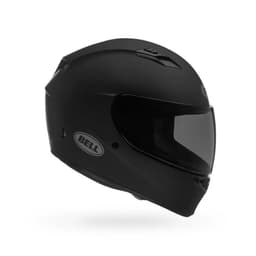
3 shell sizes, budget full-face
Bell Qualifier
DOTThe plain Qualifier — the DLX MIPS model without MIPS or the ProTint shield. DOT approved, three shell sizes, about 1,488 g, and one of the best-value certified full-faces on the market.
See the budget helmet rankingPrice as of October 17, 2026. #ad How we’re funded
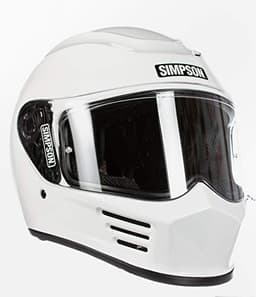
3 shells across the size range
Simpson Speed Bandit
DOT FMVSS 218 + ECE 22.05The way into the brand: a thermo-injected polycarbonate shell in three sizes, DOT plus ECE 22.05, and the ultra-wide Bandit eyeport. Read the certification carefully — 22.05 is the previous European standard, not the current 22.06.
See the full-face rankingPrice as of October 17, 2026. #ad How we’re funded
The Bell publishes 3 shells, DOT FMVSS 218 and a weight of 1,488 g, which together make it one of the easier budget helmets to evaluate honestly. The Simpson publishes 3 shells with DOT FMVSS 218 plus ECE 22.05 — the older ECE standard, not the current 22.06— and an intermediate-oval interior.
How to use this when you are actually buying
- Measure your head and get the shape right first. A tape measure around the widest part of your skull, then work out your head shape. Shell count cannot rescue the wrong shape.
- Find your size in the maker’s chart, not the brand’s reputation. Sizing varies between makers by a full size in both directions.
- Then look up the shell count for that model.If you are at the small end of the range and the helmet is built on two shells, try it on before you buy it — or choose a model with more shells.
- Check the published weight at a size, if there is one. A quoted weight is for one specific size, usually M. A small on a 2-shell helmet will be closer to the large’s weight than to that figure.
- Ignore shell count entirely if you are a straightforward M or L. The middle of every range is well served whatever the count. This spec matters most at the edges.
Why this is not on the label
Helmet labelling requirements cover certification, not construction. In the US, every street helmet must meet DOT FMVSS 218 and carry the DOT mark; the label tells you the standard, the maker, the size and the month of manufacture. Nothing in FMVSS 218, ECE 22.06 or the Snell standards requires a maker to say how many shells a model is built on, so publishing it is voluntary — which is exactly why the 9 that do it are worth noticing. The same logic runs through this site: what the label legally has to say is the floor, and everything above it is a maker choosing to be checkable.
How to read our safety notes. We have not crash-tested any of this gear — nobody honestly can on a review budget. Every helmet and armor pick names the certification the maker publishes (DOT, ECE 22.06, SNELL, or a CE level), which we read from the listing on a dated visit. Certification is the floor, not a guarantee; fit and condition matter as much as the sticker. What the standards actually mean.
Frequently asked questions
What are helmet shell sizes?
A shell size is one physical outer shell, which a maker uses to cover a range of head sizes by fitting thicker or thinner EPS liner and comfort padding inside it. A helmet built on 2 shells covers its whole size range — often XS to 3XL — with two outer shells. One built on 5 shells uses five. The shell count is not printed on the helmet, so it has to come from the maker's spec sheet.
Why do shell sizes matter when buying a helmet?
Because they decide whether a small head gets a small helmet or a thicker liner inside a large one. On a 2-shell helmet, the smallest sizes are the biggest shell's interior padded down — so the helmet looks oversized, sits higher, weighs what the bigger shell weighs, and presents more area to the wind. On a 4- or 5-shell helmet, a size small is a genuinely smaller object. More shells also means less EPS thickness variation across the range, which is the part that matters for fit rather than for looks.
How many shell sizes should a helmet have?
Three or more is a good sign; two is a compromise that mostly penalises the ends of the size range. Of the 37 helmets in our registry, 9 publish a shell count: one publishes 5, one publishes 4, five publish 3 and two publish 2. There is no standard that requires any of this to be disclosed, which is why the count is a useful signal of how much a maker has invested in fit rather than a number you can look up for every helmet.
Does a bigger shell mean a heavier helmet?
For the same model and construction, yes — more shell material and more EPS means more mass, which is why a maker's published weight is usually quoted at a specific size. It is also why shell count matters for small riders: a size XS on a 2-shell helmet carries the weight of the larger shell it is built in. Our helmet weight guide covers what the published figures do and do not tell you; 18 of our 37 helmets publish a weight at all.
How do I find out how many shells a helmet uses?
The maker's spec sheet or product page, under a line like 'shell sizes' or 'available in X shell sizes'. It is not on the certification label, not on the box, and retailers usually drop it. If you cannot find it published, the honest conclusion is that you do not know — and we record it as not published rather than estimating from the size range.
Is shell count more important than head shape?
No. Head shape — round oval, intermediate oval, long oval — decides whether a helmet is comfortable at all, and shell count decides how well-proportioned and light it is once the shape is right. Get the shape right first: a 5-shell helmet in the wrong shape still gives you a pressure point on your forehead. Our head shapes guide covers how to tell which you are.
Do more shell sizes make a helmet safer?
Not directly, and we will not claim it does. Every street helmet sold in the US must meet DOT FMVSS 218 whatever its shell count, and certification is tested per size. What more shells give you is better fit and less excess mass at the ends of the range — and fit matters for protection in a practical way, because a helmet that is too large moves on your head and a helmet that hurts gets left at home.
Sources
- 49 CFR 571.218 — FMVSS No. 218, Motorcycle helmets — The US federal helmet standard: peak-acceleration, penetration and retention requirements; applies to all on-road motorcycle helmets (accessed July 21, 2026)
- NHTSA — How to Choose the Right Motorcycle Helmet — NHTSA consumer guidance on DOT certification and spotting novelty helmets (accessed July 21, 2026)
- UNECE — Vehicle Regulations (UN Regulation No. 22 / ECE 22.06) — The UN regulation behind ECE 22.06, which added rotational/oblique-impact testing over 22.05 (accessed July 21, 2026)
- Snell Memorial Foundation — Standards — Snell's motorcycle helmet standards: M2025D/M2025R are the current generation and M2020D/M2020R the previous one (D = DOT markets, R = ECE markets) (accessed July 21, 2026)
Keep reading
Motorcycle helmet sizing
How to measure your head, read a size chart and check the fit in a shop — the step before shell count matters.
Read the sizing guideHelmet head shapes explained
Round, intermediate and long oval — the spec that decides comfort before any other.
Read the guideBest helmets for big heads
The models that go to 3XL, and which of them do it with a real shell rather than thinner padding.
See the picksHow much does a helmet weigh?
What published weights mean, why they are quoted at one size, and the 18 of 37 helmets that publish one.
Read the guide