How to Spot a Fake or Novelty Motorcycle Helmet
Nobody from the government inspects a helmet before it gets a DOT sticker — the maker puts it there. So the sticker on its own proves nothing. The federal standard tells you exactly what a real one has to look like.
How this is funded: we earn a commission if you buy through our links, at no extra cost to you. It never changes which gear we recommend, and we’ll tell you plainly when to skip a pick. Full disclosure.
Start with the fact that reframes everything else on this page. In the United States, nobody inspects a helmet before it gets its DOT label. The manufacturer applies it. FMVSS No. 218 is a self-certification standard: the maker is required to test the helmet against the federal performance requirements, and then to certify compliance by labelling it. Enforcement happens afterwards — NHTSA buys helmets off the shelf and re-tests them.
From Shoei or HJC or Bell, that label sits on top of a real testing programme and a company with a great deal to lose. From an anonymous drop-shipped shell with no manufacturer’s name anywhere on it, the label means that somebody bought a roll of stickers. The sticker is identical in both cases, which is exactly why you have to look at the helmet instead of the sticker.
The good news is that the federal standard is unusually specific about what a compliant helmet has to look like, and that specificity gives you four checks you can do in a shop in about ninety seconds.
Check 1: the certification label, in detail
FMVSS 218 does not merely require a DOT label — it prescribes its wording, the minimum size of each line and where on the shell it goes. The certification label must carry:
- “DOT”, at least 0.38 inch high
- “FMVSS No. 218”, at least 0.09 inch high
- “CERTIFIED”, at least 0.09 inch high
- positioned 1 to 3 inches from the bottom rear edge of the helmet
So a bare sticker reading DOTand nothing else — no standard number, no CERTIFIED, stuck on the back of the shell wherever it looked good — does not match the form the regulation asks for. That is not a technicality. A manufacturer that has genuinely run the impact, penetration and retention tests knows what the label is supposed to say, because printing it correctly is the last and easiest step of the process.
Check 2: the permanent labelling inside
This is the one that catches novelty helmets, because a sticker is cheap and permanent marking is not. FMVSS 218 requires every helmet to be permanently and legibly labelled with:
- the manufacturer’s name
- the discrete size
- the month and year of manufacture
- care instructions, covering materials, cleaning agents and warnings against modification
Lift the comfort liner or check the strap and the interior. A helmet with no manufacturer’s name and no date of manufacture anywhere on it is a helmet nobody has put their name to. That date is worth finding for a second reason, too — it is the clock our replacement guide runs on, and a “new” helmet with a five-year-old manufacture date is a different purchase from the one you thought you were making.
Check 3: projections — the spike rule
FMVSS 218 is blunt here, and it is worth quoting: “A helmet shall not have any rigid projections inside its shell. Rigid projections outside any helmet’s shell shall be limited to those required for operation of essential accessories, and shall not protrude more than 0.20 inch (5 mm).”
Five millimetres. A visor pivot, a vent slider, a comms mounting boss — those are essential accessories within the limit. A rigid spike, a horn, a bolt-on mohawk or any hard ornament standing proud of the shell is not, and a helmet wearing one is not a helmet that meets the standard, whatever the sticker says. The reason is not aesthetic: a projection concentrates force on one point of the shell instead of letting it slide, and it can catch on the road surface and twist your head. The same clause bans rigid projections inside the shell outright.
Check 4: pick it up, and press the liner
The physical tells come last because they are the least precise, but they are the ones you notice first in a shop. A certified helmet needs a thick layer of firm, crushable impact liner — usually expanded polystyrene — underneath the soft comfort padding, because absorbing energy is the entire job. Press in through the padding. If your thumb goes straight through soft foam to hard shell with nothing dense in between, you are holding a hat.
The same physics drives the other two tells. Novelty shells are markedly lighterthan certified helmets, because the liner is what weighs something — pick up a known-good helmet and then the one you are unsure about, and the difference is not subtle. And a novelty shell looks smaller and closer to the head, which is the whole aesthetic reason people buy them and the whole safety reason not to. That low profile is missing liner.
Chin straps are worth a look on the way past. FMVSS 218’s retention requirement is that the system holds a specified load without separating, and the straps and anchor points on a real helmet are built accordingly. A thin strap on flimsy hardware is a bad sign on its own.
What a certified budget helmet actually looks like
The point of all of this is not that cheap helmets are dangerous. It is that cheap and uncertified are two different things, and the market has plenty of the first without the second. These three are all real helmets from established manufacturers, all DOT-certified, and all at prices that make a novelty shell a false economy rather than a saving.
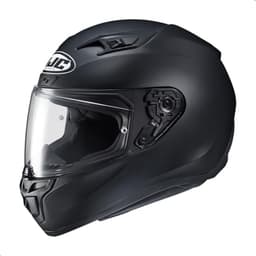
Most certification for the money
HJC i10
DOT + SNELL M2020The rare budget full-face that carries a SNELL M2020 rating on top of DOT — the voluntary top-tier test most sub-$150 helmets skip. The strongest safety-per-dollar case for a first helmet.
See the SNELL-certified rankingThe HJC i10 is the answer to “I do not want to spend much and I do not want to gamble.” It carries DOT andSNELL M2020, which means a private testing foundation has certified it in addition to the maker’s own federal self-certification — and you can look the model up on Snell’s own published list rather than taking a sticker on trust.
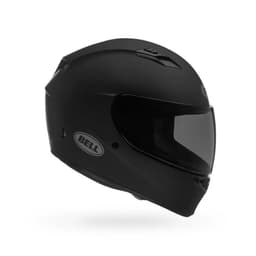
A major brand at the bottom of the range
Bell Qualifier
DOTThe plain Qualifier — the DLX MIPS model without MIPS or the ProTint shield. DOT approved, three shell sizes, about 1,488 g, and one of the best-value certified full-faces on the market.
See the Bell rangePrice as of September 22, 2026. #ad How we’re funded
Bell has been making helmets for decades and the Qualifier is where its range starts. Three shell sizes, a published weight, a name on the inside of the shell and a company that answers for it — the opposite of the anonymous listing this page is about.
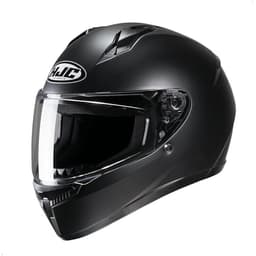
The lowest-price certified lid we rank
HJC C10
DOTHJC's entry full-face, and one of the cheapest DOT-approved lids from a major maker. An advanced polycarbonate composite shell and a proper removable liner — the honest floor for a first helmet.
See the budget helmet rankingAnd the HJC C10 is the floor: a major-brand, DOT-certified full-face at roughly what a novelty shell costs. If the budget is genuinely the constraint, this is what the money should be doing.
One last thing about the state-law argument
Riders sometimes buy novelty shells specifically to satisfy a helmet law while wearing as little as possible. It does not work: a helmet law requires a helmet meeting the federal standard, and an uncertified shell does not meet it whatever is stuck on the back. Our state-by-state helmet law guide sets out where the requirement applies and to whom. The more important argument is the other one: helmets are around 37% effective at preventing rider fatalities in NHTSA’s analysis, and none of that effectiveness belongs to a shell that has not been through the test.
If you now want to buy properly, the sequence that matters is fit first — work through sizing and head shape— then certification, then features. A certified helmet in the wrong size is a much better position to be in than the alternative, but it is still the wrong helmet.
How to read our safety notes. We have not crash-tested any of this gear — nobody honestly can on a review budget. Every helmet and armor pick names the certification the maker publishes (DOT, ECE 22.06, SNELL, or a CE level), which we read from the listing on a dated visit. Certification is the floor, not a guarantee; fit and condition matter as much as the sticker. What the standards actually mean.
Frequently asked questions
Is a DOT sticker proof that a helmet is safe?
No, and this is the single most misunderstood thing about US helmet law. DOT certification works by self-certification: the manufacturer tests the helmet against FMVSS 218, certifies that it complies, and applies the label itself. No federal agency inspects the helmet first. NHTSA's enforcement happens afterwards, by buying helmets off the shelf and re-testing them. From a reputable manufacturer the label means a real testing programme stands behind it. On an anonymous shell with no maker's name on it, the label means somebody printed a sticker.
What is a novelty helmet?
A shell sold for motorcycle use that is not certified to FMVSS 218 and generally makes no attempt to be. They are usually thin, very light, have little or no firm impact-absorbing liner beneath the comfort padding, and are sold with a low-profile look that a certified helmet cannot achieve because a certified helmet needs liner thickness to absorb energy. Some are sold openly as 'novelty' or 'not for road use'; others carry a DOT sticker anyway. They are not a budget version of a real helmet — they are a hat.
Where should the DOT label be on a motorcycle helmet?
The federal standard is specific about this. FMVSS 218 requires the certification label to carry 'DOT' at least 0.38 inch high, 'FMVSS No. 218' at least 0.09 inch, and 'CERTIFIED' at least 0.09 inch, positioned 1 to 3 inches from the bottom rear edge of the helmet. A sticker that says only 'DOT', that is in the wrong place, or that lacks the standard number and the word CERTIFIED, does not match what the regulation asks for — and a manufacturer that cannot get the label right has probably not run the test either.
Can a helmet with spikes or a mohawk be DOT certified?
Not with rigid spikes, no. FMVSS 218 states that rigid projections outside the shell are limited to those required for the operation of essential accessories and must not protrude more than 0.20 inch — 5 mm. A spike, a horn or a rigid mohawk is neither essential nor within 5 mm. Soft rubber or fabric mohawks that flex are a different case and some are sold for certified helmets, but anything hard and standing proud of the shell is incompatible with the standard. The same clause bans rigid projections inside the shell entirely.
How do I check a helmet I already own?
Look inside for the permanent labelling first, because that is harder to fake than a sticker: FMVSS 218 requires the manufacturer's name, the discrete size, the month and year of manufacture, and care instructions to be permanently and legibly marked. A helmet with no maker's name and no date of manufacture anywhere on it is not a helmet anyone stood behind. Then press the liner — you should feel firm, dense foam under the soft comfort padding, not just fabric over plastic. Then weigh it in your hands against any helmet from a known maker.
Are cheap helmets fake helmets?
No, and conflating the two is how riders end up spending money they do not need to. Real, certified helmets from real manufacturers are sold at the low end of the market — several of the helmets we rank on our budget page are DOT-certified lids from established makers at around the price of a tank of fuel. A cheap certified helmet is a reasonable purchase. The problem is never the price, it is the anonymous shell with no manufacturer, no date, no model name and a mail-order sticker.
Does ECE or SNELL certification work the same way?
No, and it is a useful contrast. DOT is self-certification with after-the-fact enforcement. ECE homologation is granted by an approval authority before the helmet goes on sale, and the helmet carries a homologation number on a label sewn to the chin strap. SNELL is a voluntary programme run by a private foundation that tests submitted helmets and publishes its own list of certified models, which means you can look a helmet up on Snell's list rather than trusting a sticker. Each has a different failure mode, and none of them removes the need to look at the helmet itself.
Sources
- 49 CFR 571.218 S5.5 and S5.6 — projections and labeling — The federal standard's own wording. S5.5 Projections: "A helmet shall not have any rigid projections inside its shell. Rigid projections outside any helmet's shell shall be limited to those required for operation of essential accessories, and shall not protrude more than 0.20 inch (5 mm)." S5.6 Labeling requires each helmet to be permanently and legibly labeled with the manufacturer's name, the discrete size, the month and year of manufacture, and care instructions covering materials, cleaning agents and modification warnings; and requires a certification label carrying "DOT" at least 0.38 inch high, "FMVSS No. 218" at least 0.09 inch, and "CERTIFIED" at least 0.09 inch, positioned 1 to 3 inches from the bottom rear edge of the helmet. S5.1 caps peak acceleration at 400 g, with time above 200 g limited to 2.0 ms and above 150 g to 4.0 ms; S5.2 requires the penetration striker not to contact the headform; S5.3 requires the retention system to hold specified loads without separating (accessed September 18, 2026)
- 49 CFR 571.218 — FMVSS No. 218, Motorcycle helmets — The US federal helmet standard: peak-acceleration, penetration and retention requirements; applies to all on-road motorcycle helmets (accessed July 21, 2026)
- NHTSA — How to Choose the Right Motorcycle Helmet — NHTSA consumer guidance on DOT certification and spotting novelty helmets (accessed July 21, 2026)
- NHTSA — Motorcycle Helmet Effectiveness Revisited (DOT HS 809 715) — Helmets ~37% effective at preventing rider fatalities (accessed July 21, 2026)
- Snell Memorial Foundation — FAQ — How Snell certification works and how it differs from DOT (accessed July 21, 2026)
- UNECE — Vehicle Regulations (UN Regulation No. 22 / ECE 22.06) — The UN regulation behind ECE 22.06, which added rotational/oblique-impact testing over 22.05 (accessed July 21, 2026)
Keep reading
DOT vs ECE vs SNELL explained
What each certification actually tests and who issues it — the background to why a DOT sticker means something different from an ECE label.
Read the certification guideBest SNELL-certified helmets
Helmets you can look up on Snell's own published certified-product list, rather than take on trust from a sticker.
See the SNELL listSafest budget motorcycle helmets
Proof that cheap and fake are different things: every helmet here is DOT-certified from a real maker, and every one is under about $150.
See the budget picksWhen to replace a motorcycle helmet
The date of manufacture you just found inside the shell is also the number that tells you how much life the helmet has left.
Read the replacement guideMotorcycle helmet laws by state
Where a helmet is legally required, and why a novelty shell does not satisfy the requirement even in states that have one.
Check the state lawsECE 22.06 helmets
The helmets in our registry whose maker publishes the current European homologation by name, rather than an unversioned 'ECE'.
See the 22.06 list