Where to Buy a Motorcycle Helmet: Local Shop or Online
Get fitted where you can put helmets on. Buy where the size you confirmed is in stock and returnable. This page is about the gap between those two sentences, and the three things that make it expensive.
How this is funded: we earn a commission if you buy through our links, at no extra cost to you. It never changes which gear we recommend, and we’ll tell you plainly when to skip a pick. Full disclosure.
The short answer: get fitted in person if there is any shop within reach, then buy wherever the size and shape you confirmed is actually in stock and returnable. That is not a dodge. It is the only order that works, because the two halves of a helmet purchase have different best answers. Fit can only be settled by putting helmets on your head. Stock, price, color, shield options and the return policy are settled by the retailer, and online retailers usually win three of those five.
What makes this decision cost people money is that they treat it as one choice instead of two. They either buy blind online and end up with a helmet that is the right number and the wrong shape, or they walk into the only shop in town and buy whatever fits off a shelf of four models. There is a better version, and it takes one trip.
One note on what this page is. We do not sell helmets, hold stock, run a shop or test helmets. We earn a commission when you buy through our links, which is disclosed above and explained on our methodology page. That is exactly why the advice below includes “buy it at the shop that fitted you” — a page that could not say that would not be worth reading.
The one thing you cannot do online
You cannot put the helmet on. Everything else about a helmet transfers perfectly to a web page: the certification is a published fact, the shell material is a published fact, the weight is a published fact where the maker states it. Fit is not published, because it is a relationship between a specific shell and your specific skull.
A helmet that is the correct circumference can still be wrong, because heads differ in shape as much as in size. A long-oval head in an intermediate-oval shell gets pressure on the forehead and crown within twenty minutes, and no amount of break-in fixes it — our head-shape guide covers how to work out which you are. This matters for the buying decision in one specific way: shape is the thing you want to settle in person, and once you have settled it, it transfers to every helmet from that maker in that shape family.
So the trip to the shop is not really about buying. It is about collecting two pieces of information you will use for the next decade: your measurement, and which brands’ interiors suit your head. Take a tape measure reading first so you walk in with a number, then ask to try that size in three different brands and keep each one on for ten minutes rather than ten seconds.
When the local shop is the right place to buy
- It is your first helmet. You do not yet know your shape, you have nothing to compare a fit against, and the thirty seconds where someone shows you how a cheek pad should press your cheeks up is worth more than any discount. Buy it there.
- You are between sizes. Circumference charts have boundaries, and plenty of riders sit on one. Trying both is the only way to resolve it, and the shop that let you do that has earned the sale.
- You want the interior adjusted. Cheek pads come in thicknesses on most mid and premium helmets, and a shop can swap them. That is a service, not a product, and you cannot order it.
- You want the helmet today, or you want a human to deal with if it is wrong. A return by mail is a week. A return in person is a conversation.
When buying online is genuinely better
- Nothing within reach stocks the model you want.A typical shop carries a handful of brands. If you have decided on a specific helmet on specific published grounds — a certification, a weight, a shell generation — the shop either has it or it does not.
- You already know your size and shape. Second helmet onwards, in the same brand and shape family, the information problem is solved. This is the case where online is simply better: more stock, more colors, a real return window.
- You need a size the shelves do not carry.XS and 3XL are stocked thinly, and often in one color. Online is where the size range actually exists — note that on premium helmets the largest size frequently appears in only one or two finishes.
- You are buying a last-year colorway on purpose. Which is the most reliable discount in helmets, and almost always an online one.
Why premium helmets all show the same price
If you have shopped for a Shoei and found every retailer displaying an identical number, that is not a cartel and it is not your browser. It is a dealer advertising policy.Shoei’s US policy, reported as taking effect on January 1, 2017, permits dealers to advertise current Shoei products only with “no price information at all or by showing the then-current MSRP”— replacing an earlier allowance to advertise a discount of up to ten percent off MSRP. The same report quotes Shoei stating that it does not use the policy to control what dealers actually sell for.
Read that carefully, because the distinction is the useful part. The advertised number is constrained; the transaction price is not necessarily. What it means for you:
- On current premium models, the displayed price stops being a way to rank retailers. Compare return policy, size availability and included accessories instead.
- A real discount on a current premium model, where it exists, tends to appear at the cart or on closeout colorways rather than on the listing.
- This is also why mid-tier brands look so much more competitive online: they are not operating the same advertising restriction, so retailers compete on the visible number.
We never print a price in our own copy for exactly this family of reasons — every number on this site comes from the live listing on the day you are reading it, not from something we typed last month.
The pre-purchase checklist, online or in person
| Check | What you are looking for |
|---|---|
| DOT FMVSS 218 | The federal standard required for street sale in the US. Note that manufacturers self-certify to it and NHTSA buys samples off the shelf to re-test — so the label is the maker’s claim, which is why brand and retailer matter |
| Any voluntary certification | SNELL or ECE 22.06 on top of DOT, if that is what you are buying. Snell publishes a certified-product list by model and size, so this one is checkable rather than trusted |
| Model generation | Makers reuse names with new numbers. Compare the model against the maker’s current line before assuming a discount is on the current shell |
| Return window | Specifically whether it covers a helmet that has been worn indoors. A policy that voids on “used” makes online fitting impossible |
| Authorized dealer | Warranty support generally runs through retailers the maker has authorized. Check the maker’s dealer locator — it is free and takes a minute |
| Box contents | Pinlock insert, breath guard, chin curtain, spare shield. These vary by model and market and they are worth real money on a premium lid |
| Size chart source | The maker’s own chart for that model, not the retailer’s generic one. They disagree more often than you would expect |
The listings to walk away from
There is a category of product that looks like a helmet, is sold as a helmet, and was never tested as one. Novelty helmets are thin shells with no meaningful impact liner, and NHTSA publishes consumer guidance on recognizing them precisely because they reach buyers. Because FMVSS 218 is self-certified, a DOT sticker can appear on something that never met it — our fake-helmet page covers the physical checks, and the short version is weight, liner thickness and the quality of the label.
The buying rule that avoids the whole problem: buy a named maker’s named model from a retailer that sells other named makers’ models. If the brand exists only on one marketplace, if the same photo appears under four brand names, or if the price is far under every other seller of that exact model, the price is the warning rather than the opportunity.
Also worth saying plainly, because it comes up on every “helmets for sale” search: do not buy a used helmet.Not from a marketplace, not from a friend. The impact liner is a single-use energy absorber and you cannot see whether it has already done its job — our used-gear guide is happy to recommend second-hand jackets, boots and armor, and draws the line at helmets for this reason.
Three helmets that are straightforward to buy online
Not “the best helmets” — that ranking is separate. These are three price points where the published certification is clear, the model is current, and the sizing is conventional enough that an informed online order is low-risk. Prices come from the live listing, not from us.
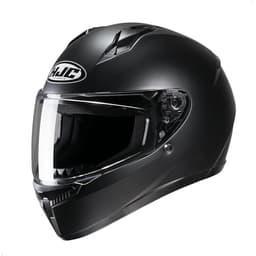
Budget — a major maker's DOT entry helmet
HJC C10
DOTHJC's entry full-face, and one of the cheapest DOT-approved lids from a major maker. An advanced polycarbonate composite shell and a proper removable liner — the honest floor for a first helmet.
See the budget rankingPrice as of October 22, 2026. #ad How we’re funded
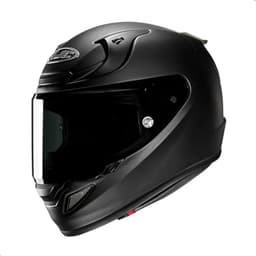
Mid — composite shell, DOT plus ECE 22.06
HJC RPHA 12
DOT + ECE 22.06HJC's sport flagship, and the model that replaced the discontinued RPHA 11 Pro: a PIM EVO composite shell of carbon-aramid hybrid and natural fibers, DOT on the US listing with ECE 22.06 published for the model, and a wind-tunnel-developed shape built for a tucked riding position.
See the full-face rankingPrice as of October 22, 2026. #ad How we’re funded
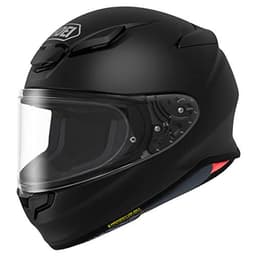
Premium — DOT plus Snell M2025D, and the advertising policy above
Shoei RF-1400
DOT + SNELL M2025DThe full-face most experienced riders land on: Shoei's hand-laid AIM+ shell, DOT plus a SNELL M2025D rating on Shoei's own spec table, and a quiet, refined fit. You're paying for finish and certification, and it shows.
See the certification rankingPrice as of October 22, 2026. #ad How we’re funded
So: one trip, then buy wherever makes sense
If you take one thing from this page, take the sequence. Measure your head. Go somewhere you can put three brands on. Keep each one on for ten minutes. Write down the size and the brands that suited your shape. After that, the question “local or online” answers itself differently every time you buy, and you will be right either way, because the part that cannot be undone is already settled.
If the shop that fitted you has the helmet, buy it there. If it does not, buy it from a retailer that will take it back, and our buying guide covers which published specs are worth paying for once fit is no longer the open question.
How to read our safety notes. We have not crash-tested any of this gear — nobody honestly can on a review budget. Every helmet and armor pick names the certification the maker publishes (DOT, ECE 22.06, SNELL, or a CE level), which we read from the listing on a dated visit. Certification is the floor, not a guarantee; fit and condition matter as much as the sticker. What the standards actually mean.
Frequently asked questions
Is it safe to buy a motorcycle helmet online?
Yes, with one condition: you have to know your size and head shape before you order, and the retailer has to take it back if you are wrong. Nothing about shipping damages a helmet in a way that matters, and a sealed box from an authorized retailer is the same helmet the shop down the road sells. The risk online is not the helmet, it is the fit — and fit is the one part of helmet safety you cannot verify from a photograph. Buy from a retailer that lets you return a helmet you have only worn indoors, and keep the box and all the packaging until you have had it on for a full half hour.
Why do all the websites show the same price for a Shoei?
Because of a dealer advertising policy, not a coincidence. Shoei's US policy, reported as effective January 1, 2017, allows dealers to advertise current Shoei products only with "no price information at all or by showing the then-current MSRP" — replacing an earlier allowance to advertise up to ten percent off MSRP. The same report quotes Shoei saying it does not use the policy to control the price dealers actually sell at. The practical effect for you: on current premium models, the advertised number stops being a useful way to compare retailers, and you should compare on return policy, stock of your size, and whether a discount appears once the helmet is in the cart.
Should I try a helmet on at a shop and then buy it cheaper online?
We will not pretend this is a free action. A shop that spends twenty minutes fitting you, pulls three sizes off the shelf and shows you how a cheek pad should press has done the single most valuable part of the purchase, and it does not get paid for that if you leave and order elsewhere. Our honest position: if a shop fits you well and has your size in stock, buy it there. Use an online retailer when the shop cannot get the model, the size or the color you need, or when there is no shop within a sane distance — which is the situation for a lot of riders, and the reason this site exists.
What should I check before paying for a helmet online?
Five things, in order. One, the DOT FMVSS 218 certification, because that is the legal requirement for street sale in the US. Two, that the retailer is selling the current model and not an old-stock colorway of a discontinued one, unless the discount is why you are buying. Three, the return window and whether it covers a helmet that has been tried on. Four, the maker's own size chart rather than the retailer's generic one. Five, whether a Pinlock insert, a dark shield or a chin curtain is included, because on premium helmets those accessories cost real money and the box contents vary by market.
Are cheap helmets on marketplaces legitimate?
Some are, and the problem is that the listing is not where you find out. NHTSA's own consumer guidance exists because novelty helmets — thin shells with no impact liner that are sold as helmets — are a real category, and a marketplace listing can show a DOT sticker on a product that was never tested to FMVSS 218. The federal standard is self-certified by the manufacturer, with NHTSA buying samples off the shelf to re-test, so the sticker is a claim and not a certificate. Buy a known brand's model from an authorized retailer, and if the price is far below every other seller of the same model, treat that as the warning rather than the deal.
Is a last-year model or discontinued colorway a bad buy?
No, and it is the most reliable way to save real money on a helmet. A helmet does not become less certified when the maker releases a new graphic — the certification is per model and per size, and it does not expire on a schedule. Two things to check: that the shell is the same generation as the current model rather than the previous one under a similar name, and that you are not buying something that has sat in a sunlit window for three years. If the model name has a number in it, compare it against the maker's current line before you assume you are getting this year's helmet at a discount.
Do I need to buy from an authorized dealer for the warranty?
Usually yes, and it is the most commonly skipped detail on a several-hundred-dollar purchase. Helmet makers generally honor a warranty only through retailers they have authorized, which means a gray-market or third-party-marketplace seller can leave you with a helmet the maker will not look at. It costs nothing to check — most makers publish a dealer locator — and on a premium helmet the warranty is a meaningful part of what you are paying for.
Can I find a safety rating to compare helmets before I buy?
Not in the US. There is no American helmet safety score, grade or league table: DOT FMVSS 218 is a legally required pass/fail minimum, and Snell certification is a voluntary pass/fail standard on top of it. The UK's SHARP programme and Australia's MotoCAP do publish comparative star scores, but they rate the models sold in their own markets, and most US-market variants are not in either database — so we will not map a foreign score onto a US listing. What you can compare before buying is how many certifications the maker publishes for that exact model, which is what our rankings are built on.
Sources
- NHTSA — How to Choose the Right Motorcycle Helmet — NHTSA consumer guidance on DOT certification and spotting novelty helmets (accessed July 21, 2026)
- 49 CFR 571.218 — FMVSS No. 218, Motorcycle helmets — The US federal helmet standard: peak-acceleration, penetration and retention requirements; applies to all on-road motorcycle helmets (accessed July 21, 2026)
- Snell Memorial Foundation — Standards — Snell's motorcycle helmet standards: M2025D/M2025R are the current generation and M2020D/M2020R the previous one (D = DOT markets, R = ECE markets) (accessed July 21, 2026)
- autoevolution — Shoei Won't Allow Dealers to Hide Helmets' Price Information (December 22, 2016) — Report of Shoei's US dealer advertising policy effective January 1, 2017: dealers may advertise current Shoei products only with "no price information at all or by showing the then-current MSRP", replacing the earlier allowance to advertise "a discount of up to ten percent (10%) off of the applicable MSRP". Quoted in the same report: "Shoei does not, and does not use its advertising policy to control, attempt to control or interfere in the actual pricing at which its dealers are free to sell Shoei products to customers." Shoei's own policy directory page on this date links no advertising-policy document, so the news report is cited (accessed September 12, 2026)
- SHARP — UK Government Helmet Safety Ratings — UK Department for Transport independent helmet safety star ratings (accessed July 21, 2026)
- MotoCAP — Independent Motorcycle Clothing & Helmet Assessment — Independent Australian lab rating protective clothing and helmets for protection and comfort (accessed July 21, 2026)
Keep reading
How to measure for a motorcycle helmet
The measurement to take before you order anything, and why the maker's chart beats the retailer's.
Read the sizing guideRound, intermediate or long oval?
Shape is why a correctly sized helmet can still hurt after twenty minutes. Work this out before you buy online.
Find your head shapeHow to spot a fake or novelty helmet
What a real DOT label looks like, what a novelty shell feels like, and the listings to walk away from.
Read the checksBest motorcycle helmets
Our main ranking, built on the certifications each maker publishes for that specific model.
See the rankingHow to choose a motorcycle helmet
Type, certification, weight and fit in the order they actually matter once you know where you are buying.
Read the buying guideWhat a full set of gear really costs
Where the helmet sits in a realistic head-to-toe budget, so you know what you have left for the rest.
See the numbersBuying used gear
The one piece we tell you never to buy second-hand, and why a helmet's history is unverifiable.
Read the rules