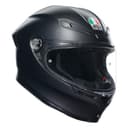
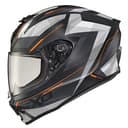
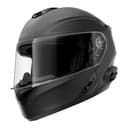
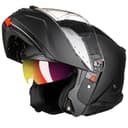
How to choose a helmet if you have a smaller head
The process is the same one in our helmet sizing guide, with three extra considerations.
1. Measure, then check the shell break
Measure the circumference of your head about an inch above your eyebrows with a soft tape. Then — and this is the part most buyers skip — find out where the manufacturer’s shell sizes break. If a maker uses one shell for XS through M, an XS head gets the same outer shell as a medium, with more foam. If the shells break at XS/S, S/M, M/L and so on, a small head gets a genuinely small helmet. Manufacturers publish this; retailers rarely surface it.
2. Head shape is not correlated with sex
Helmets are cut for round-oval, intermediate-oval or long-oval head shapes. Intermediate-oval is the most common and what most models here use. Your shape is a personal characteristic, not a gendered one, and getting it wrong is what causes the forehead pressure point that makes riders assume a helmet is “too small” when it’s actually the wrong shape. If a correctly-sized helmet hurts across the forehead after twenty minutes, you likely need a rounder shape rather than a bigger size.
3. Weight matters more than the spec sheet suggests
A 1,700 g helmet is 1,700 g regardless of who is wearing it, but the fatigue cost scales against your neck strength and how much torque the helmet generates when you check a blind spot at speed. This is the main reason the lightest certified full-face on the market leads this list. If you are choosing between two helmets that fit equally well, take the lighter one.
Long hair and ponytails
A helmet is designed to sit directly against your skull; a ponytail or bun under the shell creates a gap and a pressure point, and it can lever the helmet forward in a crash. Braid it low and let it come out under the back edge, or use a flat, low bun outside the helmet. Some touring helmets have a slightly deeper rear cutout that helps. Never size up to fit hair inside the helmet — that gives you a loose helmet, which is the thing certification cannot compensate for.
What about “women’s” models specifically?
Where a maker genuinely does build a women’s block — and it happens far more in jackets and glovesthan in helmets — it is worth paying for, because a scaled-down men’s pattern fits badly in predictable ways. In helmets, treat “women’s” in the product name as a graphics description until you see a different head form documented.
Certification is not gendered either
Every helmet here is DOT-certified under FMVSS 218; several add ECE or SNELL. The certification tests the helmet, not the wearer. Where a maker publishes an additional voluntary rating, we list it; where they don’t, the spec table says so rather than guessing.