How the range is organized
HJC splits its lineup into two families, and understanding the difference is most of what you need to shop it.
RPHA — the composite range
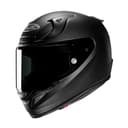
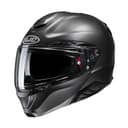
RPHA models use HJC’s Premium Integrated Matrix shells — PIM, PIM+ and now PIM EVO — which are multi-layer composites of carbon, aramid, fiberglass and natural fibers rather than injection-molded polycarbonate. This is where the money goes. The RPHA 12 is the sport helmet in that family, replacing the discontinued RPHA 11 Pro; the RPHA 91 is the touring flip-front.
The numbered range — polycarbonate and composite value
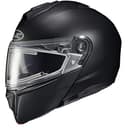
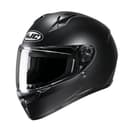
The i-series and C-series use advanced polycarbonate or polycarbonate composite shells, injection-molded rather than laid up. Heavier for the same strength, but dramatically cheaper to produce, and this is where HJC’s reputation actually comes from. The i10 is the full-face, the i90 the modular, the i31 the open-face and the C10 the entry point.
The certification map
This is the part that surprises people, so here it is plainly, using what HJC publishes for each model:
- HJC i10 — DOT plus SNELL M2020. The budget full-face carries the toughest voluntary standard of anything here.
- HJC RPHA 12 — DOT plus ECE 22.06. The composite sport flagship adds the current European standard.
- HJC i90 — DOT plus ECE 22.05. Note the point release: 22.05 is the previous European standard, superseded by 22.06 with its rotational and multi-point impact testing.
- HJC RPHA 91, C10 and i31 — DOT. The legal US floor, and what most helmets sold here carry.
Read that list again if you are about to spend RPHA money for safety reasons. The RPHA 91 is a better helmet than the i10 in most respects — composite shell, Pinlock shield in the box, touring comfort, flip-front convenience — and the i10 is the one with the SNELL sticker. Both statements are true simultaneously, and which matters more depends on what you want from the purchase.
Which HJC should you buy?
If you want the most certification for the least money
The i10. DOT plus SNELL M2020 at a budget price is the single most unusual thing in HJC’s catalog, and it is why the helmet appears on our safest budget helmets ranking and in the MIPS versus SNELL comparison. The compromises are real — a polycarbonate composite shell at 1,680 g is heavy, and the interior is basic — but the certification is not a compromise.
If you ride sport or fast road
The RPHA 12. A PIM EVO composite shell of carbon-aramid hybrid and natural fibers, DOT on the US listing with ECE 22.06 published for the model, a wind-tunnel-developed profile tuned for a tucked position and Emergency Kit cheek pads for rescue. It is the helmet in the range that competes directly with European premiums, at a price that undercuts them. Note the closure: it is a double D-ring rather than the micrometric ratchet some riders prefer in gloves.
If you tour, or you stop a lot
The i90 or the RPHA 91, depending on budget. Both are flip-fronts with drop-down sun visors. The i90 is the value option with roomy cheek pads — the reason it is our top pick on helmets for glasses — and adds ECE 22.05. The RPHA 91 is the composite version with a Pinlock shield included, but publishes DOT only. Our Neotec 3 vs i90 comparison covers what flagship modular money actually buys over the i90.
If you want the cheapest real helmet
The C10. A major-brand certified full-face at the bottom of the market, which is a meaningfully different proposition from an unbranded shell at the same price. DOT only, basic ventilation, no sun visor — but a genuine helmet from a company that makes its own.
If you want airflow and a real shield
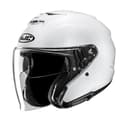
The i31, which is an open-face with a proper face shield and an internal sun visor. It is a commuter helmet rather than a retro one, and the chin-bar caveat applies exactly as it does on every 3/4 helmet — see best open-face helmets.
What HJC does well, and what it does not
Well: value per certification, an unusually wide range, consistent intermediate-oval fit across models so a rider who fits one HJC usually fits another, comms integration designed in rather than bolted on, and licensed graphics that mean you can have something interesting without leaving a certified helmet behind.
Less well: published weights are patchy across the range, which is why several of the spec rows above say “Check current listing” rather than showing a figure. Interior quality at the value end is functional rather than luxurious. And the certification inconsistency covered above means you cannot shop this range by price alone and assume the expensive one is the more tested one.
The two brands worth reading next to this one, because they compete with HJC on exactly the same ground, are Bell— which puts a MIPS rotational liner into a sub-$200 helmet and runs from the Qualifier up to a SNELL-certified carbon flagship — and ScorpionEXO, which publishes DOT and ECE on almost everything it sells at mid-market prices. If you would rather compare across brands by what is actually printed on the shell, our safest-helmets ranking sorts the whole registry that way.