Motorcycle Helmet Brands, Explained
Fourteen brands, 37 helmets, and one finding that undoes most brand advice: not a single brand certifies its whole range the same way — so the badge never tells you what the helmet passed.
How this is funded: we earn a commission if you buy through our links, at no extra cost to you. It never changes which gear we recommend, and we’ll tell you plainly when to skip a pick. Full disclosure.
Most helmet-brand advice is a loyalty argument dressed up as a safety argument. This page is the opposite: a map of what each maker publishes, built from the 37 helmets in our registry across 14 brands, with one finding that makes most of the loyalty argument collapse.
Not a single brand in our registry certifies its whole range the same way. Shoei currently sells a SNELL-rated full-face, an ECE 22.06 flip-front and a DOT-only touring helmet at the same time. Simpson publishes three different certification strings across four helmets. HJC’s cheapest helmet carries SNELL and its most expensive one does not. So the badge on the shell tells you about the company. It does not tell you what the helmet in your hands passed — only the model does.
What every brand has in common, and why it tells you nothing
All 37 helmets we track publish DOT FMVSS 218. That is not a coincidence or a quality signal: it is the federal requirement for selling a helmet for on-road use in the United States. The maker self-certifies and NHTSA pulls random samples to re-test. A helmet without it is not a cheaper helmet, it is an unlawful one — which is exactly why “DOT approved” in a listing title is worth so little as a comparison point. Everyone has it.
The marks that actually separate models are the optional ones, and they are far rarer than the marketing suggests:
- SNELL — 6 of 37 helmets. A voluntary standard from an independent non-profit with its own, tougher protocol. The six come from six different brands: Shoei, HJC, ScorpionEXO, Bell, Arai and Simpson. One helmet each.
- ECE 22.06 by name — 4 of 37. The current European standard, which added rotational and multi-point impact testing over 22.05. Four helmets name the 22.06 version explicitly on their US listing: one each from AGV, HJC, Shoei and Bell.
- ECE without a version named — 10 of 37. A real homologation, but you cannot tell from the listing whether it is 22.05 or 22.06, and the difference is the rotational testing. Three more helmets name 22.05 specifically.
- DOT and nothing else — 14 of 37. Including some genuinely expensive helmets. The legal floor, met and not exceeded on paper.
Our DOT vs ECE vs SNELL guide covers what each one measures. The relevant point here is the distribution: optional certification is a per-model purchasing decision a manufacturer makes, helmet by helmet, usually driven by which market and which price point the model is aimed at. It is not a brand philosophy.
Price does not buy certification. Here is the proof from our own data.
The cleanest example in the registry sits inside one brand and across two. Shoei’s GT-Air 3 is a premium touring helmet whose US listing publishes DOT only. HJC’s RPHA 12 costs substantially less and publishes DOT plus ECE 22.06. On certification alone, the cheaper helmet from the cheaper brand has the better paperwork. We make the same point from the other direction on GT-Air 3 versus Neotec 3, where the more expensive flip-front turns out to be the better-certified of two Shoeis.
That is not an argument for buying the cheaper helmet. It is an argument for knowing what you are paying for, because premium money buys real things — they are just not certificates:
- Shell material.Composite and carbon shells (Shoei’s AIM, HJC’s PIM, Arai’s Super Fiber, AGV’s carbon-aramid, Bell’s 3K carbon, KLIM’s carbon) are lighter for the same energy management than the polycarbonate and poly-alloy shells at the budget end.
- Shell count.How many physical shell sizes a maker molds, as opposed to padding one shell down. A small head in a padded-out big shell is a fit problem and a weight problem. The Bell Custom 500 publishes five shells across XS–3XL; plenty of helmets publish nothing at all.
- Weight, and whether it is published at all.See below — this turns out to be a brand signal in its own right.
- Aerodynamics, sealing and quiet. The thing premium touring helmets genuinely win on, and the thing no standard measures. Our quietest ranking is explicit that nobody publishes a noise figure, and our hot-weather ranking makes the same admission about airflow from the opposite direction.
- Parts and support. Replacement shields, cheek pads in other thicknesses, a crown liner you can still buy in four years. This is the quiet reason a legacy brand costs more.
The disclosure gap: the real difference between brand tiers
Here is a finding we did not expect when we counted it. Of the 37 helmets in our registry, only 18 carry a weight published by the maker — and they cluster hard at the premium end.
Shoei publishes a weight for all three of its helmets. Bell publishes one for six of its seven. Arai, AGV and the two Sena helmets all publish theirs. HJC publishes one weight across six helmets. ScorpionEXO publishes one across six. KLIM, GMAX, TORC, ILM and Fly Racing publish none at all — and ILM does not publish a shell material for one of its two helmets either.
Two consequences worth carrying with you. First: a “lightest helmet” list measures disclosure as much as it measures grams. A budget polycarbonate lid that happens to be light cannot appear on our lightest ranking because there is no published figure to rank it with, and we will not estimate one. Second: the thing that separates a marketplace brand from a legacy maker in our data is not a missing certification — it is missing information. ILM and TORC publish DOT, and in some cases ECE. What they do not publish is the shell, the weight, the shell count or anything an independent lab has checked. You are buying with less to go on.
The brands, and what each one is actually for
Grouped by the role each plays rather than alphabetically, because that is how you shop. Counts are the number of models of that brand in our registry.
| Brand | In registry | What it publishes | Who it is for |
|---|---|---|---|
| Shoei | 3, all premium | A weight for every model; AIM composite shells; one SNELL M2020D, one ECE 22.06, one DOT-only | Touring riders buying sealing, quiet and finish. The range is the clearest proof that one brand spans three certification levels |
| Arai | 1, premium | DOT + SNELL M2025, hand-laid Super Fiber shell, four shell sizes, a published weight | Riders who want four physical shell sizes and the toughest voluntary standard, at the top of the premium tier |
| AGV | 1, premium | DOT + ECE 22.06, carbon-aramid shell, ~1,255 g — the lightest published weight we hold | Sport-touring riders who notice weight on a long day. Racing lineage, wide eyeport |
| Bell | 7, budget to premium | Weights on six of seven; shells from polycarbonate to 3K carbon; one SNELL, one ECE 22.06, MIPS on two | The widest span on this site. Whatever the budget, there is a Bell with a published figure attached to it |
| HJC | 6, budget to premium | PIM and polycarbonate composite shells; one SNELL M2020 (on the cheapest helmet), one ECE 22.06, one ECE 22.05, three DOT-only; one published weight | Value buyers. The brand most likely to put the certification you want at a price you did not expect — and least likely to tell you the weight |
| ScorpionEXO | 6, mid to premium | Mostly advanced polycarbonate, one TCT composite; one SNELL, three unversioned ECE, one 22.05; one published weight | Riders who want a feature set — sun visors, convertibles, comms-ready pockets — at a mid price |
| Simpson | 4, mid to premium | Three different certification strings across four helmets, including one DOT + SNELL M2020 carbon; two published weights; explicit shell groupings | Riders buying the shape. The certification genuinely varies model to model, so check the one you want |
| KLIM | 1, premium | DOT + ECE, carbon shell, ventilation described for low-speed off-road work; no published weight | Adventure riders who stand on the pegs. An apparel company whose one helmet here is built around a single job |
| Sena | 2, mid and premium | DOT FMVSS 218 on both, a published weight on both, the intercom built into the shell; no ECE | Riders who want comms with nothing bolted to the side. A communications company that builds helmets, not the reverse |
| GMAX, TORC, ILM, Fly Racing | 6 across four brands, mostly budget | DOT on all; ECE on four; no published weight on any; one publishes no shell material at all | The lowest certified outlay. Real helmets with real certification and the thinnest published specification in the registry |
Four of these brands have their whole range broken down model by model on this site: Bell, HJC, ScorpionEXO and Simpson. Those pages are where the per-model certification lives.
When a brand IS a useful shortcut
None of the above means brands are meaningless. It means they are useful for different things than people use them for. Three of those things are genuinely valuable:
- Head shape consistency.This is the strongest reason to shortlist by brand. Makers tend to build a consistent interior profile across a range — intermediate oval dominates, Arai’s XD-5 is a round oval, the Bell Custom 500 is a low-profile oval — so if one helmet from a brand fits your head, its siblings probably will. That is worth real money when you are buying online. Our head shapes guide explains how to work out which one you are.
- Parts you can still buy in four years. Shields, cheek pads in a second thickness, a replacement crown liner, a Pinlock lens cut for your eyeport. A helmet is a five-year purchase and the wear items are consumables. Legacy makers stock them; marketplace brands often do not.
- Knowing what the specification will contain. If you want to compare on weight, you are effectively restricted to the brands that publish one. That is a brand-level fact, and it is the single most practical use of this page.
And when it is not
For safety, never.Use the model. Every certification on this site is recorded per model, read from the maker’s own page or an authoritative retailer on a dated visit, because it varies inside every brand we track. If you want the registry sorted by what makers publish rather than by badge, that is our safest-helmets ranking— which opens by stating that the United States publishes no helmet safety score of any kind, so published certification is all there is to sort by.
And never for a rating a brand did not earn.SHARP in the UK and MotoCAP in Australia do publish independent helmet assessments, but they test the variants sold in their own markets. A star rating attached to a UK model name does not transfer to a US listing with the same name, and we will not map one onto the other. Nor does a brand’s good result on one model say anything about a different model in the same catalog.
One helmet per lesson
Each of these comes from a full ranking where the trade-offs are argued properly. They are here because each one makes a point on this page concrete, and availability on all five was checked on the day this guide was written.
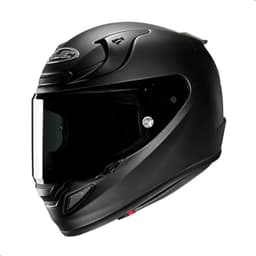
The cheaper helmet with the newer certification
HJC RPHA 12
DOT + ECE 22.06HJC's sport flagship, and the model that replaced the discontinued RPHA 11 Pro: a PIM EVO composite shell of carbon-aramid hybrid and natural fibers, DOT on the US listing with ECE 22.06 published for the model, and a wind-tunnel-developed shape built for a tucked riding position.
See the full-face rankingPrice as of October 7, 2026. #ad How we’re funded
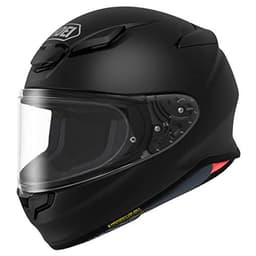
What premium money actually buys
Shoei RF-1400
DOT + SNELL M2020DThe full-face most experienced riders land on: Shoei's hand-laid AIM+ shell, DOT plus a SNELL M2020 rating, and a quiet, refined fit. You're paying for finish and certification, and it shows.
See the overall rankingPrice as of October 7, 2026. #ad How we’re funded
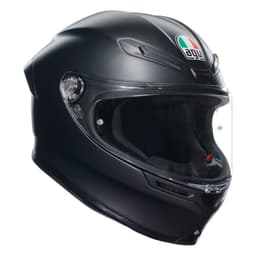
The lightest published weight in the registry
AGV K6 S
DOT + ECE 22.06One of the lightest full-carbon-aramid lids you can buy at ~1,255 g, and it's certified to the newer ECE 22.06 standard on top of DOT. The sport-touring helmet for riders who notice weight on a long day.
See the lightest rankingPrice as of October 7, 2026. #ad How we’re funded
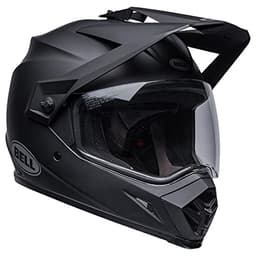
A mid-price helmet with the newer standard
Bell MX-9 Adventure MIPS
DOT + ECE 22.06The value benchmark for adventure helmets: DOT and ECE 22.06 certification plus a MIPS rotational-management liner at a mid price. Heavy at roughly 1,696 g, but nothing else certified to 22.06 costs this little.
See the dual-sport rankingPrice as of October 7, 2026. #ad How we’re funded
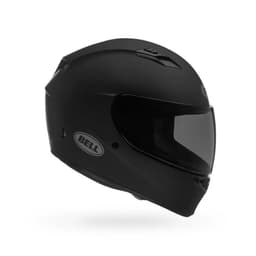
A major brand at a budget price
Bell Qualifier
DOTThe plain Qualifier — the DLX MIPS model without MIPS or the ProTint shield. DOT approved, three shell sizes, about 1,488 g, and one of the best-value certified full-faces on the market.
See the budget rankingPrice as of October 7, 2026. #ad How we’re funded
How to use all of this in ten minutes
- Work out your head shape first, then shortlist two or three brands whose interior profile matches it. This is the one step where brand is the right tool.
- Pick the type— full-face, modular, open-face, adventure — because it constrains everything downstream. Types of motorcycle helmets covers the trade in each.
- Read the certification off the specific model, not the brand. Look for an optional standard named with its version: ECE 22.06, or SNELL M2020 or M2025. “ECE approved” with no version is worth less than it looks.
- Check whether a weight is published. If it is not, you cannot compare on weight, and you should stop pretending you can.
- Check shell count if you are at either end of the size range. A small or large head in a one-shell helmet is wearing padding instead of fit.
- Buy the one that fits. A perfectly certified helmet that gives you a pressure point in 40 minutes is a helmet you will stop wearing properly, and that is the only failure mode on this list that is certain.
If you would rather have that as a single walkthrough, how to choose a motorcycle helmet is the step-by-step version, and the sizing guide covers measuring your head before you order anything.
How to read our safety notes. We have not crash-tested any of this gear — nobody honestly can on a review budget. Every helmet and armor pick names the certification the maker publishes (DOT, ECE 22.06, SNELL, or a CE level), which we read from the listing on a dated visit. Certification is the floor, not a guarantee; fit and condition matter as much as the sticker. What the standards actually mean.
Frequently asked questions
What is the best motorcycle helmet brand?
There isn't one, and the question hides the thing that matters. Our registry holds 37 helmets across 14 brands and not a single brand certifies its whole range the same way — Shoei sells a SNELL-rated helmet, an ECE 22.06 helmet and a DOT-only helmet at the same time. So the brand never tells you what a specific helmet passed; only the model does. Use a brand as a shortcut for fit consistency, shell counts, parts availability and support, and read the certification off the model.
Does a more expensive helmet brand mean a safer helmet?
Not reliably, and our own registry contains the counter-example. Shoei's GT-Air 3 is a premium touring helmet whose US listing publishes DOT only; HJC's RPHA 12 costs considerably less and publishes DOT plus ECE 22.06, the newer European standard with rotational-impact criteria. What premium money reliably buys is shell material, shell count, weight, finish, quieter aerodynamics and parts support. What it does not reliably buy is more certificates.
Which helmet brands are SNELL certified?
SNELL is a per-model certification, not a brand one, and that is the point most lists get wrong. Across the 37 helmets in our registry exactly six publish a SNELL rating, and they come from six different brands: Shoei, HJC, ScorpionEXO, Bell, Arai and Simpson. Not one of those brands certifies its whole range to SNELL — including Arai and Shoei, the two names most associated with it. Always check the specific model on Snell's own certified-product list.
Are cheap helmet brands like ILM, TORC and GMAX safe?
They publish DOT certification, which is the legal requirement for on-road sale in the US and is not nothing. What separates them from the legacy makers in our data is not a missing certification — it is missing published specification. Of the 37 helmets we track, 18 carry a maker-published weight, and none of them is from ILM, TORC, GMAX, KLIM or Fly Racing. ILM does not publish a shell material for one of its helmets at all. You are buying with less information, and no independent lab rating to check it against.
Why do lightest-helmet lists always feature premium brands?
Partly physics and substantially disclosure. Only 18 of the 37 helmets in our registry carry a weight published by the maker, and they cluster heavily at the premium end — Shoei publishes a weight for all three of its helmets, Bell for six of seven, Arai and AGV for theirs. HJC publishes one of six and ScorpionEXO one of six. A budget helmet that is genuinely light cannot appear on a weight ranking if nobody has published its weight, so those lists measure what makers choose to disclose as much as what the helmets weigh.
Should I stick with one helmet brand?
It is a reasonable shortcut for one specific reason: head shape. Makers tend to build a consistent interior profile across a range, so if a brand's helmet fits your head well, its other models probably will too — which is genuinely useful when you are buying online and cannot try it on. The reason not to is that brand loyalty stops you reading the certification, and within a single brand that varies model to model. Shortlist by brand for fit, decide by model on what it publishes.
Which brands make helmets with the intercom built in?
In our registry, Sena, TORC and ILM. Sena is a communications company that builds helmets around its own electronics rather than a helmet maker that added Bluetooth, which is why its two helmets publish DOT, a composite or polycarbonate shell and a weight, but no ECE rating. TORC's T27 uses the Blinc system and publishes DOT plus ECE. Both ILM helmets are budget modulars. If you already own an intercom, buying a helmet with a designed speaker pocket is the better route than buying the electronics twice.
Does the country a helmet is made in matter?
Less than the certification it carries. A helmet legally sold for road use in the US has to meet DOT FMVSS 218 wherever it was built, and a helmet carrying ECE 22.06 has passed the current European battery of tests wherever it was built. What manufacturing location correlates with is the things around the certificate — shell count, consistency of finish, availability of replacement shields and cheek pads, and whether there is anyone to call. Those are real, and they are not safety ratings.
Sources
- 49 CFR 571.218 — FMVSS No. 218, Motorcycle helmets — The US federal helmet standard: peak-acceleration, penetration and retention requirements; applies to all on-road motorcycle helmets (accessed July 21, 2026)
- UNECE — Vehicle Regulations (UN Regulation No. 22 / ECE 22.06) — The UN regulation behind ECE 22.06, which added rotational/oblique-impact testing over 22.05 (accessed July 21, 2026)
- Snell Memorial Foundation — Standards — Snell's motorcycle helmet standards: M2025D/M2025R are the current generation and M2020D/M2020R the previous one (D = DOT markets, R = ECE markets) (accessed July 21, 2026)
- Snell Memorial Foundation — M2020 Standard (PDF) — The full M2020 test protocol (accessed July 21, 2026)
- NHTSA — How to Choose the Right Motorcycle Helmet — NHTSA consumer guidance on DOT certification and spotting novelty helmets (accessed July 21, 2026)
- SHARP — UK Government Helmet Safety Ratings — UK Department for Transport independent helmet safety star ratings (accessed July 21, 2026)
- MotoCAP — Independent Motorcycle Clothing & Helmet Assessment — Independent Australian lab rating protective clothing and helmets for protection and comfort (accessed July 21, 2026)
Keep reading
Safest motorcycle helmets
The ranking that follows from this page: every helmet in the registry sorted by what its maker publishes, because there is no US safety score.
See the safest picksHow to choose a motorcycle helmet
Six decisions in the order that matters — type, certification, head shape, size, weight, then features.
Read the guideDOT vs ECE vs SNELL
What each mark on the back of a helmet actually measures, who issues it, and which ones a maker chooses to pay for.
Read the explainerBest Bell helmets
The widest range on this site, from a budget full-face to a SNELL carbon race lid, broken down by what each model carries.
See the Bell rangeBest HJC helmets
The brand that spans budget to premium most completely — and the one whose cheapest helmet carries SNELL.
See the HJC rangeBest motorcycle helmets
The overall ranking across every brand and style, with certification leading and nothing allowed to overrule it.
See the overall picks