How to Choose a Motorcycle Helmet
Six decisions, in the order that actually matters. Type, then certification, then head shape, then size, then weight, then everything the marketing leads with.
How this is funded: we earn a commission if you buy through our links, at no extra cost to you. It never changes which gear we recommend, and we’ll tell you plainly when to skip a pick. Full disclosure.
Most helmet advice starts with features and works backwards. That is why people end up with a helmet that has eleven vents, a photochromic shield and a shape that does not fit their head. The order below is the one that actually matters, and the first three steps decide almost everything. Type, certification, head shape. If you get those right, a $200 helmet will serve you better than a $700 one chosen in the wrong order.
We own none of the helmets on this site and we run no lab. Everything factual here is either a published standard or a specification the maker publishes for a specific model, read on a dated visit — our methodology page sets out exactly what that means and what we refuse to claim.
Step 1: Choose the type, from how you actually ride
Not from how you imagine riding. Be honest about the speeds, the weather and how often you stop, because the type decision constrains everything after it — including which certifications are even available to you.
- Full-face. The most coverage and the only type where the strongest certification pairs are common. If you have no specific reason to choose otherwise, choose this. Our full-face ranking is the page.
- Modular (flip-front).A full-face with a chin bar that lifts, for riders who stop often — fuel, tolls, glasses, conversation. Heavier, and with one catch most buyers miss: most modulars are certified closed only. See modular versus full-face.
- Open-face (3/4).Lighter, cooler, easier with glasses, and no protection for your jaw or face. A genuinely reasonable choice for low-speed city and cruiser riding, and a poor one above about 50 mph. We argue it honestly on open-face versus full-face.
- Dual-sport / adventure. A peak and a wide eyeport, so it works with goggles off-road and a shield on tarmac. Noisier at highway speed because the peak catches air. See the dual-sport ranking.
Step 2: Read the certification — for the model, not the brand
This is the step where most of the real safety information lives, and the most common mistake is reading it at brand level. Certification is per model. The same maker will sell you a DOT-only polycarbonate helmet and a dual-certified composite one with the same logo on the chin bar.
- DOT FMVSS 218 is the US legal minimum and is required for on-road sale. The manufacturer certifies its own helmet against it and NHTSA buys samples off the shelf to re-test. It is pass/fail, not a grade.
- ECE 22.06is the current UN regulation, tested by an approval authority before sale in that market, and the only common mark that added oblique-impact testing for rotational forces. On a US listing it is voluntary — and note that an unversioned “ECE” claim may be the older 22.05, which did not include that test. Our ECE 22.06 page separates the two across the whole registry.
- SNELL M2020 / M2025is voluntary, run by the Snell Memorial Foundation, and is the toughest energy-management and penetration protocol in common use — with production samples re-tested after certification. See the SNELL-certified ranking.
Two marks are better than one, and there is no US league table to rank them against each other. There is no government star rating for helmets sold in the United States — which is why our safest-helmets pageranks on published certification rather than on a score, and why any site showing you a numeric safety grade for a US helmet is quoting a foreign programme for a different variant. If rotational impact is the mechanism you most want addressed, look for ECE 22.06, or for MIPS and multi-density liners — explained in our MIPS guide.
Step 3: Match your head shape, before you think about size
Heads are not round, and makers build interiors to a profile. A helmet in the wrong shape will never fit properly at any size. The three profiles are round oval, intermediate oval (the most common, and what most helmets are built to) and long oval. The symptom of a mismatch is specific and easy to recognise: pressure on your forehead and the back of your skull with loose cheeks means the helmet is too round for you; pressure at the sides with a gap front and back means it is too long. Our head shapes guide covers how to work out which you are.
Shell count belongs in this step too, and nobody mentions it. A helmet offered in one shell size with different thicknesses of padding means a small head is wearing an oversized shell. Helmets built in three, four or five shell sizes are sized to the head rather than padded down to it — that is a genuine reason to pay more, and it is published.
Step 4: Size it, then test it with the strap done up
Measure the circumference of your head at its widest point, about an inch above your eyebrows, and compare it to that maker’s chart — helmet sizing is not standardised between brands. Then fit it properly:
- The cheek pads should press your cheeks. A new helmet should feel snug; the liner gives slightly as it breaks in.
- There should be no single pressure point anywhere. A hot spot on your forehead after ten minutes is a shape mismatch, not a break-in period.
- With the strap fastened, try to roll the helmet forward off your head. If it moves, it is too big — this is the test that matters most and the one people skip.
- Leave it on for fifteen minutes before you buy. Most fit problems only appear after ten.
Our sizing guide covers the measurement and the chart problem in full, and how to wear a helmet covers the strap.
Step 5: Check the published weight
Weight is a comfort and fatigue spec, not a safety spec — it comes from shell material rather than from protection level, and the lightest full-face in our registry publishes ECE 22.06 alongside DOT. What it affects is how your neck feels at hour six and how alert you are at the end of a long ride. Composite and carbon shells run lighter than polycarbonate at the same certification; a modular is always heavier than the equivalent full-face because of the hinge. Our weight ranking lists every figure makers actually publish, and is honest about how many publish nothing.
Step 6: Now look at features — these four, in this order
- A drop-down internal sun visor, if you ride in changing light. It removes the carry-and-swap problem that a tinted shield creates. See helmets with a sun visor.
- A Pinlock-ready shield, because an anti-fog insert is the only thing that reliably stops a shield fogging at a standstill — covered in our fogging guide.
- Removable, washable liners. This decides whether you still want the helmet in year three.
- Designed-in comms provision rather than a module clamped to the shell, if you ride with an intercom. See how to choose an intercom.
Vent counts, graphics and shield tints are where the marketing effort goes. None of them is in the first five steps for a reason.
Three helmets, three budgets
Here is what the sequence above produces at three price points. Each is drawn from a full ranking where the trade-offs are argued in detail — these are the shortcuts, not the whole answer.
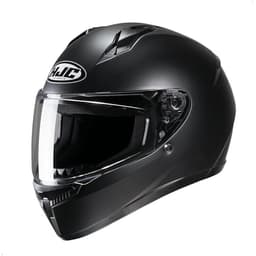
Budget pick
HJC C10
DOTHJC's entry full-face, and one of the cheapest DOT-approved lids from a major maker. An advanced polycarbonate composite shell and a proper removable liner — the honest floor for a first helmet.
See the full budget ranking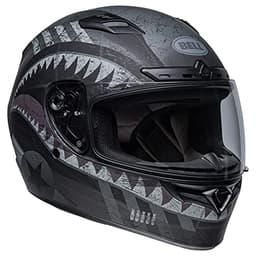
Mid-range pick
Bell Qualifier DLX MIPS
DOT FMVSS 218The value pick that adds MIPS — a low-friction liner designed to reduce rotational forces in an angled impact — to a DOT-certified full-face at a mid price. The most safety tech per dollar in this list.
See the full helmet rankingPrice as of October 4, 2026. #ad How we’re funded
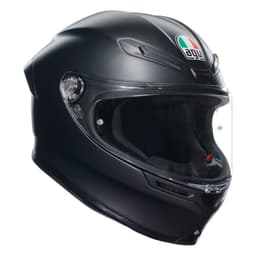
Premium pick
AGV K6 S
DOT + ECE 22.06One of the lightest full-carbon-aramid lids you can buy at ~1,255 g, and it's certified to the newer ECE 22.06 standard on top of DOT. The sport-touring helmet for riders who notice weight on a long day.
See the full-face rankingPrice as of October 4, 2026. #ad How we’re funded
Five things not to do
- Do not buy used. You cannot see the damage that matters. Compressed EPS looks identical to new EPS. Our guide to used gear covers what is and is not worth buying second-hand, and helmets are firmly in the second group.
- Do not buy a novelty helmet. Uncertified lids with counterfeit DOT stickers are a real market. See spotting a fake helmet.
- Do not size up for comfort. A loose helmet rotates under braking and can come off in a crash. Snug is correct.
- Do not paint it or stick things to it. Solvents attack the shell and the liner. The honest version of the custom-graphics question is on our custom helmets page.
- Do not keep it after an impact. EPS crushes once, by design, and it does not come back. See when to replace a helmet.
How to read our safety notes. We have not crash-tested any of this gear — nobody honestly can on a review budget. Every helmet and armor pick names the certification the maker publishes (DOT, ECE 22.06, SNELL, or a CE level), which we read from the listing on a dated visit. Certification is the floor, not a guarantee; fit and condition matter as much as the sticker. What the standards actually mean.
Frequently asked questions
How do I choose a motorcycle helmet?
In this order: type, certification, head shape, size, weight, features. Pick the type from how you actually ride — full-face if you want the most coverage and the strongest certifications, modular if you stop often, open-face only if your riding is genuinely low-speed. Then read what the maker publishes for that specific model: DOT FMVSS 218 is legally required in the US, and a second mark (ECE 22.06 or SNELL) means it cleared a second protocol. Then match your head shape, because a helmet in the wrong shape never fits regardless of size. Size, weight and features come after those three, not before.
What certification should a motorcycle helmet have?
DOT FMVSS 218 at minimum — it is legally required for on-road sale in the US, and a helmet without it is not a road helmet. Beyond that, look for a second mark published for the model you are buying: ECE 22.06 is the current UN regulation and the only common standard that added oblique-impact testing for rotational forces, while SNELL M2020 or M2025 is a voluntary standard running the toughest energy-management and penetration protocol in common use, with production samples re-tested. Two marks means two independent protocols. Read the model, not the brand — the same maker sells DOT-only and dual-certified helmets.
How do I know what size motorcycle helmet to buy?
Measure the circumference of your head at its widest point, roughly an inch above your eyebrows and above your ears, and compare that number to the chart for the specific maker — sizing is not standardised between brands. Then check the fit with the strap fastened: the cheek pads should press your cheeks, there should be no pressure point anywhere, and when you try to roll the helmet forward off your head it should not move. A new helmet should feel snug and loosen slightly as the liner breaks in, so buy the tighter of two sizes if you are between them.
What is head shape and why does it matter more than size?
Heads are not round. Makers build their interiors to one of three broad profiles — round oval, intermediate oval and long oval — and intermediate is the most common. If your head is longer front-to-back than the helmet's profile, you get pressure on your forehead and the back of your skull while the sides stay loose; if it is rounder, the opposite. No size change fixes that, which is why shape comes before size. Most makers publish their profile, and a helmet in the right shape at the right size has even pressure all round with no hot spots.
How much should I spend on a motorcycle helmet?
The useful way to think about it: certification does not scale with price, and comfort does. A budget helmet from a real helmet maker carries the same legally-required DOT certification as a flagship, and one helmet in our registry carries DOT plus SNELL at a budget-tier price. What more money reliably buys is lighter shell material, more shell sizes, quieter aerodynamics, better ventilation, a sun visor and designed-in comms. Those are fatigue and comfort arguments, and they are real on a long ride — they are just not safety-certificate arguments.
Does a heavier helmet mean a safer helmet?
No. Weight comes from shell material, not from protection level. A carbon or multi-fibre composite shell can be several hundred grams lighter than a polycarbonate one at the same certification, and the lightest full-face in our registry publishes ECE 22.06 alongside DOT. What weight does affect is neck fatigue on a long day, which matters for how alert you are late in a ride. Where a maker publishes a figure in grams we record it; plenty of makers publish nothing at all, which is why our weight ranking is honest about how few numbers exist.
Should I buy a motorcycle helmet online?
You can, with one condition: try that exact model and size on first, or buy from a seller whose returns policy lets you send it back unworn. Sizing is not standardised between makers and head shape is not something you can measure from a chart, so the first helmet of a given model is a fitting rather than a purchase. Never buy a used helmet, and be careful with listings that are cheap for no stated reason — counterfeit DOT labels are a real market and our guide on spotting a fake helmet covers what to check.
Which helmet features are actually worth paying for?
A drop-down internal sun visor, if you ride into low sun or in changing light — it removes the need to carry and swap a tinted shield. A Pinlock-ready shield, because an anti-fog insert is the only thing that genuinely stops a shield fogging at a standstill. Removable, washable liners, which decide whether the helmet is still pleasant in year three. And designed-in comms provision rather than a module clamped to the outside. Vent counts and graphics are where the marketing is; none of those four is.
Sources
- NHTSA — How to Choose the Right Motorcycle Helmet — NHTSA consumer guidance on DOT certification and spotting novelty helmets (accessed July 21, 2026)
- 49 CFR 571.218 — FMVSS No. 218, Motorcycle helmets — The US federal helmet standard: peak-acceleration, penetration and retention requirements; applies to all on-road motorcycle helmets (accessed July 21, 2026)
- UNECE — Vehicle Regulations (UN Regulation No. 22 / ECE 22.06) — The UN regulation behind ECE 22.06, which added rotational/oblique-impact testing over 22.05 (accessed July 21, 2026)
- Snell Memorial Foundation — Standards — Snell's motorcycle helmet standards: M2025D/M2025R are the current generation and M2020D/M2020R the previous one (D = DOT markets, R = ECE markets) (accessed July 21, 2026)
- Snell Memorial Foundation — FAQ — How Snell certification works and how it differs from DOT (accessed July 21, 2026)
- MIPS — What is MIPS? — MIPS's own description of its low-friction slip-plane layer, which it presents as a safety system rather than a certification (accessed August 19, 2026)
- NHTSA — Motorcycle Helmet Effectiveness Revisited (DOT HS 809 715) — Helmets ~37% effective at preventing rider fatalities (accessed July 21, 2026)
Keep reading
DOT, ECE and SNELL explained
What each mark actually tests, who checks it, and why only one of the three is legally required in the US.
Read the certification guideMotorcycle helmet sizing
How to measure your head, how to read a maker's chart, and the roll-off test that tells you it fits.
Read the sizing guideMotorcycle helmet head shapes
Round, intermediate and long oval — how to work out which you are and which makers suit each.
Read the head shapes guideTypes of motorcycle helmet
Full-face, modular, open-face, half and dual-sport — what each covers and who it is built for.
Read the types guideSafest motorcycle helmets
The registry sorted by published certification, including the helmets that add rotational management.
See the safest picksBest motorcycle helmets
Our top full-face, modular and value picks, every one cross-checked against DOT, ECE 22.06 and SNELL.
See the picks