Motorcycle Gear for Women
Which pieces are genuinely built on a women's pattern, which are a unisex item in a small size with a different colourway, and how to tell the two apart on a listing.
How this is funded: we earn a commission if you buy through our links, at no extra cost to you. It never changes which gear we recommend, and we’ll tell you plainly when to skip a pick. Full disclosure.
There are two honest versions of this topic and the internet mostly publishes neither. The first: for jackets, gloves, boots and pants, a women’s pattern is a genuinely different garment, and it matters for protection rather than for looks. The second: for helmets, it barely exists, and the brands that market one to you are selling a colourway.
This guide is about telling those apart on a listing, because the word “women’s” on a product page covers both a re-patterned garment with published CE armor and a unisex item in a small size with a different graphic. Everything factual below is drawn from what the maker publishes for that specific model, read on a dated visit — our methodology page says what we do and do not claim.
Why the pattern matters, and it is not about fit preference
A riding jacket protects you in three places that are fixed to your skeleton: shoulders, elbows and spine. The armor only works if it is sitting over the joint, and where it sits is decided by the pattern. On a shorter torso in a men’s jacket, the sequence is predictable: the shoulder pad slides outward toward the upper arm, the elbow pad ends up on the forearm, and the back protector pocket sits too high to cover the lower spine. The jacket’s CE rating has not changed. Your protection has.
The same logic runs through the other pieces. A women’s glove is narrower across the palm with shorter fingers — which is why a small men’s glove is so often tight across the knuckles and long at the fingertips, and a glove with empty fingertips puts the knuckle armor in the wrong place and bunches in your palm on the bar. A women’s boot is built on a last with a narrower heel pocket and more calf room — the two-part problem that a unisex boot in a small size never solves, because a boot that fits your foot and will not zip round your calf is as unusable as one that does the opposite.
Our guide to how riding gear should fit has the test that settles all of this: check armor placement in the riding position, arms forward on an imaginary bar, not standing up straight in front of a mirror.
The helmet exception, stated plainly
Almost no manufacturer builds a women-specific helmet shell. A helmet is sized and shaped to a head profile — round oval, intermediate oval, long oval — and that does not split by gender. What is marketed as a women’s helmet is usually a standard model in a different graphic, sometimes with a slightly different interior fabric.
So the two things to actually look for are different from what the marketing suggests:
- Small shell sizes, not small padding. A helmet built in one shell with thicker padding for the small sizes means a small head is wearing an oversized shell, which is a fit and a weight problem at the same time. Helmets built in three, four or five shells are sized to the head. This is published, and it is one of the few places where paying more buys something real.
- The right head shape. This decides comfort far more than the size label does, and the symptom of a mismatch is a pressure point rather than a loose helmet. Our head shapes guide covers how to work out which you are.
Certification is identical either way — DOT FMVSS 218 is legally required for every on-road helmet sold in the US regardless of who it is marketed to, and ECE 22.06 or SNELL on top of it is a model-level fact rather than a gendered one. Our helmet buying guide runs the whole sequence, and the safest-helmets ranking sorts the registry by what each maker publishes.
What is genuinely women-specific in our registry
Every row below is a garment whose maker describes it as a women’s-pattern item, with the certification that maker publishes for it. Where the certification column says nothing was published, that is what we found rather than an omission.
| Category | Women’s-pattern options we rank | Published certification |
|---|---|---|
| Jackets | Alpinestars Stella T-GP Plus R V4 Airflow, Joe Rocket Aurora 2.0, Milwaukee Leather MPL2775 and MPL2794 | CE armor included on the Stella, Aurora and MPL2794; no EN 17092 garment class published for any of them |
| Gloves | Alpinestars Stella SP-8 V3, Stella SMX-1 Air V2, JAUNTY women’s leather | Stella SP-8 V3 publishes CE EN 13594:2015 Level 1 KP; the others publish no rating |
| Boots | Alpinestars Stella SMX-6 V3 and Stella SMX-6 V3 Drystar | Both publish CE EN 13634:2017 |
| Helmets | None — no women-specific shell in the registry, by design | DOT is required on every on-road helmet; ECE 22.06 and SNELL are model-level |
Two things are worth noticing in that table. The pieces with a published CE standard are concentrated in one maker’s women’s line, and they sit at the premium end. That is the real shape of this market: at the budget end there are far fewer women’s patterns and far fewer published ratings. It is not a reason to overspend — it is a reason to know where to look, and to read the armor spec rather than the price.
Four picks, one per category
Each is drawn from a full ranking where the trade-offs are argued properly. These are the shortcuts.
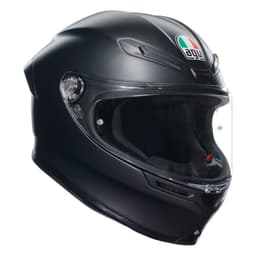
Helmet pick
AGV K6 S
DOT + ECE 22.06One of the lightest full-carbon-aramid lids you can buy at ~1,255 g, and it's certified to the newer ECE 22.06 standard on top of DOT. The sport-touring helmet for riders who notice weight on a long day.
See the full helmet rankingPrice as of October 4, 2026. #ad How we’re funded
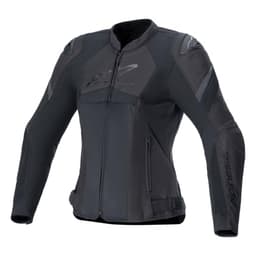
Jacket pick
Alpinestars Stella T-GP Plus R V4 Airflow
Alpinestars' Stella line is cut on a women's block rather than a scaled-down men's pattern, and this is the mesh version: full airflow construction with CE-certified armor and a sport fit.
See the full jacket rankingPrice as of October 4, 2026. #ad How we’re funded
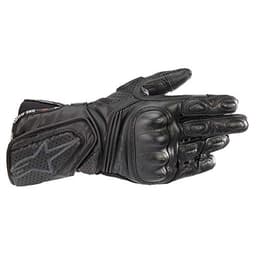
Glove pick
Alpinestars Stella SP-8 V3
CE EN 13594:2015 Level 1 KPThe rare women's glove that is a women's glove rather than a small men's one: goat-leather palm, molded hard knuckle, Arshield palm reinforcement, and a published CE EN 13594 Level 1 KP rating. Most of the women's market cannot say the last part.
See the full glove rankingPrice as of October 4, 2026. #ad How we’re funded
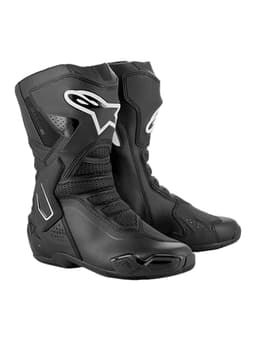
Boot pick
Alpinestars Stella SMX-6 V3
CE EN 13634:2017The women's version of the boot we already rank first overall, built on a women's last rather than a scaled-down men's one, and CE certified to EN 13634:2017. TPU ankle brace, shin plate, shifter zone and replaceable toe sliders — the full protection package, not a styling exercise.
See the full boot rankingPrice as of October 4, 2026. #ad How we’re funded
What to check before you buy, in order
- Armor placement in the riding position.Shoulders over the shoulder joint, elbow pads over the elbow with your arms forward, back protector covering the lower spine. If a women’s cut puts them right and a unisex one does not, the pattern has earned its price.
- What is actually in the box.“Armor pockets” is not armor. Four of the women’s jackets we rank include CE armor; check the back specifically, because an included back pad is frequently an uncertified foam one. If a jacket you love ships empty, a set of CE-rated inserts is the cheapest real upgrade in motorcycling.
- Published certification, per garment. CE EN 1621-1 for limb armor, EN 1621-2 for a back protector, EN 13594 for gloves, EN 13634 for boots. Our CE ratings guide explains each.
- Calf and sleeve measurements, not just the size. The two measurements that most often make a correctly-sized item unwearable.
- Returns, if you are buying online. Pattern differences are exactly the thing a size chart does not capture.
What this guide deliberately does not do
It does not claim a women’s version of a garment is safer or less safe than the men’s. We own none of this gear, we run no lab, and the published ratings are per garment rather than per gender — where a maker publishes a different armor set for the women’s cut of the same model, that is a fact about that garment and we say so on its ranking page.
It also does not publish a size chart. Sizing is not standardised between makers for helmets, gloves, jackets or boots, so a generic chart would be worse than no chart. Use the maker’s own, and use our sizing guide for the measurement and the fit tests that actually transfer between brands.
How to read our safety notes. We have not crash-tested any of this gear — nobody honestly can on a review budget. Every helmet and armor pick names the certification the maker publishes (DOT, ECE 22.06, SNELL, or a CE level), which we read from the listing on a dated visit. Certification is the floor, not a guarantee; fit and condition matter as much as the sticker. What the standards actually mean.
Frequently asked questions
Is there such a thing as women-specific motorcycle gear?
Yes for jackets, gloves, boots and pants, and essentially no for helmets. Jackets, gloves and boots are built on patterns and lasts, so a women's version is a genuinely different shape: a shorter torso with a different armor position, a narrower palm with shorter fingers, a narrower heel on a last with more calf room. Helmets are the exception — almost no maker builds a women-specific shell, because a helmet is sized and shaped to a head profile that does not split by gender. For a helmet, what you are actually looking for is a maker with small shell sizes and the right head shape.
What is the best motorcycle helmet for women?
The honest answer is a helmet in the right head shape that is offered in a small shell size, not a helmet marketed to women. The AGV K6 S is our pick because it is a light carbon-aramid full-face publishing DOT plus ECE 22.06 and it comes in genuinely small sizes rather than a single shell padded down. The thing to check on any helmet is shell count: a helmet built in one shell with thicker padding for small sizes means a small head wears an oversized shell, which is a fit problem rather than a comfort one. Our women's helmet ranking works through that in full.
Can women wear men's motorcycle gear?
Often, and plenty of riders do — but check the armor placement rather than the label. The thing a men's or unisex jacket gets wrong on a shorter torso is where the shoulder and elbow armor sits: if the elbow pad lands on your forearm rather than over the joint, the jacket is not protecting the joint whatever its rating says. Sleeve length and the back protector pocket height are the usual failures. If you try a unisex jacket, do it in the riding position with your arms forward, not standing in front of a mirror.
Do women's motorcycle jackets have the same protection as men's?
They can, and you have to check per garment rather than assume either way. The armor is the part with a published rating — CE EN 1621-1 at the shoulders and elbows, EN 1621-2 for a back protector — and a women's jacket with CE armor included is as protected as a men's jacket with the same armor. What you should not assume is that a women's version of a model carries the same specification as the men's: makers sometimes ship the women's cut with a lighter armor set or an empty back pocket. Read the listing for the exact garment.
What size motorcycle gloves should I buy?
Measure around your palm at the widest point, excluding the thumb, and compare it to that maker's chart — glove sizing varies between brands as much as helmet sizing does. The fit test is specific: the fingertips should just touch the end of the glove with no empty space, and you should be able to close your hand fully onto a bar without the glove bunching across the palm. A women's-pattern glove is not just a smaller men's glove; it is narrower across the palm with shorter fingers, which is why a small men's glove often ends up long in the fingers and tight across the knuckles.
Are motorcycle boots made in women's sizes?
Yes, and the good ones are built on a women's last rather than simply offered in a smaller number. The difference is a narrower heel pocket with more room at the calf, which is the two-part problem a unisex boot in a small size never solves — a boot that fits your foot and will not close round your calf is as useless as the reverse. Look for a published CE EN 13634 certification, which is the standard for motorcycle footwear, and treat the calf measurement as seriously as the foot size.
What gear do I need to start riding?
Helmet, jacket, gloves, boots, and trousers you would be willing to slide in — in that order of priority if you are buying over time. A certified helmet is non-negotiable and comes first. Then gloves, because hands hit the ground first and heal badly. Then a jacket with CE armor in the box rather than empty pockets, then over-the-ankle boots, then riding jeans or pants. Our beginner gear pillar does this head-to-toe with a budget for each stage, and it applies regardless of which pattern you buy.
Why is there less women's motorcycle gear?
It is a volume problem rather than a design one, and it shows up in two specific ways: fewer models carry a women's version at all, and the women's versions that exist are more often at the premium end — Alpinestars' Stella line is the clearest example, with women's patterns across jackets, gloves and boots and published CE ratings on several of them. At the budget end you will find far fewer options and more unisex gear in small sizes. That is the gap worth knowing about before you shop, because it changes where you should expect to look.
Sources
- MotoCAP — Independent Motorcycle Clothing & Helmet Assessment — Independent Australian lab rating protective clothing and helmets for protection and comfort (accessed July 21, 2026)
- SHARP — UK Government Helmet Safety Ratings — UK Department for Transport independent helmet safety star ratings (accessed July 21, 2026)
- NHTSA — How to Choose the Right Motorcycle Helmet — NHTSA consumer guidance on DOT certification and spotting novelty helmets (accessed July 21, 2026)
- 49 CFR 571.218 — FMVSS No. 218, Motorcycle helmets — The US federal helmet standard: peak-acceleration, penetration and retention requirements; applies to all on-road motorcycle helmets (accessed July 21, 2026)
- UNECE — Vehicle Regulations (UN Regulation No. 22 / ECE 22.06) — The UN regulation behind ECE 22.06, which added rotational/oblique-impact testing over 22.05 (accessed July 21, 2026)
Keep reading
Best women's motorcycle jackets
Jackets built on a women's pattern rather than a smaller men's cut, ranked on the armor actually in the box.
See the jacket picksBest women's motorcycle gloves
Narrower palms and shorter fingers, and which pairs publish a CE EN 13594 rating.
See the glove picksBest women's motorcycle boots
Built on a women's last — narrower heel, more calf room — with published CE EN 13634 certification.
See the boot picksBest motorcycle helmets for women
The honest version: almost no maker builds a women-specific shell, so this ranks on small shells, fit and certification.
See the helmet picksHow should motorcycle gear fit?
Checking armor placement in the riding position — the test that decides whether a different pattern matters.
Read the fit guideBeginner motorcycle gear
The whole head-to-toe kit by budget, one pick per category, in the order worth buying it.
Read the beginner guide