Motorcycle Gear for Commuting
Commuting gear fails for a reason touring gear never does: you leave on a schedule, you arrive somewhere you have to look normal, and you have to put the whole lot somewhere at the other end.
How this is funded: we earn a commission if you buy through our links, at no extra cost to you. It never changes which gear we recommend, and we’ll tell you plainly when to skip a pick. Full disclosure.
Commuting is the most demanding kind of riding for gear, and almost nothing is designed for it. Touring gear is built for a chosen day. Race gear is built for one position. Commuting gear has to work on a day you did not choose, twice, then be stored somewhere you do not control, five days a week, for years.
That produces a specific set of requirements, and they are not the ones gear reviews optimise for. The question is not which jacket is best. It is which jacket still gets worn in March when it is raining and you are already late. Everything in this guide is chosen against one test: does this piece work without a decision?
The five things a commute punishes
| Commuting reality | What it demands | The piece it decides |
|---|---|---|
| You leave on a schedule | Weather protection built in, never assembled from parts kept at home | Jacket and trousers |
| Short, repeated, twice daily | Nothing that needs a routine. Vents and visors you work one-handed | Helmet |
| You arrive somewhere | Gear that comes off without wrecking work clothes, and boots you can walk in | Boots and over-trousers |
| Junctions, traffic, low light | Contrast and reflectivity, plus armor actually in the box | Jacket and visibility layer |
| Stored out of your sight | A replacement cost you can absorb | All of it |
The helmet: three features, in this order
Certification first, always — DOT FMVSS 218 is legally required for on-road sale in the US and a second mark such as ECE 22.06 means a second protocol was cleared. Our helmet buying guide runs the full sequence and the safest-helmets ranking sorts the registry by what makers publish. After that, three commuting-specific features:
- A drop-down internal sun visor. You ride into low sun in both directions on the same route. Nobody carries and swaps a tinted shield twice a day.
- A chin bar that lifts.A commute is full of 20-second stops. A flip-front turns each of those from removing a helmet into lifting a visor. One caveat worth knowing: most modular helmets are certified closed only, so open it at a standstill and close it to ride — the exception is a dual P/J homologation, explained in modular versus full-face.
- A shield that can take an anti-fog insert. Cold mornings plus stop-start traffic is the exact recipe for a fogged shield, and fog at a junction is the most dangerous thing in this guide. See how to stop a helmet fogging up.
Helmet pick
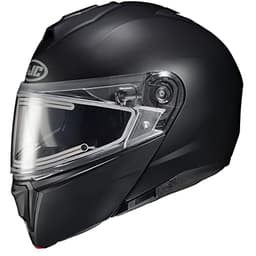
HJC i90
DOT + ECE 22.05The value modular that gets the important things right: DOT and ECE 22.05 certification, a drop-down sun visor, and comms-ready ear pockets, for a fraction of a premium flip-front's price.
See the full commuter helmet rankingPrice as of October 4, 2026. #ad How we’re funded
The jacket: the waterproofing has to be permanent
This is the decision that separates commuting gear from everything else. A jacket whose waterproof layer is a liner you zip in is a jacket that will be dry at home on the morning it rains. What you want is the membrane fixed in the shell, with the thermallayer as the removable one — so the rain protection is always with you and the warmth is what you add in January. A laminate shell, where the membrane is bonded to the outer fabric, is the premium version of the same idea and never wets out.
Check what armor is actually in the box rather than what pockets exist. “Armor pockets” is not armor, and an included back pad is frequently uncertified foam. CE EN 1621-1 at the shoulders and elbows is the standard to look for, and if your jacket shipped empty, a set of CE-rated inserts is the cheapest genuine safety upgrade in motorcycling. Our CE ratings guide explains the levels, and how to choose a jacket covers the construction question in depth.
Jacket pick
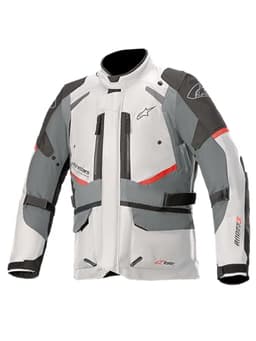
Alpinestars Andes V3 Drystar
The adventure-touring value benchmark: a Drystar waterproof membrane, a removable thermal liner and CE armor at shoulders and elbows, for roughly a quarter of what the GORE-TEX flagships cost.
See the full commuter jacket rankingPrice as of October 4, 2026. #ad How we’re funded
The gloves: where commuters under-buy most
Hands reach the ground first and heal badly, and a commute adds a requirement no other riding has: you have to operate a phone, a gate code, a door and a coffee at the other end. The failure mode is predictable — a rider buys heavy gauntlets, finds they cannot do anything in them, and ends up commuting in nothing.
What works is a waterproof glove with a published CE EN 13594 rating and a cuff you can get on and off quickly. Two pairs is the honest answer for a year-round commute: something ventilated for the hot months and something genuinely waterproof for the rest — summer gloves and winter gloves are ranked separately for exactly that reason, and the glove buying guide covers the fit tests. Water-resistant is not waterproof; a membrane is what you are paying for.
Glove pick
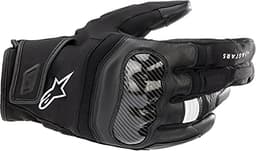
Alpinestars SMX-Z Drystar
CE EN 13594:2015 Level 1 KPThe cheapest glove we found that publishes both halves of the job: a CE EN 13594 2015 Level 1 KP certification and a named waterproof membrane. Full-grain goat leather at the palm and impact zones, a nylon hard knuckle, a hook-and-loop wrist closure and touchscreen index and thumb. For all-day mixed-weather touring this is the sane default, and Alpinestars' own more expensive adventure glove cannot match it on paper.
See the full glove rankingPrice as of October 4, 2026. #ad How we’re funded
The boots: over the ankle, and walkable
Ankles are the joint a motorcycle crash reaches almost regardless of speed, and trainers do nothing about it. The commuting constraint is that whatever you ride in, you then walk around in for eight hours — which rules out a tall sport boot and makes a casual riding boot with published CE EN 13634 certification the right category. The things to insist on are over-the-ankle height, an ankle that does not twist, a sole with real grip in the wet, and a closure that is not laces you can catch. Our guide on whether boots are necessary makes the case properly, and waterproof boots are worth it if your commute includes standing water.
Boot pick
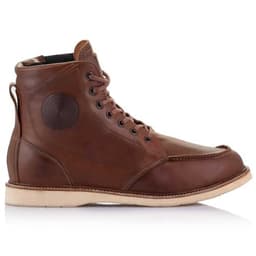
Alpinestars Oscar Monty V2
CE-certified motorcycle footwearThe rare cruiser-styled boot that carries a CE certification. Alpinestars built the Oscar line to look like normal footwear and pass the protective-footwear standard anyway — which is exactly what most cruiser riders are missing.
See the full casual boot rankingTrousers: the piece everyone skips
Most commuters ride in work trousers or jeans, and it is the single largest gap in the typical commuting kit. Denim abrades through in a fraction of a second at road speed and your hips and knees are what hit first. There are two workable answers and both avoid changing in a car park: riding jeans with CE knee and hip armor that you simply wear, or over-pants with full-length leg zips that go on over whatever you already have on and come off at the other end in thirty seconds. Our riding pants ranking compares the published garment classes, and armored jeans covers the denim side honestly, including which ones publish nothing at all.
Being seen, which no single garment fixes
A commute is the most junction-dense riding most people do, at the two worst light levels of the day, surrounded by drivers on autopilot on a route they drive every day. Conspicuity does more for your risk here than moving up an armor level — and no jacket achieves it on its own. The practical version: high contrast on the upper body where a driver scans, reflective material for the dark months, and a headlight on in daylight. If every jacket you own is black, a hi-viz over-vest costs very little and goes over all of it. What does not work is buying a fluorescent jacket you dislike and leaving it on the hook.
Solve storage before you buy
This is the question that quietly decides your whole kit, and almost nobody asks it first. Where does all of this live between 9 and 5? If the answer is a secure locker, buy better gear and leave it there. If it is a top box or a helmet lock, factor theft into the price of the helmet — which is exactly why we rank mid-priced helmets for commuting rather than touring flagships. If the answer is that everything comes inside with you, that argues for a lighter and more packable kit, and against the premium laminate shell.
Two small things that make the daily version work: somewhere for the jacket to drip that is not your chair, and a spare pair of gloves. The commute that kills enthusiasm is the one where you put on wet gloves for the ride home.
Two cheap additions with a daily payoff
- Earplugs.A commute is the largest total noise exposure most riders have — twice a day, five days a week, for years — and it is the exposure nobody accounts for because each ride feels trivial. See our earplugs guide.
- An anti-fog insert. Named twice in this guide because it is the cheapest fix for the most dangerous commuting failure, and because the only reliable version is a sealed second lens rather than a spray.
What we would not buy for a commute
A leather jacket as your only jacket. The best abrasion material available and the wrong daily commuting garment for practical reasons: it absorbs water, gets heavy, takes a day to dry and needs maintenance you will not do twice a week. We argue it both ways in leather versus textile.
A touring flagship helmet. Quieter and better sealed than anything we recommend here, and the wrong purchase because you have to leave it somewhere. They lead the touring ranking, where a 400-mile day justifies them.
Anything whose weather protection is optional. Rain liners, zip-in membranes, over-gloves kept at home. Every one of them depends on a decision made before you knew what the weather would do.
How to read our safety notes. We have not crash-tested any of this gear — nobody honestly can on a review budget. Every helmet and armor pick names the certification the maker publishes (DOT, ECE 22.06, SNELL, or a CE level), which we read from the listing on a dated visit. Certification is the floor, not a guarantee; fit and condition matter as much as the sticker. What the standards actually mean.
Frequently asked questions
What gear do I need to commute by motorcycle?
A certified helmet, a jacket with CE armor and built-in waterproofing, gloves you can operate a phone and a door with, over-the-ankle boots you can walk around in, and something that makes you visible at a junction. The sequence that distinguishes commuting from other riding is this: every piece has to work without a decision, because you leave at a fixed time regardless of the weather, and every piece has to end up somewhere at the other end. Gear that depends on you packing a liner, or that you cannot store at work, is gear you will stop wearing.
Do I need waterproof gear to commute?
Yes, and specifically waterproofing that is built into the garment rather than a liner you add. This is the single biggest difference between commuting and leisure riding: a weekend rider looks at the sky and decides, and a commuter leaves at 7:40 in whatever it is doing and comes home nine hours later in whatever it is doing then. A rain liner in a drawer at home has protected nobody. Look for a membrane fixed in the shell with a removable thermal layer — so the waterproofing is permanent and the warmth is what you adjust.
Can I wear normal clothes to commute on a motorcycle?
You can wear them underneath, and that is the practical setup most commuters land on: work clothes under a riding jacket and over-trousers that come off at the other end. What does not work is riding in the work clothes themselves. Trousers are the piece riders cut first and they are the wrong one to cut — hips and knees hit the ground. Riding jeans with CE knee and hip armor, or over-pants with full-length leg zips you can pull over what you are already wearing, both solve it without changing in a car park.
What is the best helmet for commuting?
A mid-priced flip-front with a drop-down internal sun visor. The flip-front matters because a commute is full of 20-second stops — tolls, gates, security desks, getting glasses on — and a full-face has to come all the way off for every one of them. The sun visor matters because you ride into low sun in both directions on the same route, and you cannot swap a tinted shield in a car park. Mid-priced matters because the helmet lives in a locker, a pannier or on a mirror, and theft or a drop is its realistic ending.
How do I stop my visor fogging on a cold commute?
Fit a sealed anti-fog insert. Commuting fog is the dangerous kind because it happens at a standstill — at a junction, at a light — where there is no airflow to carry your breath out or to keep the shield near ambient temperature. An insert is a second lens that seals to the shield and traps an insulating air layer, so the surface you breathe on stays above the dew point. It is the only fix that works with the bike stopped. Keeping the chin curtain in and your neck tube below your nose removes most of the rest.
Is hi-viz gear worth it for commuting?
A commute is urban, junction-heavy and happens at the two worst light levels of the day, so being seen does more for your actual risk than most gear upgrades — and no jacket solves it alone. The practical version is high contrast on your upper body where a driver scans, plus reflective material for the dark half of the year. If everything you own is black, a hi-viz over-vest costs very little and goes over any jacket. Buying a fluorescent jacket you dislike and then leaving it at home achieves nothing.
Where do I put my gear when I get to work?
Answer this before you buy the gear, because it quietly decides what you should buy. Helmet locks and top boxes handle the helmet; a jacket needs a hook and ideally somewhere it can drip. If the honest answer is that everything comes inside with you, that argues for a lighter, more packable kit and against the most expensive shell in the shop. If it is a secure locker, you can buy better gear and leave it there. Either way, gear left on the bike should be gear you can afford to replace.
How much should I spend on commuting gear?
Spend properly on the helmet and the gloves, and be pragmatic about everything else. Those two are the pieces where the failure is immediate and permanent — your head and your hands — and gloves in particular are where most riders under-buy. The jacket, boots and trousers should be bought on durability and on whether they survive daily use, rather than on being the best available: a mid-priced jacket you wear 500 times a year is worth more than a premium one you are afraid to leave in a stairwell. Add CE armor inserts to anything that ships with empty pockets.
Sources
- NHTSA — Traffic Safety Facts 2023: Motorcycles (DOT HS 813 732) — 2023 motorcyclist fatality, injury and helmet-use statistics (accessed July 21, 2026)
- NHTSA — How to Choose the Right Motorcycle Helmet — NHTSA consumer guidance on DOT certification and spotting novelty helmets (accessed July 21, 2026)
- 49 CFR 571.218 — FMVSS No. 218, Motorcycle helmets — The US federal helmet standard: peak-acceleration, penetration and retention requirements; applies to all on-road motorcycle helmets (accessed July 21, 2026)
- MotoCAP — Independent Motorcycle Clothing & Helmet Assessment — Independent Australian lab rating protective clothing and helmets for protection and comfort (accessed July 21, 2026)
- NHTSA — Motorcycle Helmet Effectiveness Revisited (DOT HS 809 715) — Helmets ~37% effective at preventing rider fatalities (accessed July 21, 2026)
Keep reading
Best helmets for commuting
Sun visor in both directions, a chin bar you can lift at a light, and a price you can leave in a pannier.
See the helmet picksBest motorcycle jackets for commuting
Built-in waterproofing, armor in the box, and a cut that goes over work clothes.
See the jacket picksBest motorcycle riding pants
Over-pants and armored trousers with published garment classes — the piece commuters skip first.
See the pants picksBest casual motorcycle boots
Over-the-ankle protection in a boot you can walk around an office in all day.
See the boot picksHow to stop a helmet fogging up
Cold mornings and stop-start traffic are the exact recipe for fog, and there is one fix that works.
Read the fogging guideMotorcycle gear for cold weather
The three-layer system that keeps a winter commute survivable, and where heated kit fits.
Read the cold-weather guide