Motorcycle Earplugs: What They Do and Which to Buy
The noise that damages your hearing on a motorcycle is wind, not the engine — and no helmet on the market is rated for noise, because nobody publishes a noise rating.
How this is funded: we earn a commission if you buy through our links, at no extra cost to you. It never changes which gear we recommend, and we’ll tell you plainly when to skip a pick. Full disclosure.
The noise that damages a motorcyclist’s hearing is almost entirely wind, and it arrives from a direction you cannot do anything about. Engine and exhaust noise is behind you and falls away. Aerodynamic noise is generated at your head: turbulent air tumbling over the shell, past the shield opening and off the lower edge of the helmet, frequently made worse by a screen that dumps disturbed air straight at your helmet instead of over it. That is why a rider on a faired tourer with a tall screen can be in a noisier environment than one on a naked bike, which is the opposite of what people expect.
Here is the part this page exists to say clearly, because it is the reason so much advice on the subject is vague. Nobody publishes a helmet noise rating. Not the US government, not SHARP, not MotoCAP. The two independent gear-rating programmes that exist assess impact and abrasion performance for the markets they test in — they do not measure noise, and there is no US noise standard for helmets at all. So there is no figure anyone can point you at, no threshold, and no way for us to tell you how loud your helmet is. What we can do is explain the mechanism, explain what the one number earplug makers dopublish means, and name the two filtered options in our registry with the figures their maker publishes. We own neither and we measure nothing — our methodology page is explicit about that.
Why duration matters more than peak level
Riders tend to think about noise as an event — a loud bike, a windy day. Hearing damage does not work that way: it is a function of level and time, and the exposure accumulates. Which means the single largest noise exposure most riders have is not the once-a-year tour. It is the commute. Forty minutes a day, five days a week, forty-eight weeks a year, for a decade, is a vastly larger total than any holiday. It is also the exposure nobody mentally accounts for, because each individual ride feels trivial.
That reframes the purchase. Earplugs are not touring equipment. They are the cheapest piece of protective equipment in motorcycling and the one with the most consistent daily payoff — and the secondary benefit is immediate rather than cumulative: fatigue. Noise is tiring. Removing the roar makes the last hour of a long ride measurably less unpleasant, and a less tired rider makes better decisions. That is the argument we would make even to someone unconcerned about their hearing.
Foam or filtered? The real trade
| Disposable foam | Reusable filtered | |
|---|---|---|
| Attenuation | Higher overall | Lower on paper, more even across frequencies |
| Speech, sirens, intercom | Muffled — high frequencies drop most | Still intelligible — this is the entire design intent |
| Cost per ride | Very low, but recurring forever | Higher up front, then effectively nothing |
| Always with you? | Only if you remember to restock | Yes — a case that lives in a jacket pocket permanently |
| Fit sensitivity | Forgiving — the foam expands to the canal | Needs seating properly or the published figure means nothing |
The honest summary: if the choice is foam or nothing, wear the foam. If you are choosing deliberately, filtered plugs are the better riding tool — not because they attenuate more, but because they attenuate more evenly, and because a reusable pair in a pocket is a pair you actually wear. The plugs you own and leave at home protect nothing, which is the same point we make about rain liners on the commuting jacket page.
What an SNR figure is, and its two catches
SNR stands for Single Number Rating: one decibel figure for how much a plug attenuates under a standardised test. It is useful and it is routinely over-read, in two specific ways.
- It assumes a correctly seated plug. The figure is a laboratory result with the plug properly in the ear canal. A plug resting at the entrance of the canal delivers a fraction of it, and feels like it is working. Fit is not a detail here; it is most of the performance.
- Higher is not automatically better for riding. There is a real ceiling past which you are isolating yourself from traffic rather than protecting yourself from wind. In an already well-sealed touring helmet, the lower-attenuation filter is usually the right choice. More is the answer for faster roads and turbulent screens, not a universal upgrade.
The two we rank
Both are reusable filtered plugs and both publish an SNR figure, which is the whole reason they are in our registry — a great deal of what is sold as motorcycle earplugs publishes no attenuation figure at all, and we will not rank a protective product that has no published number.
Start here
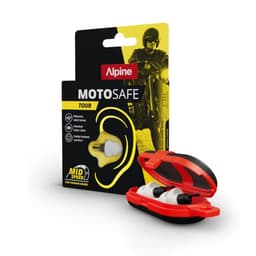
Alpine MotoSafe Tour Earplugs
Filtered plugs rather than foam: Alpine publishes 17 dB SNR for the Tour filter, so the wind roar drops while traffic, your intercom and the engine stay audible. On a long day it does more for fatigue than any helmet upgrade at this price.
See the quietest helmetsPrice as of October 4, 2026. #ad How we’re funded
The Tour filter, at a maker-published 17 dB SNR, is the one most riders should buy first. It is enough to remove the wind roar on a commute or a touring day while leaving traffic, sirens and your intercom clearly audible, and at this price it does more for end-of-day fatigue than any helmet upgrade we can name. The trade is stated plainly in our registry: disposable foam attenuates more overall for a fraction of the money, and this spends some of that attenuation on staying able to hear.
For faster or noisier riding
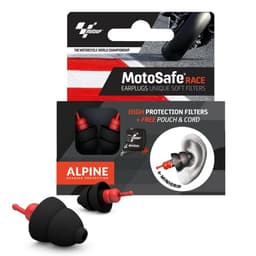
Alpine MotoSafe Race Earplugs
The same filtered plug with more attenuation — Alpine publishes 20 dB SNR for the Race filter. The version to buy if you ride faster roads, sit behind a screen that dumps turbulence at your helmet, or already find the Tour filter isn't enough.
See the quietest helmetsPrice as of October 4, 2026. #ad How we’re funded
The Race filter publishes 20 dB SNR — more attenuation, same filtered principle. Buy it if you ride faster roads, if you sit behind a screen that dumps turbulent air at the lower edge of your helmet, or if you have tried the Tour filter and want more. Do not buy it on the assumption that a bigger number is a better product: in a quiet helmet at moderate speeds it can over-plug you, and it costs more for a difference many riders only notice above highway speed.
Fitting them, which is most of the performance
- Reach over your head with the opposite hand and pull the top of your ear gently up and back. This straightens the ear canal and is the step almost everyone skips.
- Insert the plug with your other hand and release the ear. It should feel seated in the canal, not perched at the entrance.
- Plugs in first, then the helmet.Pulling a helmet down over your ears is the most common way a correctly fitted plug gets dislodged — check them once the helmet is on.
- Wash reusable plugs with warm water and let them dry fully. A dirty filter is a blocked filter, and a blocked filter is a foam plug with a worse fit.
The legal question, answered honestly
Earplug legality varies by state, and we are not going to publish a state-by-state table we cannot source. A small number of US states have statutes covering devices worn in or over both ears while operating a vehicle; the wording, the exemptions and whether hearing protection is covered differ, and some of those statutes are written for headphones rather than for plugs. Check your own state’s vehicle code. We hold helmet law to the same standard — our helmet law page cites the organisations that maintain the current tables rather than asserting the law from memory.
What else actually reduces noise
- Helmet sealing.A deep neck roll, a shield that closes against a gasket and a chin curtain do real work — this is the axis our quietest-helmets ranking is built on. No helmet is quiet, but the range between a sealed touring lid and a vented race shell is large.
- Screen height and angle. The single most under-appreciated variable. A screen that puts its turbulent wake at the level of your helmet is worse than no screen at all. If a new bike suddenly seems louder, this is usually why.
- A neck tube or collar that closes the gap. Air coming up under the helmet from your chest is a noise source as well as a cold one. See our cold-weather guide.
- Not an open-face helmet. Open-face wind noise is structural and cannot be fixed by model choice, which is why we treat plugs as part of the purchase on our open-face ranking.
Frequently asked questions
Do you need earplugs on a motorcycle?
If you ride at highway speed for any length of time, yes — and the reason is not the engine. The dominant noise inside a helmet at speed is aerodynamic: turbulent air moving over the shell, around the shield opening and off the lower edge of the helmet, often made worse by a screen that dumps disturbed air straight at your head. Engine and exhaust noise falls behind you; wind noise does not. It is also cumulative, which is the part riders underestimate — a commute twice a day, five days a week, for years, is a far larger total exposure than an occasional long tour.
Will earplugs stop me hearing traffic?
Foam plugs can get close to it, and that is the real argument for filtered plugs instead. A foam plug attenuates low frequencies less than high ones, so it muffles sirens, horns and your intercom while leaving the low-frequency rumble. A filtered plug is designed to attenuate more evenly across the frequency range, so the wind roar drops and speech, sirens and intercom audio stay intelligible — quieter, but still there. In practice most riders find their situational awareness improves with filtered plugs, because the thing that was masking everything else was the wind.
What does SNR mean on earplugs?
Single Number Rating: a single figure, in decibels, for how much a plug attenuates under a standardised test. The two filtered options we rank publish 17 dB SNR and 20 dB SNR respectively. Two things to understand about the number. It is a laboratory figure achieved with a correctly seated plug, so a plug sitting half-in gives you far less than the figure claims. And a higher number is not automatically better for riding — over-attenuating in an already-quiet touring helmet can leave you isolated from traffic, which is why the lower-rated filter is the one most riders should start with.
Are foam or filtered earplugs better for motorcycling?
Foam attenuates more overall and costs a fraction, and if the choice is foam or nothing, wear the foam. Filtered plugs cost more and attenuate less on paper, and are generally the better riding tool for two reasons: the attenuation is more even across frequencies so speech and warning sounds stay audible, and they are reusable and washable, which collapses the per-ride cost and means a pair lives in your jacket pocket permanently. The pocket point matters more than it sounds — the plugs you actually wear are the ones that are already with you.
Can you wear earplugs with an intercom?
Yes, and it usually works better than people expect, because the wind noise the plugs remove was the thing drowning your intercom out. You turn the volume down rather than up. Filtered plugs are the better choice here for the same reason they are better in traffic: they attenuate more evenly, so speech stays intelligible rather than muffled. If your intercom is inaudible with plugs in, the usual cause is speaker placement rather than the plugs — the speakers need to sit directly over your ear canal, which our intercom installation guide covers.
Is it legal to ride with earplugs?
It varies by state and we are not going to publish a state-by-state list from memory. A small number of US states have statutes about wearing devices in or over both ears while operating a vehicle, and the wording, the exemptions and whether hearing protection is covered differ between them. The reliable move is to check your own state's vehicle code rather than trust a summary, including ours. What we will not do is tell you the answer for your state without a primary source for it — that is the same rule we apply to every factual claim on this site.
Do quiet helmets mean you do not need earplugs?
No, and this is where the lack of any noise rating really bites. A well-sealed touring helmet with a deep neck roll genuinely is quieter than a vented race shell, and that is a real reason to buy one. But quieter is not quiet: at highway speed the levels inside even the best-sealed helmet are high enough that duration matters. Neither SHARP nor MotoCAP — the two independent gear-rating programmes that exist — publishes a noise figure, and no US body publishes one at all, so there is no threshold anyone can point you at. Treat plugs as part of the helmet rather than an alternative to a good one.
How do I fit motorcycle earplugs properly?
Reach over your head with the opposite hand and pull the top of your ear gently upward and back — that straightens the ear canal — then insert the plug with the other hand and release. It should feel seated rather than resting at the entrance. Put them in before the helmet goes on, not after, and check them after the helmet is on, because pulling a helmet over your ears is the most common way a correctly fitted plug gets dislodged. A plug that is not seated gives you a fraction of its published SNR and a false sense that it is working.
Sources
- SHARP — UK Government Helmet Safety Ratings — UK Department for Transport independent helmet safety star ratings (accessed July 21, 2026)
- MotoCAP — Independent Motorcycle Clothing & Helmet Assessment — Independent Australian lab rating protective clothing and helmets for protection and comfort (accessed July 21, 2026)
- NHTSA — How to Choose the Right Motorcycle Helmet — NHTSA consumer guidance on DOT certification and spotting novelty helmets (accessed July 21, 2026)
- 49 CFR 571.218 — FMVSS No. 218, Motorcycle helmets — The US federal helmet standard: peak-acceleration, penetration and retention requirements; applies to all on-road motorcycle helmets (accessed July 21, 2026)
Keep reading
Quietest motorcycle helmets
What actually makes a helmet quiet — shell sealing, neck roll and aero shape — and which ones do it.
See the quiet picksMotorcycle touring gear checklist
Everything worth having on a long trip, in the order of how much difference it makes.
Read the checklistHow to install a motorcycle intercom
Speaker placement is the difference between an audible intercom and a useless one, especially with plugs in.
Read the install guideBest helmets for commuting
The most repetitive noise exposure a rider has, twice a day — ranked for the daily ride.
See the commuter picksBest motorcycle gifts under $50
Gear a rider will actually use, including the things they keep meaning to buy for themselves.
See the gift picksOpen-face vs full-face helmets
Open-face wind noise is not fixable by helmet choice, which is why plugs are part of that decision.
Compare the two