Leather vs Textile Motorcycle Jackets
Abrasion resistance against weather range, and a jacket you keep for fifteen years against one you can vent, wash and wear in the rain. The honest trade, both ways.
How this is funded: we earn a commission if you buy through our links, at no extra cost to you. It never changes which gear we recommend, and we’ll tell you plainly when to skip a pick. Full disclosure.
This is the first real decision in buying a riding jacket, and it is usually framed badly. The internet version is “leather is safer, textile is more practical,” which is true enough to be useless. Both statements collapse the moment you compare a specific jacket to another specific jacket — a 1.2 mm cowhide race shell and a soft fashion-weight leather are both “leather,” and a GORE-TEX adventure shell and a $60 mesh jacket are both “textile.”
What follows is the version that actually helps: what each material is genuinely good at, where each one fails, and how to work out which side of the line your riding falls on. Then two picks, one from each camp, so you can see what the two answers look like in practice.
The short version
- Buy leather if your riding is dry-weather, if you want the best abrasion material available, if you ride sport or track, or if you want one jacket for the next fifteen years and are willing to maintain it.
- Buy textile if you commute year-round, if you ride in weather you did not choose, if you need to vent on hot days, if you want a waterproof layer built in, or if you want the jacket to be washable.
- Buy both, eventually. Most riders who keep riding end up with a mesh or textile jacket for the year and a leather one for the days it suits. That is not a cop-out; it is what the trade-offs actually produce.
Abrasion: what leather is genuinely better at
A slide down tarmac is a friction problem. The material has to survive the heat and the grinding long enough to stop before your skin becomes the wear surface. Thick cowhide is very good at this: it is dense, fibrous, holds together as it abrades, and — critically — it does not melt. That last point is why polyester-heavy fabrics with no abrasion-specific construction are a poor idea next to skin, and why serious textile jackets use reinforced panels at the impact zones rather than relying on the shell fabric alone.
The caveat is that thickness and construction do the work, not the word “leather.” A fashion jacket in thin, soft hide with single-stitched seams is not race gear that happens to be cheaper. If abrasion is the reason you are buying leather, look for a stated hide weight, double or triple stitching at the main seams, and reinforcement at the shoulders, elbows and hips.
Weather: what textile is genuinely better at
Leather has no waterproof layer. It absorbs water, it gets heavy and cold, and repeated soaking dries the hide out unless you feed it afterwards. Textile jackets solve rain in one of two ways, and the difference matters:
Drop liners
A separate waterproof membrane zipped inside the shell. Cheaper, and it works — but the outer fabric soaks through first and then you are riding in a wet jacket with a dry inside. Fine for occasional rain, annoying on a multi-day trip because the shell takes hours to dry.
Laminates
The membrane is bonded to the outer fabric, so the shell itself stops water rather than absorbing it. More expensive, noticeably better in sustained weather, and the construction used on serious adventure and touring jackets. If you ride in genuine weather rather than around it, this is the feature worth paying for — see our adventure and touring jacket picks for what that looks like.
Heat: not close
Perforated leather moves some air and is a real thing, but a mesh textile jacket has open panels — the air goes straight through. On a genuinely hot day the comparison is not close, and it matters more than most protection arguments do, because the failure mode of an uncomfortable jacket is that you stop wearing it. A rider in a mesh jacket with CE armor is far better protected than the same rider in a leather jacket left at home. Our mesh jacket picks cover that whole category.
Armor: a garment question, not a material question
This is where most buyers get caught. Whether a jacket has real armor is decided by the maker, not by the material. There are leather jackets with CE Level 2 at the shoulders and elbows plus a rated back protector, and there are leather jackets with nothing but empty pockets. Same for textile.
What to check before you buy, in both materials: CE EN 1621-1 armor at shoulders and elbows, and what is at the back — a genuine EN 1621-2 back protector, or a shaped foam pad with no rating at all, which is what a great many jackets ship with. If it is foam, budget for an insert; it is the cheapest meaningful upgrade in motorcycle gear. Our CE armor ratings guide explains what Level 1 and Level 2 actually measure and why Level 2 is not automatically the right answer.
Fit and how it changes over time
Leather is bought snug and breaks in. A new cowhide jacket that feels slightly tight across the shoulders in the shop is usually correct; the hide softens and takes your shape over the first few thousand miles, and a leather jacket bought loose stays loose forever, which lets armor wander off the joint it is supposed to be over.
Textile does not break in meaningfully. What it does instead is accommodate: most touring and adventure textile jackets are cut with room for a thermal liner or a mid-layer, and they have adjusters at the arms, waist and cuffs so you can pull the armor back into position when you are wearing less underneath. Buy leather for the fit you want. Buy textile for the range of layers you will actually wear.
Care, cost and lifespan
Textile is usually machine-washable, which sounds trivial and is not — a jacket you have ridden in all summer is not a pleasant object, and being able to wash it is a genuine advantage. It wears out at the coatings: the water-repellent finish stops beading, tapes lift, zips and liners fail before the outer fabric does.
Leather asks for maintenance — clean it, feed it, dry it slowly and never on a radiator — and repays it with a lifespan textile does not approach. A good leather jacket that gets looked after outlives several textile ones and gets better to wear as it goes. Whether that is worth it depends entirely on whether you will do the maintenance.
One pick from each side
Below is the shape of each answer: a race-grade perforated cowhide, and a three-season textile built to be the only jacket you own. Both are covered in full on their category pages.
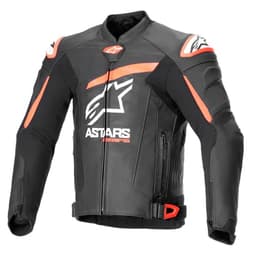
The leather answer
Alpinestars GP Plus R V4 Air Leather
Premium cowhide in a race fit, with perforated panels for airflow, CE-certified armor and DFS shoulder sliders. This is what a leather jacket looks like when abrasion resistance is the design brief rather than the styling.
Compare all the leather picks →Price as of October 19, 2026. #ad How we’re funded
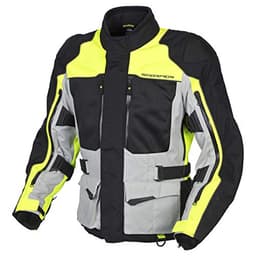
The textile answer
ScorpionEXO Yosemite XDR
A three-season touring jacket with a zip-out waterproof liner, a thermal layer and CE armor — the do-everything option for riders who commute through weather rather than only in summer.
Compare the textile and touring picks →Price as of October 19, 2026. #ad How we’re funded
How to decide in one question
Ask yourself what proportion of your riding is in weather you did not choose. If the answer is “almost none — I ride when it is good,” buy leather and enjoy it. If the answer is “I commute and I go whatever it is doing,” buy textile, because a jacket that handles the day you are actually having beats a better material you cannot use. Everything else in this comparison is detail on top of that one question.
How to read our safety notes. We have not crash-tested any of this gear — nobody honestly can on a review budget. Every helmet and armor pick names the certification the maker publishes (DOT, ECE 22.06, SNELL, or a CE level), which we read from the listing on a dated visit. Certification is the floor, not a guarantee; fit and condition matter as much as the sticker. What the standards actually mean.
Frequently asked questions
Is leather safer than textile for motorcycle riding?
For pure abrasion, a thick cowhide jacket is still the reference material — it is dense, it does not melt, and it holds together under sliding friction in a way most fabrics do not. But 'leather' and 'textile' are not grades, they are materials. A 1.2 mm cowhide race jacket and a soft fashion-weight leather jacket are both leather and are not remotely comparable, and a modern laminate textile shell with aramid reinforcement can outperform thin leather. What actually decides protection is the specific garment: material weight, seam construction, and the CE armor inside it. Independent labs such as MotoCAP publish garment-level assessments precisely because the material label is not enough on its own.
Can you wear a leather motorcycle jacket in the rain?
You can ride home in one, but you should not plan around it. Leather is not waterproof — it absorbs water, gets heavy, and repeated soaking-and-drying dries out the hide unless you feed it. Most leather riding jackets have no waterproof membrane and no removable rain liner. If your ride includes weather you did not choose, that is the single strongest argument for a textile jacket, which is where the laminate and drop-liner constructions live.
Which is better for hot weather?
Textile, almost always. Perforated leather exists and it works better than solid hide, but mesh textile moves far more air because the panels are literally open. On a hot day the practical choice is a mesh jacket with CE armor rather than any leather jacket, because a jacket you take off in traffic protects nothing. Our mesh jacket picks cover that category in full.
Do leather and textile jackets come with armor?
It varies by garment, not by material, and this is the single most common thing buyers get wrong. Plenty of jackets in both materials ship with empty armor pockets and a foam pad at the back that has no CE rating at all. Check what is actually in the box: CE EN 1621-1 armor at the shoulders and elbows, and either a real EN 1621-2 back protector or a pocket you intend to fill. A CE Level 1 or Level 2 insert is one of the cheapest genuine safety upgrades available.
Which lasts longer?
Leather, usually by a wide margin. A well-made cowhide jacket that is kept fed and dry can outlast several textile jackets — the hide softens and molds to you rather than degrading. Textile shells wear out at the coatings and the membrane: waterproofing tapes fail, DWR finishes stop beading, and zips and liners give up before the outer fabric does. Textile is also machine-washable in most cases, which matters more than it sounds after a few thousand miles.
What is EN 17092?
It is the European standard for whole motorcycle garments — it grades a complete jacket or pant from AAA down to C on abrasion, seam strength and tear strength. It is separate from EN 1621, which covers only the armor inside. It is genuinely useful because it rates the garment rather than the material. The catch for US buyers is that very little gear sold into this market publishes an EN 17092 class, so most listings give you no rating to read. Where a maker publishes one we quote it; where they do not, we say so rather than inferring a grade from the material.
Sources
- MotoCAP — Independent Motorcycle Clothing & Helmet Assessment — Independent Australian lab rating protective clothing and helmets for protection and comfort (accessed July 21, 2026)
- NHTSA — Traffic Safety Facts 2023: Motorcycles (DOT HS 813 732) — 2023 motorcyclist fatality, injury and helmet-use statistics (accessed July 21, 2026)
- SHARP — UK Government Helmet Safety Ratings — UK Department for Transport independent helmet safety star ratings (accessed July 21, 2026)
Keep reading
Best leather motorcycle jackets
Race-grade cowhide down to classic cruiser cuts — and which ones actually come with armor in the box.
See the leather picksBest mesh motorcycle jackets
Maximum-airflow summer jackets, from premium sport shells to value picks with rain liners.
See the mesh picksHow to choose a motorcycle jacket
Material, armor, fit and weather in the order that actually matters, with the questions to ask before you buy.
Read the guideBest motorcycle armor inserts
The cheapest real safety upgrade there is — replacing the foam pad your jacket shipped with for a CE-rated insert.
See the armor picks