Apex & Armor

Best Adventure & Touring Motorcycle Jackets

Laminate shells, zip-out liners and vents that actually open at low speed — the jackets built for riding in weather rather than around it.

By Stephen V.Last updated How we research

An adventure jacket has a harder brief than any other piece of riding gear. It has to keep you dry through six hours of rain, then vent enough that you don’t cook standing on the pegs at 15 mph in 90-degree heat, then take a thermal liner for a cold pass at altitude, then carry armor through all of it. Most jackets do one of those things well. The good ones do three.

The single biggest technical divide is laminate versus drop-liner waterproofing. A laminate jacket bonds the waterproof membrane to the outer shell, so the shell itself never soaks through. A drop-liner jacket puts a separate waterproof layer inside, so the outer fabric wets out and gets heavy in sustained rain, even though you stay dry underneath. Laminate is better and costs roughly twice as much, and that single distinction explains most of the price gap on this page.

The second divide is venting that works at low speed. Any jacket vents at 70 mph. Almost none vent at 15 mph on a dirt climb, which is exactly when you’re working hardest. Big through-vents with matching exhausts on the back are the design answer, and they’re a feature you can see in the photos.

How this is funded: we earn a commission if you buy through our links, at no extra cost to you. It never changes which gear we recommend, and we’ll tell you plainly when to skip a pick. Full disclosure.

Quick picks

Ranked on certification, spec and buyer fit. Select a row to jump to the full write-up. We haven’t crash-tested this gear — here is exactly what we do instead.

#GearBest forPrice
1
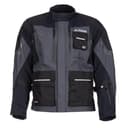
KLIM Carlsbad

KLIM Carlsbad

The reference hard-use adventure jacket: a GORE-TEX shell with huge vents that actually open, built for riders who spend real days off pavement. Expensive, and the one ADV riders keep replacing with the same jacket.

Best overall
$799.99 · View on Amazon

Price as of September 4, 2026. #ad How we’re funded

2
KLIM Latitude

KLIM Latitude

KLIM's touring jacket rather than its off-road one: GORE-TEX weather protection in a cut aimed at seated highway miles instead of standing on the pegs. The choice if your adventure is mostly pavement.

Best for touring
$849.99 · View on Amazon

Price as of September 4, 2026. #ad How we’re funded

3
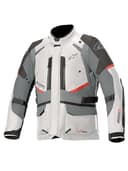
Alpinestars Andes V3 Drystar

Alpinestars Andes V3 Drystar

The adventure-touring value benchmark: a Drystar waterproof membrane, a removable thermal liner and CE armor at shoulders and elbows, for roughly a quarter of what the GORE-TEX flagships cost.

Best value
$239.36 · View on Amazon

Price as of September 4, 2026. #ad How we’re funded

4
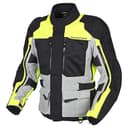
ScorpionEXO Yosemite XDR

ScorpionEXO Yosemite XDR

A three-season touring jacket with a zip-out waterproof liner, a thermal layer and CE armor — the do-everything option for riders who commute through weather rather than only in summer.

Best three-season
$424.95 · View on Amazon

Price as of September 4, 2026. #ad How we’re funded

5
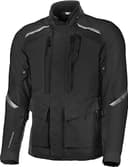
Fly Racing Terra Trek

Fly Racing Terra Trek

A dual-sport-focused adventure jacket with big zip vents, a removable waterproof liner and armor pockets throughout — aimed at riders who split time between dirt roads and the commute.

Best budget
$299.95 · View on Amazon

Price as of September 4, 2026. #ad How we’re funded

The picks in full

#1Best overall

KLIM Carlsbad

The reference hard-use adventure jacket: a GORE-TEX shell with huge vents that actually open, built for riders who spend real days off pavement. Expensive, and the one ADV riders keep replacing with the same jacket.

Strengths

  • GORE-TEX waterproof shell — waterproofing built in rather than a zip-in liner
  • Very large vents designed to work at low off-road speeds
  • Built for standing riding position with articulated sleeves and a long back

Trade-offs

  • Flagship pricing — the most expensive jacket on this page
  • Shell-only design means layering for warmth rather than a zip-in thermal
Safety standardCheck current listing
ConstructionGORE-TEX laminate shell
Key featureGORE-TEX ADV shell
Fit / sizingADV fit; cut for standing on the pegs
Best forSerious ADV riders who ride in genuine weather and off pavement

Specs and certification read from the manufacturer and retailer listing, on August 11, 2026. “Check current listing” means the maker doesn’t publish that figure — we won’t guess it.

#2Best for touring

KLIM Latitude

KLIM's touring jacket rather than its off-road one: GORE-TEX weather protection in a cut aimed at seated highway miles instead of standing on the pegs. The choice if your adventure is mostly pavement.

Strengths

  • GORE-TEX construction for genuinely all-day rain riding
  • Touring cut — less bulk than a hard-use off-road shell
  • Extensive venting and storage for long days

Trade-offs

  • Premium price, and the touring cut gives up some off-road articulation
  • KLIM doesn't publish a CE garment rating for this model
Safety standardCheck current listing
ConstructionGORE-TEX laminate shell
Key featureGORE-TEX touring shell
Fit / sizingTouring fit; room for a mid layer
Best forSport-touring and ADV riders who mostly cover distance on road

Specs and certification read from the manufacturer and retailer listing, on August 11, 2026. “Check current listing” means the maker doesn’t publish that figure — we won’t guess it.

#3Best value

Alpinestars Andes V3 Drystar

The adventure-touring value benchmark: a Drystar waterproof membrane, a removable thermal liner and CE armor at shoulders and elbows, for roughly a quarter of what the GORE-TEX flagships cost.

Strengths

  • Drystar waterproof, breathable membrane built into the shell
  • Removable thermal liner — genuinely a three-season jacket
  • CE-certified protectors at shoulders and elbows in the box

Trade-offs

  • Back protector is a foam pad; a CE Level 2 insert is a separate purchase
  • Heavier and less breathable than a laminate GORE-TEX shell in the heat
Safety standardCheck current listing
ConstructionPolyamide with Drystar membrane
Key featureDrystar waterproof + CE armor
Fit / sizingTouring fit; room for the thermal liner
Best forADV and touring riders who want all-weather coverage on a real budget

Specs and certification read from the manufacturer and retailer listing, on August 11, 2026. “Check current listing” means the maker doesn’t publish that figure — we won’t guess it.

#4Best three-season

ScorpionEXO Yosemite XDR

A three-season touring jacket with a zip-out waterproof liner, a thermal layer and CE armor — the do-everything option for riders who commute through weather rather than only in summer.

Strengths

  • Zip-out waterproof membrane and thermal liner for three seasons
  • CE armor at shoulders and elbows with a back-pad pocket
  • Hi-vis panels and plenty of storage for commuting

Trade-offs

  • Bulkier and warmer than a dedicated summer mesh jacket
  • Layered construction is heavier to pack and wear
Safety standardCheck current listing
Construction600D textile with waterproof membrane
Key feature3-season textile + CE armor
Fit / sizingRegular touring fit; room for layers
Best forAll-weather commuters and tourers who want one jacket for the year

Specs and certification read from the manufacturer and retailer listing, on July 21, 2026. “Check current listing” means the maker doesn’t publish that figure — we won’t guess it.

#5Best budget

Fly Racing Terra Trek

A dual-sport-focused adventure jacket with big zip vents, a removable waterproof liner and armor pockets throughout — aimed at riders who split time between dirt roads and the commute.

Strengths

  • Large zip vents front, back and on the arms for hot low-speed work
  • Removable waterproof and thermal liners for season range
  • Hi-vis panel options for road visibility

Trade-offs

  • Liner-based waterproofing wets out the outer shell in sustained rain
  • FLY doesn't publish a CE certification for the included armor
Safety standardCheck current listing
Construction600D textile with removable liners
Key featureVented ADV textile + liners
Fit / sizingADV fit; room for layers
Best forDual-sport riders who want ADV features without ADV pricing

Specs and certification read from the manufacturer and retailer listing, on August 11, 2026. “Check current listing” means the maker doesn’t publish that figure — we won’t guess it.

How to choose an adventure or touring jacket

1. Be honest about your rain hours

If you ride through genuine multi-hour rain more than a handful of times a year, a laminate shell is worth the money and you will notice the difference the first time. If you commute in mostly-dry weather and occasionally get caught out, a drop-liner jacket is entirely adequate and leaves budget for other gear. Nobody needs GORE-TEX to ride to work in California.

2. Count the vents, and look for exhausts

Intake vents on the chest and arms do nothing without exhaust vents on the back to pull air through. A jacket with four intakes and no exhausts is a jacket that traps hot air. Look at the back panel in the product photos; if there are no vent zips there, the venting is decorative.

3. Check what armor is actually included

Most jackets in this category include CE armor at shoulders and elbows and a foam pad at the back. That foam pad is not armor. It is the single cheapest and most impactful upgrade you can make — a CE Level 2 back insert costs around fifty dollars and replaces a piece of packing foam with something that has passed a laboratory impact test. See our insert picks and what CE levels actually mean.

4. Fit for layers, then check the armor position

An ADV jacket needs room for a thermal liner and a base layer, so it should not fit like a sport jacket. But room for layers is not the same as loose — the shoulder and elbow armor must stay over your joints when you’re in the riding position and when you stand on the pegs. Try both positions. A jacket that fits standing upright in a shop and lets the elbow armor slide down your forearm when you reach for the bars is the wrong size.

5. Adventure cut versus touring cut

An adventure jacket is cut for standing: longer at the back, articulated at the shoulder, room through the chest. A touring jacket is cut for sitting: less bulk, more streamlined, more storage in accessible places. If you ride 90% seated on pavement, the touring cut is more comfortable and less flappy at speed. If you spend real time on the pegs, take the ADV cut.

Layering: how the system is supposed to work

The modern ADV jacket is a system, not a garment. From the inside out: a wicking or thermal base layer against your skin, an optional insulating mid layer, and the shell with its armor. The mistake most riders make is treating the jacket’s zip-in thermal liner as the only warmth option; a proper thermal base layer under a shell is warmer, less bulky and doesn’t compromise the armor position the way a thick mid layer can.

What we’re not claiming

We have not put any of these jackets through a rain chamber or an abrasion test, and we don’t claim to have. Waterproofing technology (GORE-TEX, Drystar) and armor certifications below are what the makers publish, read on a dated visit. Independent garment testing does exist — MotoCAP in Australia rates protective clothing for both protection and comfort — and where a specific model has been tested there, that is a far better data source than any review including ours.
Frequently asked questions

What's the difference between a laminate and a drop-liner motorcycle jacket?

In a laminate jacket the waterproof membrane is bonded directly to the outer shell fabric, so the outside never soaks through and the jacket stays light in the rain. In a drop-liner jacket the membrane is a separate layer hanging inside, so the outer fabric wets out and gets heavy even though you stay dry. Laminate is better and typically costs about twice as much — it's the main reason for the price spread in this category.

Do I need GORE-TEX for adventure riding?

Only if you genuinely ride multi-hour rain regularly. GORE-TEX is a laminate construction that keeps the shell from wetting out, which matters enormously on a wet day and not at all on a dry one. Riders who get caught in occasional showers are well served by a drop-liner jacket at a third of the price, and the money is often better spent on a CE Level 2 back protector.

Does the back protector in my jacket count as armor?

Usually not. Most jackets in this category ship with CE-certified shoulder and elbow armor and a plain foam pad in the back pocket. That foam pad has not passed any impact test — it's there to make the pocket look filled and to add a little comfort. Replacing it with a CE Level 2 back insert costs around fifty dollars and is the single highest-value protection upgrade available to most riders.

How should an adventure jacket fit?

Loose enough for a base layer and a thermal mid layer, snug enough that the shoulder and elbow armor stays over your joints. Test it in the riding position and standing on the pegs, not just standing upright in a shop — if the elbow armor slides down your forearm when you reach for the bars, the jacket is too big no matter how it feels off the bike. ADV cuts are longer at the back for exactly this reason.

Can one jacket really cover all four seasons?

Close to it, if it has a laminate or drop-liner membrane, a removable thermal layer and vents that genuinely open. What no single jacket does well is genuine summer heat above about 90F — for that you want a dedicated mesh jacket, because a vented touring shell still has far more fabric between you and the air. Most riders who do serious mileage end up with a shell for three seasons and a mesh jacket for high summer.

Sources

Keep reading

More in Jackets