Armored base layers: what they are and aren’t
What they do
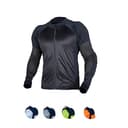
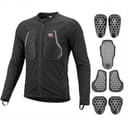
They put CE-rated impact protectors on your shoulders, elbows and back inside a garment thin enough to wear under a jacket, or on its own when it is too hot for a jacket. For an ADV rider standing on the pegs in 100-degree heat, or a rider whose textile jacket came with empty armor pockets, that is genuinely useful.
What they don’t do
Abrasion.A mesh shirt will not survive contact with pavement in any meaningful way. If you ride in an armored shirt with no jacket over it, you have impact protection and no skin protection. That’s a legitimate choice for slow off-road riding where the heat risk is real and the abrasion surfaces are soft; it is a poor choice at highway speed on tarmac. We’d rather say that plainly than sell you a shirt on a false premise.
Check the CE level and where the claim comes from
One of the shirts here states CE Level 2 on its listing and one states CE Level 1. Both claims come from the product listing rather than from a published manufacturer certification document, and our spec tables mark them “(listing)” for that reason. That is weaker evidence than an Alpinestars or Leatt certification, and you should weigh it accordingly. What the levels mean is covered in CE armor ratings explained.
Cooling layers: the unglamorous fix for summer
A cooling base layer works by moving sweat off your skin and spreading it across a larger surface so it evaporates. That only functions if air can reach it — which is why a cooling shirt under a mesh jacketis transformative and a cooling shirt under a sealed textile jacket does very little. Buy one if you already own the mesh jacket; buy the mesh jacket first if you don’t.
A cotton T-shirt is the worst possible summer base layer: it absorbs sweat, holds it against your skin and stops evaporating. If you take one thing from this page, make it that.
Thermal layers: warmth without bulk
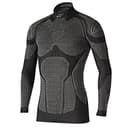
The mistake most riders make in cold weather is adding a thick mid layer — a hoodie, a fleece — under a jacket that was fitted without it. That pushes the shoulder and elbow armor out of position, which quietly undoes the protection you paid for. A compression-fit thermal base layer adds warmth with almost no bulk and leaves the armor where it belongs.
When a thermal layer is not enough on its own, the next step up follows the same logic: a heated liner or heated vestis thin enough to leave the armor alone and makes its own heat rather than trying to trap yours. Note that these are the opposite product to the armored shirts on this page — no heated garment publishes a CE rating of any kind, so it replaces your fleece, not your armor.
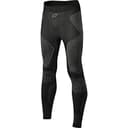
The half almost everyone forgets is the legs. Riding pants and armored jeans flow cold air straight onto your thighs at speed, and a thermal riding bottom costs less than heated grips while making a bigger difference to how long you can ride in the cold.
Building the layer system
- Skin: a wicking or thermal base layer sized to fit closely. Never cotton.
- Armor: either in the jacket’s pockets (see armor inserts) or in an armored shirt.
- Insulation, if needed: thin, and checked against armor position.
- Shell: the jacket that provides abrasion resistance and weather protection.
Get that order right and one jacket covers a much wider temperature range than its marketing claims.