Apex & Armor

ECE 22.06 Motorcycle Helmets

Four helmets in our registry publish ECE 22.06 by name. Ten more publish "ECE" with no version at all, and three publish the older 22.05. On a US listing those three things look identical.

By Stephen V.Last updated How we research

Our certification guide explains what ECE 22.06 tests. This page is the other half of the question — which helmets you can actually buy with it— and it exists because that turns out to be much harder to answer than it should be.

Here is the problem in one sentence. “ECE” on a US product listing is not a version number, and 22.06 and 22.05 are genuinely different tests. 22.06 replaced 22.05 as the current UN regulation and added, among other things, oblique-impact testing for rotational forces — the injury mechanism that the older standard’s straight linear drops never measured. A helmet homologated years ago to 22.05 is a certified helmet; it is not a helmet that passed the rotational test. And because no US seller is obliged to state a version at all — ECE is voluntary here, and only DOT FMVSS 218 is legally required for on-road sale — a lot of them simply write “DOT/ECE approved” and stop.

So we went through the whole registry and sorted every helmet by what its maker publishes, not by what the category implies. Seventeen helmets carry an ECE claim of some kind. Four publish 22.06 by name. Three publish 22.05. Ten publish “ECE” with no version attached. The four ranked below are the 22.06 helmets that returned a live, buyable offer when we checked on 18 September 2026. We own none of these helmets and run no lab — our methodology page sets out exactly what we do instead.

How this is funded: we earn a commission if you buy through our links, at no extra cost to you. It never changes which gear we recommend, and we’ll tell you plainly when to skip a pick. Full disclosure.

Quick picks

Ranked on certification, spec and buyer fit. Select a row to jump to the full write-up. We haven’t crash-tested this gear — here is exactly what we do instead.

#GearBest forPrice
1
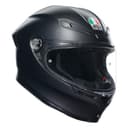
AGV K6 S

AGV K6 S

DOT + ECE 22.06

One of the lightest full-carbon-aramid lids you can buy at ~1,255 g, and it's certified to the newer ECE 22.06 standard on top of DOT. The sport-touring helmet for riders who notice weight on a long day.

Best overall
$599.00 · View on Amazon

$639.006% off

Price as of September 22, 2026. #ad How we’re funded

2
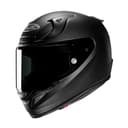
HJC RPHA 12

HJC RPHA 12

DOT + ECE 22.06

HJC's sport flagship, and the model that replaced the discontinued RPHA 11 Pro: a PIM EVO composite shell of carbon-aramid hybrid and natural fibers, DOT on the US listing with ECE 22.06 published for the model, and a wind-tunnel-developed shape built for a tucked riding position.

Best value
$227.43 · View on Amazon

Price as of September 22, 2026. #ad How we’re funded

3
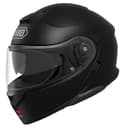
Shoei Neotec 3

Shoei Neotec 3

DOT + ECE 22.06

The benchmark touring modular. Shoei's AIM shell, DOT plus ECE 22.06 with P/J dual homologation (legal to ride with the chin bar up), and the quietest flip-front we know of. Expensive, and worth it for high-mileage touring.

Best modular (P/J)
$949.99 · View on Amazon

Price as of September 22, 2026. #ad How we’re funded

4
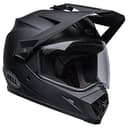
Bell MX-9 Adventure MIPS

Bell MX-9 Adventure MIPS

DOT + ECE 22.06

The value benchmark for adventure helmets: DOT and ECE 22.06 certification plus a MIPS rotational-management liner at a mid price. Heavy at roughly 1,696 g, but nothing else certified to 22.06 costs this little.

Best adventure
$249.95 · View on Amazon

Price as of September 22, 2026. #ad How we’re funded

The picks in full

#1Best overallDOT + ECE 22.06

AGV K6 S

One of the lightest full-carbon-aramid lids you can buy at ~1,255 g, and it's certified to the newer ECE 22.06 standard on top of DOT. The sport-touring helmet for riders who notice weight on a long day.

Strengths

  • DOT + ECE 22.06 — tested to the newer standard with rotational-impact criteria
  • Carbon-aramid shell, ~1,255 g — genuinely light, reduces neck fatigue on tour
  • Wide eyeport and strong airflow from AGV's racing lineage

Trade-offs

  • Premium price for the carbon-aramid construction
  • Sportier interior padding is firmer than a plush touring helmet
Safety standardDOT + ECE 22.06
ConstructionCarbon-aramid fiber shell
Claimed weight1,255 g
Key featureDOT + ECE 22.06
Fit / sizingIntermediate oval; light on the head
Best forSport-touring riders who want the lightest certified full-face

Specs and certification read from the manufacturer and retailer listing, on July 21, 2026. “Check current listing” means the maker doesn’t publish that figure — we won’t guess it.

#2Best valueDOT + ECE 22.06

HJC RPHA 12

HJC's sport flagship, and the model that replaced the discontinued RPHA 11 Pro: a PIM EVO composite shell of carbon-aramid hybrid and natural fibers, DOT on the US listing with ECE 22.06 published for the model, and a wind-tunnel-developed shape built for a tucked riding position.

Strengths

  • DOT FMVSS 218 on the US listing, and HJC publishes ECE 22.06 for the model
  • PIM EVO composite shell — carbon-aramid hybrid, carbon, glass and natural fibers
  • Ships with a clear and a dark smoke HJ-42 shield plus the Pinlock insert
  • Emergency Kit cheek pads for rescue, and a wider eye port for peripheral vision

Trade-offs

  • HJC doesn't publish a shell weight for it, so it can't be ranked on weight
  • Double D-ring closure rather than a micrometric ratchet, which is slower in gloves
Safety standardDOT + ECE 22.06
ConstructionPIM EVO composite shell (carbon-aramid hybrid and natural fibers)
Claimed weightCheck current listing
Key featureDOT + ECE 22.06, PIM EVO shell
Fit / sizingRPHA premium-fit interior; interchangeable cheek pads in every size
Best forSport riders who want a track-shaped composite helmet without the top-tier price

Specs and certification read from the manufacturer and retailer listing, on September 5, 2026. “Check current listing” means the maker doesn’t publish that figure — we won’t guess it.

#3Best modular (P/J)DOT + ECE 22.06

Shoei Neotec 3

The benchmark touring modular. Shoei's AIM shell, DOT plus ECE 22.06 with P/J dual homologation (legal to ride with the chin bar up), and the quietest flip-front we know of. Expensive, and worth it for high-mileage touring.

Strengths

  • DOT + ECE 22.06 with P/J dual homologation — rated open AND closed
  • Class-leading wind noise control and sealing for long days
  • Sena SRL3 comms integrate cleanly without breaking the shell lines

Trade-offs

  • The most expensive modular here by a wide margin
  • Heavier than a full-face at ~1,850 g, as all modulars are
Safety standardDOT + ECE 22.06
ConstructionAIM multi-composite shell
Claimed weight1,850 g
Key featureDOT + ECE 22.06 (P/J)
Fit / sizingIntermediate oval; long-oval friendly
Best forTouring riders who want a certified, genuinely quiet flip-front

Specs and certification read from the manufacturer and retailer listing, on July 21, 2026. “Check current listing” means the maker doesn’t publish that figure — we won’t guess it.

#4Best adventureDOT + ECE 22.06

Bell MX-9 Adventure MIPS

The value benchmark for adventure helmets: DOT and ECE 22.06 certification plus a MIPS rotational-management liner at a mid price. Heavy at roughly 1,696 g, but nothing else certified to 22.06 costs this little.

Strengths

  • DOT + ECE 22.06 certified — tested under the newer rotational-impact protocol
  • MIPS low-friction layer included at this price point
  • Peak, shield and goggle-ready configurations all supported

Trade-offs

  • About 1,696 g — noticeably heavy on a long day
  • Polycarbonate shell rather than a composite; that's where the price saving comes from
Safety standardDOT + ECE 22.06
ConstructionPolycarbonate shell
Claimed weight1,696 g
Key featureDOT + ECE 22.06 + MIPS
Fit / sizingIntermediate oval; MIPS liner
Best forADV riders who want ECE 22.06 and MIPS without spending flagship money

Specs and certification read from the manufacturer and retailer listing, on August 22, 2026. “Check current listing” means the maker doesn’t publish that figure — we won’t guess it.

What 22.06 added over 22.05

ECE 22.06 is the current version of UN Regulation No. 22, the European homologation standard for motorcycle helmets. The headline change over 22.05 is that the test protocol stopped being purely linear. 22.06 added oblique-impact testing, which measures rotational energy transferred to the head in an angled strike — the kind of impact a rider is far more likely to have than a clean vertical drop. It also broadened the test matrix: more impact points on the shell, a wider range of impact speeds rather than a single one, and testing of accessories such as drop-down sun visors rather than the bare helmet alone.

That last point is worth holding on to, because it is the reason a 22.06 mark tells you more than a 22.05 mark about the helmet as you will actually wear it. It is also why a 22.06 helmet and a MIPS helmet are not the same kind of claim. MIPS is a design feature a maker fits; 22.06 is a result a testing body issued. Our MIPS guide works through that distinction properly.

The honest limit of this page

ECE is a European regulation, and none of it is required to sell a helmet in the United States. What is required here is DOT FMVSS 218, and DOT works on a completely different model: the manufacturer self-certifies to the federal standard and NHTSA buys helmets off the shelf and re-tests them. Nobody hands out a DOT certificate. So the practical reading of a helmet that carries both marks is this: the DOT mark is the legal one and the ECE 22.06 mark is the evidence that someone independently put that shell through a rotational test. One is the floor, the other is the extra.

And the version matters more than the mark. If you are choosing between a helmet that publishes “ECE 22.06” and one that publishes “DOT/ECE”, you are not choosing between a certified helmet and an uncertified one — you are choosing between a known test generation and an unknown one. The unknown one may well be 22.06. It may equally be a 22.05 homologation from 2018. A listing that does not say is not evidence either way, and we will not fill that gap with a guess.

Every ECE helmet in the registry, by what its maker publishes

This is the table we wanted to find and could not, so we built it. Read on 18 September 2026 from each entry’s recorded certification.

Published certificationHelmetsWhat you know
DOT + ECE 22.06AGV K6 S, HJC RPHA 12, Shoei Neotec 3 (P/J), Bell MX-9 Adventure MIPSTested to the current protocol, oblique impact included
DOT + ECE 22.05HJC i90, ScorpionEXO GT930, Simpson Speed BanditCertified, to the previous generation of the test
DOT + “ECE”, no versionGMAX MD-01, TORC T27, KLIM Krios Pro, ScorpionEXO AT960, Fly Racing Trekker, ScorpionEXO T520, ScorpionEXO R1 Air, ILM B-711, Simpson Ghost Bandit, Simpson Mod BanditECE homologation of an unstated generation

Two things jump out of that table. The unversioned group is bigger than the other two put together, and it contains some genuinely good helmets — the KLIM Krios Pro is the top pick on our dual-sport ranking and the Simpsons are the whole of our Simpson page. This is not a list of bad helmets. It is a list of helmets whose maker has not told you which test they passed.

And every helmet on this page is also DOT-certified, because that is a legal requirement for US road sale rather than a selling point. If you see a helmet advertised as ECE-only, that is a helmet not built for this market.

A correction: the ScorpionEXO Covert 2

When this page was first published on 18 September 2026 it named the ScorpionEXO Covert 2as a fifth 22.06 helmet, unranked only because it had no buyable offer that day. On 20 September 2026 we re-read ScorpionEXO’s own US and Canadian product pages for the Covert 2, plus the RevZilla, Cycle Gear and Amazon listings, and every one of them publishes DOT FMVSS 218 only— no ECE rating of any version. We could not find a source for our earlier claim, so we have withdrawn it here and on every page that repeated it. The Covert 2 still holds a place on our open-face and cruiser rankings as a DOT helmet; it does not belong on this one.

Which of the four to buy

These four are not four versions of one helmet — they are four different helmets that happen to share a test result, which is precisely why a certification list is a starting point rather than a shortlist.

  • Sport-touring, on road, one helmet for everything: the AGV K6 S. It is also the lightest helmet in the whole registry at a published 1,255 g, which is the single spec most riders feel at the end of a long day.
  • The same idea for less money: the HJC RPHA 12. A composite shell and 22.06 at a mid-tier price is an unusual combination, and it is the reason this helmet is on our full-face ranking as well.
  • You stop a lot, or you want a flip-front:the Shoei Neotec 3. Its ECE homologation is P/J, meaning it is approved both closed and open — a distinction that matters on a modular and that most flip-fronts do not carry. Our modular vs full-face guide covers what you give up by choosing one.
  • Dirt in the middle of the day: the Bell MX-9 Adventure MIPS, which is the only helmet here that carries a rotational test result and a rotational design feature.

One last thing, and it outranks everything above: a 22.06 helmet in the wrong size protects you worse than a DOT-only helmet that fits. Work through sizing and head shape first, then use this page to break the tie.
How to read our safety notes. We have not crash-tested any of this gear — nobody honestly can on a review budget. Every helmet and armor pick names the certification the maker publishes (DOT, ECE 22.06, SNELL, or a CE level), which we read from the listing on a dated visit. Certification is the floor, not a guarantee; fit and condition matter as much as the sticker. What the standards actually mean.

Frequently asked questions

Is ECE 22.06 legal in the US?

ECE is not the legal question in the US — DOT is. On-road motorcycle helmets sold in the United States must meet the federal standard FMVSS 218, and an ECE mark on its own does not satisfy that. Every helmet on this page carries DOT certification as well as ECE 22.06, which is the combination you want: the legally required US mark, plus an independent European homologation that includes rotational testing. A helmet advertised with ECE only, and no DOT, is not built for this market.

What is the difference between ECE 22.05 and ECE 22.06?

22.06 is the current version of the regulation and 22.05 is the one it replaced. The most significant addition is oblique-impact testing, which measures rotational energy in an angled strike rather than only the straight linear impacts the older protocol used. 22.06 also tests at more points on the shell, across a range of impact speeds instead of a single one, and tests accessories such as drop-down sun visors as fitted rather than testing a bare shell. A 22.05 helmet is a certified helmet — it simply was not put through the rotational test.

How can I tell which ECE version a helmet has?

Look for the version printed on the homologation label sewn into the chin strap, not on the box or the product listing. The label carries the regulation number and the homologation code. In practice the more common problem is the one this page is about: US listings frequently say only 'DOT/ECE approved' with no version anywhere, and in that situation neither we nor you can tell from the listing. Ten of the seventeen ECE helmets in our registry are in exactly that state, and we record them as unversioned rather than assuming the current standard.

Is an ECE 22.06 helmet safer than a SNELL helmet?

They are different tests with different philosophies, not a ranking. SNELL is a voluntary standard with its own protocol, re-certified generation by generation, and it tends to reward a stiffer shell; ECE 22.06 is a regulatory homologation that added rotational testing in its current version. A helmet can carry both, one, or neither and still be a good helmet. What we would not do is trade away fit for either mark. Our SNELL page ranks the helmets on Snell's own certified-product list if that is the direction you want.

Why do so few helmets publish ECE 22.06 by name?

Because in the US market nobody has to. ECE is a European regulation, homologation is voluntary here, and the mark that carries legal weight is DOT. A US seller listing a helmet that is homologated in Europe often writes 'DOT/ECE approved' because that is what the wholesale copy says, and the version never travels with it. That is a documentation gap rather than evidence of a weaker helmet — but it is a gap, and this page separates the helmets where it has been filled in from the ones where it has not.

Does ECE 22.06 test the drop-down sun visor?

Yes, and that is one of the more practical changes it brought in. 22.06 tests the helmet with its accessories as sold, including internal sun visors and, where fitted, comms preparation, rather than testing a bare shell and leaving the extras unexamined. It is a good argument for buying a sun-visor helmet that carries the current homologation rather than an older one, which is the overlap between this page and our sun-visor ranking.

Sources

Keep reading

More in Helmets