What Is MIPS on a Motorcycle Helmet?
MIPS is a slip layer, not a certification. What it is designed to do about rotational force, what it is not, and how to weigh it against a helmet that carries ECE 22.06 or SNELL instead.
How this is funded: we earn a commission if you buy through our links, at no extra cost to you. It never changes which gear we recommend, and we’ll tell you plainly when to skip a pick. Full disclosure.
MIPS is a yellow layer you can usually see inside a helmet if you lift the comfort liner, and a logo on the box that adds to the price. It stands for Multi-directional Impact Protection System, it comes from a Swedish company that licenses the technology to helmet makers rather than making helmets itself, and it is one of the most misunderstood things a rider can buy.
The misunderstanding is specific and worth fixing before anything else: MIPS is not a certification. DOT, ECE 22.06 and SNELL M2020 are certifications — a helmet is submitted, tested against a published protocol, and passes or fails. MIPS is a component a manufacturer chooses to install. Those are different categories of claim, and a helmet with MIPS and a helmet with ECE 22.06 are telling you two unrelated things.
The problem MIPS is designed to address
Almost nobody hits the road at a perfect right angle. Real crashes put the head down at an angle and with forward speed, so the impact has two components: a straight-in force that compresses, and a glancing force that makes the head rotate.
Linear compression is the thing helmets have always been good at. A crushable EPS liner absorbs it by deforming, and that is essentially what the classic DOT drop test measures — peak acceleration through a headform dropped onto an anvil.
Rotation is a different injury pathway. The brain sits in fluid inside the skull, and a sudden rotational acceleration causes shearing between brain tissue and the structures around it. The concern in the research community has been that a helmet can perform well on a linear test and do relatively little about the rotational component — which is precisely why ECE 22.06 added oblique-impact testing when it replaced 22.05.
How the MIPS layer works
Physically it is simple. A thin, low-friction layer sits between your head (or the comfort liner) and the EPS impact liner, attached by elastomers that allow a small amount of relative movement. In an angled impact the outer helmet can rotate slightly relative to your head instead of taking your head with it, and MIPS states that this movement of the low-friction layer in certain angled impacts is what reduces rotational energies transferred to the head.
Two qualifications that MIPS itself makes and that we will repeat rather than talk around. First, the effect is described for “certain angled impacts” — not all impacts, and not straight-on ones, where the EPS is doing the work regardless. Second, MIPS states explicitly that no helmet or impact protection system can protect a user from all injuries, and that there are limits to the protective capabilities of all helmets including those with the MIPS system.
We have not tested any of this, we own no lab, and we will not put a percentage on it. What we can do is tell you accurately what the system is designed to do and where it sits relative to the things that are independently measured.
Where MIPS sits against the certifications
| Mark | What it is | Rotational testing? |
|---|---|---|
| DOT (FMVSS 218) | US legal requirement; maker self-certifies, NHTSA re-tests samples | No |
| ECE 22.05 | Superseded European approval | No |
| ECE 22.06 | Current European approval; broader test battery | Yes — oblique impact testing added |
| SNELL M2020 | Voluntary independent standard, tougher linear protocol | Not the basis of the standard |
| MIPS | A licensed design feature installed by the maker | Designed for it; not a certification of this helmet |
Read the last two columns together and the practical hierarchy falls out. A helmet carrying ECE 22.06 has been independently measured on oblique impact, whether or not it contains MIPS. A helmet carrying DOT plus MIPS has been designed to address rotation but has no independent rotational test result attached to it. Both are reasonable purchases. They are not the same claim, and the marketing tends to blur them.
Is MIPS worth paying for?
The honest framing is that it is a tie-break, not a filter. Our order of priorities for choosing a helmet does not change:
- Fit. A helmet that does not fit cannot hold its liner against your skull, and you will not wear it. See sizing and head shapes.
- Certification. DOT is the floor; ECE 22.06 or SNELL M2020 mean the helmet passed more, and harder, tests.
- Weight and noise, which decide whether you enjoy long rides.
- MIPS and other features, where two helmets are otherwise equivalent.
What we would not do is accept a worse-fitting helmet, or drop from ECE 22.06 to DOT-only, in order to get the MIPS logo. That is trading measured evidence for a design approach.
MIPS is not the only approach
Several makers manage rotational forces with their own systems rather than licensing MIPS — slip layers under other names, multi-density liners, or shell-and-liner geometry designed to shed rotational load. The absence of a MIPS logo does not mean a maker has ignored the problem, and a proprietary system is not automatically inferior. It does mean you have less to compare, because MIPS at least gives you a consistently-named component across brands.
Two MIPS helmets worth knowing
Both of these appear in our rankings for reasons beyond the slip layer, and both are DOT-certified as a baseline.
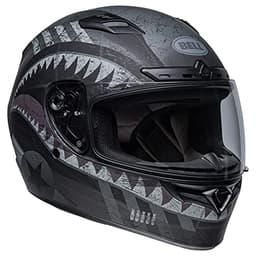
MIPS on a budget full-face
Bell Qualifier DLX MIPS
DOT FMVSS 218The value pick that adds MIPS — a low-friction liner designed to reduce rotational forces in an angled impact — to a DOT-certified full-face at a mid price. The most safety tech per dollar in this list.
See the budget helmet rankingPrice as of October 19, 2026. #ad How we’re funded
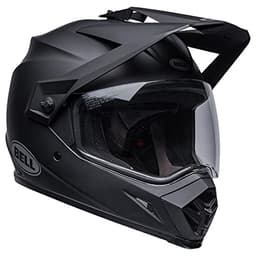
MIPS plus ECE 22.06
Bell MX-9 Adventure MIPS
DOT + ECE 22.06The value benchmark for adventure helmets: DOT and ECE 22.06 certification plus a MIPS rotational-management liner at a mid price. Heavy at roughly 1,696 g, but nothing else certified to 22.06 costs this little.
See the dual-sport rankingPrice as of October 19, 2026. #ad How we’re funded
The second of those is the interesting one, and it is the shape of what we would look for: a helmet that carries ECE 22.06 and MIPS is not asking you to choose between an independent rotational test and a design feature aimed at the same problem. Where you can have both without giving up fit, take both.
Practical notes
- Washing the liner. The MIPS layer is a moving part. Check the maker’s instructions before pulling the interior out — see how to clean a motorcycle helmet.
- Fit feel. There is an additional layer between your head and the comfort liner. Most riders never notice; a few find the fit marginally different from the same helmet without it.
- Replacement. A MIPS helmet ages and retires like any other helmet — see when to replace a motorcycle helmet. The slip layer is not a reason to keep one longer.
How to read our safety notes. We have not crash-tested any of this gear — nobody honestly can on a review budget. Every helmet and armor pick names the certification the maker publishes (DOT, ECE 22.06, SNELL, or a CE level), which we read from the listing on a dated visit. Certification is the floor, not a guarantee; fit and condition matter as much as the sticker. What the standards actually mean.
Frequently asked questions
What does MIPS stand for on a motorcycle helmet?
Multi-directional Impact Protection System. It is a proprietary technology from a Swedish company of the same name, licensed to helmet manufacturers, and it consists of a low-friction layer between your head and the helmet's impact liner. MIPS describes it as designed to reduce rotational energies to the head through the movement of that low-friction layer in certain angled impacts. It is a component fitted inside a helmet, not a rating on the outside of one.
Is MIPS a safety certification?
No, and this is the most important thing to understand about it. DOT, ECE 22.06 and SNELL are certifications: a helmet is submitted, tested against a defined protocol, and passes or fails. MIPS is a design feature that a maker chooses to build in. MIPS itself does not present the system as a certification or a regulatory standard — it calls it a safety system, and states plainly that no helmet or impact protection system can protect a user from all injuries.
Is a MIPS helmet safer than one without?
It is designed to address a specific injury mechanism — rotational force in angled impacts — that a straight linear impact test does not measure. Whether that translates into a meaningful difference for any individual crash is not something we can tell you, and we have not tested any of these helmets. What we can say is that a MIPS helmet from a good maker with DOT certification has addressed something a DOT-only helmet without MIPS has not, and that a helmet certified to ECE 22.06 has been independently tested for rotational performance whether or not it has MIPS in it.
MIPS or ECE 22.06 — which matters more?
They come at the same problem from opposite directions. MIPS is a design feature added by the maker, with no independent test result attached to that specific helmet. ECE 22.06 is a certification that includes oblique-impact testing, so a helmet carrying it has been measured on rotational performance by a testing body rather than designed for it. If we had to choose between an ECE 22.06 helmet without MIPS and a DOT-only helmet with MIPS, we would take the tested one — the certification is evidence, the feature is an approach.
Does MIPS make a helmet more comfortable or heavier?
The layer itself is thin and adds very little mass, so weight is not a practical consideration. Fit can be marginally different, because there is an extra layer between your head and the comfort liner, and a small number of riders notice it. The more common practical note is that a MIPS liner is a moving part inside the helmet, so check the maker's guidance before you pull the interior out to wash it.
Do motorcycle helmets need MIPS?
No. It is one manufacturer's approach to one injury mechanism, and plenty of excellent helmets do not use it — some makers use their own rotational management systems, and some rely on shell and liner design instead. Buy on fit first, then certification, then everything else. If two helmets are otherwise equivalent and one has MIPS, that is a reasonable tie-break. It is not a reason to accept a worse fit or a lower certification.
Sources
- MIPS — What is MIPS? — MIPS's own description of its low-friction slip-plane layer, which it presents as a safety system rather than a certification (accessed August 19, 2026)
- NHTSA — How to Choose the Right Motorcycle Helmet — NHTSA consumer guidance on DOT certification and spotting novelty helmets (accessed July 21, 2026)
- 49 CFR 571.218 — FMVSS No. 218, Motorcycle helmets — The US federal helmet standard: peak-acceleration, penetration and retention requirements; applies to all on-road motorcycle helmets (accessed July 21, 2026)
- UNECE — Vehicle Regulations (UN Regulation No. 22 / ECE 22.06) — The UN regulation behind ECE 22.06, which added rotational/oblique-impact testing over 22.05 (accessed July 21, 2026)
- Snell Memorial Foundation — Standards — Snell's motorcycle helmet standards: M2025D/M2025R are the current generation and M2020D/M2020R the previous one (D = DOT markets, R = ECE markets) (accessed July 21, 2026)
Keep reading
DOT vs ECE vs SNELL explained
What each certification actually tests, which are legally required, and how the marks differ.
Read the certification guideBell Qualifier DLX MIPS vs HJC i10
MIPS against SNELL M2020 at roughly the same money — this argument, applied to two real helmets.
Read the comparisonCE armor ratings explained
The other place riders confuse a design feature with a test result — the EN 1621 family, decoded.
Read the armor guideBest motorcycle helmets
Our top picks across every style, each with the certification the maker actually publishes.
See the helmet picks