Motorcycle Rain Gear: A Head-to-Toe Guide
Water almost never comes through the fabric. It comes in at the collar, down the cuffs and over the top of your boots — which is why the expensive jacket is rarely the thing that fixes a wet ride.
How this is funded: we earn a commission if you buy through our links, at no extra cost to you. It never changes which gear we recommend, and we’ll tell you plainly when to skip a pick. Full disclosure.
Nearly every rider who has arrived somewhere soaked assumes the jacket failed. Almost always, it did not. Modern waterproof textiles — laminate or membrane, premium or mid-market — do not let water through the material under the pressures a motorcycle generates. What they do not do is seal the holes you put your head, hands and legs through, and that is where the water arrives.
Which means the useful way to think about rain gear is as a system of overlaps rather than a list of waterproof products. Every join has an upper layer and a lower layer, and water runs downhill. Get the order right at four points and an ordinary membrane jacket keeps you dry all day. Get it wrong and a laminate will not.
The four leaks, in the order they get you
1. The collar
Rain lands on your helmet, runs down the shell, drips off the chin bar and goes straight into the gap at your throat. From there it runs down your chest inside the jacket, which is why you can be dry everywhere except a cold stripe down your sternum.
Fix: a high collar that closes properly with a storm flap, done up. If your jacket collar is loose or short, a neck tube or a rain collar solves it for very little money, and it is the highest-value five-dollar purchase in wet-weather riding.
2. The cuffs
Water runs down the outside of your sleeve. If your glove cuff is inside the jacket sleeve, the sleeve funnels it into the glove. If your glove is a short cuff worn over the sleeve, the same thing happens in reverse.
Fix: gauntlet gloves over the jacket cuff; short-cuff gloves under it. Then cinch the jacket cuff strap. Our gauntlet vs short-cuff comparison covers what else the cuff decides.
3. The waist and lower back
Sitting on a bike lifts the back of your jacket and drops the waistband of your trousers. The gap that opens is directly in the path of the spray your own rear wheel throws up.
Fix: a jacket long enough in the back, or one with a connection zip to your riding trousers. An oversuit solves it by covering the join entirely, which is one of the underrated arguments for one.
4. The boot tops
This is the one that gets almost everybody. Your trouser leg is a channel running from your knee to your ankle, and if the end of it is inside your boot, every drop that lands on your thigh ends up in your sock.
Fix: trousers outside the boot, every time, ideally with an elasticated or adjustable hem that grips the boot shaft. A waterproof boot with your trousers tucked in is a bucket.
The gear, head to toe
Helmet and visor
A helmet is already waterproof. The rain problem in a helmet is fogging: cold rain outside, warm breath inside, and the inner surface of the shield hits dew point. A Pinlock insert — a second lens sealed to the shield with a small air gap — is the fix that actually works, and most touring helmets are Pinlock-prepared.
The other visor point is tint. A tinted or iridium shield in heavy rain under low cloud is genuinely dangerous, because rain reduces the light available at exactly the moment you have made your shield darker. Carry a clear one or run a photochromic. Both are covered in our visors guide.
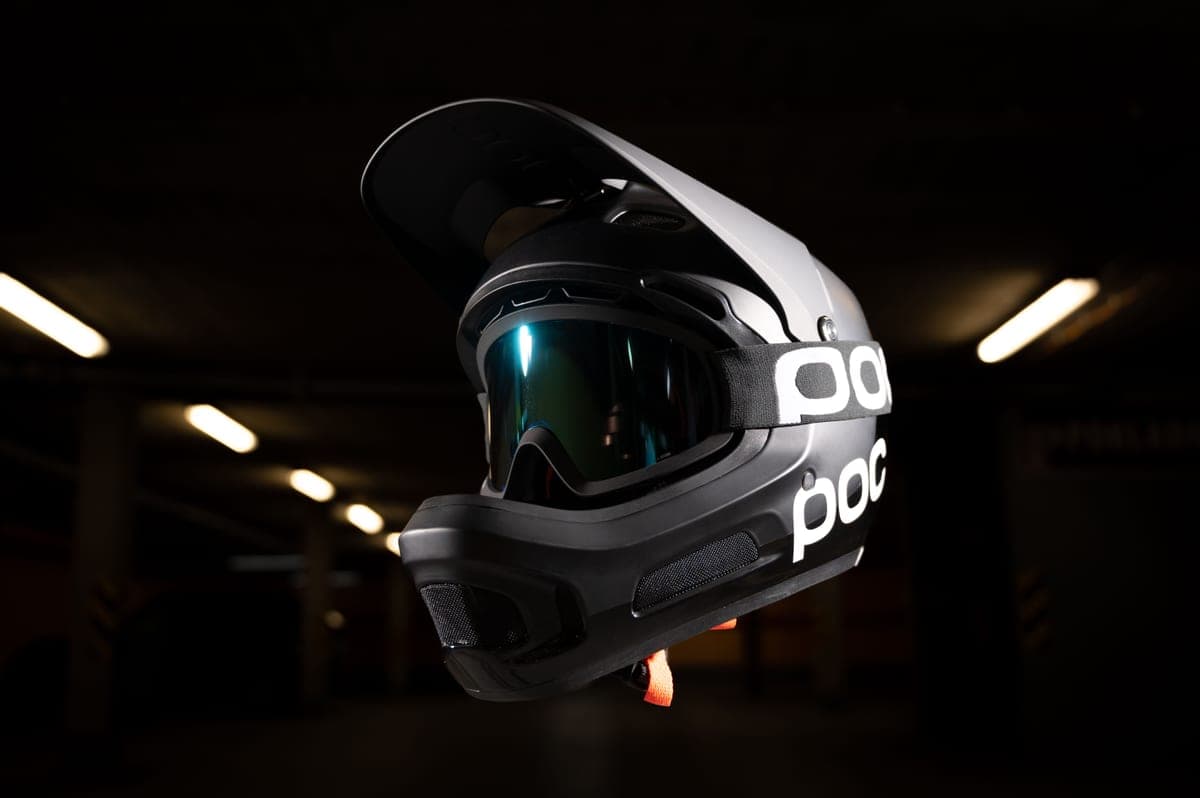
The fogging fix
Pinlock Anti-Fog Insert Lens
The one helmet accessory we would call close to essential in cold or wet weather. A second lens held on two pins with a sealing bead, so the inner surface never gets cold enough to condense your breath. Buy the lens listed for your exact visor — Pinlock codes each one (the DKS number) to a shield.
Read the visors guideJacket
Three constructions, and the difference matters more in sustained rain than anything else on this page. A laminate has the membrane bonded to the outer fabric, so the jacket wets out on the surface, stays light and dries fast. A drop-liner has the membrane hanging inside, so the outer soaks through and stays soaked — you stay dry, but you are wearing several pounds of wet textile that will not be dry by morning. A zip-in liner is a rain shell you fit at the roadside.
For a commuter, a drop-liner is genuinely enough. For multi-day touring in weather, a laminate is the difference between putting on a damp jacket every morning and not. The full argument, with picks, is on best waterproof motorcycle jackets.
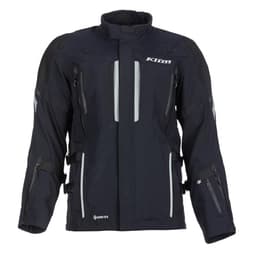
Laminate touring shell
KLIM Latitude
KLIM's touring jacket rather than its off-road one: GORE-TEX weather protection in a cut aimed at seated highway miles instead of standing on the pegs. The choice if your adventure is mostly pavement.
See the waterproof jacket rankingPrice as of October 19, 2026. #ad How we’re funded
Trousers
The most commonly skipped item and the reason most riders end up wet from the waist down. Waterproof riding trousers or a pair of overtrousers, worn over the boot, close the two largest leaks on the list at once. Overtrousers with full-length leg zips are worth the extra — you can put them on over boots at the side of the road, which is when you will actually need to.
Gloves
Wet hands are a control problem, not just a comfort one: cold, wet fingers lose dexterity fast, and everything you do with a bike goes through your hands. A waterproof glove has a membrane inside it, which is why waterproof gloves are bulkier than summer ones. Combine with the cuff overlap above and you are most of the way there.
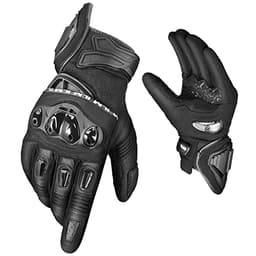
Waterproof and insulated
ILM Winter Waterproof Gloves
The value cold-weather glove: waterproof, insulated, touchscreen, with knuckle protection, at a mid price. Enough glove to keep commuting through the shoulder seasons.
See the winter glove rankingPrice as of October 19, 2026. #ad How we’re funded
Boots
A membrane boot with a tall shaft, worn under your trousers rather than over them. Height matters here for a reason unrelated to protection: a low-cut shoe simply fills faster. Our waterproof boots ranking covers membrane against treated leather.
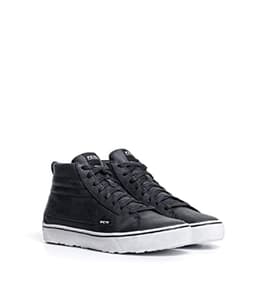
Waterproof commuter boot
TCX Street 3 Waterproof
A waterproof riding shoe that looks like a sneaker — ankle armor and a reinforced structure hidden under casual styling. The commuter pick for riders who walk into an office at the other end.
See the waterproof boot rankingPrice as of October 19, 2026. #ad How we’re funded
Base layer
The layer nobody thinks about in rain, and the one that decides how you feel for the second half of the ride. If some water does get in — and over a long enough day it will — a synthetic or merino base layer keeps insulating and moves moisture. Cotton does neither, holds water against your skin, and takes heat out of you continuously. See motorcycle base layers.
Riding in rain, not just dressing for it
Staying dry is half the problem. The other half is that a wet road behaves differently, and your gear affects that too.
- The first fifteen minutes are the worst. Oil and rubber lifted by early rain sit on the surface before the water washes them away.
- Visibility is the real hazard. Spray, glare and low cloud cut the distance at which a driver registers you. Reflective panels, a light helmet and something bright on your back are worth more in rain than in any other condition.
- Painted lines, manhole covers and tar bands are the slipperiest things on a wet road, and they are all things you can simply avoid putting a wheel on.
- Cold compounds everything. Wet plus wind chill takes heat out of you far faster than either alone, and cold hands are slow hands. Our cold-weather guide covers the layering, and heated gloves the extreme end of it.
What to carry, versus what to wear
If you ride in the rain deliberately — commuting, touring, year-round — buy the waterproof versions and wear them. A single-layer system with no gaps beats anything you have to stop and assemble.
If you ride mainly in good weather and occasionally get caught, carry a packable oversuit and a pair of waterproof over-gloves under the seat. Between them they cost a fraction of a laminate jacket, they work over whatever you are already wearing, and they turn a miserable ride home into an inconvenient one. Our touring checklist covers what else earns its space when you cannot go home for it.
How to read our safety notes. We have not crash-tested any of this gear — nobody honestly can on a review budget. Every helmet and armor pick names the certification the maker publishes (DOT, ECE 22.06, SNELL, or a CE level), which we read from the listing on a dated visit. Certification is the floor, not a guarantee; fit and condition matter as much as the sticker. What the standards actually mean.
Frequently asked questions
How do you stay dry on a motorcycle in the rain?
By sealing the joins, not by buying better fabric. Water almost never comes through a modern waterproof textile — it comes in at the collar where rain runs off your helmet, down or up the sleeve depending on whether your gloves go over or under the cuff, at the waist when you sit down, and over the top of your boots where your trouser leg funnels it straight in. Fix those four and an ordinary membrane jacket will keep you dry; ignore them and a laminate will not.
Is a rain suit better than a waterproof jacket?
They solve different problems. A waterproof jacket is one garment with no gaps and nothing to stop and put on, which is what you want if you ride in rain regularly. A packable oversuit goes over whatever you are already wearing, keeps the mud off as well, and lives under the seat for the day it genuinely does not stop — which is why plenty of touring riders carry both. If you ride mostly in good weather and get caught occasionally, the oversuit is the cheaper and more flexible answer.
Should gloves go over or under the jacket cuff?
Gauntlet gloves over the cuff, short-cuff gloves under it. The principle is that water runs downhill, so you want each layer to shed onto the outside of the layer below. A gauntlet worn under a jacket sleeve turns your arm into a funnel that fills the glove; a short cuff worn over the sleeve does the same thing. Get this one right and it costs nothing.
How do I stop my visor fogging in the rain?
A Pinlock insert, which is a second lens sealed to the inside of the shield with a small air gap that stops the inner surface reaching dew point. It is the only thing that reliably works, and it is why most touring helmets ship Pinlock-ready. Cracking the visor open helps at speed and lets rain in, and anti-fog sprays are a short-term measure at best. Our visors guide covers the full picture.
Are waterproof motorcycle boots actually waterproof?
The good ones are, and it usually does not matter — because most wet feet are caused by water running down your trouser leg and in over the top of the boot rather than through the material. That is a layering problem: your overtrousers or riding trousers need to go over the outside of the boot, not tucked into it. A tall boot with a membrane and your trousers on the outside will keep your feet dry through several hours of rain.
Do I need high-visibility rain gear?
It is worth more in rain than in any other condition. Spray, low cloud and wet glare all reduce how far a driver can see you, and dark gear against wet gray tarmac is close to invisible at distance. You do not need a full hi-vis suit — a light-colored helmet, reflective panels on the jacket and something bright on your back or your top box makes a real difference to how early you register in a mirror.
Sources
- MotoCAP — Independent Motorcycle Clothing & Helmet Assessment — Independent Australian lab rating protective clothing and helmets for protection and comfort (accessed July 21, 2026)
- SHARP — UK Government Helmet Safety Ratings — UK Department for Transport independent helmet safety star ratings (accessed July 21, 2026)
- NHTSA — How to Choose the Right Motorcycle Helmet — NHTSA consumer guidance on DOT certification and spotting novelty helmets (accessed July 21, 2026)
Keep reading
Best waterproof motorcycle jackets
Laminate, drop-liner or zip-in rain shell — the three constructions, and which suits how you ride.
See the jacket picksBest waterproof motorcycle boots
Membrane against treated leather, and what actually keeps water out on a four-hour ride.
See the boot picksMotorcycle gear for cold weather
Wind chill at 60 mph and the layering system that keeps you riding into December.
Read the cold-weather guideMotorcycle helmet visors explained
Clear, tinted and photochromic shields, why Pinlock works, and the tint decision that catches riders out.
Read the visor guide