Motorcycle Touring Gear Checklist
What to wear, what to pack and what to leave at home for a multi-day trip — built around the fact that you cannot change your mind about your gear 400 miles from anywhere.
How this is funded: we earn a commission if you buy through our links, at no extra cost to you. It never changes which gear we recommend, and we’ll tell you plainly when to skip a pick. Full disclosure.
Touring changes what “good gear” means. On a Sunday ride you pick kit for the conditions you can see out of the window. On a five-day trip you are committing to one set of gear across weather you cannot predict, in places where the nearest replacement is a day away, and wearing it for eight hours at a stretch rather than two.
That shifts every priority: range over specialization, comfort over outright performance, and dry over everything. Here is the checklist, starting with the part you cannot change your mind about.
The gear you wear
Helmet: comfort over eight hours is the spec
Everything that is mildly irritating in the first hour is unbearable in the sixth. What matters on tour, in order: a fit with no pressure points, a quiet, well-sealed shell so you arrive alert rather than hollowed out, a drop-down sun visor so you are not swapping shields in a parking lot at dusk, and comms integration if you use an intercom.
Certification first, as always — every helmet we recommend is DOT-certified under FMVSS 218, which is the legal floor for on-road use in the US — then noise, weight and features. Our touring helmet picks rank on exactly that order, and there is more on the flip-front question on modular vs full-face.
Touring helmet
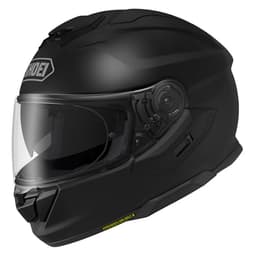
Shoei GT-Air 3
DOTShoei's dedicated touring full-face: AIM shell, an internal sun visor, a deep neck roll and comms integration designed in rather than bolted on. If you ride 400-mile days with a shield down, this is the reference.
Compare the touring helmets →Price as of October 19, 2026. #ad How we’re funded
Jacket and trousers: liners, vents, and a real waterproof layer
A touring shell earns its keep through adjustability. You want vents that genuinely open and close, a thermal liner you can add at altitude and remove in the valley, and waterproofing built in rather than carried separately. A laminate construction — membrane bonded to the outer — is the meaningful upgrade over a drop liner on a multi-day trip, because the shell itself stops water instead of soaking and taking hours to dry overnight.
Check the armor before you go: CE EN 1621-1 at shoulders and elbows, and something rated rather than foam in the back pocket.
Touring jacket
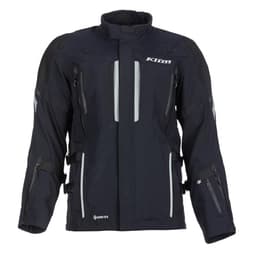
KLIM Latitude
KLIM's touring jacket rather than its off-road one: GORE-TEX weather protection in a cut aimed at seated highway miles instead of standing on the pegs. The choice if your adventure is mostly pavement.
Compare the touring jackets →Price as of October 19, 2026. #ad How we’re funded
Gloves: two pairs, non-negotiable
This is the item riders most often get wrong on a first tour. Gloves get soaked and take a very long time to dry, and a day in wet gloves is both miserable and genuinely degrading to your control inputs. Carry a waterproof gauntlet and a lighter short-cuff pair. They take almost no space, they cover the weather swing, and they mean one wet day does not contaminate the rest of the week.
Boots: waterproof, and walkable enough
Touring boots have to do two jobs that pull against each other — protect and keep water out on the bike, and be tolerable to walk around a town in at the end of the day. Mid-height membrane boots are the sensible middle. Wear your trousers over the boot in rain rather than tucked in, or the membrane simply holds the water that ran down your leg.
Touring and ADV boots
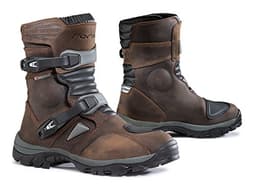
Forma Adventure Boots
The value adventure-touring boot a lot of ADV riders settle on: tall protection, a walkable sole and a waterproof membrane, without the four-figure price of a hardcore off-road boot.
Compare the ADV boots →Price as of October 19, 2026. #ad How we’re funded
Base layers: the cheapest comfort on the list
Two wicking base layers, worn on alternate days and washed in a sink. They regulate temperature in both directions, they stop sweat chilling you when you stop, and they mean the expensive jacket needs washing far less often.
Comms
An intercom is not safety equipment and it changes a long trip more than almost anything else on this list: navigation prompts without stopping, conversation with a pillion instead of a week of shouting, and a group that stays together. If you ride in a group of three or more, this is where mesh rather than Bluetooth matters — a Bluetooth chain drops everyone behind whoever stops for fuel. We have laid the difference out on mesh vs Bluetooth.
Group touring intercom
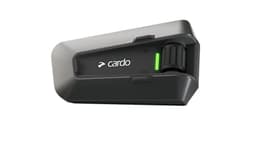
Cardo Packtalk Edge
The intercom most serious riders point to: Cardo's second-gen Dynamic Mesh (DMC) self-heals as riders drop in and out, JBL speakers sound excellent, and the magnetic Air Mount is the best in the class. The premium pick for group touring.
Compare the intercom picks →What to pack
Riding kit
- Second pair of gloves (see above — the most-regretted omission)
- Thermal liner or mid-layer, even in summer, for altitude and evenings
- Neck tube — tiny, and it closes the helmet-to-collar gap
- Anti-fog insert already fitted, plus a microfibre cloth for the shield
- Earplugs, several pairs. Fatigue on a long day is largely a noise problem
- Lightweight overboots or waterproof socks if your boots are only water-resistant
Off-bike
- Three sets of clothes and a plan to do laundry, not seven sets
- One pair of shoes that are not your riding boots
- A packable insulated jacket — doubles as a mid-layer on the bike
- Toiletries in a bag you can carry in one trip with everything else
Bike and logistics
- Tire plug kit and a way to inflate — the single highest-value spare
- The bike’s tool kit, plus whatever it is missing for fasteners you would actually touch
- Spare fuses, zip ties, duct tape wrapped around a pen rather than a whole roll
- USB charging on the bike, and a cable for the intercom and phone
- Chain lube if you run a chain, and a rag
- Documents: license, registration, insurance, and photos of all of them on your phone
- A small first-aid kit you know how to use
What to leave at home
A second helmet. Spares for failures you could not fix at the roadside. Anything you are packing because it might be useful rather than because you know when you would use it. Enough clothes to avoid laundry. A laptop, unless the trip requires it.
Weight matters more than volume: a heavily-loaded bike steers, brakes and stops differently, and a top box full of things you did not need changes how the bike behaves at exactly the moment you need it to behave normally. Load heavy items low and forward where you can.
Before you leave
- Do a shakedown ride fully loaded. A day trip with all the luggage on finds the strap that rubs, the bag that shifts and the jacket vent you cannot reach with a tank bag fitted. Finding those on day one of the tour is worse.
- Check the gear, not just the bike. Helmet strap and liner, jacket zips, armor still in its pockets, boot storm flaps, glove seams. Re-proof anything that has stopped beading water.
- Check the helmet’s age.Standard guidance is roughly five years from the date of manufacture, and a tour is a poor time to discover yours is well past it — more on that in our helmet replacement guide.
- Tell someone your rough route. Cheap insurance, costs nothing.
How to read our safety notes. We have not crash-tested any of this gear — nobody honestly can on a review budget. Every helmet and armor pick names the certification the maker publishes (DOT, ECE 22.06, SNELL, or a CE level), which we read from the listing on a dated visit. Certification is the floor, not a guarantee; fit and condition matter as much as the sticker. What the standards actually mean.
Frequently asked questions
What gear do I actually need for a multi-day motorcycle trip?
The same five categories as any ride — helmet, jacket, gloves, boots, armor — chosen for range rather than for one condition. That means a helmet you can wear for eight hours, a jacket with liners you can add and remove, at least two pairs of gloves, waterproof boots, and rated armor rather than foam. Everything else on a touring list is comfort, spares or logistics. The gear you are wearing is the part you cannot fix at 400 miles from home, which is why it gets the budget.
Should I take one pair of gloves or two?
Two, always, and it is the single most common regret on a first tour. Gloves get wet and take a long time to dry, and riding a full day in wet gloves is genuinely miserable and makes your hands clumsy. A second pair — ideally a summer short-cuff to complement a waterproof gauntlet — takes almost no luggage space and covers both the weather change and the drying problem.
Is a modular helmet better for touring?
For a lot of riders, yes, though it is a preference rather than a rule. Being able to lift the chin bar at every fuel stop, toll booth and conversation is a real quality-of-life difference over a week, especially if you wear glasses or ride with a passenger. The trade is a hinge, a latch and roughly 150 to 300 grams over a comparable full-face. A DOT-certified modular has cleared the same federal test as a DOT-certified full-face; the one-piece shell remains the structurally simpler object.
How much should I pack for a week on a bike?
Less than you will pack the first time. The reliable method is to lay everything out, then remove a third of it. Three sets of off-bike clothes and laundry beats seven sets, luggage weight makes the bike handle worse and the mounting harder, and every strap you have to undo at every stop is a small tax on the whole trip. Rule of thumb: if you cannot carry all your luggage into a motel in one trip, it is too much.
What spares are worth carrying?
A tire plug kit and a way to inflate — a puncture is the single most likely thing to strand you and the fix is small, cheap and learnable. Beyond that: the tool kit the bike came with plus whatever it is missing for the fasteners you would actually touch, a couple of spare fuses, a spare clutch or brake lever if you have room, zip ties and duct tape. The rest is bike-specific, and the honest test for anything else is whether you would know how to fit it at the roadside.
Do I need an intercom for touring?
Not for safety, but it changes the experience more than most gear does. Solo, it means GPS prompts and calls without stopping and without headphones under the helmet. With a pillion, it turns a week of shouting at each other into a conversation. In a group it is the difference between the group staying together and someone getting lost at every junction. If you ride in a group of three or more, look specifically at mesh rather than Bluetooth, because a Bluetooth chain breaks whenever one rider stops.
Sources
- NHTSA — How to Choose the Right Motorcycle Helmet — NHTSA consumer guidance on DOT certification and spotting novelty helmets (accessed July 21, 2026)
- 49 CFR 571.218 — FMVSS No. 218, Motorcycle helmets — The US federal helmet standard: peak-acceleration, penetration and retention requirements; applies to all on-road motorcycle helmets (accessed July 21, 2026)
- MotoCAP — Independent Motorcycle Clothing & Helmet Assessment — Independent Australian lab rating protective clothing and helmets for protection and comfort (accessed July 21, 2026)
Keep reading
Best motorcycle riding pants
Laminate, fixed membrane, zip-out liner or mesh — the pants that publish a garment class and hip armor, and the ones that do not.
See the riding pantsBest touring helmets
Quiet, well-sealed helmets built for 400-mile days — sun visors, comms integration and the certification each one carries.
See the touring picksBest adventure & touring jackets
Laminate shells, zip-out liners and vents that actually open — jackets built for weather rather than around it.
See the jacket picksBest motorcycle intercoms
Mesh and Bluetooth systems ranked for group touring, pillion use and value.
See the intercom picksBest waterproof motorcycle boots
Membrane and treated-leather boots compared — and what actually keeps water out on a four-hour ride.
See the boot picks