Apex & Armor

Best Motorcycle Helmets for Glasses

Helmets that let you put your glasses on last, take them off first, and keep the arms off your temples for the whole ride — ranked on the fit and shape features that actually decide it.

By Stephen V.Last updated How we research

If you wear prescription glasses, the helmet problem is not the one most reviews describe. It is not ventilation, it is not weight, and it is not the shield. It is the ninety seconds at the start and end of every ride when you are trying to thread two thin metal arms between your temples and a piece of dense foam that was molded without any awareness that glasses exist — and then the two hours after that, when the arm is pressing a groove into the side of your head.

There is no certification for this. No standard measures “eyewear compatibility,” no maker publishes a temple-channel depth, and any page that hands you a millimeter figure invented it. What we have done instead is rank on the three structural things that genuinely decide whether a helmet works with glasses, all of which come from the maker’s own published spec: whether the chin bar lifts out of the way, how the maker describes the cheek-pad fit, and whether the shell is open at the front at all. Every helmet here is DOT-certified under FMVSS 218, the US legal floor for on-road sale, and several add ECE.

One thing to be honest about up front: a modular helmet solves the donning problem almost completely and the pressure problem only partly. Lifting the chin bar means you put the helmet on first and the glasses on second, which is the single biggest quality-of-life change available to a rider in glasses. It does not, on its own, cut a channel through the comfort liner. For that you want cheek pads the maker describes as roomy — or you want to buy a size of cheek pad down and let the liner break in. More on both below.

How this is funded: we earn a commission if you buy through our links, at no extra cost to you. It never changes which gear we recommend, and we’ll tell you plainly when to skip a pick. Full disclosure.

Quick picks

Ranked on certification, spec and buyer fit. Select a row to jump to the full write-up. We haven’t crash-tested this gear — here is exactly what we do instead.

#GearBest forPrice
1
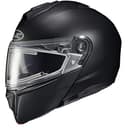
HJC i90

HJC i90

DOT + ECE 22.05

The value modular that gets the important things right: DOT and ECE 22.05 certification, a drop-down sun visor, and comms-ready ear pockets, for a fraction of a premium flip-front's price.

Best overall
$171.81 · View on Amazon

Price as of September 4, 2026. #ad How we’re funded

2
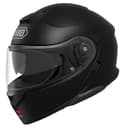
Shoei Neotec 3

Shoei Neotec 3

DOT + ECE 22.06

The benchmark touring modular. Shoei's AIM shell, DOT plus ECE 22.06 with P/J dual homologation (legal to ride with the chin bar up), and the quietest flip-front we know of. Expensive, and worth it for high-mileage touring.

Best premium
$935.00 · View on Amazon

Price as of September 4, 2026. #ad How we’re funded

3
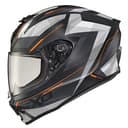
ScorpionEXO R420

ScorpionEXO R420

DOT + SNELL

A DOT-and-SNELL full-face at a beginner price, with a drop-down sun visor most sub-$200 helmets don't include. A well-equipped first sport-street helmet.

Best full-face
$169.95 · View on Amazon

$189.9511% off

Price as of September 4, 2026. #ad How we’re funded

4
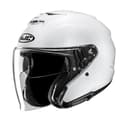
HJC i31

HJC i31

DOT

The modern take on an open-face: DOT-approved, with a drop-down internal sun visor and a proper face shield rather than a snap-on peak. The sensible commuter choice if you want an open lid that still keeps rain and bugs off.

Best open-face
$161.49 · View on Amazon

$169.995% off

Price as of September 4, 2026. #ad How we’re funded

5
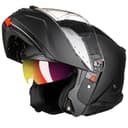
ILM B-711 Modular

ILM B-711 Modular

DOT + ECE

A sub-$100 modular listed as DOT and ECE approved, with a dual-visor system and sizes running down to the small end. It's a marketplace brand, not a legacy helmet maker — but it clears the certification bar the novelty lids don't.

Best budget
$109.99 · View on Amazon

Price as of September 4, 2026. #ad How we’re funded

The picks in full

#1Best overallDOT + ECE 22.05

HJC i90

The value modular that gets the important things right: DOT and ECE 22.05 certification, a drop-down sun visor, and comms-ready ear pockets, for a fraction of a premium flip-front's price.

Strengths

  • DOT + ECE 22.05 certified polycarbonate modular
  • Integrated drop-down sun visor and Pinlock-ready shield
  • Ear pockets sized for a Cardo/Sena install out of the box

Trade-offs

  • Polycarbonate shell is heavier than a composite modular
  • HJC doesn't publish the exact weight
Safety standardDOT + ECE 22.05
ConstructionAdvanced polycarbonate shell
Claimed weightCheck current listing
Key featureDOT + ECE 22.05
Fit / sizingIntermediate oval; roomy cheek pads
Best forCommuters and tourers who want a certified modular on a budget

Specs and certification read from the manufacturer and retailer listing, on July 21, 2026. “Check current listing” means the maker doesn’t publish that figure — we won’t guess it.

#2Best premiumDOT + ECE 22.06

Shoei Neotec 3

The benchmark touring modular. Shoei's AIM shell, DOT plus ECE 22.06 with P/J dual homologation (legal to ride with the chin bar up), and the quietest flip-front we know of. Expensive, and worth it for high-mileage touring.

Strengths

  • DOT + ECE 22.06 with P/J dual homologation — rated open AND closed
  • Class-leading wind noise control and sealing for long days
  • Sena SRL3 comms integrate cleanly without breaking the shell lines

Trade-offs

  • The most expensive modular here by a wide margin
  • Heavier than a full-face at ~1,850 g, as all modulars are
Safety standardDOT + ECE 22.06
ConstructionAIM multi-composite shell
Claimed weight1,850 g
Key featureDOT + ECE 22.06 (P/J)
Fit / sizingIntermediate oval; long-oval friendly
Best forTouring riders who want a certified, genuinely quiet flip-front

Specs and certification read from the manufacturer and retailer listing, on July 21, 2026. “Check current listing” means the maker doesn’t publish that figure — we won’t guess it.

#3Best full-faceDOT + SNELL

ScorpionEXO R420

A DOT-and-SNELL full-face at a beginner price, with a drop-down sun visor most sub-$200 helmets don't include. A well-equipped first sport-street helmet.

Strengths

  • DOT + SNELL certified polycarbonate shell
  • Integrated drop-down sun visor and Pinlock-ready shield
  • Removable, washable KwikWick liner

Trade-offs

  • Scorpion doesn't publish the exact weight
  • Superseded generation: Scorpion lists the EXO-R430 as the model that replaces this one, with DOT plus the newer SNELL M2025 — confirm current stock and sizing before buying the R420
Safety standardDOT + SNELL
ConstructionAdvanced polycarbonate shell
Claimed weightCheck current listing
Key featureDOT + SNELL
Fit / sizingIntermediate oval; roomy
Best forBeginners who want a sun-visor helmet with a SNELL rating

Specs and certification read from the manufacturer and retailer listing, on July 21, 2026. “Check current listing” means the maker doesn’t publish that figure — we won’t guess it.

#4Best open-faceDOT

HJC i31

The modern take on an open-face: DOT-approved, with a drop-down internal sun visor and a proper face shield rather than a snap-on peak. The sensible commuter choice if you want an open lid that still keeps rain and bugs off.

Strengths

  • DOT-approved with a full face shield, not just a snap visor
  • Drop-down internal sun visor — no swapping tinted shields at dusk
  • Speaker pockets sized for a bolt-on intercom

Trade-offs

  • HJC doesn't publish a shell weight for the i31
  • Still an open-face: no chin protection whatsoever
Safety standardDOT
ConstructionAdvanced polycarbonate composite shell
Claimed weightCheck current listing
Key featureDOT, internal sun visor
Fit / sizingIntermediate oval; runs true to size
Best forCommuters who want open-face airflow with a real shield and sun visor

Specs and certification read from the manufacturer and retailer listing, on August 11, 2026. “Check current listing” means the maker doesn’t publish that figure — we won’t guess it.

#5Best budgetDOT + ECE

ILM B-711 Modular

A sub-$100 modular listed as DOT and ECE approved, with a dual-visor system and sizes running down to the small end. It's a marketplace brand, not a legacy helmet maker — but it clears the certification bar the novelty lids don't.

Strengths

  • Listed as DOT + ECE approved at a genuine budget price
  • Flip-front chin bar plus a drop-down internal sun visor
  • Size range extends well into the small end for smaller heads

Trade-offs

  • ILM doesn't publish shell material or weight figures
  • Marketplace brand with no independent lab ratings (SHARP, MotoCAP) to check against
Safety standardDOT + ECE
ConstructionCheck current listing
Claimed weightCheck current listing
Key featureDOT + ECE, modular
Fit / sizingRuns true to size; wide size range
Best forRiders who want a certified flip-front for the lowest possible outlay

Specs and certification read from the manufacturer and retailer listing, on August 11, 2026. “Check current listing” means the maker doesn’t publish that figure — we won’t guess it.

Why glasses and helmets fight each other

A helmet works by holding a crushable EPS liner tightly against your skull, with a comfort liner and cheek pads taking up the last few millimeters so nothing moves. That last few millimeters is exactly where a glasses arm needs to live. The tighter and better-fitting the helmet — which is to say, the safer the helmet — the less room there is. This is a genuine trade-off, not a design failure, and it is why the answer is never “buy a looser helmet.” A helmet that rotates on your head in a crash is worse than sore temples.

The two workable answers are both about getting the arm into the gap without dragging it across foam. Either the helmet opens up so you can seat the glasses after the helmet is on, or the cheek pads are soft and deep enough that the arm can be fed in along a channel you create with a finger. Helmets that do neither are the ones that end up in the back of the garage.

How we ranked these

In this order, and only on things the maker publishes:

  • Does the front open? A modular helmet with the chin bar raised, or an open-face with the shield up, lets you put glasses on after the helmet. This is the difference between a thirty-second job and a fight.
  • How does the maker describe the cheek-pad fit? “Roomy” and “plush touring” liners take an arm far better than a race-fit liner that is designed to grip your jaw. We use the maker’s own fit language, not a guess.
  • Is the interior removable and replaceable? Almost every helmet here has a removable liner, which matters because swapping to a thinner cheek pad is the standard fix and it only works if the pads come out.
  • Certification, as always. DOT is the legal requirement; ECE 22.06 adds rotational and multi-point testing. We did not rank a helmet up for eyewear friendliness if it gave up certification to get there.

The modular argument

Three of the five picks here are flip-fronts, and that is not an accident. With the chin bar up you lower the helmet onto your head, settle it, then put your glasses on through the front opening exactly as you would in a car. Nothing drags. Taking them off at a fuel stop is the same move in reverse, which means you actually can read the pump display and the map on your phone without removing the helmet.

The cost is real and worth stating: a modular carries a hinge and a latch where a full-face has continuous shell, and it typically weighs somewhere in the region of 150–300 g more. A DOT-certified modular has passed the same federal test as a DOT-certified full-face, but the one-piece shell remains the structurally simpler object. We have laid the whole trade out on modular vs full-face. If you ride with the chin bar latched, the practical gap is smaller than the internet suggests.

Making a full-face work with glasses

You are not stuck with a modular. A full-face with a forgiving liner works well for a lot of riders, and there are three things that make it work:

1. Put the helmet on, then feed the arms in

Seat the helmet properly first with the glasses off. Then take the glasses by the lenses, slide one arm along the outside of your cheek into the gap between the pad and your face, and repeat on the other side. Trying to put a helmet on over already-worn glasses is what bends frames and scratches lenses.

2. Consider a thinner cheek pad

Most makers sell cheek pads in multiple thicknesses for the same shell. Dropping one step frees genuine room for a glasses arm without touching the EPS or the shell — the parts that do the protecting. What you must not do is size the whole helmet up: the helmet has to stay snug enough that it does not rotate, and the sizing guide covers the fit checks that tell you whether you have gone too far.

3. Choose straight, thin, flexible arms

Frames matter as much as helmets. Thin wire or flexible plastic arms that run straight back — rather than hooking sharply behind the ear — slide in far more easily and press far less. Some riders keep a dedicated cheap pair for riding for exactly this reason. It is usually a cheaper fix than a new helmet.

What about a shield with a prescription, or contacts?

Prescription shield inserts exist, but they are model-specific, expensive, and they mean your vision is corrected only while the shield is down — which is not what you want at a fuel stop, at a road sign, or reading a map. Contacts sidestep the whole problem and are what many riders switch to, with the caveat that a helmet pushes a lot of air across your eyes and dry-eye is a real consequence. Neither is a reason to skip a helmet that fits: get the fit right first, then solve the eyewear.

The one thing not to do

Do not buy a helmet a size larger to make room. A helmet that is too big moves on your head, and a helmet that moves cannot do the job it was certified for — the EPS liner has to be in contact with your skull to crush against it. NHTSA’s own consumer guidance leads with fit for exactly this reason. If the only helmet that fits your head is uncomfortable with glasses, change the cheek pads or change the glasses. Do not change the size.
How to read our safety notes. We have not crash-tested any of this gear — nobody honestly can on a review budget. Every helmet and armor pick names the certification the maker publishes (DOT, ECE 22.06, SNELL, or a CE level), which we read from the listing on a dated visit. Certification is the floor, not a guarantee; fit and condition matter as much as the sticker. What the standards actually mean.

Frequently asked questions

Which type of motorcycle helmet is best if I wear glasses?

A modular (flip-front) helmet, for most riders. With the chin bar raised you put the helmet on first and your glasses on second, through the front opening — no dragging the arms across the cheek pads, no bent frames. An open-face works the same way and is even easier, at the cost of chin protection. A full-face is entirely usable with glasses, but it asks you to feed the arms in along the cheek pads each time, so it rewards a helmet whose maker describes the liner as roomy or touring-plush rather than race-fit.

Should I buy a bigger helmet so my glasses fit?

No. A helmet protects by holding its EPS liner in contact with your skull; a helmet that is a size too large rotates and shifts, and it cannot do that. The correct fixes are a thinner cheek pad (most makers sell multiple thicknesses for the same shell), a different frame with thinner straighter arms, or a helmet style that opens at the front. Size the helmet to your head, then solve the eyewear separately.

Do any helmets have proper glasses channels?

Some makers cut grooves into the cheek-pad foam and market them as eyewear channels. The catch is that no standard defines one and no maker publishes a depth, so the claim is not comparable between brands and cannot be verified from a listing. That is why we rank on things that are published and checkable — whether the front opens, how the maker describes the fit, and whether the pads are removable and available in other thicknesses — rather than on a marketing phrase.

Will a helmet scratch my glasses?

It can, if you put the helmet on over glasses you are already wearing — the lens edges drag against the cheek-pad fabric. Put the helmet on first, then seat the glasses by holding the lenses and sliding each arm into the gap along your cheek. On a modular or open-face, do it through the open front. A soft case in a jacket pocket for stops is worth the space it takes.

Are prescription shield inserts worth it?

For some riders. They put the correction in the shield rather than on your face, which removes the pressure problem entirely. The downsides are that they are model-specific and expensive, and that your vision is only corrected with the shield down — so you are back in glasses the moment you stop and lift it. Most riders who go this route also carry normal glasses. It solves comfort, not convenience.

Sources

Keep reading

More in Helmets