Apex & Armor

Best Modular Helmets

Flip-front helmets compared on certification, weight and wind noise — touring flagships to budget flip-ups, each with the DOT and ECE rating it actually carries.

By Stephen V.Last updated How we research

A modular — or flip-front — helmet lets you lift the chin bar and visor as one piece, so you can talk, drink or cool off without taking the lid off. That convenience is why they dominate touring and commuting. It comes with a trade-off: the hinge adds weight, and a helmet you flip open is only as strong as the latch that holds it shut. Start, as always, with the certification. Every helmet here meets the US DOT FMVSS 218standard, and the better ones add ECE — a few carry P/J dual homologation, meaning they’re rated to be ridden with the chin bar both down and up.

We haven’t crash-tested any of these — nobody honestly can on a review budget. What we did was read every modular against its published certification, shell material and weight, then rank on the things that decide whether you keep it on: fit, weight and wind noise, which matters more on a flip-front because the moving chin bar is harder to seal. Below are our picks from a touring flagship down to a budget flip-up, each with the certification it carries and who it isn’t for.

How this is funded:we earn a commission if you buy through our links, at no extra cost to you. It never changes which gear we recommend, and we’ll tell you plainly when to skip a pick. Full disclosure.

Quick picks

Ranked on certification, spec and buyer fit. Select a row to jump to the full write-up. We haven’t crash-tested this gear — here is exactly what we do instead.

#GearBest forPrice
1
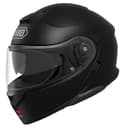
Shoei Neotec 3

Shoei Neotec 3

DOT + ECE 22.06

The benchmark touring modular. Shoei's AIM shell, DOT plus ECE 22.06 with P/J dual homologation (legal to ride with the chin bar up), and the quietest flip-front we know of. Expensive, and worth it for high-mileage touring.

Best overall
$949.99 · View on Amazon

Price as of July 21, 2026. #ad How we’re funded

2
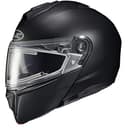
HJC i90

HJC i90

DOT + ECE 22.05

The value modular that gets the important things right: DOT and ECE 22.05 certification, a drop-down sun visor, and comms-ready ear pockets, for a fraction of a premium flip-front's price.

Best value
$171.81 · View on Amazon

Price as of July 21, 2026. #ad How we’re funded

3
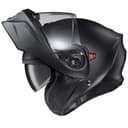
ScorpionEXO GT930 Transformer

ScorpionEXO GT930 Transformer

DOT + ECE 22.05

A genuine 3-in-1: run it as a full-face, flip it to a modular, or remove the chin bar for an open-face. DOT and ECE 22.05 certified, with a drop-down sun visor — versatile for riders who can't decide.

Best 3-in-1
$279.95 · View on Amazon

Price as of July 21, 2026. #ad How we’re funded

4
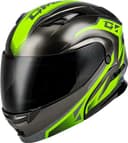
GMAX MD-01

GMAX MD-01

DOT + ECE

The cheapest DOT-and-ECE modular worth buying. A drop-down sun visor and a flip-front for well under a hundred dollars makes it a sensible first modular or a knock-around commuter lid.

Best budget
$69.97 · View on Amazon

Price as of July 21, 2026. #ad How we’re funded

5
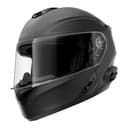
Sena Outrush R

Sena Outrush R

DOT FMVSS 218

A modular helmet with the Bluetooth mesh intercom built in and hidden — no bolt-on module, no wind snag. The US version is DOT-certified. The cleanest way to get comms without a separate purchase.

Best with built-in comms
$368.67 · View on Amazon

Price as of July 21, 2026. #ad How we’re funded

The picks in full

#1Best overallDOT + ECE 22.06

Shoei Neotec 3

The benchmark touring modular. Shoei's AIM shell, DOT plus ECE 22.06 with P/J dual homologation (legal to ride with the chin bar up), and the quietest flip-front we know of. Expensive, and worth it for high-mileage touring.

Strengths

  • DOT + ECE 22.06 with P/J dual homologation — rated open AND closed
  • Class-leading wind noise control and sealing for long days
  • Sena SRL3 comms integrate cleanly without breaking the shell lines

Trade-offs

  • The most expensive modular here by a wide margin
  • Heavier than a full-face at ~1,850 g, as all modulars are
Safety standardDOT + ECE 22.06
ConstructionAIM multi-composite shell
Claimed weight1,850 g
Key featureDOT + ECE 22.06 (P/J)
Fit / sizingIntermediate oval; long-oval friendly
Best forTouring riders who want a certified, genuinely quiet flip-front

Specs and certification read from the manufacturer and retailer listing, on July 21, 2026. “Check current listing” means the maker doesn’t publish that figure — we won’t guess it.

#2Best valueDOT + ECE 22.05

HJC i90

The value modular that gets the important things right: DOT and ECE 22.05 certification, a drop-down sun visor, and comms-ready ear pockets, for a fraction of a premium flip-front's price.

Strengths

  • DOT + ECE 22.05 certified polycarbonate modular
  • Integrated drop-down sun visor and Pinlock-ready shield
  • Ear pockets sized for a Cardo/Sena install out of the box

Trade-offs

  • Polycarbonate shell is heavier than a composite modular
  • HJC doesn't publish the exact weight
Safety standardDOT + ECE 22.05
ConstructionAdvanced polycarbonate shell
Claimed weightCheck current listing
Key featureDOT + ECE 22.05
Fit / sizingIntermediate oval; roomy cheek pads
Best forCommuters and tourers who want a certified modular on a budget

Specs and certification read from the manufacturer and retailer listing, on July 21, 2026. “Check current listing” means the maker doesn’t publish that figure — we won’t guess it.

#3Best 3-in-1DOT + ECE 22.05

ScorpionEXO GT930 Transformer

A genuine 3-in-1: run it as a full-face, flip it to a modular, or remove the chin bar for an open-face. DOT and ECE 22.05 certified, with a drop-down sun visor — versatile for riders who can't decide.

Strengths

  • DOT + ECE 22.05 with dual homologation
  • Converts full-face → modular → open-face (chin bar removes)
  • Drop-down sun visor and a comms-ready shell

Trade-offs

  • Heavier (~1,810 g) thanks to the convertible hardware
  • Open-face mode has no chin protection — a fair-weather-only setting
Safety standardDOT + ECE 22.05
ConstructionAdvanced polycarbonate shell
Claimed weight1,810 g
Key featureDOT + ECE 22.05
Fit / sizingIntermediate oval; convertible
Best forRiders who want one helmet that converts between styles

Specs and certification read from the manufacturer and retailer listing, on July 21, 2026. “Check current listing” means the maker doesn’t publish that figure — we won’t guess it.

#4Best budgetDOT + ECE

GMAX MD-01

The cheapest DOT-and-ECE modular worth buying. A drop-down sun visor and a flip-front for well under a hundred dollars makes it a sensible first modular or a knock-around commuter lid.

Strengths

  • DOT + ECE approved at a rock-bottom price
  • Drop-down internal sun visor
  • Flip-front convenience for glasses wearers and quick stops

Trade-offs

  • Poly-alloy shell is heavy and the finish is basic
  • GMAX doesn't publish the ECE sub-version or the weight
Safety standardDOT + ECE
ConstructionPoly-alloy shell
Claimed weightCheck current listing
Key featureDOT + ECE
Fit / sizingIntermediate oval; budget padding
Best forThe tightest budget that still wants a certified flip-front

Specs and certification read from the manufacturer and retailer listing, on July 21, 2026. “Check current listing” means the maker doesn’t publish that figure — we won’t guess it.

#5Best with built-in commsDOT FMVSS 218

Sena Outrush R

A modular helmet with the Bluetooth mesh intercom built in and hidden — no bolt-on module, no wind snag. The US version is DOT-certified. The cleanest way to get comms without a separate purchase.

Strengths

  • DOT certified (US version) with fully integrated Bluetooth intercom
  • No external module — nothing to snag or lose
  • Drop-down sun visor and voice controls

Trade-offs

  • Integrated comms can't be upgraded independently of the helmet
  • Polycarbonate modular, so on the heavier side (~1,730 g)
Safety standardDOT FMVSS 218
ConstructionPolycarbonate + ABS shell
Claimed weight1,730 g
Key featureDOT + built-in Bluetooth intercom
Fit / sizingIntermediate oval; comms-integrated
Best forRiders who want comms built into the helmet, not bolted on

Specs and certification read from the manufacturer and retailer listing, on July 21, 2026. “Check current listing” means the maker doesn’t publish that figure — we won’t guess it.

How to choose a modular helmet

Work in this order: fit first, then certification, then weight and noise.A modular can’t protect you if it doesn’t fit your head shape, so measure your head and check the shape (most here are intermediate-oval) before anything else — our helmet sizing guide walks through it. Then weigh the convenience of the flip-front against the extra grams and the wind noise that the moving chin bar tends to add.

P/J homologation and the chin bar

A P/J-rated modular is certified to be worn both closed (P, full chin protection) and open (J, chin bar up), which is what makes it legal to ride at low speed with the front lifted. Not every modular carries that dual rating, so if you plan to ride with the chin bar up, look for it. Whatever the rating, ride with the chin bar latched shut at speed — an open chin bar offers no chin protection in a crash.

Weight, noise and comms

Modulars run heavier than full-face helmets because of the hinge, so a composite shell that shaves grams is worth paying for on long days. Wind noise is the other trade-off; a well-sealed premium flip-front is far quieter than a budget one. Most modern modulars have comms-ready ear pockets, and a few build the intercom in — see our Bluetooth helmet picks if that matters to you. Replace any helmet after a significant impact, and roughly every five years otherwise.

How to read our safety notes. We have not crash-tested any of this gear — nobody honestly can on a review budget. Every helmet and armor pick names the certification the maker publishes (DOT, ECE 22.06, SNELL, or a CE level), which we read from the listing on a dated visit. Certification is the floor, not a guarantee; fit and condition matter as much as the sticker. What the standards actually mean.

Frequently asked questions

Are modular helmets as safe as full-face helmets?

A modular has an extra hinge and latch that a one-piece full-face doesn't, which is why full-face helmets are still considered the most protective style. That said, a DOT-certified modular has cleared the same federal test as a full-face, and models with ECE and P/J dual homologation are rated for the chin bar both down and up. Ride with the chin bar latched shut at speed and the gap narrows considerably.

What does P/J dual homologation mean?

It means the helmet is certified to be worn two ways: P for the protective closed position with full chin coverage, and J for the open position with the chin bar raised. A P/J-rated modular is legal to ride at low speed with the front lifted. Not every modular carries the J rating, so check the label if riding with the chin bar up matters to you.

Why are modular helmets heavier than full-face helmets?

The flip-front mechanism, its pivots and the latch all add material and weight over a single-piece full-face shell. A premium modular offsets some of that with a lighter composite shell, but expect a flip-front to weigh more than a comparable full-face. If you ride long days, paying for a composite shell to cut weight reduces neck fatigue.

Can I ride with the chin bar up?

Only at low speed, and only if the helmet is P/J homologated for open use. Even then, the raised chin bar offers no protection in a crash, so it's for stopping at lights, talking or cooling off, not for riding at speed. Always latch the chin bar fully shut before you get moving.

Sources

Keep reading