Shoei RF-1400 vs AGV K6 S
SNELL M2020D against ECE 22.06, and 1,640 g against 1,255 g — the two premium full-faces most riders end up choosing between, compared spec for spec.
These two helmets sit at almost the same price and answer the same question — “what is the best full-face I can buy without going carbon-flagship” — in genuinely different ways. The Shoei RF-1400 carries SNELL M2020D on top of DOT: a tougher voluntary standard, a hand-laid multi-fiber shell, and roughly 1,640 g of helmet. The AGV K6 S carries ECE 22.06 on top of DOT: the newer European protocol that includes rotational-impact testing, in a carbon-aramid shell at roughly 1,255 g.
That is a 385 g difference — almost a pound — and a genuine philosophical split on what “more tested” means. Neither is objectively correct. Below is the spec comparison, then the honest read on which rider each one suits.
How this is funded: we earn a commission if you buy through our links, at no extra cost to you. It never changes which gear we recommend, and we’ll tell you plainly when to skip a pick. Full disclosure.
The SNELL benchmark
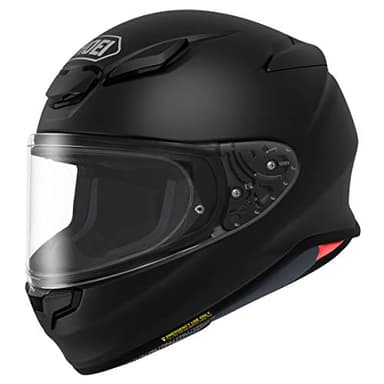
Shoei RF-1400
The full-face most experienced riders land on: Shoei's hand-laid AIM+ shell, DOT plus a SNELL M2020 rating, and a quiet, refined fit. You're paying for finish and certification, and it shows.
Price as of October 19, 2026. #ad How we’re funded
The lightweight
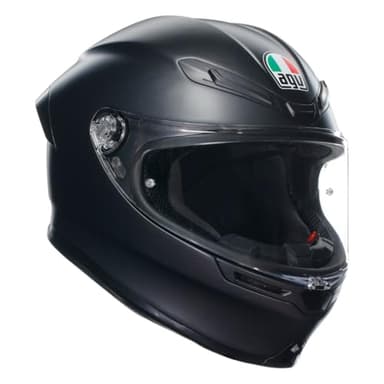
AGV K6 S
One of the lightest full-carbon-aramid lids you can buy at ~1,255 g, and it's certified to the newer ECE 22.06 standard on top of DOT. The sport-touring helmet for riders who notice weight on a long day.
| Spec | Shoei RF-1400 | AGV K6 S |
|---|---|---|
| Certification | DOT + SNELL M2020D | DOT + ECE 22.06 |
| Shell material | AIM+ multi-fiber composite | Carbon-aramid fiber |
| Claimed weight | ~1,640 g | ~1,255 g |
| Head shape | Intermediate oval | Intermediate oval |
| Interior | Plush touring-grade padding | Firmer sport padding |
| Best suited to | All-round street and touring | Sport-touring and long days |
| Price tier | Premium | Premium |
The certification question
This is the real decision, and it is not a case of one helmet being “safer.” Both have cleared the US federal standard (FMVSS 218). Beyond that they took different optional tests.
SNELL M2020D is a voluntary standard from the Snell Memorial Foundation, an independent non-profit. It is a demanding protocol with higher impact energies than DOT requires, and a helmet that carries it has cleared a genuinely tough shell test. SNELL is not required anywhere for street riding.
ECE 22.06is the current UN regulation for helmets sold in participating countries. Its significant addition over the previous 22.05 version is rotational and oblique-impact testing, plus multi-point impact requirements — a different question from “how much straight-line energy can the shell absorb.”
So: the Shoei has cleared a tougher version of the test both standards share, and the AGV has cleared a broader test that includes an impact mode the DOT and SNELL protocols don’t measure. We walk through the differences properly in DOT vs ECE vs SNELL explained. Neither answer is wrong.
The weight question
385 g is a lot. Over a four-hour ride your neck holds that difference up against turbulence continuously, and every head-check adds torque proportional to the mass. If you ride long days, if you have any history of neck issues, or if you spend time in a tucked position where your neck is loaded differently, the K6 S is the noticeably more comfortable helmet by the end of the day.
The RF-1400 is not heavy in absolute terms — it is a light helmet for a glass-composite lid with a SNELL rating, and the SNELL shell requirements are part of why it weighs what it does. But it is not in the same class as the carbon-aramid AGV.
Fit and comfort
Both are cut intermediate-oval, which is the most common head shape, and both run close to true to size. The difference is padding character: Shoei’s interior is plusher and more touring-oriented, AGV’s is firmer and sportier. Neither is better; plush padding packs out more over time, firm padding holds its shape but feels less forgiving in the first hundred miles. Check your head shape properly before either — see our sizing guide— because a shape mismatch will ruin the more expensive helmet just as fast as the cheaper one.
Noise and ventilation
The RF-1400 is generally regarded as the quieter and better-sealed of the two, which follows from its touring-leaning design; the K6 S has AGV’s racing lineage and prioritizes airflow through a wide eyeport and aggressive vent paths. We are not going to give you decibel figures — there is no standardized helmet noise test and any number we published would be uncomparable to any other. Our quietest helmets page explains what actually drives helmet noise.
The verdict
Buy the Shoei RF-1400if you want the most heavily shell-tested option, ride mostly upright on street and touring roads, value quiet and plush comfort, and the weight difference doesn’t worry you.
Buy the AGV K6 Sif weight is a priority — long days, neck fatigue, a sport riding position — or if you specifically want the rotational-impact testing that ECE 22.06 adds and DOT/SNELL don’t measure.
If neither fits your head shape properly, buy neither. A well-fitting $250 helmet outperforms a badly-fitting $700 one in the only test that counts.
Frequently asked questions
Is SNELL better than ECE 22.06?
They test different things, so 'better' doesn't resolve cleanly. SNELL M2020 uses higher impact energies than the DOT minimum and is a demanding shell test from an independent non-profit. ECE 22.06 adds rotational and oblique-impact testing plus multi-point impacts, which addresses a crash mode the other protocols don't measure. A helmet carrying either has been tested beyond the US legal requirement.
Is the AGV K6 S really 385 g lighter than the Shoei RF-1400?
Based on the manufacturers' published figures — approximately 1,255 g for the K6 S and approximately 1,640 g for the RF-1400 — yes. Bear in mind these are published claims for a specific shell size and that actual weight varies by size, so the gap on your head may differ slightly. The direction and rough magnitude are not in doubt; the carbon-aramid shell is genuinely lighter than the multi-fiber composite.
Which is quieter, the RF-1400 or the K6 S?
There's no standardized helmet noise test, so no honest comparable number exists. Structurally, the RF-1400 is the more touring-oriented design with a deeper neck roll and more sealing, which is the design profile associated with lower noise. The K6 S has AGV's racing lineage and a wide eyeport tuned for airflow. Whichever you buy, earplugs will make more difference than the model choice.
Do either of these helmets fit a round head?
Both are cut intermediate-oval, which is the most common head shape but not universal. If you have a rounder head, a correctly-sized intermediate-oval helmet will usually produce a forehead pressure point after fifteen to twenty minutes. Going up a size doesn't fix a shape mismatch — it just makes the helmet loose. Look for a model cut for a rounder shape instead.
Is either worth the money over a $250 helmet?
Both are lighter, better sealed, better finished and available in more shell sizes than a $250 helmet, and both carry an additional voluntary or regional certification beyond DOT. Those are real benefits, particularly over long distances. What they are not is the difference between protected and unprotected — a DOT-certified helmet at $150 has cleared the same federal test. Spend the money if long-day comfort and additional testing matter to you; spend it on a jacket with CE Level 2 armor if you don't yet have one.
Sources
- 49 CFR 571.218 — FMVSS No. 218, Motorcycle helmets — The US federal helmet standard: peak-acceleration, penetration and retention requirements; applies to all on-road motorcycle helmets (accessed July 21, 2026)
- Snell Memorial Foundation — Standards — Snell's motorcycle helmet standards: M2025D/M2025R are the current generation and M2020D/M2020R the previous one (D = DOT markets, R = ECE markets) (accessed July 21, 2026)
- Snell Memorial Foundation — M2020 Standard (PDF) — The full M2020 test protocol (accessed July 21, 2026)
- UNECE — Vehicle Regulations (UN Regulation No. 22 / ECE 22.06) — The UN regulation behind ECE 22.06, which added rotational/oblique-impact testing over 22.05 (accessed July 21, 2026)
- NHTSA — How to Choose the Right Motorcycle Helmet — NHTSA consumer guidance on DOT certification and spotting novelty helmets (accessed July 21, 2026)
Keep reading
Best full-face helmets
The most protective style, compared on shell material, certification and weight across every budget.
See the full-face picksDOT vs ECE vs SNELL explained
What each certification actually tests, which are required, and how they compare.
Read the safety-ratings guideQuietest motorcycle helmets
What actually cuts wind noise — sealing, neck roll and shell shape — and the helmets built around it.
See the quiet picksBest touring helmets
Helmets built for 400-mile days — sun visors, comms integration and the certification each one carries.
See the touring picks