Apex & Armor

Best Cruiser Motorcycle Helmets

Sitting bolt upright changes what a helmet has to do — the wind hits your chest instead of your shoulders, and every bit of that load ends up on your neck. These are the certified helmets built around that riding position.

By Stephen V.Last updated How we research

Most helmet reviews are written from a sport riding position, and it shows. A helmet designed for a rider tucked behind a screen at a 30-degree lean is aerodynamically optimized for airflow coming from below and in front. Put that same helmet on someone sitting upright on a cruiser with feet forward and no fairing, and the air arrives square on the front of the shell instead. The result is lift, buffeting and a level of noise that has nothing to do with how well the helmet was made.

So the criteria change. Weight matters more, because an upright neck supports the whole head unassisted rather than sharing the load with the torso. Shell shape matters more than vent count. And the eyeport geometry matters differently — you are looking straight ahead through the middle of the port rather than up through the top of it, which is why a race-shaped helmet feels like it is pointing at the ground when you sit up.

The five below are ranked for that. Every one is DOT-certified under FMVSS 218, two add ECE, and the list deliberately includes both full-face and open-face options — because a large part of the cruiser market rides 3/4, and the honest thing to do is rank the good ones rather than pretend nobody buys them.

How this is funded: we earn a commission if you buy through our links, at no extra cost to you. It never changes which gear we recommend, and we’ll tell you plainly when to skip a pick. Full disclosure.

Quick picks

Ranked on certification, spec and buyer fit. Select a row to jump to the full write-up. We haven’t crash-tested this gear — here is exactly what we do instead.

#GearBest forPrice
1
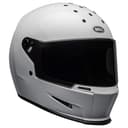
Bell Eliminator

Bell Eliminator

DOT

A full-face with the visual footprint of a 3/4 — huge eyeport, fiberglass composite shell, about 1,402 g and DOT certification. The helmet for riders who want chin protection but hate the bubble look.

Best overall
2
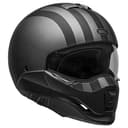
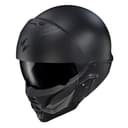
ScorpionEXO Covert 2

ScorpionEXO Covert 2

DOT + ECE 22.06

A 3/4 helmet with a removable front mask, so one lid covers both the open-face look and a closed-up configuration. Certified to DOT FMVSS 218 and ECE 22.06 — the strongest certification of any open-face here.

Best convertible
$239.95 · View on Amazon

Price as of September 4, 2026. #ad How we’re funded

3
Bell Broozer

Bell Broozer

DOT

A DOT-approved open-face with a chin bar you can bolt on and take off. Useful for riders who want two looks from one helmet — but Bell publishes no impact rating for the removable chin bar, so treat it as a wind deflector, not a full-face conversion.

Best two-in-one
$169.17 · View on Amazon

Price as of September 4, 2026. #ad How we’re funded

4
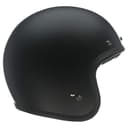
Bell Custom 500

Bell Custom 500

DOT

The 1954 silhouette that started the category, still built properly: a fiberglass composite shell in five sizes and a genuinely low-profile fit at about 982 g. It is DOT-certified, and it leaves your face completely exposed — that trade is the whole point of the helmet.

Best classic 3/4
$179.95 · View on Amazon

Price as of September 4, 2026. #ad How we’re funded

5
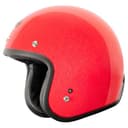
TORC T-50

TORC T-50

DOT FMVSS 218

The cheapest DOT-certified open-face we'd actually put on a head. A polycarbonate shell, multi-density EPS and a D-ring strap — the basics done right, with none of the extras.

Best budget
$77.95 · View on Amazon

Price as of September 4, 2026. #ad How we’re funded

The picks in full

#1Best overallDOT

Bell Eliminator

A full-face with the visual footprint of a 3/4 — huge eyeport, fiberglass composite shell, about 1,402 g and DOT certification. The helmet for riders who want chin protection but hate the bubble look.

Strengths

  • DOT approved fiberglass composite shell at roughly 1,402 g
  • Enormous eyeport — the widest field of view of any full-face here
  • Three shell sizes and a removable, washable interior

Trade-offs

  • DOT only — no ECE or SNELL rating published
  • The big eyeport comes with more wind noise than a sealed touring lid
Safety standardDOT
ConstructionFiberglass composite shell
Claimed weight1,402 g
Key featureDOT, wide eyeport
Fit / sizingIntermediate oval; 3 shell sizes
Best forCafe racer and custom riders who want full-face protection in a retro shape

Specs and certification read from the manufacturer and retailer listing, on August 22, 2026. “Check current listing” means the maker doesn’t publish that figure — we won’t guess it.

#2Best convertibleDOT + ECE 22.06

ScorpionEXO Covert 2

A 3/4 helmet with a removable front mask, so one lid covers both the open-face look and a closed-up configuration. Certified to DOT FMVSS 218 and ECE 22.06 — the strongest certification of any open-face here.

Strengths

  • DOT FMVSS 218 + ECE 22.06 — the newer European standard with rotational testing
  • Removable mouth cover converts between 3/4 and mask configurations
  • Three shell sizes across XS-3XL and Bluetooth-ready speaker pockets

Trade-offs

  • The removable mask is a wind and debris cover, not a certified chin bar
  • Scorpion doesn't publish a weight figure for this model
Safety standardDOT + ECE 22.06
ConstructionAdvanced polycarbonate shell
Claimed weightCheck current listing
Key featureDOT + ECE 22.06, convertible mask
Fit / sizingIntermediate oval; 3 shell sizes XS-3XL
Best forRiders who want one open-face helmet that converts for weather and wind

Specs and certification read from the manufacturer and retailer listing, on August 11, 2026. “Check current listing” means the maker doesn’t publish that figure — we won’t guess it.

#3Best two-in-oneDOT

Bell Broozer

A DOT-approved open-face with a chin bar you can bolt on and take off. Useful for riders who want two looks from one helmet — but Bell publishes no impact rating for the removable chin bar, so treat it as a wind deflector, not a full-face conversion.

Strengths

  • DOT approved, roughly 1,452 g in a polycarbonate/ABS shell
  • Removable chin bar gives two distinct riding configurations
  • Face shield included — unusual at this price for a convertible

Trade-offs

  • Bell publishes NO impact rating for the removable chin bar — it is not a certified full-face
  • Heavier than a plain 3/4 helmet because of the chin-bar hardware
Safety standardDOT
ConstructionPolycarbonate/ABS shell
Claimed weight1,452 g
Key featureDOT, removable chin bar (unrated)
Fit / sizingIntermediate oval; removable chin bar
Best forRiders who want one helmet for street and around-town in two configurations

Specs and certification read from the manufacturer and retailer listing, on August 11, 2026. “Check current listing” means the maker doesn’t publish that figure — we won’t guess it.

#4Best classic 3/4DOT

Bell Custom 500

The 1954 silhouette that started the category, still built properly: a fiberglass composite shell in five sizes and a genuinely low-profile fit at about 982 g. It is DOT-certified, and it leaves your face completely exposed — that trade is the whole point of the helmet.

Strengths

  • DOT-certified (ECE in Europe) fiberglass composite shell — not a novelty lid
  • Five shell and EPS sizes, so a small head isn't wearing a padded-out big shell
  • About 982 g (size M) — the lightest helmet in this roundup by a wide margin

Trade-offs

  • No chin bar and no face shield as standard — zero facial impact protection
  • The 5-snap visor system means buying a shield or goggles separately
Safety standardDOT
ConstructionFiberglass composite shell
Claimed weight982 g
Key featureDOT, 5 shell sizes
Fit / sizingLow-profile oval; 5 shell sizes XS-3XL
Best forCruiser and classic riders who want the retro shape without a novelty shell

Specs and certification read from the manufacturer and retailer listing, on August 11, 2026. “Check current listing” means the maker doesn’t publish that figure — we won’t guess it.

#5Best budgetDOT FMVSS 218

TORC T-50

The cheapest DOT-certified open-face we'd actually put on a head. A polycarbonate shell, multi-density EPS and a D-ring strap — the basics done right, with none of the extras.

Strengths

  • DOT FMVSS 218 certified at a genuine budget price
  • Multi-density EPS and a D-ring chin strap, not a cheap quick-release
  • Removable suede liner and detachable cheek pads for fit tuning

Trade-offs

  • No ECE rating and no published weight
  • Snap-on visor only; no face shield, so you'll want goggles or glasses
Safety standardDOT FMVSS 218
ConstructionPolycarbonate shell
Claimed weightCheck current listing
Key featureDOT FMVSS 218
Fit / sizingSlim 3/4 profile; removable cheek pads
Best forRiders who want a certified retro 3/4 helmet for well under $100

Specs and certification read from the manufacturer and retailer listing, on August 11, 2026. “Check current listing” means the maker doesn’t publish that figure — we won’t guess it.

What an upright riding position changes

Wind load moves from your shoulders to your chest

On a sportbike the torso shields the head; on a cruiser the head is the leading edge. At 70 mph that is a constant push, and everything you notice about a helmet on a cruiser — lift, the urge to duck, neck ache at the end of a day — traces back to it. The two counters available to you are weight and shape. A shell that is 300 g lighter is 300 g your neck is not holding up against that push for six hours.

Noise gets worse, not better

No fairing means no still-air pocket, so turbulent air reaches the bottom edge of the helmet directly. The neck roll — the padded collar around the base — ends up doing most of the sealing work, which is why a helmet with a well-sealed base is quieter on a cruiser than one with more expensive aerodynamics up top. If wind noise is your main complaint, our quietest helmets page ranks specifically on that, and it starts with the same advice we would give here: buy earplugs first, they will do more than any helmet upgrade.

An open-face is genuinely a compromise

We are not going to talk you out of a 3/4 helmet, but you should buy one knowing what the number is. Chin-bar impacts are a substantial share of helmet strikes in the crash literature, and an open-face protects none of that area. Everything else — crown, sides, rear — is protected to the same certified standard. If you want the open-face experience with an escape route, the ScorpionEXO Covert 2 and the Bell Broozer both give you a removable or convertible front section, and the full ranking is on best open-face helmets.

How we ranked these

  • Certification first, always. DOT is the legal floor for on-road sale. Two of the five add ECE 22.06, which brings rotational and multi-point impact testing. No helmet here is ranked up for looks at the expense of the mark on the strap.
  • Published weight where a maker gives one. The Bell Eliminator, Broozer and Custom 500 all publish figures, and they are in the spec table above. Several makers in this segment do not, in which case the row says so rather than guessing.
  • Shell count. A helmet built on three or five shell sizes rather than one keeps the outer profile proportional across the range, which matters for both weight and the mushroom-head look cruiser riders complain about.
  • Eyeport height and shape. A wide, tall port suits an upright head position. A race-shaped port designed for a tucked rider cuts the top of your vision when you sit up straight.

Full-face, convertible or 3/4?

The practical way to decide is to be honest about the ride. If most of your miles are highway, take a full-face — the noise and wind relief alone will change how far you can comfortably ride, and the Eliminator delivers that in a shape that does not look like a sport helmet. If your riding is town and short local runs at 40 mph, an open-face is a defensible choice and the Custom 500 is the one we would take, because five shell sizes is unusually good engineering for a retro lid.

The convertibles sit in the middle and are underrated for this. A ScorpionEXO Covert 2 rides as a 3/4 in town and takes a mask and shield for the highway; a Bell Broozer works the same way with a removable chin bar. Read the chin bar on a Broozer honestly, though — Bell does not certify the helmet with the bar as an impact-protective structure, so it is a wind and debris shield, not a full-face conversion. Our modular vs full-face comparison covers where flip-fronts sit on the same question.

The things cruiser riders actually complain about

Helmet lift at speed

The helmet tries to lift off your head above about 60 mph. This is almost always a shape-plus-position issue rather than a fault: a helmet with a peak, a large brow or a strongly upswept rear will generate lift when air arrives head-on. The fix is a smoother shell profile, not a tighter strap.

The helmet looks enormous

Usually a shell-count problem. A maker who builds one shell for XS through XL has to pack out the small sizes with thick foam, so a small head gets a helmet sized for a large one. The helmets above with three or five shells avoid this, and it is a specification worth checking on anything you buy.

Sunglasses and sun visors

Upright riding means more time looking into the sun. Several helmets here take a drop-down sun visor; where they do not, you are in glasses, which is its own fit problem — covered on helmets for glasses.

Boots, gloves and the rest of the kit

Cruiser gear has the same problem as cruiser helmets: most of what gets marketed for the look is not certified for anything. We have ranked the exceptions on cruiser boots and leather jackets.
How to read our safety notes. We have not crash-tested any of this gear — nobody honestly can on a review budget. Every helmet and armor pick names the certification the maker publishes (DOT, ECE 22.06, SNELL, or a CE level), which we read from the listing on a dated visit. Certification is the floor, not a guarantee; fit and condition matter as much as the sticker. What the standards actually mean.

Frequently asked questions

What kind of helmet is best for a cruiser?

A lightweight full-face with a wide eyeport, if you ride at highway speeds. Upright riding puts the air directly on your chest and head, so weight and shell shape matter more than they do on a faired bike, and a full-face is the only style that solves both the wind and the noise. If your riding is mostly short and slow, a certified 3/4 helmet is a defensible choice — just buy it knowing you have no chin protection, which is a real share of helmet impacts.

Why do helmets feel noisier on a cruiser?

Because there is no fairing to create a pocket of calm air. On a faired bike the screen throws turbulent air over and around you; on a cruiser it arrives at the base of the helmet directly, and the neck roll is the only thing sealing it out. That is why a helmet with a well-sealed bottom edge is quieter on a cruiser than one with clever aerodynamics on top. Earplugs remain the single largest improvement available, ahead of any helmet change.

Is a half helmet legal and is it any good?

A DOT-certified half helmet is legal wherever a helmet is required, but it protects the least of any style — crown only, with the sides, jaw and face uncovered. The bigger problem is that the half-helmet market is where most novelty shells live: thin shells with padding instead of a real EPS liner, wearing a DOT sticker the maker applied themselves. If you want the smallest legal helmet, buy a 3/4 from a maker that also sells full-faces, and check for a genuine one-inch EPS liner and a riveted chin strap.

Do I need a helmet with a drop-down sun visor?

It is one of the most useful features on a cruiser, because an upright riding position means more hours looking toward the horizon and into low sun. The alternatives are a tinted outer shield — which you then cannot use at dusk — or sunglasses under the helmet, which brings its own fit problem. If you can find a certified helmet in the shape you want with an internal visor, take it.

Why does my helmet try to lift off at speed?

Shell shape meeting an upright riding position. Peaks, pronounced brows and strongly upswept rear sections all generate lift when air arrives head-on rather than from below. Tightening the strap does not fix it and makes the helmet uncomfortable. A smoother, more rounded shell profile does. This is one reason retro full-faces like the Eliminator work well on cruisers despite the vintage styling — the shape is simple.

Are cruiser-style helmets less safe than sport helmets?

Not inherently, but the category contains more products that are. Every helmet on this page carries DOT certification and two carry ECE 22.06 as well, which is the same footing as any sport helmet. What is true is that the retro and cruiser aesthetic sells a lot of uncertified novelty shells, and that open-face styles — popular here — genuinely protect less than a full-face regardless of who made them. Judge the individual helmet by the certification and the liner, not the segment.

Sources

Keep reading

More in Helmets