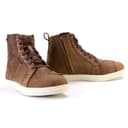
How to choose a cruiser boot
1. Decide how much protection you actually want
There is a real ladder here, and being clear about where you want to stand on it saves a lot of confusion:
- Sneakers: no protection. The most common cause of a broken ankle in a low-speed drop.
- Tall leather boot, no certification: real abrasion coverage and ankle coverage, no engineered impact or torsion structure. This is most of the classic cruiser market.
- Certified motorcycle footwear: tested to a protective-footwear standard, with ankle and malleolus protection designed in.
- Sport or touring boot: maximum protection, minimum cruiser aesthetic. See our overall boot picks.
2. Shaft height is the cruiser-specific spec
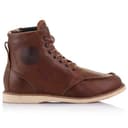
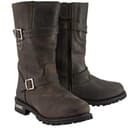
A tall shaft covers the ankle and lower shin, which is where a hot exhaust and a falling bike both live. It also gets warm in summer and makes the boot harder to walk in. Engineer and harness boots are tall by design; the casual and waterproof options here trade coverage for everyday wearability.
3. Sole and pedal feel
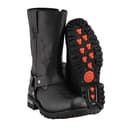
An oil-resistant rubber sole with a defined heel is what you want. The heel stops your foot sliding forward off the peg, and oil resistance matters more than riders expect at gas stations and in parking lots. Avoid a smooth leather sole entirely — it’s traditional and it’s dangerous at a stop.
4. Laces catch; pull-on doesn’t
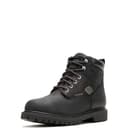
This is a small but genuine advantage of engineer and harness boots: nothing to lace, nothing to catch on a peg or a highway bar. If you buy a lace-up boot, tuck the ends or use a boot with a lace cover. The same goes for harness rings, which can snag — a real if uncommon issue.
5. Waterproof or treatable
A properly waterproof boot has a membrane and taped seams; a leather boot resists water for a while and then doesn’t. Neither is wrong, but if you commute year-round, take the membrane. If you buy plain leather, treat it before the first wet ride rather than after.
What “CE-certified footwear” actually means
The European standard for motorcycle boots (EN 13634) tests abrasion, cut resistance, impact absorption at the ankle and transverse rigidity — how much the boot resists being crushed sideways. A boot marked as certified motorcycle footwear has passed that battery. It is not a US legal requirement, which is why most boots sold here don’t carry it, and why finding a certified boot with cruiser styling is genuinely difficult.
What we haven’t done
We have not crush-tested, abrasion-tested or ridden in these boots. Every certification, material and construction detail below was read from the manufacturer’s specification or an authoritative retailer on a dated visit. Where a maker publishes nothing, we don’t fill the gap — see how we research.