Membrane or treated leather?
Membrane boots
A waterproof-breathable membrane is a thin layer with pores small enough to block liquid water and large enough to pass water vapor. Sealed into a bootie inside the boot, it means the outer material can soak and your foot still stays dry. This is the construction that works in sustained rain, and it is what serious touring and adventure boots use.
Two things to know. First, the membrane is a layer, so a membrane boot is slightly warmer and slightly less ventilated than the same boot without one — which is why they can be uncomfortable in genuine heat. Second, membranes are only as good as their seals: the failure point on an old boot is almost never the membrane itself but the seam tape or the point where the membrane meets the sole.
Treated leather
Full-grain leather with a water-repellent finish and minimal stitching sheds a surprising amount of water, and it does it while breathing far better than a membrane. It is the right answer for short commutes, showers and unpredictable days rather than for four hours of sustained rain. It also needs feeding: the finish wears off, and a leather boot that has been soaked and dried a dozen times without treatment will let water in long before the stitching fails.
Why waterproof boots still let water in
Nine times out of ten, from the top. Water runs down your leg, off your trousers, into the boot opening, and the membrane — which is doing its job perfectly — then holds it in. This is why boot height matters as much as the waterproofing itself, and why the standard fix is to wear your riding trousers over the boot rather than tucked into it, so water runs down the outside.
The other leak paths, in order of likelihood: the zip (a waterproof-zip claim usually means a storm flap over a normal zip, and the flap has to be closed properly), the seam where the upper meets the sole, and stitching through the upper on cheaper boots. None of that is a reason to avoid a boot; it is a reason to read what construction you are buying and to check the flap before you set off.
Height, and the honest trade-off
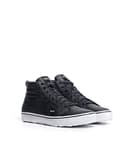
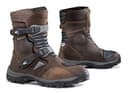
Taller boots keep more water out and cover more of the shin and ankle, and they are correspondingly worse to walk in. That is the entire spectrum on this page: a tall adventure boot is the most capable thing here in weather and the least pleasant to spend a day on foot in, while a waterproof riding shoe is the one you can wear into the office and the one that fills up first in a genuine downpour.
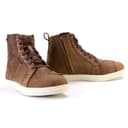
- Riding shoes and low boots— commuting, short rides, and anywhere you have to walk around in them. Water gets in over the collar in sustained rain.
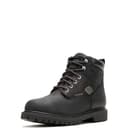
- Mid-height touring boots— the sensible default. Above the ankle, under the trouser cuff, walkable enough for a fuel stop and a cafe.
- Tall adventure boots— genuine weather capability, shin coverage and the confidence to put a foot down in anything. Stiff, heavy and awkward off the bike, though the better ones are far more walkable than an MX boot.
Protection is a separate question
Waterproofing tells you nothing about whether a boot protects your ankle. A boot protects by resisting crushing, by stopping the ankle twisting past its range, and by not coming off — which means a reinforced heel and toe box, some form of ankle cup or malleolus protection, a sole that resists twisting, and a closure that stays done up. Those are properties of the boot’s structure, not its membrane.
Two of the picks here are more protective than the other two, and that difference tracks height and construction, not waterproofing. If ankle protection is your priority rather than weather, start with our best motorcycle boots ranking and check which of those are also membrane-lined. The boot buying guide goes through the protection features in order.
Making waterproof boots last
- Dry them slowly. Never on a radiator, in front of a fire or with a hot air gun. Heat hardens leather, shrinks adhesives and can delaminate a membrane. Loosen everything, pull the insole out, stuff them with newspaper and leave them at room temperature.
- Feed the leather. Once or twice a season on a boot you ride in regularly. It keeps the outer repelling water so the membrane is not doing all the work, and it stops the upper cracking at the flex points.
- Clean the zips and check the flap.Grit in a zip is the most common cause of a zip failing, and a storm flap that has come unstuck is the most common cause of a “waterproof boot leaking” that turns out not to be leaking at all.
- Re-proof the outer, not the inside.Spray-on treatments restore the outer’s water repellency. Nothing you apply from outside will fix a failed membrane; if water is getting through with the collar dry, the boot has reached the end.
What to wear with them
Trousers over the boot, always, in rain. Waterproof socks are a legitimate and cheap backstop for a boot that is merely water-resistant, and they are far more effective than most people expect — though they are hot, so they are a rain accessory rather than a permanent fixture. And if you tour, a pair of lightweight overboots takes almost no space and turns any boot into a waterproof one for the two hours you need it. Our touring gear checklist covers what else earns its place in the luggage.