Apex & Armor

Best Motorcycle Helmets for Commuting

A commute is not a short tour. It is the same route twice a day, into the sun both ways, in traffic, with glasses, a phone and somewhere to leave the helmet at the other end.

By Stephen V.Last updated How we research

For most commuters the right helmet is the HJC i90: a DOT-and-ECE-certified flip-front with a drop-down internal sun visor, at a mid-market price. Those three things are the commute in one sentence. The flip-front means you talk to the parking attendant, pay at the gate and get your glasses on without taking the helmet off. The internal sun visor means you ride into low sun in the morning and again on the way home without carrying a second shield. The price means you can leave it on the bike without a knot in your stomach.

A commute punishes a helmet differently from a tour. It is short, so you never adapt to a helmet that annoys you — you just stop wearing it properly. It is repetitive, so a liner gets sweaty five days a week rather than once a fortnight. It is the same two sun angles every day. It is stop-start, so weight on your neck at a red light matters more than drag at 80 mph. And it ends somewhere you have to leave the helmet, which quietly rules out the most expensive lid in the shop.

Every certification, shell material and weight below is what the maker publishes for that model, read on a dated visit and recorded in our registry. We own none of these helmets and run no lab — our methodology page sets out what we do instead. If you are buying the rest of the kit at the same time, our commuting gear guide covers the jacket, gloves and visibility decisions alongside this one.

How this is funded: we earn a commission if you buy through our links, at no extra cost to you. It never changes which gear we recommend, and we’ll tell you plainly when to skip a pick. Full disclosure.

Quick picks

Ranked on certification, spec and buyer fit. Select a row to jump to the full write-up. We haven’t crash-tested this gear — here is exactly what we do instead.

#GearBest forPrice
1
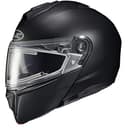
HJC i90

HJC i90

DOT + ECE 22.05

The value modular that gets the important things right: DOT and ECE 22.05 certification, a drop-down sun visor, and comms-ready ear pockets, for a fraction of a premium flip-front's price.

Best overall for commuting
$171.81 · View on Amazon

Price as of October 4, 2026. #ad How we’re funded

2
ScorpionEXO T520

ScorpionEXO T520

DOT + ECE

A DOT and ECE approved touring full-face with a drop-down sun visor and comms-ready pockets, at roughly a third of what the flagship touring lids cost. The value pick for riders who tour on a budget.

Best full-face commuter
$244.95 · View on Amazon

Price as of October 4, 2026. #ad How we’re funded

3
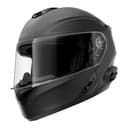
Sena Outrush R

Sena Outrush R

DOT FMVSS 218

A modular helmet with the Bluetooth mesh intercom built in and hidden — no bolt-on module, no wind snag. The US version is DOT-certified. The cleanest way to get comms without a separate purchase.

Best for navigation and calls
$359.00 · View on Amazon

Price as of October 4, 2026. #ad How we’re funded

4
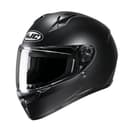
HJC C10

HJC C10

DOT

HJC's entry full-face, and one of the cheapest DOT-approved lids from a major maker. An advanced polycarbonate composite shell and a proper removable liner — the honest floor for a first helmet.

Best budget commuter helmet
$119.99 · View on Amazon

$139.9914% off

Price as of October 4, 2026. #ad How we’re funded

5
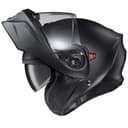
ScorpionEXO GT930 Transformer

ScorpionEXO GT930 Transformer

DOT + ECE 22.05

A genuine 3-in-1: run it as a full-face, flip it to a modular, or remove the chin bar for an open-face. DOT and ECE 22.05 certified, with a drop-down sun visor — versatile for riders who can't decide.

Best for a mixed commute
$279.95 · View on Amazon

Price as of October 4, 2026. #ad How we’re funded

The picks in full

#1Best overall for commutingDOT + ECE 22.05

HJC i90

The value modular that gets the important things right: DOT and ECE 22.05 certification, a drop-down sun visor, and comms-ready ear pockets, for a fraction of a premium flip-front's price.

Strengths

  • DOT + ECE 22.05 certified polycarbonate modular
  • Integrated drop-down sun visor and Pinlock-ready shield
  • Ear pockets sized for a Cardo/Sena install out of the box

Trade-offs

  • Polycarbonate shell is heavier than a composite modular
  • HJC doesn't publish the exact weight
Safety standardDOT + ECE 22.05
ConstructionAdvanced polycarbonate shell
Claimed weightCheck current listing
Key featureDOT + ECE 22.05
Fit / sizingIntermediate oval; roomy cheek pads
Best forCommuters and tourers who want a certified modular on a budget

Specs and certification read from the manufacturer and retailer listing, on July 21, 2026. “Check current listing” means the maker doesn’t publish that figure — we won’t guess it.

#2Best full-face commuterDOT + ECE

ScorpionEXO T520

A DOT and ECE approved touring full-face with a drop-down sun visor and comms-ready pockets, at roughly a third of what the flagship touring lids cost. The value pick for riders who tour on a budget.

Strengths

  • DOT + ECE approved — both the US legal floor and the European standard
  • Drop-down internal sun visor at a mid-tier price
  • Bluetooth-ready speaker pockets and a removable washable liner

Trade-offs

  • Scorpion doesn't publish a weight for the T520
  • Not as well sealed against wind noise as the premium touring helmets
Safety standardDOT + ECE
ConstructionPolycarbonate shell
Claimed weightCheck current listing
Key featureDOT + ECE, internal sun visor
Fit / sizingIntermediate oval; touring fit
Best forTouring riders who want dual certification and a sun visor for mid money

Specs and certification read from the manufacturer and retailer listing, on August 11, 2026. “Check current listing” means the maker doesn’t publish that figure — we won’t guess it.

#3Best for navigation and callsDOT FMVSS 218

Sena Outrush R

A modular helmet with the Bluetooth mesh intercom built in and hidden — no bolt-on module, no wind snag. The US version is DOT-certified. The cleanest way to get comms without a separate purchase.

Strengths

  • DOT certified (US version) with fully integrated Bluetooth intercom
  • No external module — nothing to snag or lose
  • Drop-down sun visor and voice controls

Trade-offs

  • Integrated comms can't be upgraded independently of the helmet
  • Polycarbonate modular, so on the heavier side (~1,730 g)
Safety standardDOT FMVSS 218
ConstructionPolycarbonate + ABS shell
Claimed weight1,730 g
Key featureDOT + built-in Bluetooth intercom
Fit / sizingIntermediate oval; comms-integrated
Best forRiders who want comms built into the helmet, not bolted on

Specs and certification read from the manufacturer and retailer listing, on July 21, 2026. “Check current listing” means the maker doesn’t publish that figure — we won’t guess it.

#4Best budget commuter helmetDOT

HJC C10

HJC's entry full-face, and one of the cheapest DOT-approved lids from a major maker. An advanced polycarbonate composite shell and a proper removable liner — the honest floor for a first helmet.

Strengths

  • DOT approved from an established helmet maker, not a marketplace brand
  • Advanced polycarbonate composite shell with a removable, washable liner
  • Multiple shell sizes so smaller heads aren't padded out

Trade-offs

  • HJC doesn't publish a weight for the C10
  • No ECE or SNELL rating and no internal sun visor at this price
Safety standardDOT
ConstructionAdvanced polycarbonate composite shell
Claimed weightCheck current listing
Key featureDOT
Fit / sizingIntermediate oval; runs true to size
Best forFirst-time buyers who want a major-brand certified helmet at the lowest price

Specs and certification read from the manufacturer and retailer listing, on September 5, 2026. “Check current listing” means the maker doesn’t publish that figure — we won’t guess it.

#5Best for a mixed commuteDOT + ECE 22.05

ScorpionEXO GT930 Transformer

A genuine 3-in-1: run it as a full-face, flip it to a modular, or remove the chin bar for an open-face. DOT and ECE 22.05 certified, with a drop-down sun visor — versatile for riders who can't decide.

Strengths

  • DOT + ECE 22.05 with dual homologation
  • Converts full-face → modular → open-face (chin bar removes)
  • Drop-down sun visor and a comms-ready shell

Trade-offs

  • Heavier (~1,810 g) thanks to the convertible hardware
  • Open-face mode has no chin protection — a fair-weather-only setting
Safety standardDOT + ECE 22.05
ConstructionAdvanced polycarbonate shell
Claimed weight1,810 g
Key featureDOT + ECE 22.05
Fit / sizingIntermediate oval; convertible
Best forRiders who want one helmet that converts between styles

Specs and certification read from the manufacturer and retailer listing, on July 21, 2026. “Check current listing” means the maker doesn’t publish that figure — we won’t guess it.

What actually matters on a commute

These are the five criteria the ranking above is built on, in the order they decide the purchase. They are deliberately not the criteria we use on the touring ranking, where sealing and all-day comfort dominate, or on the main ranking, where certification leads.

CriterionWhy a commute specificallyWhat to look for
Drop-down sun visorYou ride into low sun in both directions and you cannot swap a tinted shield in a car parkAn internal visor on a slider. Four of the five picks here publish one
Access without removalTolls, gates, security desks, glasses, a coffee — a commute is full of 20-second stopsA flip-front, or a convertible. Check the certification covers the position you ride in
CommsTurn-by-turn navigation and calls, on a route where you cannot pull over to check a phoneEither an integrated unit or a shell with a designed speaker pocket
Washable linerFive rides a week in work clothes. A liner you cannot remove becomes the reason you replace the helmetRemovable, washable cheek pads and crown liner
Replacement costIt lives in a pannier, a locker or on the mirror. Theft and drops are the realistic end of a commuter helmetMid-market. The most certified helmet you can buy is not the one to leave outside

Certification still comes first

None of the above overrides the mark on the back of the helmet. Every pick on this page publishes DOT FMVSS 218, which is the legal floor for on-road sale in the US, and three of the five add an ECE homologation on top. That matters more on a commute than people assume, because a commute is where the statistics live: urban, junction-heavy, repeated, at the two times of day with the worst light. A helmet you wear 500 times a year is not the place to save money on certification. Our certification guide explains the marks, and our safest-helmets ranking sorts the whole registry by what each maker publishes.

One thing to understand about flip-fronts before you buy one. Most modular helmets are certified in the closed position only. Riding with the chin bar up on the motorway is not covered by that certification. The exception is a dual P/J homologation, which is genuinely rated both ways — the Shoei Neotec 3 on our modular ranking is the example, and it is a touring-flagship price. For a commute, a flip-front you open at a standstill and close to ride is the sensible pattern, and that is how we have ranked them.

How we ranked these five

  • The HJC i90 wins on the combination.DOT plus ECE 22.05, a flip-front, and the internal sun visor — the three commuting features in one mid-priced helmet. It is the full flip-front experience without the flagship price, which is the right trade for a helmet that spends its life in a pannier. It is also the helmet we put against the Shoei flagship in our Neotec 3 head-to-head if you want to see exactly what the extra money buys.
  • The ScorpionEXO T520 is the pick if you would rather have a full-face. DOT plus ECE with the internal sun visor, no hinge, and less weight and noise than any modular. You give up the 20-second-stop convenience and get a stronger structure — see modular versus full-face for the full argument.
  • The Sena Outrush R is the one to buy if navigation is the problem. DOT-certified with the intercom built into the shell, so there is no module to unclip and lose and nothing bolted to the side. For a commute that means turn-by-turn directions and calls without a second purchase. More context in our Bluetooth helmet ranking and the intercom guide.
  • The HJC C10 is the honest budget answer.DOT, a polycarbonate shell, and a price low enough that the maths on leaving it locked to the bike actually works. No sun visor and no flip-front — it is on this page because a cheap certified full-face is a better commuting helmet than an expensive one you are afraid to park. Our budget ranking has the rest.
  • The ScorpionEXO GT930 Transformer is for a commute that changes. DOT plus ECE 22.05, and it runs as a full-face, a modular or an open-face. If your ride is motorway in winter and five slow miles through town in July, that is one helmet instead of two. Check the certification position you are riding in, as with any convertible — the point we make on open-face versus full-face.

The two accessories that change a commute most

Neither is a helmet, and both do more for the daily ride than moving up a helmet tier.

  • An anti-fog insert.Commuting is cold mornings and stop-start traffic, which is the exact recipe for a fogged shield — and a fogged shield at a junction is the most dangerous thing on this page. Our guide to stopping a helmet fogging up covers the fix properly.
  • Earplugs. Twice a day, five days a week, for years. Noise exposure is cumulative and a commute is the most repetitive exposure a rider has. See our earplugs guide.

What we did not rank, and why

Touring flagships. The Shoei GT-Air 3 and Neotec 3 are quieter and better-sealed than anything here, and they are the wrong purchase for a commute for one reason that has nothing to do with the helmet: you have to leave it somewhere. They lead the touring ranking, where the 400-mile day justifies them.

Open-face helmets.A 3/4 helmet is a genuinely good city helmet below about 30 mph and a poor commuting helmet the moment your route includes a motorway slip road or a wet morning. If your commute really is all low-speed surface streets, our open-face ranking is the page you want instead of this one.

Anything SNELL-certified. SNELL-rated helmets are built around the hardest energy test in common use and are mostly race-shaped, loud and expensive. That is the right set of trade-offs for a track day and the wrong one for 20 minutes of traffic twice a day. They are ranked on the SNELL page.
How to read our safety notes. We have not crash-tested any of this gear — nobody honestly can on a review budget. Every helmet and armor pick names the certification the maker publishes (DOT, ECE 22.06, SNELL, or a CE level), which we read from the listing on a dated visit. Certification is the floor, not a guarantee; fit and condition matter as much as the sticker. What the standards actually mean.

Frequently asked questions

What is the best motorcycle helmet for commuting?

The HJC i90. It is a flip-front carrying DOT plus ECE 22.05 with a drop-down internal sun visor, at a mid-market price — which covers the three things a commute actually demands: access without taking the helmet off, sun protection in both directions, and a replacement cost you can live with when the helmet spends its life in a pannier. If you would rather have a full-face, the ScorpionEXO T520 has the same sun visor and the same DOT-plus-ECE pair with no hinge. If navigation is your main problem, the Sena Outrush R has the intercom built into the shell.

Is a modular helmet good for commuting?

It is the best type for it, with one caveat. The flip-front is genuinely useful on a commute — tolls, gates, security desks, getting glasses on and off — and the reason is that a commute is full of short stops where a full-face has to come all the way off. The caveat is that most modular helmets are certified in the closed position only, so riding with the chin bar raised is outside what the certification covers. Open it at a standstill, close it to ride. Only a dual P/J homologated helmet is genuinely rated both ways, and those are flagship-priced.

Do I need a sun visor on a commuting helmet?

It is the single most useful commuting feature after certification, because a commute is the one kind of riding where you reliably face low sun twice a day on the same route. A drop-down internal visor solves it with a slider you can use at 60 mph without stopping; the alternative is carrying and swapping a tinted shield in a car park, which nobody does twice. The cost is a little weight and a slightly thicker shell, and on a sub-30-minute ride that is a trade worth making.

How much should I spend on a commuting helmet?

Mid-market, and deliberately less than you would spend on a touring helmet. A commuter helmet gets left in a locker, hung on a mirror or carried into an office, so theft and drops are its realistic ending, and a helmet you are nervous about parking is one you will eventually leave at home. Every pick on this page publishes DOT certification, so the floor is the same regardless of price — what the extra money buys you on a commute is the sun visor, the flip-front and the comms, not more safety certificate.

What helmet is best for commuting with glasses?

A flip-front, because you can put your glasses on after the helmet is on your head rather than threading the arms past the cheek pads. Both the HJC i90 and the Sena Outrush R on this page are modulars and both work this way. If you want a full-face, look for a model with channels cut in the cheek pads for spectacle arms, or swap to thinner cheek pads if the maker sells them — we rank the full-faces that cope best with glasses on a separate page.

How do I stop my helmet fogging up in traffic?

An anti-fog insert is the real fix: a second lens that seals to the inside of the shield and creates an insulating air gap, so the inner surface stays above the dew point. Cracking the shield open a notch works at speed and does nothing at a standstill, which is exactly when commuting fog happens. Keep the chin curtain in, breathe downward rather than up into the shield, and never wipe the inside of a shield with anything abrasive. Our fogging guide covers the whole sequence.

Do commuting helmets need comms?

Not strictly, but navigation is the one case where it earns its place fast — a commute often includes a diversion or a route you do not know, and glancing at a phone in traffic is worse than any other option. A helmet with the intercom designed in, like the Sena Outrush R, saves you clamping a module to a shell and means nothing is hanging off the side to catch. If you already own an intercom, buy a helmet with a designed speaker pocket instead and move the unit over.

How often should I replace a commuting helmet?

The same rules apply as to any helmet: after any impact, and otherwise on the maker's stated service life, which is commonly about five years from first use. A commute shortens that in practice for a different reason — the liner takes five sweaty wears a week and the shield takes grit twice a day. Buy a helmet with removable, washable cheek pads and a replaceable shield so the wear items are the parts you replace rather than the helmet. Our guide on when to replace a helmet covers the impact rule in full.

Sources

Keep reading

More in Helmets