Apex & Armor

Best Touring Motorcycle Helmets

Helmets built for 400-mile days — quiet, well-sealed, sun-visored and comms-ready — each ranked on the certification it actually carries, not the marketing.

By Stephen V.Last updated How we research

A touring helmet is a different object from a track helmet that happens to be comfortable. On a 400-mile day the things that decide whether you finish alert are wind noise, how well the neck roll seals against turbulence, whether you can drop a sun visor at 4pm without stopping, and whether the intercom lives inside the shell or hangs off the side of it. Ventilation matters, but it matters differently: you want airflow you can shut off completely when it turns cold at altitude, not maximum flow at all times.

Certification still comes first. Every helmet below is DOT-certified under FMVSS 218, which is the legal floor for on-road sale in the US, and several add ECE. What we have not done is crash-test any of them — nobody honestly can on a review budget, and we say so on our methodology page. What we did was read each helmet against its published certification, shell material and weight, then rank on the things that make a helmet livable over distance.

One honest caveat on noise: there is no industry decibel standard for helmets, so nobody — including us — can hand you a comparable dB figure. What we can do is point at the design features that demonstrably reduce noise (deep neck rolls, chin curtains, sealed shield gaskets, low-turbulence shells) and tell you which helmets are built around them. See our quietest helmets page for the longer version of that argument.

How this is funded: we earn a commission if you buy through our links, at no extra cost to you. It never changes which gear we recommend, and we’ll tell you plainly when to skip a pick. Full disclosure.

Quick picks

Ranked on certification, spec and buyer fit. Select a row to jump to the full write-up. We haven’t crash-tested this gear — here is exactly what we do instead.

#GearBest forPrice
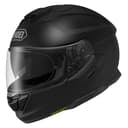
1
Shoei GT-Air 3

Shoei GT-Air 3

DOT

Shoei's dedicated touring full-face: AIM shell, an internal sun visor, a deep neck roll and comms integration designed in rather than bolted on. If you ride 400-mile days with a shield down, this is the reference.

Best overall
$765.00 · View on Amazon

Price as of September 4, 2026. #ad How we’re funded

2
Shoei Neotec 3

Shoei Neotec 3

DOT + ECE 22.06

The benchmark touring modular. Shoei's AIM shell, DOT plus ECE 22.06 with P/J dual homologation (legal to ride with the chin bar up), and the quietest flip-front we know of. Expensive, and worth it for high-mileage touring.

Best modular
$935.00 · View on Amazon

Price as of September 4, 2026. #ad How we’re funded

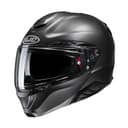
3
HJC RPHA 91

HJC RPHA 91

DOT

HJC's premium touring modular: a composite shell, a Pinlock-ready shield in the box and an internal sun visor, at a price that undercuts the Japanese and European flagships by hundreds.

Best premium value
$639.99 · View on Amazon

Price as of September 4, 2026. #ad How we’re funded

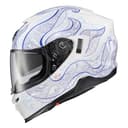
4
ScorpionEXO T520

ScorpionEXO T520

DOT + ECE

A DOT and ECE approved touring full-face with a drop-down sun visor and comms-ready pockets, at roughly a third of what the flagship touring lids cost. The value pick for riders who tour on a budget.

Best value
$244.95 · View on Amazon

Price as of September 4, 2026. #ad How we’re funded

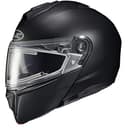
5
HJC i90

HJC i90

DOT + ECE 22.05

The value modular that gets the important things right: DOT and ECE 22.05 certification, a drop-down sun visor, and comms-ready ear pockets, for a fraction of a premium flip-front's price.

Best budget
$171.81 · View on Amazon

Price as of September 4, 2026. #ad How we’re funded

The picks in full

#1Best overallDOT

Shoei GT-Air 3

Shoei's dedicated touring full-face: AIM shell, an internal sun visor, a deep neck roll and comms integration designed in rather than bolted on. If you ride 400-mile days with a shield down, this is the reference.

Strengths

  • Shoei AIM multi-fiber shell — DOT certified for the US market
  • Drop-down internal sun visor and a deep neck roll for sealing
  • Designed around Shoei's SRL comms so nothing hangs off the shell

Trade-offs

  • Premium price, and the US listing carries DOT only — no SNELL
  • About 1,714 g; the sun-visor mechanism adds weight over a bare racing lid
Safety standardDOT
ConstructionAIM multi-fiber composite shell
Claimed weight1,714 g
Key featureDOT, internal sun visor
Fit / sizingIntermediate oval; touring-plush interior
Best forHigh-mileage touring riders who want a quiet, well-sealed full-face

Specs and certification read from the manufacturer and retailer listing, on August 11, 2026. “Check current listing” means the maker doesn’t publish that figure — we won’t guess it.

#2Best modularDOT + ECE 22.06

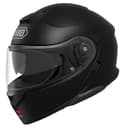
Shoei Neotec 3

The benchmark touring modular. Shoei's AIM shell, DOT plus ECE 22.06 with P/J dual homologation (legal to ride with the chin bar up), and the quietest flip-front we know of. Expensive, and worth it for high-mileage touring.

Strengths

  • DOT + ECE 22.06 with P/J dual homologation — rated open AND closed
  • Class-leading wind noise control and sealing for long days
  • Sena SRL3 comms integrate cleanly without breaking the shell lines

Trade-offs

  • The most expensive modular here by a wide margin
  • Heavier than a full-face at ~1,850 g, as all modulars are
Safety standardDOT + ECE 22.06
ConstructionAIM multi-composite shell
Claimed weight1,850 g
Key featureDOT + ECE 22.06 (P/J)
Fit / sizingIntermediate oval; long-oval friendly
Best forTouring riders who want a certified, genuinely quiet flip-front

Specs and certification read from the manufacturer and retailer listing, on July 21, 2026. “Check current listing” means the maker doesn’t publish that figure — we won’t guess it.

#3Best premium valueDOT

HJC RPHA 91

HJC's premium touring modular: a composite shell, a Pinlock-ready shield in the box and an internal sun visor, at a price that undercuts the Japanese and European flagships by hundreds.

Strengths

  • DOT approved with an advanced composite (PIM) shell
  • HJ-37 Pinlock-prepared shield included — no separate anti-fog purchase
  • Drop-down sun visor and a comms-ready interior

Trade-offs

  • HJC doesn't publish a shell weight for the RPHA 91
  • Flip-front hinge means more wind noise than a sealed full-face
Safety standardDOT
ConstructionPIM advanced composite shell
Claimed weightCheck current listing
Key featureDOT, Pinlock shield included
Fit / sizingIntermediate oval; touring fit
Best forTouring riders who want a composite flip-front without flagship pricing

Specs and certification read from the manufacturer and retailer listing, on August 11, 2026. “Check current listing” means the maker doesn’t publish that figure — we won’t guess it.

#4Best valueDOT + ECE

ScorpionEXO T520

A DOT and ECE approved touring full-face with a drop-down sun visor and comms-ready pockets, at roughly a third of what the flagship touring lids cost. The value pick for riders who tour on a budget.

Strengths

  • DOT + ECE approved — both the US legal floor and the European standard
  • Drop-down internal sun visor at a mid-tier price
  • Bluetooth-ready speaker pockets and a removable washable liner

Trade-offs

  • Scorpion doesn't publish a weight for the T520
  • Not as well sealed against wind noise as the premium touring helmets
Safety standardDOT + ECE
ConstructionPolycarbonate shell
Claimed weightCheck current listing
Key featureDOT + ECE, internal sun visor
Fit / sizingIntermediate oval; touring fit
Best forTouring riders who want dual certification and a sun visor for mid money

Specs and certification read from the manufacturer and retailer listing, on August 11, 2026. “Check current listing” means the maker doesn’t publish that figure — we won’t guess it.

#5Best budgetDOT + ECE 22.05

HJC i90

The value modular that gets the important things right: DOT and ECE 22.05 certification, a drop-down sun visor, and comms-ready ear pockets, for a fraction of a premium flip-front's price.

Strengths

  • DOT + ECE 22.05 certified polycarbonate modular
  • Integrated drop-down sun visor and Pinlock-ready shield
  • Ear pockets sized for a Cardo/Sena install out of the box

Trade-offs

  • Polycarbonate shell is heavier than a composite modular
  • HJC doesn't publish the exact weight
Safety standardDOT + ECE 22.05
ConstructionAdvanced polycarbonate shell
Claimed weightCheck current listing
Key featureDOT + ECE 22.05
Fit / sizingIntermediate oval; roomy cheek pads
Best forCommuters and tourers who want a certified modular on a budget

Specs and certification read from the manufacturer and retailer listing, on July 21, 2026. “Check current listing” means the maker doesn’t publish that figure — we won’t guess it.

How to choose a touring helmet

Work in this order: fit, then certification, then noise and weight, then features.A helmet that doesn’t match your head shape will hurt at hour three no matter what it cost, so measure your head and check the shape before anything else — our helmet sizing guide walks through the measurement and the pressure-point check. Only then start comparing helmets to each other.

Full-face or modular?

Touring splits almost exactly down the middle here. A full-face is lighter, quieter and structurally simpler; a modular lets you lift the chin bar at every gas stop, toll booth and conversation, which over a week of riding is a genuine quality-of-life difference. The modular pays for that with a hinge, a latch and roughly 150–300 extra grams. If you tour with a passenger or ride in a group that stops often, the flip-front usually wins; if you ride long solo stretches, the full-face does. We’ve laid the trade out in full on modular vs full-face.

The internal sun visor is not a gimmick

A drop-down sun visor is the single feature that most changes a touring day. Without one you either carry a second shield and swap it at dusk in a parking lot, or you ride into a low sun squinting. Four of the five helmets here have one. The trade-off is real: the visor mechanism adds 50–100 g and a slot in the EPS liner, which is why pure racing helmets don’t have them.

Comms integration

“Comms-ready” means speaker recesses deep enough that a 40 mm driver doesn’t press on your ear. “Comms-integrated” means the maker sells a unit shaped for that specific shell — Shoei’s SRL series for the GT-Air and Neotec, for instance — so nothing hangs into the airflow. If you already own a Cardo or Sena, comms-ready is enough; see our intercom picksfor what to pair. If you’re starting from scratch and want the cleanest install, buy into an integrated system.

Weight and neck fatigue

Every 100 g you save is 100 g your neck muscles aren’t holding up against turbulence for eight hours. That’s the entire argument for a composite shell over polycarbonate at this price point, and it’s why the flagship touring helmets use multi-fiber layups. It is not, however, a reason to buy an ill-fitting light helmet over a well-fitting heavier one — pressure points hurt far more than grams.

Replace it on schedule

Replace any helmet after a significant impact, even if the shell looks fine — the EPS liner crushes once and does not recover. Absent an impact, roughly five years from the date of manufacture is the standard guidance, because the liner and the shell’s resins age. High-mileage touring riders reach that point faster than the calendar suggests.
How to read our safety notes. We have not crash-tested any of this gear — nobody honestly can on a review budget. Every helmet and armor pick names the certification the maker publishes (DOT, ECE 22.06, SNELL, or a CE level), which we read from the listing on a dated visit. Certification is the floor, not a guarantee; fit and condition matter as much as the sticker. What the standards actually mean.

Frequently asked questions

What makes a touring helmet different from a normal full-face?

Three things: sealing, sun protection and comms. A touring helmet has a deeper neck roll and a chin curtain to cut turbulence noise, usually carries a drop-down internal sun visor so you don't swap shields at dusk, and is designed around a specific intercom rather than expecting you to bolt one on. Ventilation is also designed to close completely, because touring means riding into weather you didn't start in.

Are touring helmets actually quieter, or is that marketing?

The design features that reduce noise are real and measurable in a lab: a deep neck roll seals the gap under the helmet where most turbulence noise enters, a chin curtain blocks air coming up from the chin bar, and a low-turbulence shell shape reduces the noise generated at the edges. What is NOT real is any comparable decibel number — there's no industry noise standard for helmets, so any dB figure you see is one reviewer's setup and can't be compared to another's. We rank on the features, not on invented numbers.

Do I need ECE 22.06 for touring in the US?

No. DOT (FMVSS 218) is the legal requirement for on-road use in the US, and every helmet on this page carries it. ECE 22.06 is the current European standard and adds rotational-impact and multi-point testing, so a helmet carrying both has cleared more testing. It's a genuine bonus, not a legal requirement — and several excellent touring helmets sold in the US are DOT-only.

Is a modular helmet safe enough for long-distance touring?

A DOT-certified modular has cleared the same federal test as a full-face. The structural difference is the hinge and latch, which is why a one-piece full-face is still considered the most protective style. For touring specifically, the practical question is whether you'll ride with the chin bar latched — if you will, the gap is small. If the convenience tempts you to ride with it up at speed, buy a full-face instead.

How often should I replace a touring helmet?

Immediately after any significant impact — the EPS liner compresses once and does not spring back, so a helmet that has taken a hit is spent even if the shell looks undamaged. Otherwise the standard guidance is roughly five years from the date of manufacture (usually stamped inside the strap or under the liner), because the liner foam and shell resins degrade with heat, sweat and UV. Touring riders who put on serious mileage tend to wear out the comfort liner well before that.

Sources

Keep reading

More in Helmets