Apex & Armor

Best Leather Motorcycle Jackets

Real hide from race-grade perforated cowhide down to classic cruiser cuts — compared on construction, armor and what each one actually ships with.

By Stephen V.Last updated How we research

Leather earns its place in motorcycle gear on one property: abrasion resistance. A properly-thick cowhide panel survives a slide that would open most textiles, which is why race suits are leather and have been for seventy years. That is the whole argument, and it is a strong one. What leather is notis impact protection — that is the armor’s job, and a leather jacket without armor protects your skin while doing nothing for your shoulder or elbow joints.

This is where the leather-jacket market gets confusing, because it contains two almost unrelated product categories wearing the same name. One is protective equipment: heavy hide, CE-certified armor at shoulders and elbows, a back-protector pocket, and a cut designed for a riding position. The other is a fashion jacket in the shape of a biker jacket, which may or may not use real leather and almost certainly has no armor. Both are on Amazon. We have only featured the first kind, and where a jacket ships with armor pockets rather than armor, we say so explicitly.

One honest limitation on this page: almost no leather jacket sold in the US market publishes a CE garment certification (EN 17092), which is the European standard for the whole garment rather than just its armor. So our spec tables show “Check current listing” for that field more often than we’d like. What we can tell you is what the maker publishes about the hide, the armor and the construction — and where they publish nothing, we say that too.

How this is funded: we earn a commission if you buy through our links, at no extra cost to you. It never changes which gear we recommend, and we’ll tell you plainly when to skip a pick. Full disclosure.

Quick picks

Ranked on certification, spec and buyer fit. Select a row to jump to the full write-up. We haven’t crash-tested this gear — here is exactly what we do instead.

#GearBest forPrice
1
Alpinestars GP Plus R V4 Air Leather

Alpinestars GP Plus R V4 Air Leather

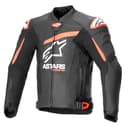
Premium cowhide in a race fit, with perforated panels for airflow, CE-certified armor and DFS shoulder sliders. This is what a leather jacket looks like when abrasion resistance is the design brief rather than the styling.

Best overall
$566.95 · View on Amazon

Price as of September 4, 2026. #ad How we’re funded

2
First Mfg Co Raider

First Mfg Co Raider

A traditional biker-cut cowhide jacket with an action back, armor pockets at shoulders, elbows and spine, and a zip-out thermal liner. The classic shape done with real hide rather than fashion leather.

Best classic cut
$259.99 · View on Amazon

Price as of September 4, 2026. #ad How we’re funded

3
Milwaukee Leather CE-Armored Leather Jacket

Milwaukee Leather CE-Armored Leather Jacket

An affordable cowhide jacket that actually ships with CE armor and zip-out layers — the value way into leather abrasion resistance for cruiser and standard riders on a budget.

Best value with armor
$99.99 · View on Amazon

Price as of September 4, 2026. #ad How we’re funded

4
Vance Leather Premium Leather Racer

Vance Leather Premium Leather Racer

A vented cafe-racer cut in real leather with reflective piping, at roughly a quarter of what the race-grade jackets cost. The cheapest way into leather that isn't a fashion jacket pretending to ride.

Best cafe racer
$149.95 · View on Amazon

Price as of September 4, 2026. #ad How we’re funded

5
Milwaukee Leather SH1011 Classic Brando

Milwaukee Leather SH1011 Classic Brando

The Brando silhouette in premium leather with side laces for fit adjustment. It's a style jacket first — but it's real hide, which is more than most jackets in this shape can say.

Best styling
$147.28 · View on Amazon

Price as of September 4, 2026. #ad How we’re funded

The picks in full

#1Best overall

Alpinestars GP Plus R V4 Air Leather

Premium cowhide in a race fit, with perforated panels for airflow, CE-certified armor and DFS shoulder sliders. This is what a leather jacket looks like when abrasion resistance is the design brief rather than the styling.

Strengths

  • Premium cowhide with perforated panels — leather abrasion resistance that still breathes
  • CE-certified protectors included, plus DFS shoulder sliders
  • Accordion stretch zones so a race cut still lets you move on the bike

Trade-offs

  • Race fit is aggressive — it's cut for a tucked position, not upright riding
  • By far the most expensive jacket in this roundup
Safety standardCheck current listing
ConstructionPerforated premium cowhide leather
Key featureCowhide leather + CE armor
Fit / sizingRace fit; runs snug, size up for layers
Best forSport and track riders who want genuine race-grade leather

Specs and certification read from the manufacturer and retailer listing, on August 11, 2026. “Check current listing” means the maker doesn’t publish that figure — we won’t guess it.

#2Best classic cut

First Mfg Co Raider

A traditional biker-cut cowhide jacket with an action back, armor pockets at shoulders, elbows and spine, and a zip-out thermal liner. The classic shape done with real hide rather than fashion leather.

Strengths

  • Genuine cowhide in a traditional biker cut with an action back for reach
  • Armor pockets at shoulders, elbows and spine so you can fit CE inserts
  • Zip-out thermal liner extends it into cold weather

Trade-offs

  • Ships with armor POCKETS, not armor — budget for CE inserts separately
  • Heavy, and warm in anything above mild weather
Safety standardCheck current listing
ConstructionCowhide leather
Key featureCowhide + armor pockets + thermal liner
Fit / sizingTraditional biker cut; roomy
Best forCruiser riders who want a classic leather cut with room for armor

Specs and certification read from the manufacturer and retailer listing, on August 11, 2026. “Check current listing” means the maker doesn’t publish that figure — we won’t guess it.

#3Best value with armor

Milwaukee Leather CE-Armored Leather Jacket

An affordable cowhide jacket that actually ships with CE armor and zip-out layers — the value way into leather abrasion resistance for cruiser and standard riders on a budget.

Strengths

  • Genuine cowhide leather with CE armor included
  • Zip-out thermal liner for cooler-weather range
  • Classic cruiser styling at a low price

Trade-offs

  • Leather is hot in summer with limited venting
  • Heavier and less refined than a premium leather jacket
Safety standardCheck current listing
ConstructionCowhide leather
Key featureLeather + CE armor included
Fit / sizingRegular cruiser cut
Best forCruiser riders who want real leather with CE armor cheaply

Specs and certification read from the manufacturer and retailer listing, on July 21, 2026. “Check current listing” means the maker doesn’t publish that figure — we won’t guess it.

#4Best cafe racer

Vance Leather Premium Leather Racer

A vented cafe-racer cut in real leather with reflective piping, at roughly a quarter of what the race-grade jackets cost. The cheapest way into leather that isn't a fashion jacket pretending to ride.

Strengths

  • Real leather in a fitted racer cut with side vents
  • Reflective piping for night visibility
  • Priced well under the sport-leather brands

Trade-offs

  • Vance doesn't publish a CE armor certification for the included padding
  • Fit runs tight through the shoulders — check the size chart carefully
Safety standardCheck current listing
ConstructionPremium leather
Key featureVented leather racer cut
Fit / sizingFitted racer cut; runs snug
Best forRiders who want a leather racer cut without spending premium money

Specs and certification read from the manufacturer and retailer listing, on August 11, 2026. “Check current listing” means the maker doesn’t publish that figure — we won’t guess it.

#5Best styling

Milwaukee Leather SH1011 Classic Brando

The Brando silhouette in premium leather with side laces for fit adjustment. It's a style jacket first — but it's real hide, which is more than most jackets in this shape can say.

Strengths

  • Premium leather in the classic asymmetric-zip Brando cut
  • Side lacing lets you tune the fit rather than living with the cut
  • Well under $200 for a full-grain style jacket

Trade-offs

  • No CE armor and no armor pockets published — this is styling before protection
  • Asymmetric zip and wide lapels flap at highway speed
Safety standardCheck current listing
ConstructionPremium leather
Key featureClassic Brando cut, premium leather
Fit / sizingClassic cut with side lacing
Best forRiders who want the classic Brando look in actual leather

Specs and certification read from the manufacturer and retailer listing, on August 11, 2026. “Check current listing” means the maker doesn’t publish that figure — we won’t guess it.

How to choose a leather motorcycle jacket

1. Confirm it’s real hide, and find the weight

“Genuine leather” on a listing can mean anything from 1.0 mm cowhide to a thin split-leather laminate. What you want for abrasion resistance is cowhide or buffalo at roughly 1.0–1.4 mm. Goatskin and sheepskin are softer and more supple — excellent for gloves, thinner for jackets. If a listing says “PU leather” or “faux leather,” it is a fashion jacket and offers essentially no abrasion protection. None of those appear on this page.

2. Armor: included, or pockets only?

This is the single most consequential spec and the one most buyers miss. Plenty of good leather jackets ship with empty armor pockets at the shoulders, elbows and back, on the assumption you’ll fit your own. That is a fine design decision — it lets you choose your CE level — but it means the jacket you receive has no impact protection until you spend another $30–80. Our armor inserts roundup covers exactly what to put in them, and CE armor ratings explained covers what Level 1 and Level 2 actually mean.

3. Fit: leather does not forgive a bad cut

A textile jacket with stretch panels tolerates a size error. Leather does not — it is stiff when new, it stretches only in the direction the hide wants to, and armor that sits in the wrong place is armor that isn’t protecting the joint. A leather jacket should be snug enough that the shoulder and elbow armor stays over the joint when you reach for the bars, and it should feel slightly tight standing upright. It will break in; it will not shrink.

4. Decide the cut before the brand

A race-fit jacket is cut short at the front, long at the back and pre-curved at the elbow so it fits a tucked position. Standing upright in one is uncomfortable and that is by design. A traditional cruiser cut is straight, roomier and comfortable off the bike, which means it moves more at speed. Neither is better — buy the one matching your riding position.

5. Heat is the real cost

Leather is warm. Perforated panels help a great deal and are the reason the race jackets on this list have holes punched through the chest and arms, but a perforated leather jacket is still hotter than a mesh jacket. If you ride in genuine heat, plan on two jackets or accept the trade honestly.

Caring for a leather riding jacket

  • Don’t dry it with heat. A soaked leather jacket dried on a radiator will stiffen and crack. Air dry it away from direct heat, on a broad hanger so the shoulders keep shape.
  • Condition it once or twice a year. Leather conditioner replaces the oils that sun and rain strip out. Dry leather is brittle leather, and brittle leather tears.
  • Remove the armor before cleaning— and take the chance to check the armor hasn’t deformed or gone hard.
  • Replace it after a slide.Leather that has taken a serious abrasion event is thinned in that area even if it hasn’t opened. Armor that has taken an impact is spent.
Frequently asked questions

Is leather better than textile for a motorcycle jacket?

For abrasion resistance, generally yes — properly thick cowhide survives a slide better than most textiles, which is why race suits are leather. For weather protection, breathability, weight and versatility, textile usually wins. And for impact protection, neither material matters: that's entirely down to the CE armor inside. The honest answer is that a textile jacket with CE Level 2 armor beats a leather jacket with no armor for most real-world crashes.

How thick should motorcycle leather be?

Roughly 1.0 to 1.4 mm cowhide is the usual target for a road jacket; race suits use the upper end of that or thicker. Below about 0.9 mm you're into fashion-weight leather that will open in a serious slide. Many listings don't publish a thickness figure at all — where a maker doesn't, our spec tables say so rather than guessing, and 'genuine leather' with no thickness stated should be treated with caution.

Do leather motorcycle jackets come with armor?

Some do, many don't. It's common for a leather jacket to ship with empty armor pockets at shoulders, elbows and spine, expecting you to buy your own inserts — which is a reasonable design choice but means the jacket has zero impact protection out of the box. Always check whether the listing says 'armor included' or 'armor pockets'. If it's pockets, budget another $30-80 for CE inserts.

Is a fashion leather jacket safe for riding?

No, and the distinction matters. A fashion biker jacket is usually thin leather or PU with no armor, no armor pockets, decorative rather than reinforced seams, and a cut that isn't designed for a riding position. In a slide, thin leather opens and decorative stitching fails at the seams. If a jacket doesn't state its hide weight or mention armor at all, treat it as clothing.

How should a leather motorcycle jacket fit?

Snug — snug enough that it feels slightly tight standing upright, because it's cut for a riding position and will loosen as the hide breaks in. The critical test is that the shoulder and elbow armor stays directly over your joints when you reach for the handlebars. If the armor slides off the elbow when you extend your arm, the jacket is too big regardless of how it feels off the bike. Leather stretches a little; it does not shrink.

Sources

Keep reading

More in Jackets