The four criteria a passenger helmet is actually judged on
They are not the criteria behind the main ranking. A pillion helmet lives a different life: it goes on and off more often, it is frequently bought for someone who is not standing there, and it spends most of the year in a cupboard.
| Criterion | Why it matters from the back seat | What to look for |
|---|
| Certification, with no exceptions | Your passenger is in the same crash as you. A novelty shell is not a cheaper helmet, it is a hat | DOT FMVSS 218 at minimum, published for the model. An ECE homologation on top is better. Every pick here publishes DOT |
|---|
| Gets on and off without a fight | A pillion removes the helmet at every stop, often over long hair or glasses, often without having done it before | A flip-front chin bar, and a micrometric ratchet strap rather than a double-D. Five of the six picks are modulars for exactly this reason |
|---|
| You can talk to each other | The most common pillion complaint is not discomfort, it is being unable to say anything for two hours. Hand signals do not cover “slow down” | An integrated intercom, or at minimum pre-cut ear pockets so a unit fits without hacking out liner foam |
|---|
| A size range that reaches your passenger | Many pillions have smaller heads than the rider, and a helmet padded out to fit is a helmet that moves in a crash | Multiple shell sizes, or a published range that extends into the small end. The HJC C10 and ILM B-711 both publish one |
|---|
The rule we are not going to soften: measure their head
You cannot buy a helmet for someone whose head you have not measured, and this page is not going to pretend otherwise. A helmet that is one size too large does not merely feel loose — it can move or come off during an impact, which removes the reason you bought it. Measure the circumference about an inch above the eyebrows with a soft tape, then read the maker’s own chart for that specific model, because sizing is not consistent between brands. Our sizing guide covers the measurement and the check that matters more than the number: the helmet should move the skin on the forehead, not slide against it.
Head shape is the other half of fit. An intermediate-oval helmet on a long narrow head produces pressure at the forehead and a gap at the cheeks, and every pick on this page is an intermediate oval, which is the most common shape but not a universal one. Our head-shape guide explains how to tell, and our fit guide covers the same question across jackets, gloves and boots. This is also the strongest argument against a surprise helmet gift: buy the ride, not the helmet, unless you already know their size.
Talking to each other: what the intercom choice really is
Two-up is the easiest case in intercom terms, because you only need two units talking to each other over a few feet — not a mesh network across a group strung out over a mile. That means the cheap end of the intercom market genuinely works for a pillion, and it is why two of the picks here have Bluetooth built in at prices that would not buy a mid-tier standalone unit.
Three honest caveats. An integrated intercom cannot be upgraded without replacing the helmet, which is the real cost of the Sena Outrush R and the ILM 902BT. Cross-brand pairing works over standard Bluetooth intercom but not over the proprietary mesh networks, so a Sena helmet and a Cardo mesh unit will talk to each other in Bluetooth mode and lose the mesh features — our mesh versus Bluetooth explainer covers what that costs. And if you would rather choose the intercom and the helmet separately, our rider-and-passenger intercom ranking covers the two-unit sets built for exactly this, and we have written the decision up on its own.
How we ranked these six
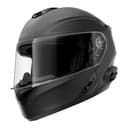
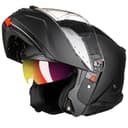
- The Sena Outrush R leads because it solves the pillion problem in one box. DOT certified in the US version, a flip-front chin bar, a drop-down sun visor and a Bluetooth intercom built into the shell with voice controls — no external module to mount, snag or lose. For a passenger who will not be installing anything themselves, that integration is the whole point. The trade-offs are real: the comms cannot be upgraded independently of the helmet, and at roughly 1,730 g it is a heavy polycarbonate modular.
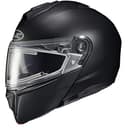
- The HJC i90 is the value pick if you already have intercoms. DOT plus ECE 22.05 on an advanced polycarbonate shell, a drop-down sun visor, a Pinlock-ready shield and ear pockets already cut for a Cardo or Sena install — which is what “comms-ready” should mean and often does not. A passenger facing low sun with no way to change shields at a stop gets more from an internal sun visor than from almost anything else on the spec sheet. HJC publishes no weight for it, and a polycarbonate modular is heavier than a composite one.
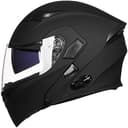
- The ILM 902BT Pro is the cheapest honest way to get comms on both heads. It meets DOT FMVSS 218, it is a flip-up with a drop-down sun visor, and the intercom is included at a price that would not buy a mid-tier helmet on its own. Be clear about what you are accepting: an ABS shell, basic intercom range against a Cardo or Sena system, and no published helmet-only weight. For a passenger who rides with you a handful of times a year, that is a defensible trade. For a daily pillion it is not the one we would make.
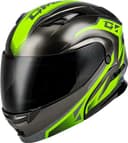
- The GMAX MD-01 is the cheapest certified flip-front from a helmet brand. DOT plus ECE at well under a hundred dollars with a drop-down internal sun visor. The poly-alloy shell is heavy, the finish is basic and GMAX publishes neither the ECE sub-version nor the weight. It is on this page because it is the answer to “I need a second certified helmet this week”, and it is a far better answer than the novelty shell someone will otherwise suggest.
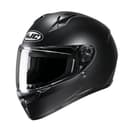
- The HJC C10 is here for the passenger who would rather have a sealed full-face. DOT approved from an established maker rather than a marketplace brand, an advanced polycarbonate composite shell, a removable washable liner — which matters when two people share a helmet across a season — and multiple shell sizes so a smaller head is not padded out inside a large shell. No ECE rating, no internal sun visor at this price, and no published weight. A full-face is quieter and warmer than a flip-front; it is also the harder helmet to put on for the first time.
- The ILM B-711 is the lowest outlay with the widest published size range. Listed as DOT and ECE approved, with a flip-front and a drop-down internal sun visor, and a size range that extends well into the small end — which is the specific reason it earns a slot here rather than on a general ranking. Two things we will not paper over: ILM publishes neither shell material nor weight, and as a marketplace brand there are no independent SHARP or MotoCAP results to check the claim against. Our guide to spotting a fake covers how to read a certification claim on a listing like this.
Three things that matter more than which helmet you pick
- Gear below the neck. A certified helmet on a passenger in shorts is a half-finished job, and the pillion is the person who cannot see the road ahead or prepare for anything. Our passenger guide covers the jacket, gloves and boots at the budget end, and the beginner gear guide prices a full head-to-toe set.
- A briefing before the first ride.Where to put their feet and keep them there, when to get on and off, not to lean against the turn, and what happens at a stop. None of that is obvious from the back seat, and all of it is harder to explain once you are moving — which is the other argument for intercoms.
- Washing the liner.A shared helmet collects two people’s sweat, hair product and sunscreen, and a loaded liner stops wicking and starts smelling. Every pick here except the ILM pair publishes a removable liner. Our cleaning guide covers doing it without damaging the EPS or the shield coating.
What we did not rank, and why
The cheapest helmets on the internet, which is what this page is arguing against. A “novelty” or “DOT-style” shell is not a budget helmet; it is an uncertified one, and the cheapest genuinely certified helmet in our registry costs less than a tank of fuel for most bikes. That removes the only argument anyone has for the alternative. Our budget helmet ranking is the broader version of this point.
Open-face and 3/4 helmets. A pillion gets more buffeting than the rider and has no screen and no bars to brace on, so the comfort argument for an open-face is weaker from the back seat than the front, and the protection argument is unchanged. Our open-face ranking and open-face versus full-face lay out that trade honestly; neither recommends it for a passenger specifically.
Several helmets that would have ranked, excluded on availability. The HJC i10 is the best-certified cheap full-face we know of — DOT plus SNELL M2020 — and on the day this page was written its listing read “only 4 left”, which is below the stock bar we hold new picks to. The ScorpionEXO R420 (“only 1 left”) and the TORC T27 (“only 1 left”) went the same way. All three remain ranked on the pages that already carry them, including the SNELL page and the beginner ranking.