Bluetooth Helmet or Separate Intercom?
An integrated helmet is tidier, cheaper as a bundle and impossible to upgrade. A separate unit is uglier, moves between helmets and outlives three of them. Here is how to pick.
How this is funded: we earn a commission if you buy through our links, at no extra cost to you. It never changes which gear we recommend, and we’ll tell you plainly when to skip a pick. Full disclosure.
The decision comes down to one question: which do you expect to replace first, the helmet or the electronics? A helmet is a consumable with a replacement interval measured in years and an immediate write-off after any impact. An intercom is hardware that gets a firmware update, a battery degradation curve and a successor generation. If you fuse them, you have tied two different replacement cycles together.
That is the whole argument, and everything below is the detail. Both routes are legitimate and we rank helmets and intercoms on both.
The trade-offs, side by side
| Consideration | Helmet with comms built in | Separate intercom |
|---|---|---|
| Upgrade path | None. New electronics means a new helmet — the single biggest cost of this route | Sell, replace or move it to your next helmet. Outlives most helmets it is fitted to |
| Installation | Nothing to do. Speakers are designed into the shell at the right depth | A clamp or adhesive mount plus speakers in the pockets. Fine on a comms-ready helmet, awkward on one without pockets |
| Spec level | Usually a tier behind, because the electronics are specified to a helmet price | Whatever you choose. Current mesh units, published rider counts and ranges |
| Group compatibility | Locked to one brand’s ecosystem for mesh. Bluetooth intercom still pairs cross-brand | You can buy the brand your group runs, which is the thing that actually decides group audio |
| Snag and loss risk | Nothing on the outside of the shell to catch or lose at a fuel stop | An external module. Low-profile mounts are fine; a tall one is worth thinking about |
| Weight | Included in the published helmet weight, and it shows — the two we track publish 1,730 g and 1,750 g | Added on top and never in the published figure, but removable for a track day or a short ride |
When the integrated helmet is the right call
Three situations, and they are more common than the spec-sheet argument suggests:
- Your helmet has no speaker pockets. This is the strongest case. Pressure on the ear from a speaker crammed against the liner is genuinely painful over two hours, and the fix is never to cut EPS foam out of a helmet.
- You are buying for someone who will not maintain it. A passenger, a partner who rides occasionally, a new rider. Firmware, charging and re-pairing are all real tasks.
- You want one purchase. No clamp, no compatibility check, nothing to install. For a rider doing a few thousand miles a year this is a reasonable priority rather than a lazy one.
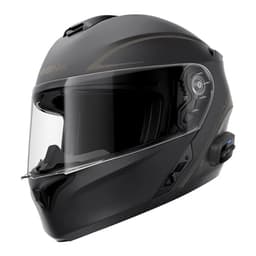
The value integrated option
Sena Outrush R
DOT FMVSS 218A modular helmet with the Bluetooth mesh intercom built in and hidden — no bolt-on module, no wind snag. The US version is DOT-certified. The cleanest way to get comms without a separate purchase.
See the Bluetooth helmet rankingPrice as of October 10, 2026. #ad How we’re funded
A DOT-certified modular with the Bluetooth intercom inside the shell, voice controls and a drop-down sun visor. Nothing to mount, nothing to snag. The costs are the ones this page keeps naming: the comms cannot be upgraded independently of the helmet, and at about 1,730 g it is a heavy polycarbonate modular.
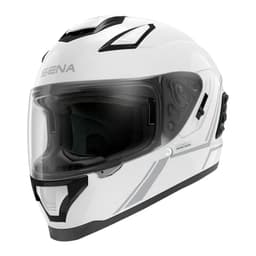
The premium integrated option
Sena Stryker
DOT FMVSS 218A composite-fiberglass full-face with a Mesh intercom and Sound by Harman Kardon built in. DOT-certified in the US, and the audio is a real step up from bolt-on speakers.
Compare the integrated helmetsPrice as of October 10, 2026. #ad How we’re funded
A composite-fiberglass full-face, DOT certified in the US version, with a mesh intercom and Harman Kardon audio built in — which is the one integrated product in our registry whose electronics are not obviously a tier behind the standalone market. You are paying premium money for the integration, and the upgrade problem is unchanged.
When a separate unit is the right call
Most of the time, and especially in these cases. You already own a helmet that fits — fit is the thing you should never compromise for electronics. You ride with a group, because the brand your group runs mesh on decides whether you can hear them. Or you expect to change helmets, which almost every rider does sooner than they expect: helmets get replaced on a schedule and immediately after any impact, and our replacement guide covers that interval.
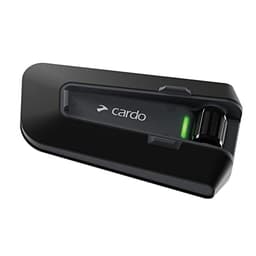
The mesh unit that moves between helmets
Cardo Packtalk Neo
The cheapest unit on Cardo's current mesh network, and it is on exactly the same network as the most expensive one. Cardo publishes 2nd Generation DMC, up to 31 riders, 1.6 km (1 mi) unit-to-unit, 40 mm Sound by JBL speakers, 13 hours of talk time, IP67 and Bluetooth 5.2 for the Neo and the Edge alike. What you give up is the magnetic Air Mount, the ability to charge while riding, and one year of warranty.
See the full intercom ranking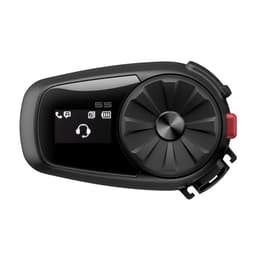
The simple two-rider option
Sena 5S
The cheapest Sena that still has the Jog Dial. Bluetooth 5.1, 40 mm speakers, 18 hours of talk time on a 1.5-hour charge — and the detail the listings bury: Sena publishes a TWO-rider intercom, not four. For a rider and pillion it is the sensible Sena. For a group it is the wrong one.
See the two-up intercom picksThe Sena 5S is the useful counter-example to the whole integrated-helmet pitch for two-up riding: Sena’s own specification names the passenger directly, publishes support for up to two riders, up to 700 m in open terrain, 40 mm speakers, 18 hours of talk time and a glove-friendly jog dial — on a unit that costs a fraction of an integrated helmet and transfers to your next one.
The one thing that decides more purchases than any spec
Mesh does not cross brands.Cardo’s Dynamic Mesh and Sena’s Mesh networks are proprietary and will not join each other, so a mixed group falls back to Bluetooth intercom — which works, and gives you Bluetooth range, Bluetooth rider counts and none of the self-healing behaviour that makes mesh worth the money. Cardo publishes its own limitation on cross-generation music sharing in similar terms.
The practical consequence: if you ride with the same people, find out what they run before you spend anything, and buy that. That applies equally to an integrated helmet, which locks you to one ecosystem for the life of the helmet. Our mesh versus Bluetooth explainer covers what each actually does, and Cardo versus Sena compares the two ecosystems directly.
Our recommendation, stated plainly
For most riders: buy the best-fitting certified helmet you can, then add a separate intercom. Fit is not negotiable and electronics are, so letting the comms choice constrain the helmet choice is the wrong way round. Check for speaker pockets before you buy either, because a comms-ready helmet makes the separate route painless and a helmet without pockets makes it miserable.
Buy integrated when the install is the problem you are solving — no pockets, a passenger, or a rider who wants one box. In that case treat the electronics as a feature of the helmet rather than an intercom purchase, and expect to replace both together. Our installation guide covers measuring the speaker depth you have and where to put a module, and our intercom buying guide covers the rest of the decision.
Frequently asked questions
Is it better to buy a Bluetooth helmet or add an intercom?
Buy a separate intercom if you already own a helmet you like, if you ride with a group whose brand you need to match, or if you expect to change helmets before you change intercoms — which most riders do. Buy an integrated helmet if you want one purchase with nothing to install, if you have struggled to fit a unit into a helmet with no speaker pockets, or if you are buying for someone else, such as a passenger, who will not want to maintain hardware. The deciding question is simple: which do you expect to replace first, the helmet or the electronics?
Do built-in Bluetooth helmets work with Cardo and Sena units?
Over standard Bluetooth intercom, generally yes — cross-brand pairing between two units in Bluetooth mode is a long-standing feature and that is how mixed groups have always worked. What does not cross brands is mesh: Cardo's Dynamic Mesh and Sena's Mesh networks are proprietary and do not join each other. So a Sena integrated helmet and a Cardo mesh unit will talk in Bluetooth mode, with the range, rider count and self-healing behaviour of Bluetooth rather than mesh. If the group you ride with runs mesh on one brand, that brand decides your purchase more than any spec sheet does.
Can you replace the intercom in a Bluetooth helmet?
Not independently, and that is the central trade-off. The electronics in an integrated helmet are part of the helmet: when the battery degrades, when the firmware stops being updated, or when the intercom generation you own is two behind, your upgrade path is a new helmet. A separate unit can be sold, replaced or moved to your next helmet, and a mid-tier intercom will typically outlast the helmet it was first fitted to — helmets have a replacement interval measured in years and after any impact, which the electronics do not.
Does adding an intercom affect helmet safety or certification?
Fitting speakers into existing speaker pockets and a module to the outside of the shell does not re-open the helmet's DOT certification, which is tested on the helmet as supplied. Two practical cautions. Do not cut, grind or remove EPS foam to make room for speakers — if the pockets are not deep enough, the helmet is the wrong helmet for that unit. And mount the module where it will not sit under your head in a slide. The federal standard limits rigid external projections on the helmet as supplied; an accessory you add afterwards is your judgement, so keep it low-profile and well adhered.
Are built-in Bluetooth helmets worse at intercom range?
Usually they are a tier behind, because the electronics are specified to a helmet price rather than chosen on their own merits. Budget integrated helmets in particular pair basic Bluetooth intercom hardware with a certified shell, and the published range and rider counts are well short of a current standalone mesh unit. The premium integrated helmets are closer — one in our registry publishes an integrated mesh system with branded audio. As a rule: if the intercom is the reason you are buying, buy the intercom. If the helmet is the reason, the integrated electronics are a convenience rather than a feature set.
What if my helmet has no speaker pockets?
That is the strongest single argument for an integrated helmet. Helmets without pre-cut speaker pockets — common on sport shells and on cheap helmets — leave you choosing between thin speakers pressed against your ears and modifying the liner, and pressure on the ear over a two-hour ride is genuinely painful. An integrated helmet has the speakers designed into the shell. If you are keeping your current helmet, check for pockets before buying any unit, and our installation guide covers how to measure the depth you have.
Is an integrated helmet cheaper than buying both separately?
As a bundle, usually yes — and the comparison is less useful than it looks, because you are comparing a mid-tier helmet plus mid-tier electronics against one product that is a compromise on both. The honest way to run the numbers is over the life of the gear: if you keep a helmet five years and change intercoms once in that time, the separate route costs more up front and less overall, and leaves you with hardware that moves to the next helmet. If you ride a few thousand miles a year and want one box to arrive, the bundle wins.
Which should I buy for a passenger?
An integrated helmet, in most cases. A pillion is not going to maintain firmware, charge a module or re-pair a unit, and two-up is the easiest intercom case there is — two units a few feet apart, no mesh network required. That is why the cheap end of the integrated market genuinely works here when it does not work for group riding. Our passenger helmet ranking covers the specific models, and our rider-and-passenger intercom page covers the two-unit sets if you would rather keep the electronics separate.
Sources
- Sena — 5S Motorcycle Bluetooth Communication System — Sena's published 5S specs: Bluetooth 5.1, intercom supports up to 2 riders, up to 700 m (0.4 miles) in open terrain, 40 mm speakers, 18 h talk time, 1.5 h charge, Jog Dial (accessed August 31, 2026)
- Cardo — PACKTALK NEO — Cardo's published PACKTALK NEO specs: 2nd Generation DMC, "Connect up to 31 riders", range of up to 1.6 km / 1 mi, 40 mm Sound by JBL speakers, IP67, Bluetooth 5.2, clickable mount rather than the Edge's Air Mount, 2 hours of talk time after 20 minutes of USB-C charging, 2-year warranty (accessed August 31, 2026)
- Sena — Firmware updates for the 50S & 50R v1.5 — Sena's own release notice for 50S (SP75) and 50R (SP76) firmware v1.5, dated 27 March 2025: "Added Mesh 3.0" — the primary record that the 50-series moved mesh generation by firmware rather than by new hardware (accessed August 31, 2026)
- Cardo — Packtalk Neo vs. Edge: What's the Difference? — Cardo's own Neo-versus-Edge article: identical 2nd Generation DMC, "Unit-to-unit range reaches up to 1.6km, and the group range extends to 8km", 40 mm JBL speakers "tuned identically", "13 hours of talk time per charge" and "up to 10 days on standby" for both; the differences are the Air Mount versus the clickable mount, that "The Neo does not support charge-while-riding", and a 3-year versus 2-year warranty (accessed August 31, 2026)
- 49 CFR 571.218 — FMVSS No. 218, Motorcycle helmets — The US federal helmet standard: peak-acceleration, penetration and retention requirements; applies to all on-road motorcycle helmets (accessed July 21, 2026)
Keep reading
Best Bluetooth motorcycle helmets
Every helmet in the registry with comms built in, ranked on the certification first and the electronics second.
See the integrated helmetsBest motorcycle intercoms
The standalone route: mesh and Bluetooth units ranked on what each maker publishes.
See the intercom picksMesh vs Bluetooth intercoms
What mesh actually buys you, and the cross-brand limitation that decides most group purchases.
Read the explainerHow to install a motorcycle intercom
Speaker depth, module placement and the one thing never to do to an EPS liner.
Read the install guideBest helmets for a passenger
Where an integrated helmet makes the most sense, and why two-up is the easy intercom case.
See the passenger picksBest budget intercoms
What the separate route costs at the bottom of the market, for comparison against a bundled helmet.
See the budget picks