Are Motorcycle Riding Pants Necessary?
Almost every rider buys an armored jacket and then rides in ordinary jeans. The gear data says that is backwards: lower-body gear is where the published evidence is better and the spending is worse.
How this is funded: we earn a commission if you buy through our links, at no extra cost to you. It never changes which gear we recommend, and we’ll tell you plainly when to skip a pick. Full disclosure.
The honest answer: no single piece of gear below the helmet is necessary, and lower-body gear is the largest unprotected area on a rider who already owns an armored jacket. Almost everyone buys the jacket, the gloves and eventually the boots, and rides in ordinary jeans for years. This page is about whether that is a defensible order of operations.
What jeans actually do
Two separate jobs, and denim fails them differently:
- Impact: nothing. There is no protector over the knee or the hip in a pair of jeans, and no weight of denim creates one. Knees land first in most low-speed falls and hips take a heavy direct hit in a low-side at road speed. This is the gap, and it is total.
- Abrasion: some, at low speed. Unreinforced denim offers real resistance at walking pace and very little at road speed. It is better than bare skin by a wide margin and it is not an abrasion garment.
So the useful question is not “are jeans dangerous” but which of those two gaps you close first, and how cheaply you can close it.
The four options, honestly compared
| Option | What it adds | What it still does not do |
|---|---|---|
| Strap-on knee armor under your own jeans | Certified EN 1621-1 impact protection at the most likely impact point, for the least money of anything here | Nothing for abrasion, nothing for hips. A first step, not a destination |
| Armored riding jeans | Knee and often hip armor pockets, sometimes abrasion-rated panels, in something you can wear all day off the bike | Many publish no abrasion lining and no garment class. Read the listing rather than the category name |
| Overpants | An abrasion layer plus certified knees that goes on over street clothes and off at the office door | Frequently no hip armor and no membrane. Bulky and warm over jeans |
| Textile or leather riding pants | The complete answer: a published garment class, certified knee and hip armor, overlays in the abrasion zones, often a membrane | Costs the most, and the adventure cuts are more pant than a short commute needs |
Start at the bottom: the cheapest thing that works
Most riders have never considered this option, because it is sold in the off-road aisle rather than the touring one.
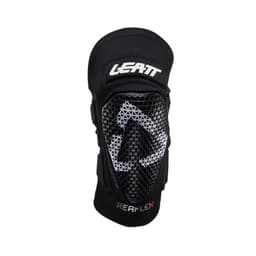
Certified knees, worn under the jeans you own
Leatt ReaFlex Pro Knee Guard
CE EN 1621-1 Level 1 (knee)The slimmest certified guard here, and Leatt's replacement for the discontinued AirFlex Pro — which fixes our one complaint about it. Pre-curved ReaFlex impact gel in a wicking sleeve, from 300 g a pair, certified to knee EN 1621-1 with the level published this time.
See the full knee guard rankingPrice as of October 10, 2026. #ad How we’re funded
Leatt publishes CE EN 1621-1 Level 1for the knee, in a slim gel guard from 300 g a pair that is designed to disappear under trousers. It costs a fraction of any riding pant and it covers the joint that lands first. It does nothing for abrasion and nothing for your hips — so this is the floor, not the answer. But a rider in jeans with certified knees is meaningfully better protected than a rider in jeans, for the price of a tank of fuel.
The commuter’s middle ground, and its specific flaw
If the reason you are not wearing riding pants is that you arrive somewhere and have to look normal, an overpant solves exactly that problem.
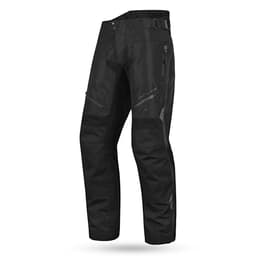
Goes on over street clothes — and publishes no hip armor
Tourmaster Overpant Evo
Armanox CE Level 1 knee armor; no hip armor or garment class listedThe one pant on this page you put on over what you are already wearing. Full-length YKK zippers down each leg, 600D Carbolex polyester with 1000D ripstop overlays, large thigh vents and Armanox CE Level 1 knee armor with an adjustable fit. Tourmaster lists no hip armor and no waterproof membrane, so this is a commuter's abrasion-and-knee layer, not a touring pant.
Compare it against the full riding pantsPrice as of October 10, 2026. #ad How we’re funded
Full-length YKK zippers down each leg so it fits over shoes, 600D Carbolex with 1000D ripstop overlays, large zippered thigh vents, and Armanox CE Level 1 knee armor with an adjustable fit. Tourmaster lists no hip armor and no waterproof membrane — which is the flaw the whole overpant category tends to share, and it is the joint an overpant most needs to cover. Bought as a commuter’s abrasion-and-knee layer it is good value; bought as a touring pant it is not one.
The denim-shaped option has a related problem, and it is worth naming because the category name does a lot of work it has not earned:
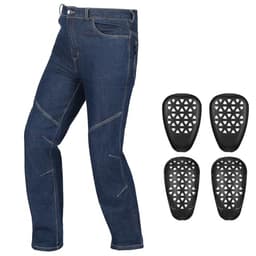
Jeans that take armor — check the level on the listing
Kemimoto Armored Riding Jeans
Riding jeans that look like normal denim but take CE armor at the knees and hips — the practical middle ground for commuters who won't wear obvious riding pants. Confirm the armor rating on the listing.
See the armored jeans rankingStretch denim with armor pockets at the knees and hips, in something that passes as everyday jeans. The honest limits are on the card: no aramid abrasion lining is stated, and the exact CE level of the included inserts needs confirming on the listing. That is the state of most of this category — a genuine step up from ordinary jeans for commuters who will not wear obvious riding gear, and not an abrasion-rated garment.
What the complete answer looks like
One pant in our registry publishes both numbers with nothing inferred, and it is useful as the reference point even if you never buy it.
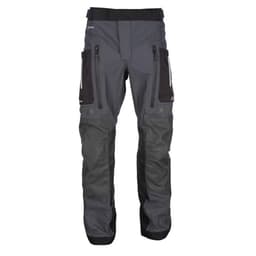
AA garment class and Level 2 hip and knee armor
KLIM Carlsbad Pant
CE AA EN 17092-3 garment; KLIM Rogue CE Level 2 hip and knee armorThe pant that publishes both numbers this page shops on: a CE AA rating certified to EN 17092-3 for the garment, and KLIM Rogue CE Level 2 armor at the hip and the knee. The shell is a GORE-TEX Performance Shell laminate, so there is no drop liner to wet out, with 630D CORDURA twisted-yarn overlays in the abrasion zones and goat leather inside the knees. Expensive, and the only pant here where nothing had to be inferred.
See where it sits in the rankingPrice as of October 10, 2026. #ad How we’re funded
KLIM publishes a CE AA rating certified to EN 17092-3 for the garment and Rogue CE Level 2 vented hip and adjustable knee armor included, over a GORE-TEX Performance Shell with 630D CORDURA twisted-yarn overlays in the abrasion zones and goat leather inside the knees. It is the most expensive pant we rank, no thermal liner is listed, and it is far more pant than a short commute requires. It is here to show what a fully documented lower half costs.
The finding that should change your spending order
We counted our own catalogue, and the result argues against how most riders buy gear:
- Four of the pants we track publish a full EN 17092 garment class — two at AA, two at A.
- Only two of the 27 jackets we track publish a class at all, and both are the same brand.
So the category most riders skip is the one where you can actually shop on published, tested evidence. If you own an armored jacket and ride in jeans, your next purchase has better data behind it than your last one did. Our guide to the EN 17092 classes explains what AA and A mean, and the armor ratings guide covers the EN 1621 levels and the foam-pad substitution that affects hips most of all.
Where we would put the money
In this order, for a rider who already has a certified helmet, an armored jacket and gloves:
- Certified knee armor under your existing jeans. Cheapest, fastest, covers the likeliest impact. Do it this week.
- One pair of lower-body gear that publishes an armor level for both knee and hip. Riding jeans if you need it to look normal, textile pants if you do not. Hip armor is the thing to insist on, because it is the hardest to add afterwards.
- Boots, if you have not already. Ankles are the other joint with no soft-tissue protection and a long recovery, and that question has a less equivocal answer than this one.
What we would not do is spend a second time on the upper body while the lower half is denim. The jacket market is where the marketing budget is; the published evidence is downstairs. Our beginner gear guide prices a full head-to-toe set, and the cost guide shows what each layer runs.
How to read our safety notes. We have not crash-tested any of this gear — nobody honestly can on a review budget. Every helmet and armor pick names the certification the maker publishes (DOT, ECE 22.06, SNELL, or a CE level), which we read from the listing on a dated visit. Certification is the floor, not a guarantee; fit and condition matter as much as the sticker. What the standards actually mean.
Frequently asked questions
Are motorcycle riding pants necessary?
Necessary is the wrong frame — nothing below a helmet is legally required in most US states. The useful question is what ordinary jeans do and do not do, and the answer is that denim provides essentially no impact protection at the knee or hip and very little abrasion resistance at road speed. Riding pants or armored riding jeans add two things jeans cannot: an abrasion layer designed for sliding, and certified impact protectors over the knee and ideally the hip. If you ride regularly and you own an armored jacket, lower-body gear is the largest remaining gap in your kit.
Will jeans protect you in a motorcycle crash?
Barely, and not in the way riders assume. Ordinary denim has no impact protector over the knee or hip, which is the part of lower-body protection that matters most in a low-speed fall — knees hit first and hips hit hard. On abrasion, unreinforced denim offers some resistance at walking pace and very little at road speed. What jeans genuinely do is cover you, which is better than shorts. What they do not do is anything a certified protector or an abrasion-rated garment does, and no amount of heavyweight denim changes the impact side at all.
Are armored riding jeans good enough?
They are a real improvement over ordinary jeans and a real step below textile pants, and the honest version depends on what the specific pair publishes. The good ones take CE armor at the knees and hips and use aramid or abrasion-rated panels in the slide zones. Many sold as 'riding jeans' do neither — they are stretch denim with armor pockets and no abrasion lining stated. Read the listing for two things: whether armor is included and at what EN 1621 level, and whether any abrasion reinforcement is actually named. If neither is there, you are buying jeans.
What is the difference between riding pants and overpants?
An overpant goes on over what you are already wearing, with full-length leg zippers so it fits over shoes and street clothes, and comes off at the door. A riding pant is what you wear instead of trousers for the whole day. The overpant is the commuter's answer and the compromise is usually hip armor: several overpants publish knee armor and no hip armor at all, which leaves the joint that takes the most force in a low-side uncovered. Check that specifically before buying one.
Do I need hip armor as well as knee armor?
Hip armor is the piece most often missing and the one hardest to add later. Knees are the joint riders instinctively protect and most lower-body gear includes knee armor; hips frequently get an EVA foam pad or nothing, and a foam pad is not a certified protector. The hip takes a heavy direct impact in a low-side at road speed, and unlike a knee there is rarely a strap-on alternative you can wear underneath. Of the pants we track, the ones that publish certified hip armor are the ones worth paying more for.
What is the cheapest way to protect my legs on a motorcycle?
Strap-on knee armor under the trousers you already own. A certified EN 1621-1 knee guard costs a fraction of any riding pant, goes under jeans, and covers the single most likely impact point on the lower body. It does nothing for abrasion and nothing for your hips, so it is a first step rather than a destination — but it is a genuinely effective first step, and it is the option most riders have never considered because it is sold in the dirt-bike aisle rather than the touring one.
Can you wear motorcycle pants in summer?
Yes, and the best proof is that one of the highest-rated pants we track is a mesh pant. KLIM publishes a CE AA rating certified to EN 17092-3 on a pant whose chassis is vented through mesh panels with no membrane and no liner listed at all — so an abrasion class and hot-weather airflow are not mutually exclusive. The practical options for heat are a mesh textile pant, a vented adventure pant with thigh intakes and exhausts, or armored jeans with vented armor. What does not work is removing the gear, because the crash does not care what the temperature was.
Do riding pants have CE ratings?
More often than jackets do, which surprises most riders. In our registry four pants publish a full EN 17092 garment class — two at AA and two at A — while only two of the 27 jackets we track publish one at all. Armor levels are published more widely still, under EN 1621-1 for knee and hip protectors. So the lower-body category is the one where you can actually shop on published evidence rather than construction alone, which is a strong argument for spending there next. Our EN 17092 guide explains what the classes mean.
Sources
- KLIM — Carlsbad Pant — KLIM's published Carlsbad Pant specification: "GORE-TEX PERFORMANCE SHELL", "630D CORDURA twisted yarn overlays in abrasion zones", "Goat leather on inside of knees for grip/protection", "CE AA rating certified to EN 17092-3", "KLIM Rogue CE Level 2 vented hip/adjustable knee armor", "2 Thigh intake vents", "2 Thigh exhaust vents", "Jacket-pant zip connection", "Waterproof fly zipper gusset", "Zipper/snap adjustable cuff". No thermal liner is listed (accessed September 17, 2026)
- Tourmaster — Overpant Evo — Tourmaster's published Overpant Evo specification: "600D Carbolex polyester and 1000D Ripstop overlays for durability", "4-way stretch panels", "Armanox CE Level 1 knee armor with adjustable fit", "Large thigh vents with YKK zippers", "Reflective piping", "Full-length YKK zipper for easy entry and exit", "8-inch zipper for seamless jacket connection". No hip armor, no membrane and no garment class is listed (accessed September 17, 2026)
- Tourmaster — Men's Ridgecrest Pants — Tourmaster's published Ridgecrest Hi-Flow Mesh Adventure Touring Pants specification: "Abrasion-resistant 600D polyester fabric and hi-flow mesh shell", "1000D Honeycomb nylon ripstop reinforced knees and seat", "3-way adjustable knee armor is impact tested and CE certified to EN 1621-1, Level 1", "Aqua-Barrier breathable waterproof zip-out liner", "Removable EVA foam hip pads", "4-Way stretch crotch/inner leg, rear waist gusset, back of knees and lower thigh", "Reflective accents on the upper thigh and lower cuff", "Full-circumference and 8-inch Pant-to-jacket attachment zipper with jacket side included". No garment class is published and the hip pads are not described as certified (accessed September 17, 2026)
- Alpinestars — Andes V3 Drystar Pants — Alpinestars' published Andes V3 Drystar Pants specification, in full: "CE-Certified Garment", "A Class", "Direct vent openings", "Drystar", "5000mm", "Waterproof", "Fixed membrane", "Thermal insulation", "Detachable thermal layer", with the description stating "100% waterproofing and high levels of breathability", "added protection in strategic areas" and compatibility with the Andes Drystar Jacket; sizes S-5XL in Regular, Short and Long. No EN standard is named for the garment class and no armor type or EN 1621-1 level is published anywhere on the page (accessed September 17, 2026)
- FLY Racing — Terra Trek Pants — FLY Racing's published Terra Trek Pants specification: "600D polyester outer shell with fully taped seams", "Hydraguard - Weatherproof technology", "Windproof, waterproof, breathable", "1680D at critical wear areas", "CE Level 1 removable knee armor - conforms to EN 1621-1 standard", "Hip armor pockets - compatible with FLY Barricade CE armor", "Removable thermal liner", "8 inch attachment zipper connects to jacket", "Adjustable knee armor pockets accommodates different heights", "Intake and exhaust vents". No garment class is published and no hip armor is included (accessed September 17, 2026)
- KLIM — Baja S4 Pant — KLIM's published Baja S4 Pant specification: "CE AA RATING CERTIFIED TO EN 17092-3", "D3O CE LEVEL 1 LP1 VENTED ADJUSTABLE KNEE ARMOR", "D3O CE LEVEL 1 LP1 VENTED HIP ARMOR", "REMOVABLE ARMOR PADS", "KARBONITE MICROMESH 4-WAY STRETCH 1000D CORDURA IN STRETCH ZONES", "SUPERFABRIC ON KNEES", "PERFORATED GOAT LEATHER ON INSIDE OF KNEES", "DURABLE 750D CORDURA FABRIC FOR CARGO POCKETS, CUFFS, WAIST", "FULL TIME CHASSIS VENTILATION THROUGH SCHOELLER-DYNATEC MESH PANELS", "DESIGNED TO KIT WITH ENDURO S4 PANT FOR COOL/WET WEATHER". No membrane or liner is listed (accessed September 17, 2026)
- MotoCAP — Independent Motorcycle Clothing & Helmet Assessment — Independent Australian lab rating protective clothing and helmets for protection and comfort (accessed July 21, 2026)
Keep reading
Best motorcycle riding pants
Every pant we rank, with the garment class and armor level each one publishes — or does not.
See the riding pantsBest armored motorcycle jeans
The denim-shaped option, and how to tell real riding jeans from stretch denim with pockets.
See the armored jeansBest motorcycle knee guards
The cheapest effective step: certified EN 1621-1 knee armor you can wear under the trousers you own.
See the knee guardsCE clothing classes explained
AAA, AA, A, B and C — what the garment class means, and why pants publish it more often than jackets.
Read the garment guideCE armor ratings explained
EN 1621 levels, and the foam-pad-instead-of-armor problem that affects hips most of all.
Read the armor guideAre motorcycle boots necessary?
The same honest question one joint further down, and the answer that turns out to be less equivocal.
Read the boots guide