Apex & Armor

Best Waterproof Motorcycle Jackets

There are three completely different ways a jacket keeps water out, and they fail in three different ways. Laminate, drop-liner and zip-in rain shell compared — with the picks that suit each kind of riding.

By Stephen V.Last updated How we research

“Waterproof” on a motorcycle jacket describes three different constructions that behave in three different ways, and the label almost never tells you which one you are buying. A laminate jacket has the membrane bonded to the outer fabric. A drop-liner jacket has it hanging loose inside. A zip-in jacket has a separate rain shell you fit when it starts. All three will keep water off your skin in a shower. Only one of them still works properly four hours into a wet day.

The distinction matters because of what happens to the outer shell. In a drop-liner or zip-in jacket the outer fabric soaks through and stays soaked — the membrane is behind it holding the line. That is several pounds of wet textile against you, it stops breathing, and it takes a day to dry out. In a laminate the membrane is the outer surface, so the jacket wets out on the face and no further. This is the single largest practical difference between a $250 waterproof jacket and a $700 one, and it is far more consequential than any millimeter rating.

Five jackets below covering all three constructions, because all three are the right answer for somebody. Every one carries CE armor or armor pockets — waterproofing is a comfort feature and protection is not, so we do not rank a jacket up for staying dry if it gives up the armor to do it. What CE armor levels mean is covered in our CE armor guide.

How this is funded: we earn a commission if you buy through our links, at no extra cost to you. It never changes which gear we recommend, and we’ll tell you plainly when to skip a pick. Full disclosure.

Quick picks

Ranked on certification, spec and buyer fit. Select a row to jump to the full write-up. We haven’t crash-tested this gear — here is exactly what we do instead.

#GearBest forPrice
1
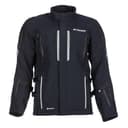
KLIM Latitude

KLIM Latitude

KLIM's touring jacket rather than its off-road one: GORE-TEX weather protection in a cut aimed at seated highway miles instead of standing on the pegs. The choice if your adventure is mostly pavement.

Best overall
$849.99 · View on Amazon

Price as of September 4, 2026. #ad How we’re funded

2
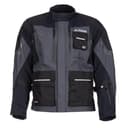
KLIM Carlsbad

KLIM Carlsbad

The reference hard-use adventure jacket: a GORE-TEX shell with huge vents that actually open, built for riders who spend real days off pavement. Expensive, and the one ADV riders keep replacing with the same jacket.

Best for adventure riding
$799.99 · View on Amazon

Price as of September 4, 2026. #ad How we’re funded

3
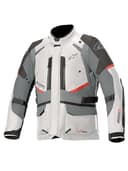
Alpinestars Andes V3 Drystar

Alpinestars Andes V3 Drystar

The adventure-touring value benchmark: a Drystar waterproof membrane, a removable thermal liner and CE armor at shoulders and elbows, for roughly a quarter of what the GORE-TEX flagships cost.

Best value laminate alternative
$239.36 · View on Amazon

Price as of September 4, 2026. #ad How we’re funded

4
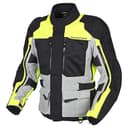
ScorpionEXO Yosemite XDR

ScorpionEXO Yosemite XDR

A three-season touring jacket with a zip-out waterproof liner, a thermal layer and CE armor — the do-everything option for riders who commute through weather rather than only in summer.

Best all-season membrane
$424.95 · View on Amazon

Price as of September 4, 2026. #ad How we’re funded

5
ScorpionEXO Optima II Mesh

ScorpionEXO Optima II Mesh

A reflective mesh jacket with a zip-out waterproof liner, so it flexes from a summer airflow shell to a light rain jacket. CE armor at the shoulders and elbows, with reflective panels for commuting.

Best zip-in system
$334.95 · View on Amazon

Price as of September 4, 2026. #ad How we’re funded

The picks in full

#1Best overall

KLIM Latitude

KLIM's touring jacket rather than its off-road one: GORE-TEX weather protection in a cut aimed at seated highway miles instead of standing on the pegs. The choice if your adventure is mostly pavement.

Strengths

  • GORE-TEX construction for genuinely all-day rain riding
  • Touring cut — less bulk than a hard-use off-road shell
  • Extensive venting and storage for long days

Trade-offs

  • Premium price, and the touring cut gives up some off-road articulation
  • KLIM doesn't publish a CE garment rating for this model
Safety standardCheck current listing
ConstructionGORE-TEX laminate shell
Key featureGORE-TEX touring shell
Fit / sizingTouring fit; room for a mid layer
Best forSport-touring and ADV riders who mostly cover distance on road

Specs and certification read from the manufacturer and retailer listing, on August 11, 2026. “Check current listing” means the maker doesn’t publish that figure — we won’t guess it.

#2Best for adventure riding

KLIM Carlsbad

The reference hard-use adventure jacket: a GORE-TEX shell with huge vents that actually open, built for riders who spend real days off pavement. Expensive, and the one ADV riders keep replacing with the same jacket.

Strengths

  • GORE-TEX waterproof shell — waterproofing built in rather than a zip-in liner
  • Very large vents designed to work at low off-road speeds
  • Built for standing riding position with articulated sleeves and a long back

Trade-offs

  • Flagship pricing — the most expensive jacket on this page
  • Shell-only design means layering for warmth rather than a zip-in thermal
Safety standardCheck current listing
ConstructionGORE-TEX laminate shell
Key featureGORE-TEX ADV shell
Fit / sizingADV fit; cut for standing on the pegs
Best forSerious ADV riders who ride in genuine weather and off pavement

Specs and certification read from the manufacturer and retailer listing, on August 11, 2026. “Check current listing” means the maker doesn’t publish that figure — we won’t guess it.

#3Best value laminate alternative

Alpinestars Andes V3 Drystar

The adventure-touring value benchmark: a Drystar waterproof membrane, a removable thermal liner and CE armor at shoulders and elbows, for roughly a quarter of what the GORE-TEX flagships cost.

Strengths

  • Drystar waterproof, breathable membrane built into the shell
  • Removable thermal liner — genuinely a three-season jacket
  • CE-certified protectors at shoulders and elbows in the box

Trade-offs

  • Back protector is a foam pad; a CE Level 2 insert is a separate purchase
  • Heavier and less breathable than a laminate GORE-TEX shell in the heat
Safety standardCheck current listing
ConstructionPolyamide with Drystar membrane
Key featureDrystar waterproof + CE armor
Fit / sizingTouring fit; room for the thermal liner
Best forADV and touring riders who want all-weather coverage on a real budget

Specs and certification read from the manufacturer and retailer listing, on August 11, 2026. “Check current listing” means the maker doesn’t publish that figure — we won’t guess it.

#4Best all-season membrane

ScorpionEXO Yosemite XDR

A three-season touring jacket with a zip-out waterproof liner, a thermal layer and CE armor — the do-everything option for riders who commute through weather rather than only in summer.

Strengths

  • Zip-out waterproof membrane and thermal liner for three seasons
  • CE armor at shoulders and elbows with a back-pad pocket
  • Hi-vis panels and plenty of storage for commuting

Trade-offs

  • Bulkier and warmer than a dedicated summer mesh jacket
  • Layered construction is heavier to pack and wear
Safety standardCheck current listing
Construction600D textile with waterproof membrane
Key feature3-season textile + CE armor
Fit / sizingRegular touring fit; room for layers
Best forAll-weather commuters and tourers who want one jacket for the year

Specs and certification read from the manufacturer and retailer listing, on July 21, 2026. “Check current listing” means the maker doesn’t publish that figure — we won’t guess it.

#5Best zip-in system

ScorpionEXO Optima II Mesh

A reflective mesh jacket with a zip-out waterproof liner, so it flexes from a summer airflow shell to a light rain jacket. CE armor at the shoulders and elbows, with reflective panels for commuting.

Strengths

  • Mesh airflow with a removable waterproof liner
  • CE shoulder and elbow armor plus reflective paneling
  • Zip-together attachment to Scorpion riding pants

Trade-offs

  • Waterproof liner is a layer to carry, not a laminated shell
  • Back protector is an added cost
Safety standardCheck current listing
ConstructionMesh with zip-out waterproof liner
Key featureMesh + rain liner + CE armor
Fit / sizingRegular fit; reflective panels
Best forCommuters who want mesh airflow plus a rain liner and visibility

Specs and certification read from the manufacturer and retailer listing, on July 21, 2026. “Check current listing” means the maker doesn’t publish that figure — we won’t guess it.

The three constructions, and how each fails

Laminate — membrane bonded to the outer fabric

GORE-TEX Pro and GORE-TEX laminates are the reference. The membrane is bonded directly behind the face fabric, so there is no separate loose liner and no absorbent layer to saturate. Water beads or wets the outer surface and stops there.

Why it wins: the jacket stays light in the rain, keeps breathing (a saturated outer fabric cannot pass moisture vapor), and dries in an hour rather than overnight. On a multi-day trip that is not a luxury — it is the difference between putting on a damp jacket every morning and not.

How it fails: price, and abrasion. Laminates are the expensive construction, and a bonded membrane is damaged by hard abrasion in a way a protected inner liner is not. Also worth understanding: a laminate does not vent by unzipping the shell, because the shell is the waterproof layer. You vent through zips designed into it.

Drop-liner — membrane hanging inside

Alpinestars Drystar and most mid-market waterproof jackets. The membrane is a separate layer sewn or hung inside the shell, protected from abrasion by the outer fabric.

Why it wins: far cheaper, and the membrane is protected. For a commuter riding thirty minutes each way, it is genuinely all you need — you arrive dry, and the jacket has all day to dry out.

How it fails: the outer soaks. After an hour of real rain you are wearing a wet, heavy, non-breathing jacket with a dry lining. It will still keep you dry. It will not be pleasant, and it will not be dry by morning.

Zip-in rain liner — a separate shell

A packable waterproof layer that zips inside the jacket when needed. Common on mesh and three-season jackets, including two of the picks above.

Why it wins: versatility. A mesh jacket with a zip-in liner is a hot-weather jacket that survives a surprise, which no laminate can claim — and it costs almost nothing extra.

How it fails: you have to stop and fit it, usually on a hard shoulder, usually late. And a liner worn inside the shell means the shell soaks first — the same problem as a drop-liner, plus the ten minutes at the roadside.

Where water actually gets in

Almost never through the fabric. In practice the leaks are:

  • The collar. Rain runs down your helmet, off the chin bar, and straight into the gap at your throat. A high collar with a storm flap is worth more than a better membrane.
  • The cuffs. Water runs down the outside of your sleeve and into the glove, or down the inside of the glove gauntlet and into the sleeve, depending on which is worn over which. Gauntlet gloves over the cuff is usually the right order — see gauntlet vs short-cuff gloves.
  • The jacket-to-trouser gap. Sitting down opens the lower back. A jacket with a connection zip, or a long enough cut, solves it.
  • Zips and seams. A membrane is only as good as the seam taping and the storm flaps over the main zip. This is construction quality, and it is a real part of what you pay for.

Our head-to-toe rain gear guide covers the rest of the kit, including the fact that most riders lose the battle at the boots rather than the jacket.

What the numbers mean, and why we mostly ignore them

Where a maker publishes a hydrostatic head figure — the millimeter rating, such as the 5,000 mm Alpinestars quotes for Drystar in some products — it describes how much water pressure the fabric resists before it passes water. Anything above roughly 10,000 mm is comfortably beyond what rain and wind pressure generate on a bike, and a great many jackets do not publish a figure at all.

Which is why we rank on construction rather than numbers. Two jackets quoting the same rating with different constructions will behave completely differently in an eight-hour downpour, and no listed figure captures that. Where our product data has a published number, it is in the spec table; where it does not, the row says so rather than inventing one.

Waterproof and hot are opposites

A membrane restricts airflow by definition. A laminate touring jacket in 95°F traffic is genuinely unpleasant, and no amount of “breathability” changes it — breathability governs moisture vapor transfer, not the cooling airflow that actually keeps you comfortable. If you ride in real heat, the honest answer is two jackets: a mesh jacket for summer and one of these for everything else, or a jacket with vents large enough to genuinely open up. Our hot weather guide covers why airflow stops helping above a certain temperature.

Frequently asked questions

What is the difference between a laminate and a drop-liner motorcycle jacket?

Where the waterproof membrane sits. In a laminate it is bonded directly behind the outer fabric, so the jacket wets out on the surface and no further — it stays light, keeps breathing and dries fast. In a drop-liner the membrane hangs loose inside, protected by an outer fabric that soaks through and stays soaked. Both keep you dry in the short term. On a long wet day the laminate is dramatically more pleasant, and that is most of what the price difference buys.

Is GORE-TEX worth it on a motorcycle jacket?

For distance riding in genuine weather, yes — but what you are really paying for is the laminate construction rather than the brand. A GORE-TEX laminate jacket does not soak, so it stays light, keeps passing moisture vapor and dries in an hour. For a commuter riding half an hour each way, a drop-liner membrane at a third of the price will get you to work dry and have all day to dry out, and the extra spend is hard to justify.

Can a mesh jacket be waterproof?

Not by itself — mesh is deliberately full of holes. What mesh jackets offer instead is a zip-in waterproof liner, which turns a hot-weather jacket into something that survives an unexpected soaking. It works, with two caveats: you have to stop and fit it, and because the liner sits inside the shell the mesh outer soaks anyway. It is a rescue system rather than a rain jacket, and it is genuinely useful in that role.

Where does water actually get into a motorcycle jacket?

Almost never through the fabric. It comes in at the collar, where rain runs off your helmet into the gap at your throat; at the cuffs, depending on whether the glove goes over or under the sleeve; at the waist and lower back when you sit down; and through un-taped seams or an unprotected main zip. A high collar with a storm flap and a good cuff seal will do more for you than upgrading the membrane.

What does the mm rating on a waterproof jacket mean?

It is the hydrostatic head — how much water pressure the fabric resists before it lets water through, measured as a column height in millimeters. Anything above roughly 10,000 mm is well beyond what rain and riding wind actually generate. Two jackets can quote the same number and behave completely differently over an eight-hour ride, because the number says nothing about construction, seam taping, collar design or whether the outer soaks. Rank on construction, not on the figure.

Should I buy a waterproof jacket or a separate rain suit?

If you ride in the rain regularly, buy the jacket — a one-piece system with no gaps beats an oversuit you have to stop and put on. If you ride mainly in good weather and get caught occasionally, a packable oversuit that lives under the seat is cheaper, works over any jacket, and keeps the mud off as well. Many touring riders carry both: a membrane jacket for the ordinary wet and an oversuit for the day it genuinely does not stop.

Sources

Keep reading

More in Jackets