How to Choose a Motorcycle Intercom
Network type, speaker fit, mounting and controls you can work in gloves — the four things that decide whether an intercom gets used or ends up in a drawer.
How this is funded: we earn a commission if you buy through our links, at no extra cost to you. It never changes which gear we recommend, and we’ll tell you plainly when to skip a pick. Full disclosure.
An intercom is the rare piece of motorcycle kit that is bought for pleasure rather than protection, which means the failure mode is not injury — it is a unit that sits in a drawer because it was irritating to use. Almost every intercom on sale will connect to another intercom and play music. The differences that decide whether you keep using one are less glamorous: how the network behaves when someone stops for fuel, whether the speaker presses on your ear, and whether you can find the button with a winter glove on.
This guide goes through them in the order that actually matters.
1. Network type: the decision everything else follows from
Bluetooth intercoms build a chain. Each unit connects to the next in a line. It works well, it is cheap, and it has one specific weakness: if a rider in the middle rides out of range, stops or switches off, everyone behind them is cut off and reconnecting usually means someone pressing buttons at the roadside.
Mesh intercoms build a network. Every unit can reach every other unit in range, and the network re-routes itself when someone drops out or rejoins. Nobody re-pairs, and one rider turning their unit off does not break the conversation for anyone else.
If you ride alone with music and GPS prompts, or two-up with one passenger who is always the same person, Bluetooth is genuinely sufficient and the money saved is real. If you ride in a group of three or more, especially one that does not all stop at the same time, mesh is the entire reason the category exists. We have gone through the mechanics of both on mesh vs Bluetooth.
2. Helmet compatibility — check before you buy, not after
Speaker recesses
Most modern helmets have shaped pockets in the cheek pad area for speakers. If yours does not, a 40 mm driver sits against your ear and becomes genuinely painful over an hour or two, which is the most common reason a first intercom gets abandoned. Take the cheek pads out and look before ordering. Slim-profile speakers exist and help, but they are a mitigation, not a fix.
Mount type
Units ship with a clamp mount — a bracket that slides between the shell and the liner — and usually an adhesive plate as an alternative. The clamp is more secure and completely removable; it needs a shell-to-liner gap to slide into. Some helmets, particularly certain open-face and adventure shells, do not have one, and you are on adhesive. Adhesive works fine, but plan the position properly the first time because moving it later is unpleasant.
Integrated systems
Some helmets are sold with the comms designed in, either built into the shell or as a maker-specific module shaped for that exact helmet. Nothing hangs into the airflow, there is no adhesive, and the speakers are already in the right place. The trade is that you are tied to that system, and to that helmet. Our Bluetooth helmets page covers both the built-in helmets and the comms-ready ones worth pairing with a separate unit.
3. Controls you can use in gloves
This is worth more attention than it gets. You will operate this thing at speed, in the cold, with thick gloves on and no way to look at it. The approaches split into three:
- A large rotary dial or wheel. The easiest to find and use blind, and the reason some older units are still recommended.
- Physical buttons. Fine if they are large, raised and spaced apart. Poor if they are small and flush.
- Voice control. Excellent when it works, and it works much less well at highway speed with wind noise in the microphone. Treat it as a convenience layered on top of physical controls, not as a replacement for them.
4. Audio, honestly
The premium units carry co-branded speakers — JBL on Cardo, Harman Kardon on most premium Senas, and Bose tuning on Sena’s newest top unit — and they are a real step up in clarity and bass over generic drivers. What they cannot do is beat the environment: at highway speed you are listening through wind noise inside a helmet, and that puts a ceiling on what any speaker achieves. Earplugs actually improve perceived audio quality for many riders, because they cut the broadband wind noise more than they cut speech.
Microphone type matters as much as speakers for intercom use. A boom mic positioned in front of your mouth is clearer than a wired mic tucked into the chin bar, which is why boom mics come with full-face-friendly units and why open-face riders should look specifically for good wind noise handling.
5. Battery and charging
Quoted talk times are measured at moderate volume in intercom mode; heavy music playback and mesh networking both drain faster. What matters more than the headline number is whether the unit supports charging while in use, because a USB lead from the bike turns a battery limit into a non-issue on a long day. If you tour, that feature is worth more than an extra couple of hours of rated capacity.
6. Buying into a group
Mesh networks are easiest within one brand’s ecosystem, and mixed groups get more complicated — often falling back to Bluetooth between brands. If you regularly ride with the same people, ask what they run before you buy. It is the single cheapest way to avoid a unit that works perfectly and still cannot talk to your friends. Our Cardo vs Sena comparison covers the two ecosystems most groups are already in.
Three units, three budgets
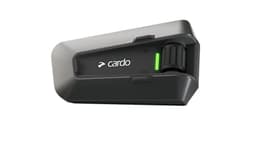
If you ride in a group
Cardo Packtalk Edge
The intercom most serious riders point to: Cardo's second-gen Dynamic Mesh (DMC) self-heals as riders drop in and out, JBL speakers sound excellent, and the magnetic Air Mount is the best in the class. The premium pick for group touring.
Compare all the intercom picks →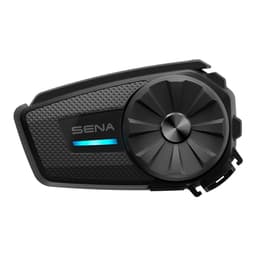
Mesh without flagship money
Sena Spider ST1
The value way into Sena Mesh: Open Mesh and Bluetooth in a simpler unit at a lower price than the 50S. If you want mesh's self-healing group audio without the flagship features, this is the entry point.
See where it ranks →Price as of October 19, 2026. #ad How we’re funded
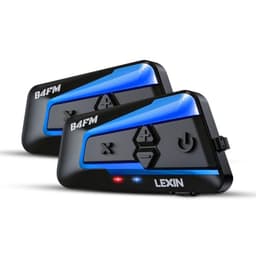
Trying it out
Lexin B4FM
The budget group intercom that punches above its price: up to four riders, FM radio, and music sharing, for a fraction of a premium unit. The value pick for casual group riders.
Compare the budget picks →Price as of October 19, 2026. #ad How we’re funded
Set it up in the driveway, not at 60 mph
Whatever you buy: pair the phone, pair the group, set the volume and learn where the buttons are before you ride. An intercom is a distraction exactly in proportion to how much attention it demands while moving, and the units that end up unused are usually the ones someone tried to configure at the roadside in the rain on day one.
Frequently asked questions
Do I need mesh, or is Bluetooth enough?
It depends entirely on who you ride with. A Bluetooth intercom builds a chain — rider A to B, B to C — so if one rider stops for fuel or turns their unit off, everyone behind them drops out and someone has to press buttons at the roadside. A mesh unit builds a network that re-routes automatically, so riders can leave and rejoin without breaking the conversation. If you ride solo with music and GPS, or two-up with one passenger, Bluetooth is genuinely enough. If you ride in a group of three or more that stops at different times, mesh is the whole point.
Will an intercom fit my helmet?
Almost certainly, but check two things. First, whether the helmet has speaker recesses deep enough for a 40 mm driver — without them the speaker presses on your ear and becomes painful within an hour. Second, whether the shell shape suits a clamp mount or needs an adhesive one; helmets with a very tight shell-to-liner gap, and some open-face and adventure shells, are adhesive-only. A few helmets are sold comms-integrated, meaning the maker sells a unit shaped for that exact shell, which is the cleanest install of all.
Does fitting an intercom affect my helmet's certification?
Fitting speakers and a battery pack into the recesses the maker built for them does not change the helmet's certification, which was granted for the helmet as sold. What you should not do is cut, grind or drill the EPS liner to make room for a unit — the liner is the part that crushes to absorb impact energy, and removing material removes protection. If a unit does not fit without modification, buy a different unit rather than modifying the helmet.
How much intercom range do I really need?
Far less than the headline numbers imply. Every quoted range is a best case: line of sight, flat open ground, no traffic. Hills, buildings, trees and a truck between two riders all cut it substantially. In real group riding what matters is not maximum range but what happens when a rider drops out of it — which is exactly what separates mesh from Bluetooth. Treat range figures as a rough ranking of units, not as a distance you can plan around.
Can I use an intercom in the rain?
Most are rated as water-resistant rather than waterproof, which in practice means sustained rain is fine and immersion is not. The vulnerable parts are the charging port — keep the rubber cover seated — and the mount joint. It is worth checking the specific rating on the listing rather than assuming, and worth remembering that a unit left on a helmet on the bike overnight in rain is a harder test than riding in it.
Are helmet speakers legal?
Rules on headphones and helmet speakers vary by state, and some restrict wearing headphones in both ears while driving or riding. We are not going to guess at your state's wording — check your own state's vehicle code before relying on an intercom for music. What is uncontroversial everywhere is the practical safety point: set the volume so you can still hear traffic, sirens and your own engine, and set up anything that needs configuring before you set off rather than at 60 mph.
Sources
- NHTSA — How to Choose the Right Motorcycle Helmet — NHTSA consumer guidance on DOT certification and spotting novelty helmets (accessed July 21, 2026)
- 49 CFR 571.218 — FMVSS No. 218, Motorcycle helmets — The US federal helmet standard: peak-acceleration, penetration and retention requirements; applies to all on-road motorcycle helmets (accessed July 21, 2026)
Keep reading
Best motorcycle intercoms
Mesh and Bluetooth systems ranked for group touring, pillion use and value.
See the intercom picksMesh vs Bluetooth intercoms
Why a Bluetooth chain drops the whole group when one rider turns off, and what mesh actually changes.
Read the comparisonBest budget motorcycle intercoms
The cheap intercoms that actually work — for trying group riding before you spend flagship money.
See the budget picksBest Bluetooth motorcycle helmets
Helmets with the intercom built in — no bolt-on module — plus the certified helmets worth pairing with a separate unit.
See the helmet picks