Apex & Armor

Best Sport & Track Motorcycle Helmets

Six of the 37 helmets we track publish a SNELL certification and only two name a current-generation M2025 standard. That number, not the paint, is what separates a sport helmet from a sporty-looking one.

By Stephen V.Last updated How we research

For fast road riding and track days the helmet to buy is the Bell Race Star DLX Flex: a 3K carbon shell with DOT plus SNELL certification at a published 1,540 g, which is the strongest certification set on this page attached to the lightest carbon shell on it. It is also the most expensive helmet Bell sells by a wide margin, and if that is out of reach the Shoei RF-1400 carries a newer SNELL standard for meaningfully less money.

Here is the thing that makes this category different from every other helmet page on this site. Of the 37 helmets in our registry, six publish a SNELL certification and only two name a current-generation M2025 standard. SNELL is the voluntary standard most associated with racing, it is re-tested by the certifying body rather than self-declared by the maker, and almost no helmet carries it. So on a page about going fast, the certification line is not a box to tick at the end — it is the shortest list on the site, and it does most of the ranking before weight, shell material or price get a turn.

We will not tell you what your track day requires, because we have not read your organizer’s rulebook and we are not going to paraphrase one from memory. Tech inspection rules differ by club, by circuit and by year, and the only reliable source is the organization taking your entry fee. Call them, ask which standards and which certification dates they accept, and buy against that answer. What this page can do is tell you exactly which standard each maker publishes for each model, read from the maker’s own page or listing on a dated visit and recorded in our registry.

Nothing here was worn, ridden or crash-tested by us — our methodology page sets out what we do and do not do. Availability on every pick below was checked live on the day this page was written, and two SNELL-certified helmets we would otherwise have ranked are named and excluded further down for exactly that reason. If you are choosing between this page and the main ranking, the difference is the use case: that page optimizes for the rider doing everything, this one for the rider whose head is behind a screen with the throttle open.

How this is funded: we earn a commission if you buy through our links, at no extra cost to you. It never changes which gear we recommend, and we’ll tell you plainly when to skip a pick. Full disclosure.

Quick picks

Ranked on certification, spec and buyer fit. Select a row to jump to the full write-up. We haven’t crash-tested this gear — here is exactly what we do instead.

#GearBest forPrice
1
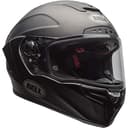
Bell Race Star DLX Flex

Bell Race Star DLX Flex

DOT + SNELL

Bell's flagship: a 3K carbon shell, the three-layer Flex impact liner, and DOT plus SNELL certification at around 1,540 g. The most heavily certified helmet Bell sells, priced accordingly.

Best overall for sport and track
$949.95 · View on Amazon

Price as of November 12, 2026. #ad How we’re funded

2
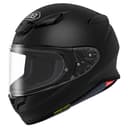
Shoei RF-1400

Shoei RF-1400

DOT + SNELL M2025D

The full-face most experienced riders land on: Shoei's hand-laid AIM+ shell, DOT plus a SNELL M2025D rating on Shoei's own spec table, and a quiet, refined fit. You're paying for finish and certification, and it shows.

Best current-generation SNELL
$541.00 · View on Amazon

Price as of November 12, 2026. #ad How we’re funded

3
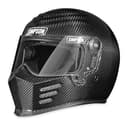
Simpson Outlaw Bandit 3.0 Carbon

Simpson Outlaw Bandit 3.0 Carbon

DOT + SNELL M2020

The one Simpson that carries SNELL M2020 on top of DOT, in a carbon shell that Simpson claims is 10% lighter than the model it replaced. At 3.37 lb it is the lightest lid in the range and the only one certified beyond the legal floor plus ECE.

Best carbon alternative
$699.95 · View on Amazon

Price as of November 12, 2026. #ad How we’re funded

4
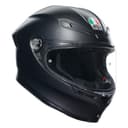
AGV K6 S

AGV K6 S

DOT + ECE 22.06

One of the lightest full-carbon-aramid lids you can buy at ~1,255 g, and it's certified to the newer ECE 22.06 standard on top of DOT. The sport-touring helmet for riders who notice weight on a long day.

Lightest certified sport full-face
$599.00 · View on Amazon

$639.006% off

Price as of November 12, 2026. #ad How we’re funded

5
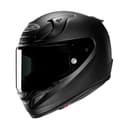
HJC RPHA 12

HJC RPHA 12

DOT + ECE 22.06

HJC's sport flagship, and the model that replaced the discontinued RPHA 11 Pro: a PIM EVO composite shell of carbon-aramid hybrid and natural fibers, DOT on the US listing with ECE 22.06 published for the model, and a wind-tunnel-developed shape built for a tucked riding position.

Best value sport full-face
$197.63 · View on Amazon

Price as of November 12, 2026. #ad How we’re funded

6
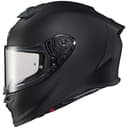
ScorpionEXO R1 Air

ScorpionEXO R1 Air

DOT + ECE

Scorpion's sport flagship, developed alongside their MotoGP program. DOT and ECE certified, a Pinlock shield in the box, and an aero shape designed for a tucked riding position.

Best airflow in a tuck
$449.95 · View on Amazon

Price as of November 12, 2026. #ad How we’re funded

The picks in full

#1Best overall for sport and trackDOT + SNELL

Bell Race Star DLX Flex

Bell's flagship: a 3K carbon shell, the three-layer Flex impact liner, and DOT plus SNELL certification at around 1,540 g. The most heavily certified helmet Bell sells, priced accordingly.

Strengths

  • DOT + SNELL certified (ECE 22.06 in Europe) — the strongest cert set on this page
  • 3K carbon shell at roughly 1,540 g (size M)
  • Flex three-layer liner and Panovision shield with ProTint photochromic option

Trade-offs

  • The most expensive helmet in the Bell range by a wide margin
  • Race-tuned airflow is loud at touring speeds without earplugs
Safety standardDOT + SNELL
Construction3K carbon fiber shell
Claimed weight1,540 g
Key featureDOT + SNELL, carbon shell
Fit / sizingIntermediate oval; race fit
Best forTrack-day and fast-road riders who want carbon and a SNELL rating

Specs and certification read from the manufacturer and retailer listing, on August 11, 2026. “Check current listing” means the maker doesn’t publish that figure — we won’t guess it.

#2Best current-generation SNELLDOT + SNELL M2025D

Shoei RF-1400

The full-face most experienced riders land on: Shoei's hand-laid AIM+ shell, DOT plus a SNELL M2025D rating on Shoei's own spec table, and a quiet, refined fit. You're paying for finish and certification, and it shows.

Strengths

  • DOT + SNELL M2025D — the US legal floor plus Snell's CURRENT-generation test, confirmed on Snell's own M2025D certified list
  • Hand-laid AIM+ multi-fiber shell, light for a full glass-composite lid (~1,640 g)
  • Refined ventilation and a genuinely quiet ride at highway speed

Trade-offs

  • Premium price — you pay for the shell and the SNELL rating
  • Intermediate-oval fit doesn't suit every head shape
  • A successor NAME is already certified: Snell's current M2025D list carries an RF-1500 alongside this helmet. Shoei publishes no RF-1500 product page and we found no US listing, so this is still the one to buy — but check what a discount is against
Safety standardDOT + SNELL M2025D
ConstructionMulti-Ply Matrix AIM+ shell, Dual Density EPS liner
Claimed weight1,640 g
Key featureDOT + SNELL M2025D
Fit / sizingIntermediate oval; runs true to size
Best forRiders who want the safest all-round street helmet and will pay for it

Specs and certification read from the manufacturer and retailer listing, on October 22, 2026. “Check current listing” means the maker doesn’t publish that figure — we won’t guess it.

#3Best carbon alternativeDOT + SNELL M2020

Simpson Outlaw Bandit 3.0 Carbon

The one Simpson that carries SNELL M2020 on top of DOT, in a carbon shell that Simpson claims is 10% lighter than the model it replaced. At 3.37 lb it is the lightest lid in the range and the only one certified beyond the legal floor plus ECE.

Strengths

  • DOT + SNELL M2020 — the only Simpson here tested to the independent standard
  • Carbon fiber shell at 3.37 lb (about 1,529 g), a claimed 10% lighter than the previous Outlaw Bandit
  • Three shell sizes and a four-position ratcheting shield that stays put at speed

Trade-offs

  • The most expensive helmet Simpson sells on this listing
  • Cycle Gear's spec sheet lists DOT and SNELL only — no ECE approval is published for it
Safety standardDOT + SNELL M2020
ConstructionCarbon fiber shell
Claimed weight1,529 g
Key featureDOT + SNELL M2020 in carbon
Fit / sizingThree shells: XS-SM, MD-LG, XL-2XL
Best forRiders who want the Simpson look and the toughest voluntary certification

Specs and certification read from the manufacturer and retailer listing, on August 19, 2026. “Check current listing” means the maker doesn’t publish that figure — we won’t guess it.

#4Lightest certified sport full-faceDOT + ECE 22.06

AGV K6 S

One of the lightest full-carbon-aramid lids you can buy at ~1,255 g, and it's certified to the newer ECE 22.06 standard on top of DOT. The sport-touring helmet for riders who notice weight on a long day.

Strengths

  • DOT + ECE 22.06 — tested to the newer standard with rotational-impact criteria
  • Carbon-aramid shell, ~1,255 g — genuinely light, reduces neck fatigue on tour
  • Wide eyeport and strong airflow from AGV's racing lineage

Trade-offs

  • Premium price for the carbon-aramid construction
  • Sportier interior padding is firmer than a plush touring helmet
Safety standardDOT + ECE 22.06
ConstructionCarbon-aramid fiber shell
Claimed weight1,255 g
Key featureDOT + ECE 22.06
Fit / sizingIntermediate oval; light on the head
Best forSport-touring riders who want the lightest certified full-face

Specs and certification read from the manufacturer and retailer listing, on July 21, 2026. “Check current listing” means the maker doesn’t publish that figure — we won’t guess it.

#5Best value sport full-faceDOT + ECE 22.06

HJC RPHA 12

HJC's sport flagship, and the model that replaced the discontinued RPHA 11 Pro: a PIM EVO composite shell of carbon-aramid hybrid and natural fibers, DOT on the US listing with ECE 22.06 published for the model, and a wind-tunnel-developed shape built for a tucked riding position.

Strengths

  • DOT FMVSS 218 on the US listing, and HJC publishes ECE 22.06 for the model
  • PIM EVO composite shell — carbon-aramid hybrid, carbon, glass and natural fibers
  • Ships with a clear and a dark smoke HJ-42 shield plus the Pinlock insert
  • Emergency Kit cheek pads for rescue, and a wider eye port for peripheral vision

Trade-offs

  • HJC doesn't publish a shell weight for it, so it can't be ranked on weight
  • Double D-ring closure rather than a micrometric ratchet, which is slower in gloves
Safety standardDOT + ECE 22.06
ConstructionPIM EVO composite shell (carbon-aramid hybrid and natural fibers)
Claimed weightCheck current listing
Key featureDOT + ECE 22.06, PIM EVO shell
Fit / sizingRPHA premium-fit interior; interchangeable cheek pads in every size
Best forSport riders who want a track-shaped composite helmet without the top-tier price

Specs and certification read from the manufacturer and retailer listing, on September 5, 2026. “Check current listing” means the maker doesn’t publish that figure — we won’t guess it.

#6Best airflow in a tuckDOT + ECE

ScorpionEXO R1 Air

Scorpion's sport flagship, developed alongside their MotoGP program. DOT and ECE certified, a Pinlock shield in the box, and an aero shape designed for a tucked riding position.

Strengths

  • DOT + ECE certified with a Pinlock-ready shield included
  • Aero profile and airflow tuned for a head-down sport position
  • Emergency-release cheek pads and comms-ready speaker pockets

Trade-offs

  • Scorpion doesn't publish a weight for the standard (non-carbon) shell
  • Sport ventilation makes it loud at highway speeds
Safety standardDOT + ECE
ConstructionTCT composite shell
Claimed weightCheck current listing
Key featureDOT + ECE, Pinlock included
Fit / sizingIntermediate oval; sport fit
Best forSport riders who want a race-shaped helmet under premium-brand money

Specs and certification read from the manufacturer and retailer listing, on August 11, 2026. “Check current listing” means the maker doesn’t publish that figure — we won’t guess it.

The five criteria, in the order they decide the purchase

These are deliberately not the criteria behind the touring ranking, where sealing and quiet dominate, or the hot-weather ranking, where airflow leads and certification only has to clear a floor. On this page certification leads and nothing is allowed to overrule it.

CriterionWhy it decides a fast rideWhat to look for
1. The certification published for THAT modelIt is the only independently checkable number on the helmet, and on this page it is also the rarest. SNELL re-tests samples it buys; DOT is self-certified by the maker with random federal re-testingThe standard named for the exact model and generation you are buying — M2025 or M2020, not “SNELL approved” in the abstract. Then confirm it against your organizer
2. Shell material and shell-size countComposite and carbon shells hit the same energy-absorption requirement with less material, which is where the weight saving comes from. Shell count decides whether a small head gets a smaller shell or just thicker paddingA named layup (3K carbon, carbon-aramid, a composite with the fibers listed) and a published number of shells. Most makers publish the first and not the second
3. Published weightIn a head-down position your neck is carrying the helmet against wind load, not just gravity. It is the one spec on this page with a real number attached — when the maker publishes oneGrams, stated by the maker, with the size or shell it was measured at. Treat an unstated size as the model’s figure rather than yours
4. Shield system and opticsAt speed the shield is the only thing between your eyes and the air, and a shield that fogs or distorts is a safety problem rather than a comfort oneA Pinlock insert in the box, an optical class if the maker publishes one, a quick-release mechanism you can work in gloves, and a tear-off provision if you intend to use one
5. Ventilation hardware for a tuckSport helmets are vented for a rider tucked behind a screen at speed. That is the airflow budget they are designed around, and it is why they are loud in trafficBrow and chin intakes with rear extraction, described as an airflow path rather than counted as holes. Then buy earplugs, because the two are the same thing

What is NOT on this page, and why

Six helmets in our registry publish a SNELL certification. Only four of them appear above, and the two missing ones are missing on availability rather than merit. We write this down every wave so the reasoning is auditable:

HelmetWhat it publishesWhy it is not ranked here
HJC i10DOT + SNELL M2020The cheapest SNELL-certified helmet we track, and we could not stock it. The listing our registry pointed at returns nothing from the retailer’s catalog at all on this date, and every live i10 listing we could find read “Only 1 left in stock”. We re-pointed the registry entry at a listing that at least resolves, and left the helmet off this page
ScorpionEXO R420DOT + SNELL“Currently unavailable” on this date, and the same at our last check a week earlier. A certified budget sport helmet we would rank the moment it comes back
Arai XD-5DOT + SNELL M2025One of only two current-generation M2025 helmets we track, and “Only 3 left in stock” on this date — below the depth bar we apply before featuring anything on a new page. It is also an adventure helmet with a peak, which is the wrong aerodynamics for this page. It is ranked on the dual-sport page instead
Bell Qualifier and Qualifier DLX MIPSDOT FMVSS 218 onlyBoth are good helmets for the money and neither publishes a second certification, so neither clears criterion 1 on a page where criterion 1 leads. They are ranked on the budget page

The honest shape of the SNELL list, then, is that it is six helmets long, two of the six were not purchasable in depth today, and of the two that name a current M2025 standard one is a road full-face and the other is an adventure helmet that costs roughly twice as much. Anyone telling you there is a deep field of SNELL-certified sport helmets at sensible money has not counted them.

SNELL, DOT and ECE 22.06: what each one actually tests

This matters more here than on any other page, because sport helmets are where the three standards diverge most and where the marketing leans hardest on the word “race”. Our standards explainer covers all three in full; the short version for a buyer standing in a shop is this.

  • DOT FMVSS 218 is the US legal minimum and it is self-certified: the manufacturer declares compliance and NHTSA buys helmets off the shelf to re-test. Every helmet on this page carries it, so it separates nothing here.
  • SNELL M2020 and M2025are voluntary, and the difference that matters to a buyer is the process rather than the numbers: the Snell Memorial Foundation certifies specific models and publishes a list of them, and tests samples it obtains itself. Two of the helmets above are on a current M2025 list. The others are on M2020, which does not stop being a real certification because a newer one exists — a point our SNELL page makes at length.
  • ECE 22.06 is the European homologation, and it is the newest of the three. It added rotational-acceleration criteria and tests at more impact points and speeds than its predecessor. Two helmets above carry it instead of SNELL, which is a genuine trade and not a downgrade: you are choosing a standard that tests rotation over one that re-tests the model.

What none of the three does is rank helmets against each other. There is no comparative safety rating published for the US market at all. SHARP in the UK and MotoCAP in Australia both publish star ratings, and both rate helmets sold in their own markets, so a US-spec helmet is frequently absent from them. Treat any “safest sport helmet” list — including the way this one is ordered — as a ranking of published certifications, not of measured crash outcomes.

Weight: what the published numbers do and do not tell you

Eighteen of the 37 helmets we track publish a weight; nineteen publish nothing. That alone should make you suspicious of any lightness ranking, including ours — it measures disclosure as much as grams. Among the six picks above, four publish a figure and two do not, and the two that do not are not heavy helmets, they are quiet ones about it.

The published range across this page runs from roughly 1,255 g for the AGV K6 S to about 1,640 g for the Shoei RF-1400. That is a 385 g spread, which you will notice at the end of a long day and will not notice in the first hour. There is one wrinkle worth knowing about the K6 S figure, and we have written it up in full in our AGV K6 S review: AGV’s own product page publishes 1,290 g in the first shell size, while the US retail listing our registry was built from says about 1,255 g. The gap is 35 g, which is inside the 50 g our own weight guide calls noise, so we have not restated the figure across the site — but you should know both numbers exist before you use either one to decide.

Weight is also the spec most often confused with protection. It is not one. A carbon shell and a polycarbonate shell both pass the same certification; the energy absorption is done by the crushable EPS liner underneath in both cases. What the lighter shell buys is a less tiring day, which on a track is a real performance argument and on the road is a comfort one.

The two things this page cannot rank, and you must

Fit. Every helmet above is described in our registry as an intermediate oval, which is the most common Western head shape and also the laziest thing a spec sheet can say. If your head is long and narrow or round and wide, the intermediate-oval shell will give you a hot spot on the forehead or the temples within twenty minutes, and no certification compensates for that. Our head-shape guide explains how to work out which you are, and our per-brand size chart shows why the letter on the box differs between these exact makers — a 60 cm head is a Large in AGV’s chart and an XL in HJC’s.

Noise. Nobody publishes a noise figure for a helmet, there is no standardized test for it, and sport helmets are the loudest category on the site because ventilation and noise are physically the same thing. Two of the six picks above carry an explicit noise criticism in their own entry, which is us being honest rather than us having measured anything. The correct response is not to buy a quieter, hotter helmet; it is to buy earplugs with a published SNR, because hearing damage accumulates over years and a loud helmet does not get quieter with mileage.

What a sport helmet costs, and where the money goes

Prices on this page move, so we do not print them in prose — the buy buttons above carry the live figure with the date it was read. What is stable is the shape of the market, and it is worth understanding before you decide what to spend.

At the value end you can buy a composite-shell helmet with ECE 22.06 and a Pinlock-ready shield, and that is a genuinely good helmet: the certification is the newest of the three standards and the shell is a real composite rather than polycarbonate. At the mid point the money buys a named carbon or carbon-aramid layup and a lower published weight. At the premiumend you are paying for a SNELL certification on a carbon shell — a certifying body testing the model plus the lightest construction available — and the step from mid to premium can more than double the price for a difference you cannot feel in the first hour of riding.

Our standing position, which costs us money to hold: if the certified value helmet fits your head better than the premium one, buy the value helmet. A correctly fitted helmet that you wear on every ride protects you more than a better-certified one that pinches and stays on the shelf. For the full picture of what every layer of sport kit costs together, see our gear cost breakdown, and if you want the shield and visor side of this in depth, our visor guide covers tints, Pinlock and optical class.
How to read our safety notes. We have not crash-tested any of this gear — nobody honestly can on a review budget. Every helmet and armor pick names the certification the maker publishes (DOT, ECE 22.06, SNELL, or a CE level), which we read from the listing on a dated visit. Certification is the floor, not a guarantee; fit and condition matter as much as the sticker. What the standards actually mean.

Frequently asked questions

What is the best motorcycle helmet for sport riding and track days?

The Bell Race Star DLX Flex, on published specifications. It pairs a 3K carbon shell with DOT plus SNELL certification at a published 1,540 g, which is the strongest certification set on this page on the lightest carbon shell on it. It is also the most expensive helmet Bell sells by a wide margin. If that is out of reach, the Shoei RF-1400 carries DOT plus Snell M2025D — a current-generation standard — for substantially less, and the HJC RPHA 12 gets you a composite shell with DOT plus ECE 22.06 for less again. All three are honest answers to different budgets, and none of them is the right answer if it does not fit your head.

Do I need a SNELL-certified helmet for a track day?

Ask your organizer, and do not take an answer from a website — including this one. Tech inspection requirements differ by club, by circuit and by year, and the organization taking your entry fee is the only source that binds. What we can tell you is how short the list is if the answer comes back SNELL: of the 37 helmets in our registry exactly six publish a SNELL certification, only two name a current-generation M2025 standard, and on the day we wrote this page two of the six were not purchasable in any depth. Plan the purchase around that scarcity rather than assuming you can pick one up the week before.

Is SNELL M2020 still good, or do I need M2025?

M2020 is still a real certification and a helmet carrying it did not become uncertified when M2025 appeared. SNELL certifies specific models and publishes lists of them; a model on the M2020 list was tested against the M2020 requirements and still was. What a current-generation standard gives you is confidence that the model was assessed against the most recent revision, which is a reasonable thing to want for a helmet you expect to own for five years. Our SNELL page goes through this in detail, including the point that only two helmets in our registry name an M2025 standard at all.

Is ECE 22.06 better than SNELL for sport riding?

They test different things, which is why we rank them as a trade rather than a hierarchy. ECE 22.06 is the newest of the three standards here and it added rotational-acceleration criteria plus testing at more impact points and speeds than its predecessor; it is a type approval of the model. SNELL is voluntary, re-tests samples the foundation obtains itself, and publishes the certified model list. If your track organizer names SNELL, the question is settled for you. If it does not, an ECE 22.06 helmet that fits you properly is not a compromise.

Why is my sport helmet so loud?

Because ventilation and noise are the same phenomenon. A sport helmet gets its airflow by giving air an open path through the shell and past your head, and air moving through an open path makes noise — the vents that keep you cool are the ones you hear. It is also tuned for a tucked rider behind a screen, so sitting upright in traffic puts your head in exactly the airflow the shell was not shaped for. Nobody publishes a noise figure for any helmet and there is no standardized test, so treat every decibel claim you read as an opinion. Buy earplugs with a published SNR and keep the airflow.

Does a carbon shell make a helmet safer?

No, and this is the most expensive misunderstanding in the category. Carbon, carbon-aramid and glass-composite shells reach the same certification requirements as polycarbonate using less material, which is where the weight saving comes from — but the energy absorption in a crash is done by the crushable EPS liner underneath, in every one of them. What you buy with carbon is a lighter helmet and therefore a less tiring day, which is a real performance argument on track. What you do not buy is a higher safety ceiling.

Can I use a sport helmet for commuting and touring?

You can, and plenty of riders do, but you are accepting two costs. The first is noise, which is worse than on a touring lid by a margin you will notice on your first hour of highway. The second is ventilation that works best in a position you will not be in — head down behind a screen — so in slow traffic a sport helmet both runs hot and sounds loud. If most of your miles are commuting or touring with occasional fast days, a well-vented sport-touring helmet with a drop-down sun visor is the better single purchase, and our touring ranking is built for exactly that rider.

How often should a track helmet be replaced?

Sooner than a road helmet, and immediately after any impact — including one where the helmet came off your head and hit the garage floor, because the EPS liner crushes once and does not come back. Beyond impacts, the limiting factor is age rather than mileage: liners compress, adhesives and glues age, and the shell's resin matrix does not last forever. Our replacement guide goes through the manufacturer guidance and what the standards bodies say. For a helmet that sees track use, the more useful habit is inspecting the liner and the retention strap before every event rather than counting years.

Sources

Keep reading

More in Helmets