Shoei RF-1400 Review: The Certification Is Newer Than Everyone Says
Shoei's own spec table now reads Snell M2025D, not M2020 — and Snell's current certified list agrees. Every figure here comes from Shoei's US product page, read on a dated visit, including the three it does not publish.
How this is funded: we earn a commission if you buy through our links, at no extra cost to you. It never changes which gear we recommend, and we’ll tell you plainly when to skip a pick. Full disclosure.
The verdict: buy the RF-1400 if you want Snell’s current-generation certification in a road helmet you can tour in, and buy something else if grams, rotational-impact testing or price are your deciding spec. Shoei publishes a Multi-Ply Matrix AIM+ shell, a Dual Density EPS liner with the 3D Max-Dry System II interior, the CWR-F2 shield, a weight of 3.64 pounds, sizes from X-Small to 3X-Large, and — the figure this page exists to correct — “Snell M2025D and DOT-218 Approved.”
One thing before the specs, because it is the basis of this whole page. We have not worn this helmet. We own no units, run no lab and crash-test nothing. Every figure below was read from Shoei’s own US product page on a dated visit and is cited at the bottom, and the certification was independently confirmed against the Snell Memorial Foundation’s own certified-product list the same day. Where Shoei publishes nothing, this page says so rather than filling the gap — our methodology and our editorial policy set out exactly what we will and will not claim.
The certification, and why almost everyone has it wrong
Search for this helmet and you will be told, more or less universally, that it is Snell M2020 certified. We told you that too, until we read the page again.
The specification table on Shoei’s US product page reads “Snell M2025D and DOT-218 Approved.” Marketing copy elsewhere on Shoei’s own site still describes the helmet as meeting SNELL M2020 standards, which is almost certainly where the internet’s version came from and why it has survived so long. So we did the one check that settles it: the Snell Memorial Foundation’s own M2025D certified-product list carries the RF-1400, in XS, S, M, L, XL, XXL and XXXL, as a Full Face helmet. The maker’s spec table and the certifying body agree, so that is the figure we take, and we corrected our own registry entry from M2020D to M2025D on the day we read it.
Why this matters rather than just being pedantic: M2025 is the current generation of Snell’s motorcycle standard and M2020 is the previous one — the D suffix denotes the DOT-market variant rather than a severity tier. Helmets move onto the newer list as makers re-certify them, which is a product-cycle decision rather than a verdict on the older helmet. But if you are spending premium money partly for the voluntary certification, the difference between “certified to the previous generation” and “certified to the current one” is exactly the thing you are paying for.
For scale, from our own registry: of the 37 helmets we track, 6 publish any Snell certification at all, and only 2 of those name a current-generation M2025 standard. The RF-1400 is one of the two. Two more publish “SNELL” with no generation named, and two still name M2020. Our Snell page checks each of them against the Foundation’s lists rather than against retailer claims, and our standards explainer covers what the test actually does.
What Shoei publishes
| Spec | Shoei’s published figure | What it means for you |
|---|---|---|
| Certifications | Snell M2025D and DOT-218 Approved | The US legal floor (FMVSS 218) plus Snell’s current-generation voluntary standard. No ECE homologation is published, so this helmet does not carry the one common standard that tests oblique/rotational impact |
| Shell | Multi-Ply Matrix AIM+ | Shoei’s hand-laid multi-fiber composite rather than injected polycarbonate. It is most of the reason the helmet costs what it does, and most of the reason it is not heavy for a composite lid |
| Liner | Dual Density EPS, 3D Max-Dry System II | Two EPS densities manage different impact energies; the Max-Dry interior is the removable, washable, replaceable part. Replaceable cheek pads are what let a shop tune the fit |
| Weight | 3.64 pounds (about 1,650 g) | Mid-pack. Of the 18 helmets in our registry that publish a weight, this sits ninth; the AGV K6 S publishes roughly 385 g less. Shoei does not state the measured size, so treat it as a model figure |
| Shield | CWR-F2 | The current Shoei shield generation for this helmet. Worth knowing the part number before you buy a tinted spare — Shoei shields are model-specific and not interchangeable across the range |
| In the box | Pinlock Evo lens, breath guard, chin curtain | Three accessories that cost real money separately. The Pinlock is the single most effective anti-fog measure there is. No spare shield is listed |
| Sizes | X-Small to 3X-Large; not every color in every size, and 3X-Large listed only in Matte Black and White | An unusually wide range, and Snell’s list confirms the certification runs to XXXL rather than stopping short of it. The color caveat is the practical catch at both ends of the range |
| MSRP | $679.99 - 759.99 published as MSRP | Published by Shoei as a range across finishes. Pay no attention to it as a street price — see the advertising-policy section below |
The three things Shoei does not publish
On a premium helmet this is the most informative section of a review, because the absences tell you where other reviews are guessing. Nowhere on Shoei’s own RF-1400 page could we find:
- A warranty term.The page links to a warranty claim process and states no coverage period. On a helmet at this price that is a real gap — and it is worth settling with your retailer before you buy, because warranty support generally runs through authorized dealers only.
- The number of shell sizes. This is the spec that tells you whether an XS head gets a smaller shell or the same shell with thicker padding, and it is the difference between a small helmet and a padded-out large one. Our shell-sizes guide found that 28 of 37 helmets we track publish nothing here, so Shoei is in the majority — it is still an absence.
- Any ventilation specification. No vent count, no airflow claim, no description of the system. Shoei lists intake and exhaust vents as separate purchasable parts, so the hardware plainly exists; the published specification does not.
None of these makes the helmet worse than it is. They do mean that a review stating a shell count or a vent number for this helmet got it from somewhere other than Shoei, and you should treat the figure accordingly.
Where it loses, honestly
- Weight.About 1,650 g published is respectable for a composite full-face and is not light. If you want the lightest certified lid, our weight ranking is sorted strictly on published grams and this helmet is not at the top of it. Our weight guide explains why a 50 g difference is noise and 385 g is not.
- No rotational-impact testing published.Snell M2025 is a demanding energy-management and penetration protocol. ECE 22.06 is the common standard that added oblique-impact testing for rotational forces, and Shoei publishes no ECE homologation for the US RF-1400. Only 4 of the 37 helmets we track publish ECE 22.06; if that is the test family you want, this is the wrong helmet and our ECE 22.06 page lists the right ones.
- Price, and an advertised price you cannot shop on. See below. It is the most expensive non-carbon full-face in our registry after the modular flagships.
- A successor name already exists on Snell’s list. The same M2025D list that carries the RF-1400 also carries an RF-1500. We are not ranking or recommending that helmet — it is not in our registry and we have not verified its US price or stock — but if you are buying this one at a discount, check what the discount is against.
- Fit is intermediate oval. Which is the most common head shape and therefore the most likely to suit you, and is no comfort at all if yours is long or round. Settle your shape first.
Why every retailer shows you the same number
If you shop this helmet you will find an identical price almost everywhere, and that is a published policy rather than a coincidence. Shoei’s US dealer advertising policy, reported as effective 1 January 2017, permits dealers to advertise current Shoei products only with “no price information at all or by showing the then-current MSRP” — replacing an earlier allowance to advertise a discount of up to ten percent off MSRP. The same report quotes Shoei stating that it does not use the policy to control the price its dealers actually sell at.
The practical consequence: on this helmet the advertised number is a bad way to rank retailers. Compare the return window, whether your size and color are in stock, and whether the seller is an authorized dealer for warranty purposes. Our guide to where to buy a helmet goes through that properly. The price you see on this page comes from the live listing on the day you are reading it — we never type a price into our own copy.
Who should buy it
- A rider who wants the strongest published certification pair in a helmet they can do 400 miles in. DOT plus current-generation Snell, confirmed on the Foundation’s own list, on a hand-laid composite shell. That is the pitch and it holds up.
- Anyone with an intermediate-oval head and a long commute. The removable, washable interior and replaceable cheek pads are the features that matter at the 200th wear, not the 2nd.
- A rider who needs XS or 3XL.Shoei publishes the range and Snell certifies to XXXL, which is genuinely uncommon — our large-sizes page covers how often the biggest size quietly loses the rating on other helmets.
Who should not
- Weight-first riders.385 g is a real difference over a long day and the AGV K6 S publishes it.
- Riders who want rotational testing. That is ECE 22.06, and this helmet does not publish it.
- Anyone on a budget where this is most of it. Fit does more for your real-world risk than moving up a certification tier, and a correctly fitted budget DOT helmet on a head it suits beats a premium helmet on a head it does not.
- Riders who want a flip-front.No modular appears anywhere on Snell’s D-market lists, so if you want a chin bar that lifts you are trading this rating for the convenience — that trade has its own page.
The alternatives worth comparing it against
Two, in the order a buyer actually weighs them, plus the helmet this review is about. These are registry entries with live prices rather than a shopping list.
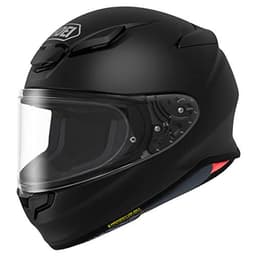
The helmet this review is about — DOT + Snell M2025D
Shoei RF-1400
DOT + SNELL M2025DThe full-face most experienced riders land on: Shoei's hand-laid AIM+ shell, DOT plus a SNELL M2025D rating on Shoei's own spec table, and a quiet, refined fit. You're paying for finish and certification, and it shows.
See it ranked on certificationPrice as of October 22, 2026. #ad How we’re funded
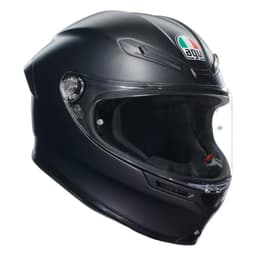
Lighter, and the rotational-testing route instead
AGV K6 S
DOT + ECE 22.06One of the lightest full-carbon-aramid lids you can buy at ~1,255 g, and it's certified to the newer ECE 22.06 standard on top of DOT. The sport-touring helmet for riders who notice weight on a long day.
Compare published weights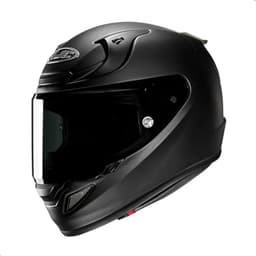
Composite shell and ECE 22.06 for considerably less
HJC RPHA 12
DOT + ECE 22.06HJC's sport flagship, and the model that replaced the discontinued RPHA 11 Pro: a PIM EVO composite shell of carbon-aramid hybrid and natural fibers, DOT on the US listing with ECE 22.06 published for the model, and a wind-tunnel-developed shape built for a tucked riding position.
See the full-face rankingPrice as of October 22, 2026. #ad How we’re funded
Bottom line
The RF-1400 is one of two helmets in our registry whose maker publishes a current-generation Snell certification, and the only one of those that is a conventional road full-face. Shoei publishes enough to judge it on — AIM+ shell, Dual Density EPS, CWR-F2 shield, 3.64 pounds, XS to 3XL, Pinlock Evo in the box — and the certification holds up against the certifying body’s own list rather than against a retailer’s sticker.
The two reasons to walk away are specific and easy to check against your own riding: it is not light, and it does not publish ECE 22.06. If neither of those is your deciding spec, this is a sound premium buy and the one real risk left is fit — which one trip to a shop removes before you spend anything.
How to read our safety notes. We have not crash-tested any of this gear — nobody honestly can on a review budget. Every helmet and armor pick names the certification the maker publishes (DOT, ECE 22.06, SNELL, or a CE level), which we read from the listing on a dated visit. Certification is the floor, not a guarantee; fit and condition matter as much as the sticker. What the standards actually mean.
Frequently asked questions
Is the Shoei RF-1400 Snell M2020 or M2025 certified?
M2025D, according to both Shoei and Snell. The specification table on Shoei's US product page reads 'Snell M2025D and DOT-218 Approved', and the Snell Memorial Foundation's own M2025D certified-product list carries the RF-1400 in XS, S, M, L, XL, XXL and XXXL as a Full Face helmet. Marketing copy elsewhere on Shoei's site still says the helmet 'meets SNELL M2020 standards', which is where most of the internet's M2020 claims come from. We take the spec table plus the certifying body's own list, and we corrected our own registry entry from M2020D to M2025D on 22 October 2026 because of it.
How much does the Shoei RF-1400 weigh?
Shoei publishes 3.64 pounds, which is about 1,650 g. Shoei does not state which size that figure is measured at, so read it as the model weight rather than your helmet's weight. For context, 18 of the 37 helmets we track publish a weight at all, and at roughly 1,640-1,650 g the RF-1400 sits mid-pack among them: lighter than every modular we list, and about 385 g heavier than the AGV K6 S. If grams are your deciding spec, this is not the helmet that wins on them.
What comes in the box with the RF-1400?
Shoei lists a Pinlock Evo lens, a breath guard and a chin curtain as included items, on top of the CWR-F2 shield fitted to the helmet. That matters more than it sounds: on a premium helmet those three accessories cost real money bought separately, and a Pinlock insert is the single most effective anti-fog fix there is. Shoei does not publish a spare shield in the box, so if you want a dark visor that is a separate purchase.
What does Shoei not publish for the RF-1400?
Three things we wanted and could not find on Shoei's own product page. First, any warranty term — the page links to a warranty claim form but states no coverage period. Second, the number of shell sizes, which is the spec that tells you whether a small head is getting a smaller shell or just thicker padding. Third, any ventilation specification: no vent count, no airflow figure, nothing. Shoei sells the intake and exhaust vents as separate parts, so the hardware exists; the specification does not. Any review quoting a shell count or a vent number for this helmet got it somewhere other than Shoei.
Does the RF-1400 come in 3XL?
Yes, but read the color list before you get attached to a finish. Shoei publishes a size range of X-Small through 3X-Large and states that not every color comes in every size — on the page we read, 3X-Large was listed only for Matte Black and White. Snell's certified list independently confirms the certification runs to XXXL, so the largest size is not a DOT-only outlier the way it is on some helmets. This is a good argument for buying online rather than off a shelf, because large sizes are stocked thinly in shops.
Is there a newer helmet than the RF-1400?
Snell's current M2025D list carries six Shoei models, and one of them is an RF-1500. That is the honest answer to 'am I buying the current generation': a successor model name exists and is certified to the current Snell standard. We are not ranking it, comparing it or recommending it, because it is not in our registry and we have not verified what it costs or whether it is stocked in the US. What it does mean is that if you are buying the RF-1400 on discount, check what you are being discounted against before assuming it is this year's flagship.
Why do all the retailers show the same RF-1400 price?
A dealer advertising policy. Shoei's US policy, reported as effective 1 January 2017, allows dealers to advertise current Shoei products only with 'no price information at all or by showing the then-current MSRP', replacing an earlier allowance to advertise up to ten percent off. The same report quotes Shoei saying it does not use the policy to control the price dealers actually sell at. So the advertised number is a poor way to compare retailers on this helmet — compare the return policy and whether your size and color are in stock instead.
Is the RF-1400 quieter than other helmets?
We cannot tell you that, and we will not pretend otherwise. Shoei publishes no noise figure for this helmet, there is no standardized helmet noise test, and we have not worn it. What we can say is what the construction suggests and what the standards bodies do and do not measure: neither DOT FMVSS 218 nor Snell M2025 tests noise. If quiet is your priority, treat every decibel claim you read about any helmet — including ours elsewhere on this site — as the opinion it is, and weight the fit of the neck roll on your own neck far above it.
Sources
- SHOEI — RF-1400 (maker's product page, US) — Every figure on the RF-1400 review, read from Shoei's own US product page and its specification table. Published: Shell Type "Multi-Ply Matrix AIM+"; Shield Type "CWR-F2"; Liner "Dual Density EPS, 3D Max-Dry System II"; Weight "3.64 pounds"; Certifications "Snell M2025D and DOT-218 Approved"; in the box a "Pinlock Evo Lens", a "Breath Guard" and a "Chin Curtain"; sizes X-Small through 3X-Large, with Shoei noting that not every color comes in every size and listing 3X-Large only for Matte Black and White; "MSRP $679.99 - 759.99". The certification line is the reason our registry entry was corrected from M2020D to M2025D on this date — Shoei's marketing copy elsewhere on the site still says the helmet "meets SNELL M2020 standards", and the specification table is the figure we take. What Shoei does NOT publish on this page, and the review says so: no warranty term, no shell-size count, and no ventilation specification of any kind (accessed October 22, 2026)
- Snell Memorial Foundation — M2025D certified helmet list — Snell's current-generation M2025D certified list, which records which models have been re-certified to the 2025 standard (accessed August 27, 2026)
- Snell Memorial Foundation — Standards — Snell's motorcycle helmet standards: M2025D/M2025R are the current generation and M2020D/M2020R the previous one (D = DOT markets, R = ECE markets) (accessed July 21, 2026)
- Snell Memorial Foundation — FAQ — How Snell certification works and how it differs from DOT (accessed July 21, 2026)
- 49 CFR 571.218 — FMVSS No. 218, Motorcycle helmets — The US federal helmet standard: peak-acceleration, penetration and retention requirements; applies to all on-road motorcycle helmets (accessed July 21, 2026)
- NHTSA — How to Choose the Right Motorcycle Helmet — NHTSA consumer guidance on DOT certification and spotting novelty helmets (accessed July 21, 2026)
- autoevolution — Shoei Won't Allow Dealers to Hide Helmets' Price Information (December 22, 2016) — Report of Shoei's US dealer advertising policy effective January 1, 2017: dealers may advertise current Shoei products only with "no price information at all or by showing the then-current MSRP", replacing the earlier allowance to advertise "a discount of up to ten percent (10%) off of the applicable MSRP". Quoted in the same report: "Shoei does not, and does not use its advertising policy to control, attempt to control or interfere in the actual pricing at which its dealers are free to sell Shoei products to customers." Shoei's own policy directory page on this date links no advertising-policy document, so the news report is cited (accessed September 12, 2026)
- SHARP — UK Government Helmet Safety Ratings — UK Department for Transport independent helmet safety star ratings (accessed July 21, 2026)
Keep reading
Shoei RF-1400 vs AGV K6 S
Snell M2025D against ECE 22.06, and 1,640 g against 1,255 g — the comparison this review's buyers actually run.
Read the comparisonSafest motorcycle helmets
Where this helmet ranks on published certification, and why the US has no helmet safety score to settle it.
See the rankingSnell-certified helmets
Every pick verified against Snell's own certified-product lists, model by model and size by size.
See the Snell listDOT, ECE and Snell explained
What each standard actually tests, which are required and which are the maker paying for an optional exam.
Read the explainerWhere to buy a motorcycle helmet
Why every retailer shows the same number on this helmet, and how to buy a premium lid online without guessing.
Read the buying guideBest full-face helmets
The wider field this helmet sits in, ranked on what each maker publishes rather than on brand.
See the rankingLightest motorcycle helmets
Sorted strictly on published grams — useful if the 3.64 lb figure above is the thing you are weighing.
See the weights