Alpinestars Tech-Air 3 vs Tech-Air 5
Over the jacket or under it. Chest-and-back or full torso. Same electronic airbag system, two completely different ways of living with one — and one question that settles it.
These are the two electronic airbags we rank first and second on best motorcycle airbag vests, they come from the same manufacturer, they use the same sensor-and-algorithm approach, and both publish Airbag Level 2 impact performance under the EN 1621-4 test method. On paper they look like the same product at two prices. They are not.
The Tech-Air 3 is a canvas-outer vest designed to be worn over whatever you already own, or under a loose jacket. The Tech-Air 5 is designed to be worn under a jacket, with a fuller torso coverage envelope that needs room in the shell around it. That single difference cascades into everything else — which jackets work, how hot you get, how you look off the bike, and how much of you the airbag actually covers.
Before either: an airbag is a supplement, not a replacement. It does nothing for your head, your hands or your legs, and it protects the torso only when it deploys. Our airbag vest explainer covers what EN 1621-4 does and does not cover, and what happens after one fires.
How this is funded: we earn a commission if you buy through our links, at no extra cost to you. It never changes which gear we recommend, and we’ll tell you plainly when to skip a pick. Full disclosure.
Wear it over anything
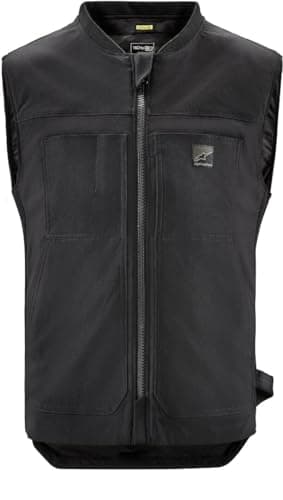
Alpinestars Tech-Air 3 V2 Canvas
An electronically-triggered airbag vest you wear over or under a jacket, with no subscription and no tether to the bike. Alpinestars states it meets the EN 1621-4 airbag Level 2 impact requirement across both full chest and full back.
Price as of October 18, 2026. #ad How we’re funded
Wear it under a jacket
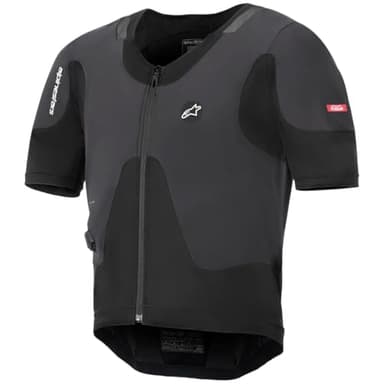
Alpinestars Tech-Air 5 Plasma
The step up from the Tech-Air 3: a full-torso airbag system designed to be worn under a jacket, with wider coverage and Alpinestars' more advanced crash-detection algorithm set. The most protection you can buy in a self-contained vest.
Price as of October 18, 2026. #ad How we’re funded
| Spec | Alpinestars Tech-Air 3 V2 Canvas | Alpinestars Tech-Air 5 Plasma |
|---|---|---|
| Certification | Airbag Level 2 impact performance (EN 1621-4 test method) | Airbag Level 2 impact performance (EN 1621-4 test method) |
| Deployment | Electronic, self-contained sensors | Electronic, self-contained sensors |
| How it is worn | Over a jacket, or under a loose one | Under a jacket, needs room in the shell |
| Coverage | Chest and back, Level 2 | Full torso, widest coverage in the range |
| Outer | Canvas outer, wearable as a visible layer | Vest designed to be hidden under a shell |
| Jacket compatibility | Works with any jacket you already own | Needs a jacket sized to accommodate it |
| Best suited to | Street riders adding an airbag to existing gear | Fast road and track riders wanting maximum coverage |
| Price tier | Premium | Premium |
The question that decides it
Are you buying a jacket at the same time?
If no — you have jackets you like and you want to add an airbag to them — the Tech-Air 3 is the answer, and the reasoning is simple. An under-jacket airbag needs the jacket to have room for it, both when packed and when inflated. Most jackets bought without an airbag in mind do not. You would be buying a Tech-Air 5 and then discovering you also need a new jacket, or wearing it over the top of a shell it was never styled to sit on.
If yes — or if you already ride in a jacket cut generously enough — then the Tech-Air 5 gives you more torso coverage and disappears under the shell, which is both cooler in a well-vented jacket and tidier off the bike.
Coverage: what “full torso” buys
The Tech-Air 3 protects chest and back at Level 2. The Tech-Air 5 extends the inflated envelope further around the torso, which is the headline reason it exists. Whether that matters depends on the kind of crash you are equipping for. Chest and back cover the impacts that come from going over the bars or landing on your back; the wider envelope adds more of the flanks and shoulders, which is where a high-side or a tumble at speed loads you.
Both certify to Airbag Level 2 impact performance under the EN 1621-4 test method — that number describes how well the inflated bag attenuates an impact where it covers, not how much of you it covers. Coverage area and impact level are two separate specifications, and reading them as one is the most common mistake in this category.
Living with each of them
Tech-Air 3, day to day
- Works with anything. Leather jacket, mesh jacket, textile touring shell. Also works over a jacket you already own, which is the whole point.
- Visible. The canvas outer is designed to be seen. Some riders like that; some do not.
- Adds a layer. Worn over a mesh jacket in summer, it blocks airflow across the torso — which is exactly where a mesh jacket does its work. That is a real trade in hot weather.
Tech-Air 5, day to day
- Invisible under the shell. Off the bike you are wearing a jacket.
- Jacket sizing becomes a constraint. You need room in the chest and shoulders, and you are effectively committing your jacket wardrobe to it.
- Displaces your back protector. Worn under a jacket, it occupies the space where a CE back protector would sit. That is fine — the airbag covers the back — but do not try to wear both.
What neither of them changes
An electronic airbag is a supplement to your existing armor, not a substitute for it. Both vests are designed to be worn alongside the CE shoulder and elbow armor in your jacket, and neither does anything for your head, hands or legs. If your kit has a genuine gap — no certified back protector, unarmored trousers, no knee guards, or a helmet you should have replaced — that gap is a better use of the money than an airbag. This is the same order-of-priorities argument in our beginner gear guide, and it does not change just because the product is impressive.
The verdict
Tech-Air 3 for the large majority of street riders. It is the airbag you can actually add to the gear you own, and an airbag you wear is worth more than one that needs a wardrobe change first. It is our top pick on the airbag vest roundup for that reason.
Tech-Air 5 if you are buying into the system properly — new jacket included — or if you already ride in a generously cut shell and want the widest coverage Alpinestars offers. On track, where you are buying maximum protection rather than maximum compatibility, it is the right one.
Frequently asked questions
What is the difference between the Tech-Air 3 and Tech-Air 5?
How they are worn and how much they cover. The Tech-Air 3 has a canvas outer designed to be worn over a jacket you already own, or under a loose one, and protects chest and back at Level 2. The Tech-Air 5 is designed to be worn under a jacket with room to accommodate it, and inflates a wider torso envelope. Both are electronic, both publish Airbag Level 2 impact performance under the EN 1621-4 test method, and both come from the same system.
Can I wear the Tech-Air 5 with my existing jacket?
Only if that jacket has genuine room in the chest and shoulders, both for the packed vest and for the inflated bag. Most jackets bought without an airbag in mind do not, and a jacket too tight to allow full inflation is a real problem rather than a comfort one. If you are not replacing your jacket, the Tech-Air 3 is the version designed for that situation — it works over anything.
Do I still need a back protector with an airbag vest?
No, and you should not try to wear both under the same jacket — there is not room and the airbag needs space to inflate. Both of these vests cover the back as part of their inflated envelope. What an airbag does not replace is the CE shoulder and elbow armor in your jacket, or any protection below the waist. Treat the airbag as covering the torso and keep everything else.
Is an airbag vest worth it over normal armor?
It adds a layer of protection nothing else provides, at a price that would buy a complete set of everything else. The honest sequencing is: get a certified helmet that fits, a jacket with real CE armor, gloves, boots and a CE Level 2 back protector first. If all of that is in place and you want the next increment, an airbag is genuinely the next increment. If any of it is missing, fill that gap first — it costs a fraction as much and covers a gap that currently reads as zero.
What happens to an airbag vest after it deploys?
Alpinestars' electronic systems are designed to be serviced and returned to use rather than discarded, which is a meaningful difference from single-use tethered systems. The specifics — turnaround, cost, how many deployments a vest is rated for — are set by the manufacturer and change over time, so check the current terms before you buy rather than relying on anything written here. Our airbag vest explainer covers the general mechanics of what happens after a deployment.
Will an airbag vest make me too hot in summer?
The Tech-Air 3 will, worn over a mesh jacket — it puts a canvas layer across exactly the part of the jacket doing the cooling. That is a real trade and worth thinking about if you ride in genuine heat. Under a well-vented jacket the Tech-Air 5 is less of an imposition, though any additional torso layer costs you something. Riders in hot climates often run the airbag from spring to autumn and accept the compromise, or size the jacket to keep airflow moving around the vest.
Sources
- MotoCAP — Independent Motorcycle Clothing & Helmet Assessment — Independent Australian lab rating protective clothing and helmets for protection and comfort (accessed July 21, 2026)
- SHARP — UK Government Helmet Safety Ratings — UK Department for Transport independent helmet safety star ratings (accessed July 21, 2026)
- IIHS — Motorcycle registrations and fatality data — On-road motorcycle registration and fatality context (accessed July 21, 2026)
Keep reading
Best motorcycle airbag vests
Electronic and tethered airbags compared on what each one is actually certified to.
See the airbag picksHow motorcycle airbag vests work
Tethered against electronic, what EN 1621-4 covers, and where an airbag belongs in your priorities.
Read the explainerBest motorcycle back protectors
The CE EN 1621-2 option if an airbag is out of budget — and the one you skip once you have one.
See the back protectorsCE armor ratings explained
The EN 1621 family in full — why the level and the coverage area are two different specifications.
Read the armor guide