Apex & Armor

Best Motorcycle Airbag Vests

Electronic and tethered airbags compared on what each one is actually certified to — and an honest account of what EN 1621-4 does and doesn't cover.

By Stephen V.Last updated How we research

An airbag vest inflates a bladder around your torso in the moments before you hit the ground, spreading impact energy across your chest, back and (on some systems) shoulders and neck. It is the most significant advance in rider protection since the modern helmet, and it is also the piece of gear with the most confusing certification picture in motorcycling. This page is mostly about untangling that.

Two mechanisms exist. A tetheredvest clips a coiled lanyard to the bike; separating from the bike pulls a pin and fires a CO2 cartridge. No electronics, no charging, no firmware — and no protection if you forget to clip in. An electronicvest carries accelerometers and gyroscopes, decides on its own that a crash is occurring, and fires a gas generator. No tether to forget, but a battery to charge and an algorithm you’re trusting.

The certification wrinkle.The European airbag standard is EN 1621-4:2013, and it was written when mechanical triggers were the only kind. Electronic systems therefore cannot be certified in full under it — the standard hasn’t been updated to cover electronic triggering. Alpinestars states it has used the impact-testing requirements of EN 1621-4 to establish that its Tech-Air systems meet the airbag Level 2 impact performance for full chest and full back. That is a meaningful claim and it is not the same thing as a full certification to the standard. We think riders should know that distinction rather than have it smoothed over.

How this is funded: we earn a commission if you buy through our links, at no extra cost to you. It never changes which gear we recommend, and we’ll tell you plainly when to skip a pick. Full disclosure.

Quick picks

Ranked on certification, spec and buyer fit. Select a row to jump to the full write-up. We haven’t crash-tested this gear — here is exactly what we do instead.

#GearBest forPrice
1
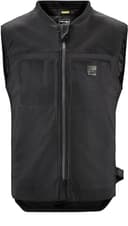
Alpinestars Tech-Air 3 V2 Canvas

Alpinestars Tech-Air 3 V2 Canvas

Airbag Level 2 impact performance (EN 1621-4 test method)

An electronically-triggered airbag vest you wear over or under a jacket, with no subscription and no tether to the bike. Alpinestars states it meets the EN 1621-4 airbag Level 2 impact requirement across both full chest and full back.

Best overall
$699.95 · View on Amazon

Price as of September 4, 2026. #ad How we’re funded

2
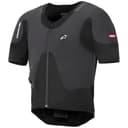
Alpinestars Tech-Air 5 Plasma

Alpinestars Tech-Air 5 Plasma

Airbag Level 2 impact performance (EN 1621-4 test method)

The step up from the Tech-Air 3: a full-torso airbag system designed to be worn under a jacket, with wider coverage and Alpinestars' more advanced crash-detection algorithm set. The most protection you can buy in a self-contained vest.

Best coverage
$782.95 · View on Amazon

$869.9510% off

Price as of September 4, 2026. #ad How we’re funded

3
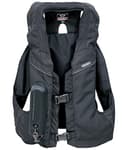
Hit-Air MLV2

Hit-Air MLV2

CE EN 1621-4:2013 (Level 1, back)

A mechanically-triggered airbag vest: a coiled tether clips to the bike, and separating from the bike pulls the CO2 cartridge. No electronics, no charging, and certified to EN 1621-4:2013 — Level 1 at the back.

Best certified tethered
$659.00 · View on Amazon

Price as of September 4, 2026. #ad How we’re funded

4
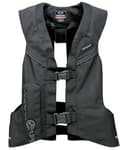
Hit-Air VHR Slim

Hit-Air VHR Slim

Hit-Air's minimal harness-style airbag — the same tethered CO2 mechanism as the MLV2 in a much smaller package that disappears under or over normal riding gear.

Best low-bulk
$599.00 · View on Amazon

Price as of September 4, 2026. #ad How we’re funded

5
Airobag Lite Vest

Airobag Lite Vest

The cheapest tethered airbag vest we can find that states an EN 1621-4 certification on its listing. It roughly halves the entry price into airbag protection — with the caveat that this is a newer brand with no independent lab or long-term field record to check against.

Cheapest way in

The picks in full

#1Best overallAirbag Level 2 impact performance (EN 1621-4 test method)

Alpinestars Tech-Air 3 V2 Canvas

An electronically-triggered airbag vest you wear over or under a jacket, with no subscription and no tether to the bike. Alpinestars states it meets the EN 1621-4 airbag Level 2 impact requirement across both full chest and full back.

Strengths

  • Alpinestars states airbag Level 2 impact performance for full chest AND full back
  • Self-contained electronics — no bike tether, no wiring, no subscription
  • Wears over or under a jacket, so one vest covers your whole wardrobe

Trade-offs

  • Electronic triggers aren't yet covered in full by EN 1621-4, which was written for mechanical systems
  • Needs charging, and the airbag must be serviced/repacked after a deployment
Safety standardAirbag Level 2 impact performance (EN 1621-4 test method)
ConstructionCanvas outer with electronic airbag system
Claimed weightCheck current listing
Key featureElectronic airbag, chest + back Level 2
Fit / sizingWorn over or under a jacket; sized S-3XL
Best forStreet riders who want airbag protection that works with any jacket

Specs and certification read from the manufacturer and retailer listing, on August 11, 2026. “Check current listing” means the maker doesn’t publish that figure — we won’t guess it.

#2Best coverageAirbag Level 2 impact performance (EN 1621-4 test method)

Alpinestars Tech-Air 5 Plasma

The step up from the Tech-Air 3: a full-torso airbag system designed to be worn under a jacket, with wider coverage and Alpinestars' more advanced crash-detection algorithm set. The most protection you can buy in a self-contained vest.

Strengths

  • Wider torso coverage than the Tech-Air 3, including shoulders
  • Self-contained system with no bike tether or subscription
  • Designed to be worn under a jacket, so it doesn't change your outer layer

Trade-offs

  • The most expensive protection item on this page
  • Needs a compatible jacket with room underneath — it doesn't fit inside a race-fit leather
Safety standardAirbag Level 2 impact performance (EN 1621-4 test method)
ConstructionAirbag vest with electronic deployment
Claimed weightCheck current listing
Key featureElectronic airbag, full-torso coverage
Fit / sizingWorn under a jacket; needs room in the shell
Best forFast-road and track riders who want the widest airbag coverage

Specs and certification read from the manufacturer and retailer listing, on August 11, 2026. “Check current listing” means the maker doesn’t publish that figure — we won’t guess it.

#3Best certified tetheredCE EN 1621-4:2013 (Level 1, back)

Hit-Air MLV2

A mechanically-triggered airbag vest: a coiled tether clips to the bike, and separating from the bike pulls the CO2 cartridge. No electronics, no charging, and certified to EN 1621-4:2013 — Level 1 at the back.

Strengths

  • Certified to EN 1621-4:2013 — the actual airbag standard, at Level 1 (back)
  • No battery, no charging, no firmware — the tether IS the sensor
  • Reflective Lumidex shell adds real night-time conspicuity

Trade-offs

  • Tethered: you must clip in every ride and remember to unclip before dismounting
  • Level 1 back rating is a step below the electronic systems' Level 2 performance
Safety standardCE EN 1621-4:2013 (Level 1, back)
ConstructionReflective outer with CO2 airbag system
Claimed weightCheck current listing
Key featureTethered CO2 airbag, EN 1621-4
Fit / sizingUnisex adjustable; worn over a jacket
Best forRiders who want airbag protection with zero electronics to maintain

Specs and certification read from the manufacturer and retailer listing, on August 11, 2026. “Check current listing” means the maker doesn’t publish that figure — we won’t guess it.

#4Best low-bulk

Hit-Air VHR Slim

Hit-Air's minimal harness-style airbag — the same tethered CO2 mechanism as the MLV2 in a much smaller package that disappears under or over normal riding gear.

Strengths

  • Harness format is far less bulky than a full vest
  • Same mechanical CO2 trigger — no electronics to charge or update
  • Cross-discipline design (motorcycle and equestrian) means high production volume

Trade-offs

  • Slim format covers less area than the full MLV2 vest
  • Hit-Air doesn't publish a separate CE level for the VHR Slim — check the current listing
Safety standardCheck current listing
ConstructionHarness with CO2 airbag system
Claimed weightCheck current listing
Key featureTethered CO2 airbag, slim harness
Fit / sizingAdjustable harness; worn over gear
Best forRiders who want a tethered airbag with the smallest possible bulk

Specs and certification read from the manufacturer and retailer listing, on August 11, 2026. “Check current listing” means the maker doesn’t publish that figure — we won’t guess it.

#5Cheapest way in

Airobag Lite Vest

The cheapest tethered airbag vest we can find that states an EN 1621-4 certification on its listing. It roughly halves the entry price into airbag protection — with the caveat that this is a newer brand with no independent lab or long-term field record to check against.

Strengths

  • Listing states CE EN 1621-4 certification — the motorcycle airbag standard
  • Reusable: replace the CO2 cartridge after a deployment rather than the whole vest
  • Roughly half the price of the established tethered vests

Trade-offs

  • Newer brand with no independent lab ratings or long-term field record
  • We have not seen a certificate published outside the listing — verify the current listing before you buy
Safety standardCheck current listing
ConstructionTethered CO2 airbag vest
Claimed weightCheck current listing
Key featureTethered CO2 airbag (listing states EN 1621-4)
Fit / sizingUnisex adjustable
Best forRiders who want to try airbag protection at the lowest entry price

Specs and certification read from the manufacturer and retailer listing, on August 11, 2026. “Check current listing” means the maker doesn’t publish that figure — we won’t guess it.

How to choose an airbag vest

1. Tethered or electronic — decide this first

Everything else follows from this choice.

Tetheredsuits riders who want zero maintenance and a mechanism they can understand completely. The trade is discipline: you must clip in every single ride, and you must remember to unclip before you dismount or you’ll fire the vest walking away from the bike. Tethered vests also can’t protect you in a crash where you stay on the bike, because nothing pulls the pin.

Electronicsuits riders who’ll forget the tether, ride multiple bikes, or want protection in low-side scenarios where you stay attached to the machine. The trade is a battery to charge, a system to trust, and a higher price.

2. Coverage: what actually inflates

Systems differ substantially. Some cover chest and back only; some add shoulders; some extend up the neck to limit hyperextension. Read the coverage diagram, not the marketing headline. More coverage is more protection and also more bulk, more weight and a longer inflation path.

3. Where it wears

Some vests are designed to go over your jacket, some underneath. Under-jacket systems need room in the shell — you cannot fit one inside a race-fit leather that already fits properly, so budget for a jacket sized around it. Over-jacket vests work with your existing wardrobe but change how you look and add a layer in the heat.

4. What happens after it fires

Tethered vests use a CO2 cartridge you can replace yourself for a modest cost — the vest is reusable in minutes. Electronic systems generally need to be returned for servicing and repacking, which costs more and takes the vest out of use for a period. Neither is a reason to choose one over the other, but it’s a real ownership cost worth knowing before you buy.

5. It does not replace armor

An airbag protects your torso. It does nothing for your shoulders, elbows, hips or knees, and it does nothing for abrasion — you still need a jacket that can survive a slide with CE-rated inserts in it. Think of the airbag as an addition to a complete kit, not a substitute for part of it.

Reading the certification claims honestly

  • “CE EN 1621-4:2013”on a tethered vest is a genuine certification to the motorcycle airbag standard. It also comes with a level and a coverage area — a vest certified Level 1 at the back is not certified for the chest.
  • “Airbag Level 2 impact performance”on an electronic vest usually means the maker used the standard’s test method and met its Level 2 threshold, without a full certification (because the standard doesn’t cover electronic triggers). That is a substantive claim from a serious manufacturer.
  • “CE certified” with no standard number tells you almost nothing. Ask which standard, which level, and which area.

What we haven’t done

We have not deployment-tested any of these vests, we have not verified any manufacturer’s test data independently, and we do not operate a lab. Everything above is read from the maker’s published documentation or an authoritative retailer on a dated visit. For the budget option on this page in particular, the certification claim comes from the product listing and we have not seen a certificate published elsewhere — we’ve said so in its entry rather than treating it as equivalent to the established brands. See how we research.

How to read our safety notes. We have not crash-tested any of this gear — nobody honestly can on a review budget. Every helmet and armor pick names the certification the maker publishes (DOT, ECE 22.06, SNELL, or a CE level), which we read from the listing on a dated visit. Certification is the floor, not a guarantee; fit and condition matter as much as the sticker. What the standards actually mean.

Frequently asked questions

Do motorcycle airbag vests actually work?

The mechanism is sound and the impact-performance data manufacturers publish is real: an inflated bladder spreads impact energy across a much larger area of your torso than a rigid protector can. Alpinestars states its Tech-Air systems meet airbag Level 2 impact performance for full chest and full back under the EN 1621-4 test method, and Hit-Air's MLV2 carries EN 1621-4:2013 certification. What we can't tell you is a real-world effectiveness percentage, because we haven't seen a large-scale crash study we'd stand behind — and we're not going to invent one.

What's the difference between a tethered and an electronic airbag vest?

A tethered vest clips a lanyard to the bike; separating from the bike pulls a pin and fires a CO2 cartridge. It has no electronics, needs no charging, and costs less — but you must clip in every ride, remember to unclip before dismounting, and it can't fire in a crash where you stay on the bike. An electronic vest uses sensors to detect a crash itself, works across multiple bikes, and needs charging and periodic servicing.

Is EN 1621-4 certification required for airbag vests?

It's the European standard for motorcycle airbags, published in 2013, and it's not a legal requirement in the US. Importantly, it was written around mechanically-triggered systems and hasn't been updated to cover electronic triggers — which is why electronic vests generally state that they meet the standard's impact-performance thresholds rather than claiming full certification to it. A tethered vest citing 'EN 1621-4:2013' with a level and a coverage area is making the more complete claim.

Does an airbag vest replace my jacket armor?

No. An airbag protects your torso — chest and back, sometimes shoulders and neck. It does nothing for your elbows, hips or knees, and it provides no abrasion resistance at all. You still need a jacket that survives a slide, with CE-rated shoulder and elbow armor in it. An airbag is a significant addition to a complete kit, not a replacement for any part of it.

What happens after an airbag vest deploys?

A tethered CO2 vest is reusable: you fit a new cartridge and repack the bladder, usually in minutes and for a modest cost. Electronic systems typically need to be sent back to the manufacturer or a service center for inspection and repacking, which costs more and leaves you without the vest for a period. Either way, treat a deployment as a signal to also inspect your helmet and armor — anything that took an impact needs checking.

Are cheap airbag vests worth it?

A budget tethered vest that genuinely carries an airbag certification is meaningfully better than no airbag. The caution is disclosure: established brands publish their certification documentation and have a long field record, while newer marketplace brands often state a certification only in the product listing. We've included one budget option here because it roughly halves the entry price, and we've been explicit in its entry that we haven't seen a certificate published outside the listing. Verify the current listing before buying.

Sources

Keep reading

More in Armor