Apex & Armor

Best Motorcycle Elbow Guards

Every guard here publishes an EN 1621-1 level — which makes this the rare armor category where the rating is the easy part. What actually separates them is whether the guard is still on your elbow at the end of the crash.

By Stephen V.Last updated How we research

Start with the honest part, because it will save some of you the money. If your jacket has an elbow pocket with certified armor already in it, you probably do not need anything on this page. A standalone elbow guard exists for three specific riders: the one whose jacket has an empty pocket or a foam comfort pad pretending to be armor, the one riding in a jacket with no armor provision at all, and the adventure or dual-sport rider who wants a hard shell that a jacket insert cannot give. If you are the first of those, a drop-in armor insert is cheaper, invisible and certified to the same standard.

For everyone else, elbows earn the attention. They are the second thing down in a low-side after the knee and the shoulder, they carry almost no soft tissue over the joint, and an elbow injury is the kind that follows you around for years. The five guards below are ranked on three things, in this order. What EN 1621-1 level does the maker publish? Is the protector soft or hard-shelled? That decides whether it slides or grips when it meets tarmac, which the rating does not measure at all. And how is it held on? A guard that rotates onto your forearm during a tumble was never the rating it claimed.

Every certification and construction detail on this page was read on 3 September 2026, either from the maker’s own product page (Alpinestars and Leatt) or from the maker’s published specification sheet as carried by RevZilla, because Fox’s own product pages render their spec tables client-side and returned no specification text. We own none of these guards, we run no impact lab, and nothing here is a test result of ours — our methodology page sets out exactly what that means.

How this is funded: we earn a commission if you buy through our links, at no extra cost to you. It never changes which gear we recommend, and we’ll tell you plainly when to skip a pick. Full disclosure.

Quick picks

Ranked on certification, spec and buyer fit. Select a row to jump to the full write-up. We haven’t crash-tested this gear — here is exactly what we do instead.

#GearBest forPrice
1
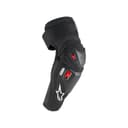
Alpinestars Bionic Flex Elbow Protector

Alpinestars Bionic Flex Elbow Protector

CE EN 1621-1:2012 Level 1

The elbow guard that actually fits the way most people ride on the road. Alpinestars publishes EN 1621-1:2012 Level 1 for a slip-on sleeve built from breathable stretch mesh, with the Nucleon Flex protector perforated and mounted on the outside of the sleeve. It is the one guard here you can wear under a road jacket without fighting the sleeve.

Best overall
$89.00 · View on Amazon

Price as of September 4, 2026. #ad How we’re funded

2
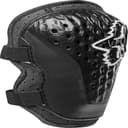
Fox Racing Titan Sport CE Elbow Guards

Fox Racing Titan Sport CE Elbow Guards

CE EN 1621-1:2012 Level 1

The cheapest guard here by a wide margin, and it carries the same published limb rating as protectors costing three times as much: EN 1621-1:2012 Level 1. Plastic elbow and forearm coverage over a soft bio-foam chassis, held on by an elastic strap system. If the choice is this or nothing, this wins easily.

Best budget
$39.95 · View on Amazon

Price as of September 4, 2026. #ad How we’re funded

3
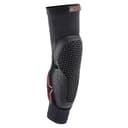
Alpinestars Bionic Pro Plasma Elbow Protector

Alpinestars Bionic Pro Plasma Elbow Protector

CE EN 1621-1:2012 Level 2

The Level 2 answer, and the elbow twin of the Bionic Pro Plasma knee already on this site. Thermoplastic shells over a Nucleon PLASMA insert, certified to EN 1621-1:2012 Level 2. The shells matter for a reason the rating does not measure: hard plastic slides on tarmac where fabric and foam grip it.

Best Level 2
$99.95 · View on Amazon

Price as of September 4, 2026. #ad How we’re funded

4
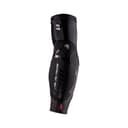
Leatt Elbow Guard 3DF 6.0 Evo

Leatt Elbow Guard 3DF 6.0 Evo

CE EN 1621-1 Level 2

Level 2 protection in a guard designed to disappear under a shell jacket. Leatt publishes Elbow EN1621-1 Level 2 for a low-profile 3DF soft impact foam with an abrasion-resistant DeFLEXtion outer layer, pre-curved, on Lycra and MoistureCool fabrics. The adventure and dirt pick, and the only Level 2 guard here sized S through XXL.

Best for adventure and dirt
$119.00 · View on Amazon

Price as of September 4, 2026. #ad How we’re funded

5
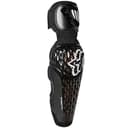
Fox Racing Titan Pro D3O CE Elbow Guards

Fox Racing Titan Pro D3O CE Elbow Guards

CE EN 1621-1 Level 1

The guard that solves retention rather than rating. EN 1621-1 Level 1 with nested D3O armor under a vented plastic exoskeleton, but the reason to buy it is the Posi-Lock buckle and the variable-axis hinge — a guard that stays on the point of the elbow through a tumble is worth more than a higher number that has rotated onto your forearm.

Best retention
$119.95 · View on Amazon

Price as of September 4, 2026. #ad How we’re funded

The picks in full

#1Best overallCE EN 1621-1:2012 Level 1

Alpinestars Bionic Flex Elbow Protector

The elbow guard that actually fits the way most people ride on the road. Alpinestars publishes EN 1621-1:2012 Level 1 for a slip-on sleeve built from breathable stretch mesh, with the Nucleon Flex protector perforated and mounted on the outside of the sleeve. It is the one guard here you can wear under a road jacket without fighting the sleeve.

Strengths

  • CE EN 1621-1:2012 Level 1, published by Alpinestars for this exact protector
  • Slip-on stretch-mesh sleeve — no buckles to work around a jacket cuff
  • Elasticated hems with silicone printing to stop the sleeve migrating

Trade-offs

  • Level 1, not Level 2, and roughly twice the price of a Level 1 hard-shell guard
  • A soft protector gives you impact absorption but little sliding performance
  • Sold in S/M and L/XL only, so there is no fine sizing between the two
Safety standardCE EN 1621-1:2012 Level 1
ConstructionBreathable stretch-mesh sleeve with perforated Nucleon Flex protector
Claimed weightCheck current listing
Key featureEN 1621-1 Level 1 in a slip-on sleeve
Fit / sizingSlip-on with elasticated hems and silicone print; S/M and L/XL only
Best forStreet and touring riders adding elbow protection under a jacket

Specs and certification read from the manufacturer and retailer listing, on September 3, 2026. “Check current listing” means the maker doesn’t publish that figure — we won’t guess it.

#2Best budgetCE EN 1621-1:2012 Level 1

Fox Racing Titan Sport CE Elbow Guards

The cheapest guard here by a wide margin, and it carries the same published limb rating as protectors costing three times as much: EN 1621-1:2012 Level 1. Plastic elbow and forearm coverage over a soft bio-foam chassis, held on by an elastic strap system. If the choice is this or nothing, this wins easily.

Strengths

  • CE EN 1621-1:2012 Level 1 at the lowest price on this page
  • Hard plastic coverage across the elbow AND the forearm, not just the point
  • Fox publishes real sizing in bicep and forearm inches, XS through 2XL

Trade-offs

  • An MX-style external guard — it does not sit comfortably under a road jacket
  • Elastic and hook-and-loop straps need re-checking on a long ride
  • Soft bio-foam chassis rather than the molded impact foams higher up the range
Safety standardCE EN 1621-1:2012 Level 1
ConstructionPlastic elbow and forearm coverage over a soft bio-foam chassis
Claimed weightCheck current listing
Key featureEN 1621-1 Level 1 at the bottom of the price range
Fit / sizingElastic strap with hook-and-loop; sized XS-2XL on bicep and forearm
Best forRiders who want a certified elbow guard for the least money

Specs and certification read from the manufacturer and retailer listing, on September 3, 2026. “Check current listing” means the maker doesn’t publish that figure — we won’t guess it.

#3Best Level 2CE EN 1621-1:2012 Level 2

Alpinestars Bionic Pro Plasma Elbow Protector

The Level 2 answer, and the elbow twin of the Bionic Pro Plasma knee already on this site. Thermoplastic shells over a Nucleon PLASMA insert, certified to EN 1621-1:2012 Level 2. The shells matter for a reason the rating does not measure: hard plastic slides on tarmac where fabric and foam grip it.

Strengths

  • CE EN 1621-1:2012 Level 2 — the higher of the two limb ratings
  • Thermoplastic shells for abrasion and sliding performance, not impact alone
  • Wide elasticated top strap and perforated stretch padding underneath

Trade-offs

  • The most expensive Alpinestars elbow protector here
  • A hard external shell is noticeable under a close-fitting jacket sleeve
  • S/M and L/XL only, like its Bionic Flex sibling
Safety standardCE EN 1621-1:2012 Level 2
ConstructionThermoplastic shells over a Nucleon PLASMA viscoelastic insert
Claimed weightCheck current listing
Key featureEN 1621-1 Level 2 with a hard sliding shell
Fit / sizingWide elasticated top strap over perforated padding; S/M and L/XL
Best forRiders who want the higher published limb rating plus a sliding shell

Specs and certification read from the manufacturer and retailer listing, on September 3, 2026. “Check current listing” means the maker doesn’t publish that figure — we won’t guess it.

#4Best for adventure and dirtCE EN 1621-1 Level 2

Leatt Elbow Guard 3DF 6.0 Evo

Level 2 protection in a guard designed to disappear under a shell jacket. Leatt publishes Elbow EN1621-1 Level 2 for a low-profile 3DF soft impact foam with an abrasion-resistant DeFLEXtion outer layer, pre-curved, on Lycra and MoistureCool fabrics. The adventure and dirt pick, and the only Level 2 guard here sized S through XXL.

Strengths

  • CE EN1621-1 Level 2 published by Leatt for this model
  • Low-profile soft impact foam with an abrasion-resistant DeFLEXtion outer
  • Sized S, M, L, XL and XXL — the widest size run on this page

Trade-offs

  • The highest list price here
  • Leatt lists the weight for this model as TBC, so there is no published figure
  • A single anti-slip forearm band is less retention than a buckled hinge system
Safety standardCE EN 1621-1 Level 2
ConstructionLow-profile 3DF soft impact foam with a DeFLEXtion abrasion outer
Claimed weightCheck current listing
Key featureEN 1621-1 Level 2 in a low-profile soft guard
Fit / sizingPre-curved with an anti-slip forearm band; sizes S-XXL
Best forAdventure and dirt riders who want Level 2 without a bulky exoskeleton

Specs and certification read from the manufacturer and retailer listing, on September 3, 2026. “Check current listing” means the maker doesn’t publish that figure — we won’t guess it.

#5Best retentionCE EN 1621-1 Level 1

Fox Racing Titan Pro D3O CE Elbow Guards

The guard that solves retention rather than rating. EN 1621-1 Level 1 with nested D3O armor under a vented plastic exoskeleton, but the reason to buy it is the Posi-Lock buckle and the variable-axis hinge — a guard that stays on the point of the elbow through a tumble is worth more than a higher number that has rotated onto your forearm.

Strengths

  • CE EN 1621-1 Level 1 with nested D3O viscoelastic impact armor
  • Posi-Lock buckle system — set the strap once, then click in and out
  • Variable-axis hinge keeps the guard tracking with the joint, not fighting it

Trade-offs

  • Level 1, at a price where both Level 2 guards here are within reach
  • A vented exoskeleton is the bulkiest option on this page under a jacket
  • Buckles and a hinge are more to check and more to eventually break
Safety standardCE EN 1621-1 Level 1
ConstructionVented PP exoskeleton over nested D3O with a compression-molded liner
Claimed weightCheck current listing
Key featureEN 1621-1 Level 1, D3O, buckle-and-hinge retention
Fit / sizingPosi-Lock buckle and bicep strap; sized XS-2XL on bicep and forearm
Best forRiders who have had guards rotate out of position mid-crash

Specs and certification read from the manufacturer and retailer listing, on September 3, 2026. “Check current listing” means the maker doesn’t publish that figure — we won’t guess it.

What EN 1621-1 actually measures, and what it does not

EN 1621-1 is the limb-protector standard — shoulders, elbows, hips and knees. It is a different test from EN 1621-2 (back), EN 1621-3 (chest) and EN 1621-4 (airbags), so “CE Level 2” on an elbow guard and “CE Level 2” on a back protector are not the same claim. Our CE armor guide covers the whole family properly.

What matters for shopping is what the test does. EN 1621-1 measures how much force a protector lets through under an impact, and nothing else. Level 1 and Level 2 describe two thresholds of transmitted force, with Level 2 the tougher of the two. The test says nothing about abrasion resistance, nothing about whether the guard stays in place, and nothing about how it behaves when it is dragged along a road surface at speed.

That is the single most useful thing to understand before comparing these five, because it means a Level 1 hard-shell guard can protect your arm better in a slide than a Level 2 soft one — while the Level 2 soft one absorbs a direct impact better. They are answering different questions. Neither number is wrong; the number just is not the whole product.

Every guard here publishes a level, which is unusual

Across this site, the most common thing our spec tables have to say about a certification is that the maker does not publish one. Gloves are the worst case — almost nothing sold into the US market publishes an EN 13594 rating. Budget armor sets frequently claim “CE Level 2” without naming the standard behind it. Even in this hub, Leatt states EN 1621-1 for its AirFlex Pro knee guard without stating the level.

Elbow guards are the exception, and it is worth saying plainly: all five products below publish a specific EN 1621-1 level, from makers who name the standard, the year, or both. That is a category where you can shop on published data rather than on construction inference, which is rare enough to be the reason this page is short and definite rather than long and hedged.

GuardPublished levelProtector typeRetentionSizes
Alpinestars Bionic FlexEN 1621-1:2012 Level 1Soft, perforated Nucleon FlexSlip-on sleeve, silicone hemsS/M, L/XL
Fox Titan Sport CEEN 1621-1:2012 Level 1Plastic over bio-foam chassisElastic + hook and loopXS–2XL
Alpinestars Bionic Pro PlasmaEN 1621-1:2012 Level 2Thermoplastic shells over Nucleon PLASMAWide elasticated top strapS/M, L/XL
Leatt 3DF 6.0 EvoEN 1621-1 Level 2Low-profile 3DF foam, DeFLEXtion outerAnti-slip forearm bandS–XXL
Fox Titan Pro D3OEN 1621-1 Level 1Vented PP exoskeleton over D3OPosi-Lock buckle + hingeXS–2XL

Soft or hard: the decision the level does not make for you

The five guards split cleanly into two designs, and the split matters more than the price does.

Soft protectors — the Alpinestars Bionic Flex and the Leatt 3DF 6.0 Evo — use an impact foam that stiffens under load and stays flexible the rest of the time. They are comfortable, they breathe, and they are the only guards here you would happily wear for eight hours under a road jacket. What they do not do is slide. Foam and stretch fabric grip tarmac, and a guard that grips transfers that grip to your arm.

Hard-shelled guards — the Bionic Pro Plasma, the Fox Titan Sport CE and the Fox Titan Pro D3O — put rigid plastic on the outside. Alpinestars is explicit about why: it describes the Bionic Pro Plasma’s thermoplastic shells as offering “enhanced levels of abrasion resistance and sliding performance.” A shell lets the impact spread across a wider area and lets the guard skate instead of catching. The cost is bulk, heat, and a guard you will notice inside a fitted sleeve.

For most road riders the honest answer is the soft one, because the guard you actually wear beats the guard in the top box. For adventure, dual-sport and dirt, where a get-off is more likely and the jacket is looser anyway, the shell earns its space — and the Leatt is the interesting middle, a soft foam with what Leatt calls an “abrasion resistant outer layer” over the top.

Retention is the spec nobody compares

An elbow guard has one job at the moment it matters: be on the point of the elbow. Every retention system here is a different bet on how to achieve that, and they are genuinely not equivalent.

  • Slip-on sleeve (Alpinestars Bionic Flex). Alpinestars uses elasticated hems with silicone printing to stop the sleeve migrating. Nothing to adjust, nothing to come undone, and no pressure point — but you take your jacket off to take it off.
  • Single top strap (Bionic Pro Plasma). A wide elasticated strap at the bicep. Quick, and the width spreads the pressure, but a single anchor point above the joint is the least positive location here.
  • Anti-slip forearm band (Leatt 3DF 6.0 Evo). Leatt anchors below the joint instead of above it, on a pre-curved chassis. Low profile, and the pre-curve does real work in keeping the guard tracking with the arm.
  • Elastic and hook-and-loop (Fox Titan Sport CE). The cheapest approach, with silicone print on the bio-foam to resist creeping. It works; it also needs re-checking on a long day, which is a fair trade at this price.
  • Buckle and hinge (Fox Titan Pro D3O). Fox’s Posi-Lock buckle lets you set the strap once and then click in and out, and a variable-axis hinge lets the guard pivot with the joint rather than fight it. It is the most positive retention on this page and the reason the Titan Pro is here at Level 1.

Sizing: bicep and forearm, not shirt size

Elbow guards are sized on the circumference of the arm above and below the joint, and the two brands here approach it very differently. Fox publishes real measurements across six sizes, XS through 2XL, running from a 10 to 11 inch bicep at the small end to 12.5 to 13.5 inches at the large end, with a matching forearm range. Leatt runs S through XXL. Alpinestars offers two sizes only, S/M and L/XL, for both of its protectors.

That is a real buying constraint rather than a detail. If your arms sit at either extreme, a two-size range is a coin flip and a six-size range is not. Measure your bicep at its fullest point and your forearm about three inches below the elbow before you order anything here, and buy the size the maker’s own chart gives you — a guard sized up to feel comfortable is a guard with room to rotate.

Where elbow guards fit in the rest of your kit

Elbows are one body area, and the order you protect the others in is not arbitrary. If you are building armor from nothing, the back comes first: most jackets ship with certified shoulder and elbow armor but only a foam comfort pad in the back pocket, which is exactly the gap our back protector roundup exists to close. Knees come next, because they reach the road more reliably than anything else — our knee guard roundup is the direct sibling of this page and ranks on the same EN 1621-1 standard.

Elbows are usually already handled, which is the whole reason this page opens by telling some of you not to buy. Check your jacket first. If the elbow pocket holds something certified, you are done; if it holds foam or nothing, compare an armor insert against the guards here before spending more. And if your jacket has no armor at all, the more efficient fix is usually a jacket that comes with it rather than three separate strap-on guards.

What we did not rank, and why

  • Armor inserts. Drop-in elbow and shoulder pads that live in a jacket pocket are a different product solving a different problem, and they have their own page at motorcycle armor inserts. For a rider with an empty jacket pocket they are the cheaper and better answer, and this page says so rather than selling around it.
  • Guards claiming “CE” with no standard named. The budget end of this category is full of them. Because every product above publishes an actual EN 1621-1 level, including one at the bottom of the price range, there was no reason to include a guard whose claim we could not trace to a published specification.
  • Elbow and forearm combinations sold as a body-armor suit. Jacket-style armor shirts put protectors at the shoulders, elbows and back in one garment. That is a legitimate approach and it lives on our armored base layers page, where it can be compared against its actual competitors instead of against a single elbow guard.

Before you buy

Three checks, in order. First, open your jacket’s elbow pocket and look at what is in it — if there is a CE label on the pad, you have already got what this page sells. Second, decide soft or shelled before you compare prices, because the two designs are not competing for the same rider and the price order will otherwise choose for you. Third, measure your bicep and forearm and check them against the specific maker’s chart, particularly with the Alpinestars protectors, which come in two sizes rather than six.

And if this is the first armor you are buying rather than the last, our beginner gear guide works through the whole head-to-toe order by budget, so you spend the money in the sequence that buys the most protection.
How to read our safety notes. We have not crash-tested any of this gear — nobody honestly can on a review budget. Every helmet and armor pick names the certification the maker publishes (DOT, ECE 22.06, SNELL, or a CE level), which we read from the listing on a dated visit. Certification is the floor, not a guarantee; fit and condition matter as much as the sticker. What the standards actually mean.

Frequently asked questions

Do I need separate elbow guards if my jacket has armor?

Usually not. Most riding jackets ship with CE-rated armor in the shoulder and elbow pockets, and if yours does, a separate strap-on guard adds bulk rather than protection. Check the pad itself: if it carries a CE label naming EN 1621-1, you are covered. If the pocket holds a plain foam comfort pad or nothing at all, you have two options — a drop-in armor insert, which is cheaper and invisible, or one of the guards on this page, which is the better answer if you also want a hard sliding shell or you ride in a jacket with no armor provision at all.

What is the difference between EN 1621-1 Level 1 and Level 2?

They are two thresholds in the same impact test. EN 1621-1 is the limb-protector standard covering shoulders, elbows, hips and knees, and it measures how much force the protector transmits under a standardized impact. Level 2 permits less transmitted force than Level 1, so it is the tougher rating. What neither level describes is abrasion resistance or retention — the test does not drag the guard along a road surface and does not check whether it stays on your elbow. That is why a Level 1 hard-shell guard can outperform a Level 2 soft one in a slide while losing to it on a direct impact.

Are hard-shell or soft elbow guards better?

They solve different problems. Soft protectors use an impact foam that stiffens under load — comfortable, breathable, and the only type you would wear all day under a road jacket, but foam and fabric grip tarmac rather than sliding on it. Hard-shelled guards put rigid plastic outside the foam; Alpinestars describes its thermoplastic shells as offering enhanced abrasion resistance and sliding performance, which spreads the impact and lets the guard skate instead of catching. For road riding, soft usually wins because you will actually wear it. For adventure, dual-sport and dirt, the shell earns its bulk.

Which motorcycle elbow guard has the highest CE rating?

Two of the five here publish EN 1621-1 Level 2: the Alpinestars Bionic Pro Plasma, which Alpinestars lists as EN 1621-1:2012 LEVEL 2, and the Leatt Elbow Guard 3DF 6.0 Evo, which Leatt lists as Elbow EN1621-1 Level 2. They get there differently — the Alpinestars is thermoplastic shells over a Nucleon PLASMA insert, the Leatt is a low-profile soft foam under an abrasion-resistant DeFLEXtion outer layer. If you want the highest published number in the slimmest package, the Leatt is the one; if you want the number plus a hard sliding surface, the Alpinestars.

Do elbow guards fit under a motorcycle jacket?

Some do. The Alpinestars Bionic Flex is a slip-on stretch-mesh sleeve designed for exactly that, and the Leatt 3DF 6.0 Evo is built low-profile on Lycra and wicking fabrics. The three shelled options — the Bionic Pro Plasma and both Fox Titan guards — are noticeably bulkier, and the Fox Titan Pro's vented exoskeleton is the bulkiest here. If your jacket sleeve is close-fitting, buy soft; if it is a loose adventure shell, anything on this page will go under it.

How do I size a motorcycle elbow guard?

By the circumference of your arm, not by your shirt size. Measure your bicep at its fullest point and your forearm about three inches below the elbow, then check both against the specific maker's chart. Fox publishes six sizes from XS to 2XL with real inch ranges — roughly a 10 to 11 inch bicep at XS up to 12.5 to 13.5 inches at 2XL. Leatt runs S to XXL. Alpinestars offers only S/M and L/XL for both of its protectors, so riders at either extreme have less to work with. Never size up for comfort: a guard with room to move is a guard that can rotate off the joint.

Are cheap elbow guards worth buying?

In this category, yes — and that is not true everywhere on this site. The cheapest guard here, the Fox Titan Sport CE, publishes the same EN 1621-1:2012 Level 1 limb rating as protectors costing three times as much, with plastic coverage across both the elbow and the forearm. What you give up is refinement rather than certification: a soft bio-foam chassis instead of a molded impact foam, elastic and hook-and-loop straps instead of a buckle and hinge, and a shape that does not sit under a road jacket. What you should still avoid is any guard claiming 'CE' without naming the standard behind it.

How much do motorcycle elbow guards cost?

They span a wide band, from the entry Fox guard up to the Level 2 Alpinestars and Leatt protectors, and prices move constantly with color and size availability. We do not print a number into this answer — the price on each card above is pulled live from the retailer and time-stamped, which is the only figure worth trusting on a page you might be reading months after it was written.

Sources

  • Alpinestars — Bionic Flex Elbow ProtectorAlpinestars' published Bionic Flex elbow specs: "Elbow Protector - En 1621-1:2012 Level 1", a breathable stretch-mesh sleeve, Nucleon Flex protectors "highly perforated and secured on the outside of the sleeve", slip-on design with elasticated hems and silicone printing, S/M and L/XL (accessed September 3, 2026)
  • Alpinestars — Bionic Pro Plasma Elbow ProtectorAlpinestars' published Bionic Pro Plasma elbow specs: "Elbow Protector: EN 1621-1:2012 LEVEL 2", "thermoplastic shells that offer enhanced levels of abrasion resistance and sliding performance" over Nucleon PLASMA, "a viscoelastic material engineered from bio-based polymers", wide elasticated top strap, S/M and L/XL (accessed September 3, 2026)
  • Leatt — Elbow Guard 3DF 6.0 EvoLeatt's published 3DF 6.0 Evo specs: "Elbow EN1621-1 Level 2", "NEW low-profile 3DF soft impact foam with added ventilation", "Abrasion resistant outer layer using our top of the line in DeFLEXtion Technology", pre-curved design, anti-slip fore-arm band, Lycra and MoistureCool fabrics, sizes S-XXL, weight listed as TBC (accessed September 3, 2026)
  • Fox Racing — Titan Pro D3O Elbow Guards (published spec sheet via RevZilla)Fox's published Titan Pro D3O elbow spec sheet: "CE EN 1621-1 Level 1 certified", "Fully vented elbow and forearm with nested D3O impact armor", compression-molded liner, "Posi-Lock buckle system allows quick release after strap adjustment has been made", "Variable axis hinge allows full range of motion", sized XS-2XL by bicep (10-11 in to 12.5-13.5 in) and forearm (accessed September 3, 2026)
  • Fox Racing — Titan Sport CE Elbow Guards (published spec sheet via RevZilla)Fox's published Titan Sport CE elbow spec sheet: "Limb Armor Rating: 1 EN1621-1:2012", "Plastic elbow and forearm coverage" over a "Soft bio-foam chassis for comfort", "Elastic strap system with hook and loop adjustment", silicone print on the bio-foam to keep the guards in place, sized XS-2XL by bicep and forearm circumference (accessed September 3, 2026)

Keep reading

More in Armor