Apex & Armor

Airbag Vest vs Back Protector

One of these costs about fifteen times the other, and they are certified under different standards to do different jobs. Here is which one to buy first, and why for most riders that is not the airbag.

By Stephen V.Last updated How we research

This page exists because the two products get compared as though they were alternatives, and they are not. A back protector is a certified plate that sits in your jacket and spreads a direct impact. An airbag vest is a system that inflates before you land and adds a cushion your jacket cannot. They are certified under different parts of the same standard family, they are tested by different methods, and the sensible question is not “which one” but “which one first”.

The answer, for the overwhelming majority of riders, is the back protector — and the reason is not that the airbag is worse. It is arithmetic. A CE EN 1621-2 Level 2 back protector costs roughly a twentieth of an electronic airbag vest, drops straight into a pocket your jacket almost certainly already has, and you cannot forget to switch it on. Most riding jackets ship with a slab of soft foam in that pocket which is not certified armor at all, and replacing it is the single cheapest protection upgrade available to anyone reading this.

Below are four picks spanning the whole range, from a fifty-dollar insert to a full electronic airbag, each confirmed live and buyable on 18 September 2026. Every certification quoted is the one the maker publishes for that model. We own none of this gear, we have deployed none of these airbags, and nothing here is a test result of ours — our methodology page spells out exactly what we do instead.

How this is funded: we earn a commission if you buy through our links, at no extra cost to you. It never changes which gear we recommend, and we’ll tell you plainly when to skip a pick. Full disclosure.

Quick picks

Ranked on certification, spec and buyer fit. Select a row to jump to the full write-up. We haven’t crash-tested this gear — here is exactly what we do instead.

#GearBest forPrice
1
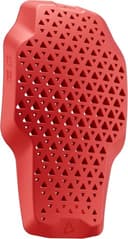
Alpinestars Nucleon Flex Pro Back Protector

Alpinestars Nucleon Flex Pro Back Protector

CE EN 1621-2 Level 2

A flexible back protector insert certified to CE EN 1621-2 Level 2 — the higher of the two impact levels — that slips into the back pocket most riding jackets already have. The upgrade almost every jacket needs.

Buy this first
$101.81 · View on Amazon

Price as of September 22, 2026. #ad How we’re funded

2
Leatt 3DF Level 2 Back Protector Insert

Leatt 3DF Level 2 Back Protector Insert

CE EN 1621-2 Level 2

A CE Level 2 back insert for around fifty dollars — the single highest-value protection upgrade on this site. Leatt's 3DF impact foam is soft in the hand and stiffens under impact.

Cheapest Level 2
$54.99 · View on Amazon

Price as of September 22, 2026. #ad How we’re funded

3
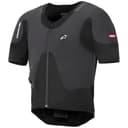
Alpinestars Tech-Air 5 Plasma

Alpinestars Tech-Air 5 Plasma

Airbag Level 2 impact performance (EN 1621-4 test method)

The step up from the Tech-Air 3: a full-torso airbag system designed to be worn under a jacket, with wider coverage and Alpinestars' more advanced crash-detection algorithm set. The most protection you can buy in a self-contained vest.

Best airbag overall
$869.95 · View on Amazon

Price as of September 22, 2026. #ad How we’re funded

4
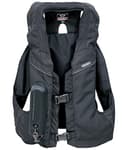
Hit-Air MLV2

Hit-Air MLV2

CE EN 1621-4:2013 (Level 1, back)

A mechanically-triggered airbag vest: a coiled tether clips to the bike, and separating from the bike pulls the CO2 cartridge. No electronics, no charging, and certified to EN 1621-4:2013 — Level 1 at the back.

Best airbag with no electronics
$659.00 · View on Amazon

Price as of September 22, 2026. #ad How we’re funded

The picks in full

#1Buy this firstCE EN 1621-2 Level 2

Alpinestars Nucleon Flex Pro Back Protector

A flexible back protector insert certified to CE EN 1621-2 Level 2 — the higher of the two impact levels — that slips into the back pocket most riding jackets already have. The upgrade almost every jacket needs.

Strengths

  • CE EN 1621-2 Level 2 — the higher impact rating
  • Flexible and ventilated, so it's comfortable to wear all day
  • Drops into most jackets' standard back-pad pocket

Trade-offs

  • Check your jacket's pocket dimensions before buying
  • An insert, not a strap-on — needs a compatible jacket
Safety standardCE EN 1621-2 Level 2
ConstructionFlexible multi-layer foam
Claimed weightCheck current listing
Key featureCE EN 1621-2 Level 2 back protector
Fit / sizingInsert; check jacket pocket size
Best forAnyone whose jacket shipped with an empty back-pad pocket

Specs and certification read from the manufacturer and retailer listing, on July 21, 2026. “Check current listing” means the maker doesn’t publish that figure — we won’t guess it.

#2Cheapest Level 2CE EN 1621-2 Level 2

Leatt 3DF Level 2 Back Protector Insert

A CE Level 2 back insert for around fifty dollars — the single highest-value protection upgrade on this site. Leatt's 3DF impact foam is soft in the hand and stiffens under impact.

Strengths

  • CE Level 2 rating at roughly a third the price of a premium insert
  • 3DF impact foam is pliable at rest, so you barely notice it on the bike
  • Two sizes cover most jacket insert pockets

Trade-offs

  • Generic insert shape — check your jacket's pocket dimensions before buying
  • Foam constructions retain more heat than a vented lattice plate
Safety standardCE EN 1621-2 Level 2
Construction3DF impact foam
Claimed weightCheck current listing
Key featureCE EN 1621-2 Level 2 back insert
Fit / sizingSM/MD and LG/XL sizing
Best forAnyone whose jacket shipped with a foam back pad instead of armor

Specs and certification read from the manufacturer and retailer listing, on August 11, 2026. “Check current listing” means the maker doesn’t publish that figure — we won’t guess it.

#3Best airbag overallAirbag Level 2 impact performance (EN 1621-4 test method)

Alpinestars Tech-Air 5 Plasma

The step up from the Tech-Air 3: a full-torso airbag system designed to be worn under a jacket, with wider coverage and Alpinestars' more advanced crash-detection algorithm set. The most protection you can buy in a self-contained vest.

Strengths

  • Wider torso coverage than the Tech-Air 3, including shoulders
  • Self-contained system with no bike tether or subscription
  • Designed to be worn under a jacket, so it doesn't change your outer layer

Trade-offs

  • The most expensive protection item on this page
  • Needs a compatible jacket with room underneath — it doesn't fit inside a race-fit leather
Safety standardAirbag Level 2 impact performance (EN 1621-4 test method)
ConstructionAirbag vest with electronic deployment
Claimed weightCheck current listing
Key featureElectronic airbag, full-torso coverage
Fit / sizingWorn under a jacket; needs room in the shell
Best forFast-road and track riders who want the widest airbag coverage

Specs and certification read from the manufacturer and retailer listing, on August 11, 2026. “Check current listing” means the maker doesn’t publish that figure — we won’t guess it.

#4Best airbag with no electronicsCE EN 1621-4:2013 (Level 1, back)

Hit-Air MLV2

A mechanically-triggered airbag vest: a coiled tether clips to the bike, and separating from the bike pulls the CO2 cartridge. No electronics, no charging, and certified to EN 1621-4:2013 — Level 1 at the back.

Strengths

  • Certified to EN 1621-4:2013 — the actual airbag standard, at Level 1 (back)
  • No battery, no charging, no firmware — the tether IS the sensor
  • Reflective Lumidex shell adds real night-time conspicuity

Trade-offs

  • Tethered: you must clip in every ride and remember to unclip before dismounting
  • Level 1 back rating is a step below the electronic systems' Level 2 performance
Safety standardCE EN 1621-4:2013 (Level 1, back)
ConstructionReflective outer with CO2 airbag system
Claimed weightCheck current listing
Key featureTethered CO2 airbag, EN 1621-4
Fit / sizingUnisex adjustable; worn over a jacket
Best forRiders who want airbag protection with zero electronics to maintain

Specs and certification read from the manufacturer and retailer listing, on August 11, 2026. “Check current listing” means the maker doesn’t publish that figure — we won’t guess it.

What each one is certified to

This is where the comparison should start, because the standards are different and the difference is informative.

  • Back protectors are certified to EN 1621-2. A protector is struck in a controlled impact test and graded on how much force is transmitted through it. Level 1 passes below a set threshold; Level 2 transmits roughly half that. It is a static, repeatable measurement of one thing: blunt impact on the spine area. Our CE ratings guide covers the whole EN 1621 family.
  • Airbag vests are certified to EN 1621-4.That is the part of the family written for inflatable protectors, and it tests the system inflated — which means the certification covers the deployment as well as the cushion. The AIROBAG Wise Vest publishes EN 1621-4 Level 2 at the back and Level 1 at the chest; the Hit-Air MLV2 publishes EN 1621-4:2013 Level 1 at the back; Alpinestars publishes Level 2 impact performance under the EN 1621-4 test method for the Tech-Air 5.

Note what falls out of that. An airbag is not automatically “more certified” than a back protector. A $55 Leatt insert publishes EN 1621-2 Level 2; a $659 Hit-Air MLV2 publishes EN 1621-4 Level 1 at the back. Those are different tests and the numbers are not directly comparable, but anyone assuming the expensive product carries the higher published level is assuming wrong.

What the airbag does that armor cannot

Everything above is an argument about published test numbers, and it would be dishonest to leave it there, because it does not capture what an airbag is for. A back protector protects the area it covers, at the moment of the hit. An airbag inflates before impact and covers a much larger area including the collarbone, the ribs, the chest and, on full-torso systems, the neck— and it adds volume, which is a different mechanism from spreading force through a plate.

That is a genuine capability gap and it is why airbags exist. The trade-offs are equally genuine:

Back protectorAirbag vest
StandardEN 1621-2, Level 1 or 2EN 1621-4, Level 1 or 2
Area coveredSpine region onlyBack, chest, ribs, collarbone; neck on some systems
Can it fail to work?No moving parts, nothing to charge or armYes — a flat battery, an unclipped tether or a non-deployment
Re-use after a crashReplace the protectorRecharge or replace a CO2 cartridge; service the system
Running costNoneCartridges, charging, and on some systems a subscription
Rough costThe price of a tank of fuelThe price of a helmet, or several

Electronic or tethered — the airbag decision

If you are buying an airbag, the first fork is not brand, it is mechanism.

Electronic systems like the Alpinestars Tech-Air 5 use sensors and an algorithm to decide you are crashing and fire without anything physically connecting you to the bike. They protect you if you are thrown clear, they work on any bike you get on, and they need to be charged and worn correctly to work at all. The Tech-Air 5 is worn undera jacket and needs a shell with room for it — a snug-fitting jacket you already own may not be that shell.

Tethered systemslike the Hit-Air MLV2 and the AIROBAG Wise Vest work mechanically: a lanyard clips to the bike, and if you and the bike separate, the lanyard pulls a pin and a CO2 cartridge inflates the vest. There is nothing to charge, nothing to subscribe to and no algorithm to trust — and the honest catch is that you have to remember to clip in every single time, and unclip before you walk away. Tethered vests are worn over your jacket, which makes them the practical choice if you do not want to re-buy your jacket.

The cheapest fully-certified route in is the AIROBAG Wise Vest, which publishes EN 1621-4 Level 2 at the back, Level 1 at the chest, a 90 ms inflation time and a shell certified to EN 17092, in sizes S to 4XL. It is ranked on our airbag vest page, which goes through all five systems in the registry properly.

The order we would actually buy in

  1. Replace the foam in your jacket’s back pocket with a certified EN 1621-2 Level 2 protector. Tens of dollars, no behaviour change, and it fixes the most common gap in a riding wardrobe. Check the pocket size first — our armor inserts page covers what fits what.
  2. Fill the other empty pockets. Most jackets ship without certified elbow or shoulder armor either. Our back protector ranking and jackets with armor page cover the rest of the audit.
  3. Then consider the airbag, once the cheap protection is all in place. Buying an $870 airbag to wear over a jacket with a foam pad in the back pocket is spending in the wrong order.

One thing neither product does, and it is worth saying plainly: neither a back protector nor an airbag protects your head. If the money is finite, a certified helmet that fits properly comes before both, every time. Our beginner gear guide works through the whole head-to-toe order by budget.
How to read our safety notes. We have not crash-tested any of this gear — nobody honestly can on a review budget. Every helmet and armor pick names the certification the maker publishes (DOT, ECE 22.06, SNELL, or a CE level), which we read from the listing on a dated visit. Certification is the floor, not a guarantee; fit and condition matter as much as the sticker. What the standards actually mean.

Frequently asked questions

Do I need a back protector if I have an airbag vest?

Read what your specific airbag publishes rather than assuming. Some airbag systems include a back protector in the vest, some inflate over the area instead, and some are designed to be worn with the jacket's own armor still in place. The systems are certified to EN 1621-4, which is the inflatable-protector standard, and that certification describes the inflated system — not the state of your jacket's back pocket. What we would not do is take the certified insert out of a jacket because an airbag is going over it, unless the airbag maker says to.

Is an airbag vest worth the money?

It buys you something no static armor can: coverage of the chest, ribs and collarbone as well as the back, and volume between you and whatever you hit. Whether that is worth roughly fifteen to twenty times the price of a Level 2 back protector depends on how much riding you do and what is already in your jacket. Our position is about sequence rather than merit — if your jacket still has factory foam in the back pocket, a certified insert is the higher-value purchase, and the airbag makes far more sense once the cheap protection is already in place.

What is the difference between EN 1621-2 and EN 1621-4?

They are two parts of the same European standard family for motorcyclists' impact protectors. EN 1621-2 covers back protectors: the protector is struck in a controlled impact test and graded Level 1 or Level 2 on how much force it transmits, with Level 2 transmitting roughly half what Level 1 does. EN 1621-4 covers inflatable protectors — airbag systems — and tests the system as it performs inflated, so the certification takes in the deployment as well as the cushion. A Level 2 under one part is not directly comparable to a Level 2 under the other.

Do airbag vests need a subscription?

Some electronic systems have been sold with subscription or activation models and some have not, and the picture has changed over time, so check the current terms for the exact model before you buy — we are not going to quote a figure here that may be out of date by the time you read it. Tethered mechanical vests like the Hit-Air MLV2 and the AIROBAG Wise Vest have no subscription by design: there is no electronics package to license. What they do cost you after a deployment is a replacement CO2 cartridge.

Can you wear an airbag vest over a jacket?

It depends on the system, and it is the most practical question to settle first. Tethered vests such as the Hit-Air MLV2 and the AIROBAG Wise Vest are designed to be worn over your existing jacket, which means you do not have to re-buy anything. The Alpinestars Tech-Air 5 is designed to be worn under a jacket and needs a shell with enough room for it to inflate into — a close-fitting jacket may not be suitable. The Tech-Air 3 takes the opposite approach with a canvas outer built to work over or under a jacket, which is why it exists alongside the 5.

What level back protector should I get?

Level 2 if it fits the pocket and you can afford it. The difference is not marginal: Level 2 transmits roughly half the force of Level 1 in the same test, and the price gap between a Level 1 and a Level 2 insert is usually small. Where Level 1 makes sense is bulk — a slim Level 1 plate that you actually leave in the jacket beats a Level 2 protector that sits in a drawer because it is uncomfortable. Measure your jacket's back pocket before ordering; that is the constraint that catches most people out, not the level.

Does a back protector go in the jacket or over it?

Both exist and they solve different problems. An insert drops into the back pocket almost every riding jacket has, sits invisibly against your spine and costs the least — that is the Alpinestars Nucleon Flex Pro and the Leatt 3DF Level 2 on this page. A standalone harness or vest, like the Leatt 3DF AirFit Hybrid on our chest protector ranking, is worn as its own garment and typically covers the chest as well, which suits adventure and off-road riders who swap between jackets or ride in a jersey.

Sources

Keep reading

More in Armor