Do I Need a Motorcycle Back Protector?
Your jacket probably has a back pocket with a foam pad in it, and that pad almost certainly has no rating. Replacing it with a CE EN 1621-2 insert is the cheapest real protection upgrade available to most riders.
How this is funded: we earn a commission if you buy through our links, at no extra cost to you. It never changes which gear we recommend, and we’ll tell you plainly when to skip a pick. Full disclosure.
Yes — and the reason is specific rather than general: the pad in your jacket’s back pocket is probably not armor. Most textile jackets ship with certified shoulder and elbow protectors and a plain foam pad in the back pocket, because the pad’s job is to hold the pocket’s shape. Replacing it with a CE EN 1621-2 insert is the cheapest change on this entire site that moves a real protective number, and it takes about ninety seconds.
Here is the test. Unzip the back pocket, take the pad out, and look at it in daylight. Certified armor is printed with a CE mark, the standard — EN 1621-2 for backs — and the level. No printing means no rating. That is not a conspiracy; certification costs money and the pad is a shipping component. But it does mean the protection you think you bought with the jacket may not be there.
Why the back ranks so high
We put a back protector third in the buying order, after a helmet and a jacket with armor, and ahead of gloves, boots and chest protection. The reasoning is not that spine injuries are the most common — hands, ankles and collarbones are far more frequently hurt. It is that the spine is the structure with no redundancy and the worst outcomes, and that the fix is unusually cheap:
- The pocket already exists. You are not buying a new garment, just filling a hole in one you own.
- The upgrade is measurable. You go from an unrated pad to a plate marked with a standard and a level. Very little else in gear buying is that clean.
- It does not change how you ride. A good insert is flexible and ventilated enough that most riders stop noticing it within a week.
For the whole order by budget, see our beginner gear guide, and the armor hub ranking works through all five armor positions in the same sequence.
Level 1 or Level 2
| EN 1621-2 Level 1 | EN 1621-2 Level 2 | |
|---|---|---|
| Requirement | The base pass for back impact | The harder pass — roughly half the transmitted force allowed |
| Usually feels like | Thinner, more flexible, cooler | Thicker or denser, stiffer, warmer |
| Buy it if | You want something you will never take out, or you ride in real heat | You want the highest published rating and can live with the bulk |
Both are genuine ratings and both are enormously better than an unmarked pad. Across the 36 armor pieces in our registry, 12 carry a Level 2 claim somewhere on the piece, and five of the back-specific options publish a named EN 1621-2 level. Our CE armor ratings guide covers how the levels are measured.
The three routes, and what each one costs you
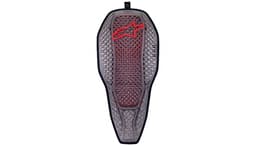
Level 2 insert — the default answer
Alpinestars Nucleon Flex Pro Back Protector
CE EN 1621-2 Level 2A flexible back protector insert certified to CE EN 1621-2 Level 2 — the higher of the two impact levels — that slips into the back pocket most riding jackets already have. The upgrade almost every jacket needs.
See the back protector rankingPrice as of October 17, 2026. #ad How we’re funded
EN 1621-2 Level 2 in a flexible, ventilated plate that drops into most jackets’ standard back-pad pocket. Check your pocket dimensions first; it is an insert, not a harness, so it needs a compatible jacket.
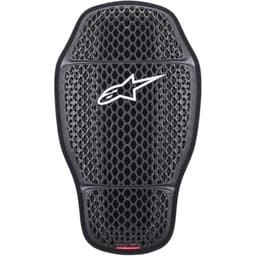
Level 1 insert — the one you will not remove
Alpinestars Nucleon KR-Celli Insert
CE EN 1621-2:2014 Level 1Alpinestars' lightest back insert: a cell micro-structure plate certified to EN 1621-2:2014 Level 1. It's the one to buy when a Level 2 plate is too stiff or too hot to live with day to day.
Compare the insertsPrice as of October 17, 2026. #ad How we’re funded
EN 1621-2:2014 Level 1 in a cell micro-structure plate with an airmesh body side, in three waist-to-shoulder sizes. Level 1 is the lower requirement — and this is the plate to buy if a stiff Level 2 insert is the reason your back pocket is currently empty.
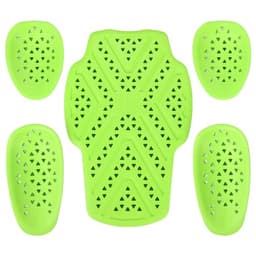
Fill every pocket at once
KEMIMOTO CE Level 2 Armor Set
CE Level 2 (listing)A complete back, elbow and shoulder set with CE Level 2 stated on the listing, for under forty dollars. The cheapest way to bring a jacket full of empty armor pockets up to a real rating.
See the armor setsPrice as of October 17, 2026. #ad How we’re funded
Back, shoulder and elbow pieces in one purchase for under forty dollars, with CE Level 2 stated on the listing. The honest label: that claim comes from a marketplace listing and does not name the standard behind it, which is weaker provenance than a maker’s technical page. We include it because the realistic comparison for a rider on a budget is not Alpinestars — it is the unrated foam already in the jacket.
If your jacket has no back pocket
Plenty of leather jackets do not have one. The answer there is a strap-on harness worn over a base layer and under the jacket, which also solves a second problem: a harness is held on your body rather than held in the garment, so it cannot ride up when the jacket does. The costs are bulk and heat, and you have to put it on as a separate step. Our ranking includes the harness options, and our leather jacket page notes which jackets have an insert pocket at all.
What a back protector is not
- Not a chest protector.EN 1621-2 covers the back; the chest is EN 1621-3, and very few products publish one. The chest question has its own page.
- Not an airbag.An airbag vest covers more area by a different mechanism and publishes against EN 1621-4. Airbag vest versus back protector is the honest comparison, including what has to be true for each one to work.
- Not a substitute for a certified jacket.Armor handles impact; the garment handles abrasion. A rated insert in a fashion jacket leaves most of your skin unprotected — EN 17092 is the standard that covers the fabric.
- Not a lifetime purchase. Foam and polymer plates age, and one that has taken a real impact should be replaced. How long gear lasts covers the timelines makers publish.
How to read our safety notes. We have not crash-tested any of this gear — nobody honestly can on a review budget. Every helmet and armor pick names the certification the maker publishes (DOT, ECE 22.06, SNELL, or a CE level), which we read from the listing on a dated visit. Certification is the floor, not a guarantee; fit and condition matter as much as the sticker. What the standards actually mean.
Frequently asked questions
Do I need a motorcycle back protector?
If your jacket has an empty back pocket or a plain foam pad in it, yes — this is the highest-value upgrade left in most riders' kit. A certified insert costs a fraction of the jacket, fits a pocket you already have, and protects the one structure in your body with no redundancy. Our order of priority is helmet, certified jacket, back protector, then gloves and boots, then chest protection.
How do I know if my jacket's back pad is certified?
Take it out and read it. Certified armor is marked on the part itself with a CE mark, the standard (EN 1621-2 for back protectors) and the level. If the pad has no printing at all, or only a brand name and a size, it has no rating — and in many jackets the back pad is there to hold the pocket's shape rather than to pass a test. Shoulder and elbow armor in the same jacket is often certified when the back pad is not, so check all three.
What is the difference between Level 1 and Level 2 back protectors?
Both are pass grades of the same standard, EN 1621-2, measured by how much impact energy the protector transmits in a lab test. Level 2 meets the harder requirement — roughly half the transmitted force allowed at Level 1. In practice Level 2 plates are thicker or denser and therefore stiffer and warmer, and Level 1 plates are easier to live with. A Level 1 insert you leave in the jacket beats a Level 2 plate you take out in July.
Insert, strap-on harness or airbag?
An insert is cheapest and tidiest and needs a jacket with a compatible pocket. A strap-on harness works with any jacket, including a leather with no pocket, at the cost of bulk and heat — and it stays in place on your spine regardless of what the jacket does. An airbag vest covers the back plus the chest, shoulders and neck area and publishes against EN 1621-4, for many times the price. For most riders the order is insert now, airbag later if at all.
Will any back protector fit my jacket?
No — pocket shapes are brand-specific. Alpinestars inserts are cut for Alpinestars pockets, and a plate that is 2 cm too wide will not sit flat or will push the pocket out of shape. Measure the pocket's width and height before you buy, and check the maker's compatibility note. If your jacket's pocket is an odd size or your jacket has no pocket at all, buy a strap-on harness instead of forcing an insert.
Do back protectors actually work?
What we can say honestly is what the standard measures: a CE EN 1621-2 protector has been struck in a lab and shown to transmit less than a defined amount of force, and a Level 2 protector transmits less than a Level 1. We have not crash-tested anything and we do not publish injury-reduction percentages, because the research on back protectors specifically is thinner than the equivalent work on helmets. The case for one is that the alternative in most jackets is an uncertified pad.
Where should a back protector sit?
Covering from the base of your neck to your lower back, centred on your spine, with the top edge between your shoulder blades rather than up against your helmet. Sizing is by torso length — usually three waist-to-shoulder sizes rather than clothing sizes — so a tall rider in a short plate has an unprotected lower spine. Put the jacket on and have someone check the plate has not ridden up or slid sideways.
Is a back protector necessary if I already wear a backpack?
A backpack is not protection and can make things worse: a loaded pack concentrates force on your spine and can shift violently in a crash. If you ride with a pack, that is an argument for a back protector underneath it rather than instead of it — and for keeping hard objects like laptops out of the panel that sits against your back.
Sources
- NHTSA — Traffic Safety Facts 2023: Motorcycles (DOT HS 813 732) — 2023 motorcyclist fatality, injury and helmet-use statistics (accessed July 21, 2026)
- MotoCAP — Independent Motorcycle Clothing & Helmet Assessment — Independent Australian lab rating protective clothing and helmets for protection and comfort (accessed July 21, 2026)
- NHTSA — Motorcycle Helmet Effectiveness Revisited (DOT HS 809 715) — Helmets ~37% effective at preventing rider fatalities (accessed July 21, 2026)
Keep reading
Best back protectors
The ranking: Level 1 and Level 2 inserts, strap-on harnesses and the full-body option.
See the rankingCE armor ratings explained
EN 1621-1, -2, -3 and -4 and what the levels actually measure.
Read the ratings guideAirbag vest vs back protector
The step up, compared honestly on coverage, cost and what has to happen for each to work.
Read the comparisonBest armor inserts and sets
What goes in the other pockets your jacket came with, from single plates to three-piece sets.
See the inserts