Apex & Armor

Best Motorcycle Armor

The armor worth buying, ranked by what the maker publishes rather than by how it looks: 26 of the 36 armor pieces in our registry name an EN standard, 5 claim a level without naming one, and 5 publish nothing at all. Start with the back, then the chest, then the limbs.

By Stephen V.Last updated How we research

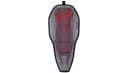
For most riders the first piece of armor to buy is the Alpinestars Nucleon Flex Pro back protector: a flexible, ventilated insert certified to CE EN 1621-2 Level 2 — the higher of the two back-impact levels — that drops into the empty back pocket your jacket almost certainly already has. It is the cheapest change that moves a jacket from “has armor pockets” to “has rated armor in them”, and it is the piece most riders never get around to.

This page is the hub-level ranking across every kind of armor — back, chest, limbs, full sets and airbags — so it answers one question the per-piece pages cannot: what do you buy, in what order, and what does each step buy you. Everything below is ranked on a published certification, because that is the only thing in this category that can be checked. Across the 36 armor products in our registry, 26 name an EN standard by number, 5 claim a “CE Level” without naming the standard it came from, and 5 publish nothing — and 12 carry a Level 2 claim somewhere on the piece. We have never crash-tested any of it and nothing here implies we have; our methodology page sets out exactly what we do.

Two warnings that decide more purchases than any ranking. A “CE Level 2” claim with no standard next to it is not the same claim as EN 1621-2 Level 2 — the levels only mean something inside a named standard, and our CE armor ratings guide explains which standard covers which body part. And a roost deflector is not a chest protector: EN 14021 is a stone-shield test, not an impact test, which is why the chest-protector question has its own page. Availability was checked the day this page was written and every pick below was in stock then.

How this is funded: we earn a commission if you buy through our links, at no extra cost to you. It never changes which gear we recommend, and we’ll tell you plainly when to skip a pick. Full disclosure.

Quick picks

Ranked on certification, spec and buyer fit. Select a row to jump to the full write-up. We haven’t crash-tested this gear — here is exactly what we do instead.

#GearBest forPrice
1
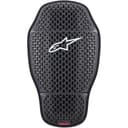
Alpinestars Nucleon Flex Pro Back Protector

Alpinestars Nucleon Flex Pro Back Protector

CE EN 1621-2 Level 2

A flexible back protector insert certified to CE EN 1621-2 Level 2 — the higher of the two impact levels — that slips into the back pocket most riding jackets already have. The upgrade almost every jacket needs.

Best overall first upgrade
$104.95 · View on Amazon

Price as of October 17, 2026. #ad How we’re funded

2
KEMIMOTO CE Level 2 Armor Set

KEMIMOTO CE Level 2 Armor Set

CE Level 2 (listing)

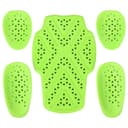
A complete back, elbow and shoulder set with CE Level 2 stated on the listing, for under forty dollars. The cheapest way to bring a jacket full of empty armor pockets up to a real rating.

Cheapest way to finish a jacket
$39.99 · View on Amazon

Price as of October 17, 2026. #ad How we’re funded

3
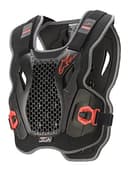
Alpinestars Bionic Action Chest Protector

Alpinestars Bionic Action Chest Protector

CE EN 1621-3 Level 1 (chest) + EN 1621-2 Level 1 (back)

One of the few affordable chest protectors with a real street IMPACT rating — CE EN 1621-3 Level 1 at the chest and EN 1621-2 Level 1 at the back — rather than only roost protection. The difference matters, and most 'chest protectors' don't clear this bar.

Best chest and back together
$107.95 · View on Amazon

Price as of October 17, 2026. #ad How we’re funded

4
Alpinestars Nucleon KR-Celli Insert

Alpinestars Nucleon KR-Celli Insert

CE EN 1621-2:2014 Level 1

Alpinestars' lightest back insert: a cell micro-structure plate certified to EN 1621-2:2014 Level 1. It's the one to buy when a Level 2 plate is too stiff or too hot to live with day to day.

Best low-bulk back insert
$69.95 · View on Amazon

Price as of October 17, 2026. #ad How we’re funded

5
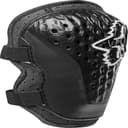
Fox Racing Titan Sport CE Elbow Guards

Fox Racing Titan Sport CE Elbow Guards

CE EN 1621-1:2012 Level 1

The cheapest guard here by a wide margin, and it carries the same published limb rating as protectors costing three times as much: EN 1621-1:2012 Level 1. Plastic elbow and forearm coverage over a soft bio-foam chassis, held on by an elastic strap system. If the choice is this or nothing, this wins easily.

Best certified limb guard for the money
$39.95 · View on Amazon

Price as of October 17, 2026. #ad How we’re funded

6
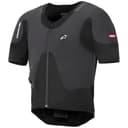
Alpinestars Tech-Air 5 Plasma

Alpinestars Tech-Air 5 Plasma

Airbag Level 2 impact performance (EN 1621-4 test method)

The step up from the Tech-Air 3: a full-torso airbag system designed to be worn under a jacket, with wider coverage and Alpinestars' more advanced crash-detection algorithm set. The most protection you can buy in a self-contained vest.

Most protection money can buy
$869.95 · View on Amazon

Price as of October 17, 2026. #ad How we’re funded

The picks in full

#1Best overall first upgradeCE EN 1621-2 Level 2

Alpinestars Nucleon Flex Pro Back Protector

A flexible back protector insert certified to CE EN 1621-2 Level 2 — the higher of the two impact levels — that slips into the back pocket most riding jackets already have. The upgrade almost every jacket needs.

Strengths

  • CE EN 1621-2 Level 2 — the higher impact rating
  • Flexible and ventilated, so it's comfortable to wear all day
  • Drops into most jackets' standard back-pad pocket

Trade-offs

  • Check your jacket's pocket dimensions before buying
  • An insert, not a strap-on — needs a compatible jacket
Safety standardCE EN 1621-2 Level 2
ConstructionFlexible multi-layer foam
Claimed weightCheck current listing
Key featureCE EN 1621-2 Level 2 back protector
Fit / sizingInsert; check jacket pocket size
Best forAnyone whose jacket shipped with an empty back-pad pocket

Specs and certification read from the manufacturer and retailer listing, on July 21, 2026. “Check current listing” means the maker doesn’t publish that figure — we won’t guess it.

#2Cheapest way to finish a jacketCE Level 2 (listing)

KEMIMOTO CE Level 2 Armor Set

A complete back, elbow and shoulder set with CE Level 2 stated on the listing, for under forty dollars. The cheapest way to bring a jacket full of empty armor pockets up to a real rating.

Strengths

  • Listing states CE Level 2 for the back protector and CE 2 for elbow and shoulder
  • Complete set rather than a single insert — one purchase finishes the jacket
  • Perforated construction to reduce heat build-up

Trade-offs

  • Marketplace brand — no independent lab data behind the listing's claim
  • Universal shapes may not sit perfectly in every jacket's pockets
Safety standardCE Level 2 (listing)
ConstructionPerforated impact polymer
Claimed weightCheck current listing
Key featureBack + elbow + shoulder set, CE Level 2
Fit / sizingUniversal insert shapes
Best forUpgrading a budget jacket that shipped with armor pockets and no armor

Specs and certification read from the manufacturer and retailer listing, on August 11, 2026. “Check current listing” means the maker doesn’t publish that figure — we won’t guess it.

#3Best chest and back togetherCE EN 1621-3 Level 1 (chest) + EN 1621-2 Level 1 (back)

Alpinestars Bionic Action Chest Protector

One of the few affordable chest protectors with a real street IMPACT rating — CE EN 1621-3 Level 1 at the chest and EN 1621-2 Level 1 at the back — rather than only roost protection. The difference matters, and most 'chest protectors' don't clear this bar.

Strengths

  • CE EN 1621-3 Level 1 chest + EN 1621-2 Level 1 back — impact-rated, not just roost
  • Full harness, worn over a base layer under any jacket
  • Reasonable price for a certified chest protector

Trade-offs

  • Level 1, not Level 2 — a step below the top rating
  • Adds a layer of heat in summer
Safety standardCE EN 1621-3 Level 1 (chest) + EN 1621-2 Level 1 (back)
ConstructionBionic impact foam harness
Claimed weightCheck current listing
Key featureCE EN 1621-3 Level 1 chest impact rating
Fit / sizingHarness; adjustable S-XXL
Best forRiders who want genuine chest impact protection, not just roost cover

Specs and certification read from the manufacturer and retailer listing, on July 21, 2026. “Check current listing” means the maker doesn’t publish that figure — we won’t guess it.

#4Best low-bulk back insertCE EN 1621-2:2014 Level 1

Alpinestars Nucleon KR-Celli Insert

Alpinestars' lightest back insert: a cell micro-structure plate certified to EN 1621-2:2014 Level 1. It's the one to buy when a Level 2 plate is too stiff or too hot to live with day to day.

Strengths

  • Certified CE EN 1621-2:2014 Level 1 — a real rating, not a foam pad
  • Cell micro-structure keeps it flexible and very light
  • Airmesh body side so it breathes against a base layer

Trade-offs

  • Level 1, not Level 2 — half the impact-energy reduction requirement
  • Only fits jackets with an Alpinestars-compatible insert pocket
Safety standardCE EN 1621-2:2014 Level 1
ConstructionCell micro-structure polymer plate
Claimed weightCheck current listing
Key featureCE EN 1621-2 Level 1 back insert
Fit / sizingThree waist-to-shoulder sizes
Best forRiders who want a low-bulk back insert they'll leave in the jacket

Specs and certification read from the manufacturer and retailer listing, on August 11, 2026. “Check current listing” means the maker doesn’t publish that figure — we won’t guess it.

#5Best certified limb guard for the moneyCE EN 1621-1:2012 Level 1

Fox Racing Titan Sport CE Elbow Guards

The cheapest guard here by a wide margin, and it carries the same published limb rating as protectors costing three times as much: EN 1621-1:2012 Level 1. Plastic elbow and forearm coverage over a soft bio-foam chassis, held on by an elastic strap system. If the choice is this or nothing, this wins easily.

Strengths

  • CE EN 1621-1:2012 Level 1 at the lowest price on this page
  • Hard plastic coverage across the elbow AND the forearm, not just the point
  • Fox publishes real sizing in bicep and forearm inches, XS through 2XL

Trade-offs

  • An MX-style external guard — it does not sit comfortably under a road jacket
  • Elastic and hook-and-loop straps need re-checking on a long ride
  • Soft bio-foam chassis rather than the molded impact foams higher up the range
Safety standardCE EN 1621-1:2012 Level 1
ConstructionPlastic elbow and forearm coverage over a soft bio-foam chassis
Claimed weightCheck current listing
Key featureEN 1621-1 Level 1 at the bottom of the price range
Fit / sizingElastic strap with hook-and-loop; sized XS-2XL on bicep and forearm
Best forRiders who want a certified elbow guard for the least money

Specs and certification read from the manufacturer and retailer listing, on September 3, 2026. “Check current listing” means the maker doesn’t publish that figure — we won’t guess it.

#6Most protection money can buyAirbag Level 2 impact performance (EN 1621-4 test method)

Alpinestars Tech-Air 5 Plasma

The step up from the Tech-Air 3: a full-torso airbag system designed to be worn under a jacket, with wider coverage and Alpinestars' more advanced crash-detection algorithm set. The most protection you can buy in a self-contained vest.

Strengths

  • Wider torso coverage than the Tech-Air 3, including shoulders
  • Self-contained system with no bike tether or subscription
  • Designed to be worn under a jacket, so it doesn't change your outer layer

Trade-offs

  • The most expensive protection item on this page
  • Needs a compatible jacket with room underneath — it doesn't fit inside a race-fit leather
Safety standardAirbag Level 2 impact performance (EN 1621-4 test method)
ConstructionAirbag vest with electronic deployment
Claimed weightCheck current listing
Key featureElectronic airbag, full-torso coverage
Fit / sizingWorn under a jacket; needs room in the shell
Best forFast-road and track riders who want the widest airbag coverage

Specs and certification read from the manufacturer and retailer listing, on August 11, 2026. “Check current listing” means the maker doesn’t publish that figure — we won’t guess it.

The order we would buy armor in

Armor is the one category where the cheap move is also the high-value move, because most riders are walking around with empty pockets sewn into a jacket they already paid for.

StepWhat it coversThe standard to look for
1. Back insertThe spine, which almost no stock jacket protects — the “armor” shipped in the back pocket is usually uncertified foamEN 1621-2, Level 1 or Level 2. Level 2 is the higher requirement
2. Shoulders and elbowsThe joints that hit first in almost every fall, and the pockets most often filled with soft padsEN 1621-1 Level 1 or Level 2 (limb armor)
3. Knees and hipsLegs. If you ride in jeans this is the largest unprotected area on your bodyEN 1621-1 for the armor, EN 17092 for the garment it sits in
4. ChestThe ribs and sternum. Worth it sooner if you ride fast roads or off-roadEN 1621-3 for impact. EN 14021 is roost only — not the same thing
5. AirbagTorso, shoulders and neck area, deployed before impact rather than absorbing itEN 1621-4 (the airbag test method)

What the registry shows about armor

  • 26 of 36 armor pieces name an EN standard.That is by far the best disclosure rate of any category on this site — compare it with 2 of 27 jackets publishing an EN 17092 class or 4 of 24 gloves publishing EN 13594. Armor is sold on its rating, so makers publish it.
  • 5 pieces claim a level without naming the standard behind it. Every one of those five is a marketplace listing rather than a maker’s technical page. We still rank one of them below, clearly labelled, because the alternative for a $40 budget is usually nothing at all.
  • 12 pieces carry a Level 2 claim.Level 2 means the piece met the harder impact requirement of its standard — not that it is twice as good. The honest framing is that Level 1 is a real rating and Level 2 is a better one, and both are enormously better than the unrated pad in the pocket.
  • Not one armor piece in the registry publishes a weight. Nor does any boot. Helmets are the exception: 18 of 37 publish grams. So this page cannot rank on mass, and it does not pretend to.

How we ranked these six

  • The Nucleon Flex Pro leads because it is the single biggest protection gain per dollar on this site. EN 1621-2 Level 2, flexible and ventilated enough that you will leave it in, and it fits the standard back pocket in most jackets. The honest costs: it is an insert, not a strap-on harness, so it needs a compatible jacket, and you should measure the pocket before buying. Our back protector page covers the alternatives, including the strap-on route.
  • The KEMIMOTO CE Level 2 set is the cheapest honest way to finish a budget jacket. Back, elbow and shoulder pieces in one purchase for under forty dollars, with CE Level 2 stated on the listing. Here is the label we are obliged to put on it: that claim is a marketplace listing, not a maker’s technical document, and it does not name the standard. We rank it because the realistic comparison is not against Alpinestars — it is against the uncertified foam already in the jacket.
  • The Bionic Action is the cheapest piece here that carries a real chest impact rating. CE EN 1621-3 Level 1 at the chest plus EN 1621-2 Level 1 at the back, in a harness worn over a base layer under a jacket. Both are Level 1 rather than Level 2, and it adds a layer of heat in summer — but an EN 1621-3 rating at this price is rare, and most products shaped like this one carry no impact rating at all.
  • The Nucleon KR-Celli is the insert for people who take armor out because it is too stiff. EN 1621-2:2014 Level 1 in a cell micro-structure plate with an airmesh backing, in three waist-to-shoulder sizes. Level 1 is half the impact-energy requirement of the Flex Pro above it and it only fits Alpinestars-compatible pockets. Worn armor beats stored armor, which is why it ranks ahead of harder plates.
  • The Fox Titan Sport is proof that a certification is not a price bracket. EN 1621-1:2012 Level 1 — the same published limb rating as guards costing three times more — with hard coverage across the elbow and forearm and real sizing in bicep and forearm inches. It is an MX-style external guard, so it does not sit well under a close-fitting road jacket, and the straps need re-checking on a long ride. Our elbow guard pageranks the Level 2 options.
  • The Tech-Air 5 Plasma is the top of the market, and it is a different kind of product. A self-contained electronic airbag vest with full-torso coverage including the shoulders, worn under a jacket, with no bike tether and no subscription. It costs more than every other pick on this page combined, and it needs a jacket with room underneath — it will not fit inside a race-cut leather. How airbag vests work explains the deployment logic, and the Tech-Air 3 versus 5 comparison is the page to read before you spend this much.

What we left off, and why

Knee armor, deliberately.Knees are step three in the table above and we would not want anyone to read this page as saying legs do not matter. The reason there is no knee pick here is availability: on the day this page was written the Alpinestars Bionic Pro Plasma knee protector read “only 7 left” and the Bionic Flex knee “only 5 left”, both at or below the stock bar we hold a NEW featured pick to. Our knee guard page ranks them, and the riding pants page covers the garment route, which is the better answer for most street riders anyway.

Armored jeans with no published standard. Three of the five armor products in our registry that publish nothing at all are armored jeans. They may well be better than ordinary denim; there is simply nothing to rank them on. Our armored jeans page says so on every entry, and how to choose riding pants explains what an EN 17092 class would tell you if one were published.

Roost deflectors, in the chest slot.They are certified — to EN 14021, which tests resistance to flung stones and debris, not to impact. For dirt that is exactly the right product. On the street it is the wrong one, and a page that ranked a roost deflector as chest protection would be making a reader less safe, not more.
How to read our safety notes. We have not crash-tested any of this gear — nobody honestly can on a review budget. Every helmet and armor pick names the certification the maker publishes (DOT, ECE 22.06, SNELL, or a CE level), which we read from the listing on a dated visit. Certification is the floor, not a guarantee; fit and condition matter as much as the sticker. What the standards actually mean.

Frequently asked questions

What is the best motorcycle armor to buy first?

A certified back insert. The Alpinestars Nucleon Flex Pro is our pick because it carries CE EN 1621-2 Level 2 — the higher back-impact level — and fits the back pocket most jackets already have, so it upgrades gear you own rather than replacing it. If your jacket also shipped with soft shoulder and elbow pads, a complete set like the KEMIMOTO CE Level 2 kit fills all three pockets for less than the single insert costs, with the caveat that its rating comes from the listing rather than a maker's technical page.

What does CE Level 1 versus Level 2 actually mean for armor?

They are two pass levels inside the same standard, measured by how much impact energy the piece transmits in a lab test. Level 2 is the harder requirement. The important part is that the levels only mean something when the standard is named: EN 1621-1 covers limb armor (elbows, shoulders, knees, hips), EN 1621-2 covers back protectors, EN 1621-3 covers chest protectors and EN 1621-4 is the airbag test method. A listing that says 'CE Level 2' with no standard beside it has not told you which test it passed.

Is the armor that came with my jacket good enough?

Sometimes at the shoulders and elbows, rarely at the back. Many jackets ship with certified limb armor and an uncertified foam pad in the back pocket, because the pad is there to hold the shape of the pocket rather than to pass a test. Check the armor itself: certified pieces are marked with the standard, the level and a CE mark on the part. If the back pad has no marking, it has no rating, and replacing it with an EN 1621-2 insert is the cheapest real upgrade available to you.

Do I need a chest protector for street riding?

It is lower priority than a back protector and higher than most riders assume. The thing to get right is the standard: EN 1621-3 is the chest IMPACT test, while EN 1621-4 covers airbags and EN 14021 covers roost deflectors — the vented plastic shells sold for dirt riding, which are not impact-rated. In our registry only two pieces publish an EN 1621-3 chest rating. Our full answer, including why a roost deflector is not a substitute, is on the chest protector guide.

Is an airbag vest worth it compared with body armor?

It is a different mechanism rather than a better grade of the same thing. Passive armor spreads and absorbs the energy of whatever hits that spot; an airbag inflates before impact and covers the torso, shoulders and neck area as one piece. The current systems publish performance against the EN 1621-4 test method, and the self-contained ones need no tether to the bike. The honest trade-off is cost: a Tech-Air 5 costs more than a full set of rated passive armor plus a certified jacket, so for most riders the order is rated armor first, airbag later.

Can I wear armor under a jacket that already has armor pockets?

Yes, and that is the normal way to do it — an insert goes in the pocket, not over the top. The two things to check are pocket dimensions and the maker's pocket shape: Alpinestars inserts are cut for Alpinestars pockets and may not sit properly in another brand's jacket. Strap-on harnesses and standalone vests avoid the compatibility question entirely by sitting over a base layer and under any jacket, at the cost of more bulk and more heat.

Why don't you publish armor weights?

Because no maker in our registry publishes one. All 36 armor entries and all 17 boots have a null weight field, against 18 of 37 helmets that publish grams. We will not estimate a figure to fill a column, so this page ranks on published certification, coverage and construction instead. If a listing quotes an armor weight, check whether it is per piece or per pair before you compare it with anything.

Why do the prices on this page change?

Because the site stores no prices. Every button shows a live price read in a daily retailer check and stamped with the date it was read; if that check stops, the numbers disappear after 48 hours and the button falls back to 'Check price on Amazon' rather than showing a stale figure.

Sources

  • Fox Racing — Titan Sport CE Elbow Guards (published spec sheet via RevZilla) — Fox's published Titan Sport CE elbow spec sheet: "Limb Armor Rating: 1 EN1621-1:2012", "Plastic elbow and forearm coverage" over a "Soft bio-foam chassis for comfort", "Elastic strap system with hook and loop adjustment", silicone print on the bio-foam to keep the guards in place, sized XS-2XL by bicep and forearm circumference (accessed September 3, 2026)
  • Alpinestars — Bionic Pro Plasma Elbow Protector — Alpinestars' published Bionic Pro Plasma elbow specs: "Elbow Protector: EN 1621-1:2012 LEVEL 2", "thermoplastic shells that offer enhanced levels of abrasion resistance and sliding performance" over Nucleon PLASMA, "a viscoelastic material engineered from bio-based polymers", wide elasticated top strap, S/M and L/XL (accessed September 3, 2026)
  • MotoCAP — Independent Motorcycle Clothing & Helmet Assessment — Independent Australian lab rating protective clothing and helmets for protection and comfort (accessed July 21, 2026)

Keep reading

More in Armor