Heated Motorcycle Gear Explained: 12V vs Battery
Wired to the bike or run off a battery pack — the choice that decides how warm the gear gets and how long it stays warm. With the published wattage of every heated garment we rank, and why one of them publishes none at all.
How this is funded: we earn a commission if you buy through our links, at no extra cost to you. It never changes which gear we recommend, and we’ll tell you plainly when to skip a pick. Full disclosure.
If you are buying one piece of heated gear, buy a 12-volt jacket liner and wire it to the bike. It is the only version of this product that delivers real heat for as long as the engine runs, and the published numbers make the case: the bike-powered liners in our registry are rated at 77 W to 106 W, while the battery-powered garments either run at a fraction of that or publish no wattage figure at all. Battery gear has one genuine advantage — it works off the bike, walking around a town in February — and if that is what you want, buy it knowing what you traded.
This page explains the mechanism behind both, using only figures the makers themselves publish. It exists because the marketing for this category talks about “zones” and “carbon fiber elements” and almost never about watts, which is the one number that tells you how much heat there is to go around.
The two kinds of heated gear
| 12-volt (bike-powered) | Battery-powered | |
|---|---|---|
| Power source | The motorcycle’s charging circuit, via a fused lead | A rechargeable pack, typically 7.4 V, in a pocket |
| Published output | 77 W to 106 W for the jacket liners we rank; 37 W to 54 W for vests | Often not published at all — one vest in our registry publishes zone count and no wattage anywhere |
| Runtime | Unlimited while the engine runs. Zero when it stops | Hours, and fewer of them on the high setting |
| Install | Fused lead to the battery, a controller, and a connector you can reach | None. Charge it, put it on |
| Off the bike | No | Yes — the entire reason to choose it |
| Best for | Commuting through winter, long cold days, touring | Occasional cold, riders who do not want to touch the wiring, use off the bike |
What the wattage figures actually mean
Watts are the heat available. A controller decides how much of it reaches you, which is why a 106 W liner on a low setting is more comfortable than a 40 W garment on full — it has headroom. The published figures across the heated garments we rank are worth seeing together:
- 106 W across 7 carbon panels— the highest published figure in our registry, on a jacket liner. Panel count matters as much as the total, because it determines where the heat lands.
- 135 °F at 77 W, 12V DC 6.4 A— Gerbing publishes a target temperature AND the current draw, which is the most complete disclosure in the category. The 6.4 A figure is the one to check against your bike’s spare alternator output.
- 135 °F at 54 W, 12V DC 4.5 A— the same system in vest form. Same temperature target, less area, less draw.
- 42 W with the controller built in— a jacket with 7 elements and nothing else to buy or mount, at well under half the wattage of the liners above.
- 37.2 W, 4 elements, controller built in— the vest version of the same system, and a good illustration of where the vest band sits.
- No wattage published at all— one battery-powered fleece vest publishes 4 heating zones (“Left & Right Hand Pockets, Mid-back and Collar”), a carbon-fiber element and NTC protection, and no power figure anywhere on the page. It is also sold as general cold-weather apparel rather than motorcycle gear.
Two honest caveats on those numbers. A temperature figure like 135 °F is an element target, not the temperature at your skin — you will be wearing a base layer under it and a jacket over it. And watts tell you nothing about where the heat is: a 77 W vest that heats your chest and mid-back feels warmer than a 106 W liner whose panels are mostly in the sleeves.
What to look for before you buy
- Your bike’s spare output, in amps.Subtract ignition, lights, fuel pump and any accessories from the alternator rating, and compare what is left with the garment’s published draw. A 6.4 A liner on a small single-cylinder commuter is asking for trouble; on a 1200 cc tourer it is nothing.
- A fuse, always. Any 12-volt garment gets a fused lead to the battery, and a connector positioned where you can unplug it without looking. Never wire a heated garment direct and unswitched.
- Where the controller lives. Built-in is tidier; an inline or handlebar controller is easier to reach with gloves on. Either is fine; no controller is not.
- How it layers.A liner replaces your jacket’s zip-out thermal, it does not go over it. Check that adding it does not push your armor out of position — our gear fit guide covers how to check that.
- That it is not your outer layer. No heated garment in our registry publishes any CE rating. The abrasion protection has to come from the jacket over the top.
The picks that match each route
These three are drawn from our heated jacket, liner and vest ranking, which has the full list. They are here because they are the clean example of each of the three routes above: maximum wired heat, a wired vest on a complete system, and the no-wiring option.
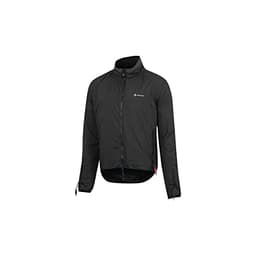
Most published wattage — the wired route
Firstgear Gen4 Heated Jacket Liner
The most heat published by any liner here, and the cheapest of the three 12-volt liners: Firstgear states a 106-watt output across seven carbon panels covering chest, abdomen, arms, collar and the entire back. Buy this one unless you specifically want Gerbing's lifetime element warranty.
See the full heated rankingPrice as of October 17, 2026. #ad How we’re funded
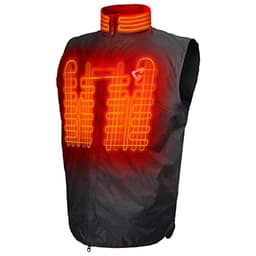
The wired vest, with the draw published
Gerbing Heated Vest Liner 12V
The core-only Gerbing: 135°F at 54 watts across five Microwire zones, with the same lifetime element warranty as the jacket liner and a pre-wired connector that feeds heated pants. The right Gerbing for a rider who already has warm gloves.
Compare the vestsPrice as of October 17, 2026. #ad How we’re funded
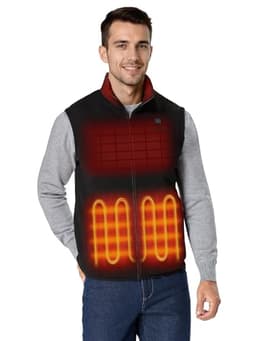
No wiring, no wattage published
ORORO Men's Heated Fleece Vest (4 Heating Zones)
The answer for a rider who will not wire the bike. Four carbon zones including both hand pockets, run off ORORO's own 7.4-volt pack — which publishes 4800 mAh and up to 10 hours on low. It is cold-weather apparel rather than motorcycle gear, and it is honest about being a heating layer.
See the battery optionsPrice as of October 17, 2026. #ad How we’re funded
The third one is included deliberately as the honest version of the battery route: it is a comfortable, well-reviewed garment that publishes its zone layout and nothing about power, and it is sold as apparel rather than as motorcycle equipment. If you buy it, buy it for the walk around town and keep a rated jacket over it on the bike.
Heated gear is not a substitute for the rest of the kit
The reason heated gear feels transformative is that cold is a concentration problem before it is a comfort problem — a rider shivering at 40 °F is a rider who is not reading the road. But the order matters. A certified jacket, a back protector and gloves that fit come first; a heated layer extends the season you can use them in. Our beginner gear guide sets out that order by budget, and the touring checklist is where heated gear earns its place in a packing list.
How to read our safety notes. We have not crash-tested any of this gear — nobody honestly can on a review budget. Every helmet and armor pick names the certification the maker publishes (DOT, ECE 22.06, SNELL, or a CE level), which we read from the listing on a dated visit. Certification is the floor, not a guarantee; fit and condition matter as much as the sticker. What the standards actually mean.
Frequently asked questions
Is 12V heated gear better than battery-powered heated gear?
It is warmer and it never runs out; battery gear is simpler and portable. The wattage figures makers publish tell the story: a 12-volt jacket liner in our registry is rated at 77 W to 106 W, while battery-powered garments either run at a fraction of that or publish no wattage at all. A 12-volt system draws from the bike's charging circuit, so it needs a fused lead and a controller, and it only works while the engine is running. Battery gear works walking around and off the bike, at the cost of heat and runtime.
Will heated gear drain my motorcycle battery?
Not while you are riding, if your bike's alternator has the headroom — and that is the figure to check before you buy. A 77 W liner draws roughly 6.4 amps at 12 volts, and your bike's surplus output after ignition, lights and fuel pump is what has to cover it. Small bikes often have very little surplus. What will flatten a battery is leaving a heated garment plugged in with the engine off, which is why every system should be fused and switched rather than wired direct.
How many watts do I need in a heated jacket liner?
More watts means more heat available, not more heat delivered — a controller sets how much of it you actually use. The published figures across the heated garments we rank run from about 37 W for a vest up to 106 W for a jacket liner spread over seven carbon panels. As a rough guide: a vest in the 37-55 W band handles cool mornings and keeps your core warm, and a 77-106 W jacket liner with arm coverage is what you want below about 45 F or for long days.
Is heated gear protective gear?
No, and this is the most important thing on this page. Not one of the heated garments in our registry publishes a CE abrasion class (EN 17092) or a CE impact rating (EN 1621) — they are comfort layers, and the protective garment is the jacket that goes over the top. Two of them look like outerwear, which is exactly why we say it explicitly: if you wear a heated jacket as your outer layer, you are riding in an unrated garment.
Do I need a controller for heated gear?
For anything 12-volt, yes — without one the element runs at full output and gets uncomfortable fast. Some garments have the controller built in, which is one less thing to buy and mount; others use an inline controller or a handlebar remote, and some brands pair over Bluetooth to a phone app. For battery-powered gear the controller is usually a button on the garment with two or three heat levels, and runtime drops sharply at the top setting.
Can I wear a heated liner under any jacket?
Usually, if the jacket has room. A liner is cut slim to sit under a shell, and the thing that catches people out is a jacket sized tightly over existing armor: adding a liner can push the armor out of position. If your jacket already has a zip-out thermal liner, take it out and put the heated one in its place rather than wearing both. Jackets with a laminated shell and no liner, like the KLIM Carlsbad, are the ideal host for a heated layer.
What is the difference between a heated vest and a heated jacket liner?
Sleeves, wattage and price. A vest heats the core — chest, mid-back, sometimes the collar — and is enough for most riders down to cool weather, because warming the torso changes how your whole body feels. A jacket liner adds heated arms, which matters when the wind is pushing through your sleeves on a highway run in real cold. Our heated jacket ranking covers both formats with the published wattage for each.
Are heated gloves or a heated jacket the better first purchase?
The jacket or vest, almost always. Cold hands are usually a symptom of a cold core: the body restricts blood flow to the extremities to protect your trunk temperature, so heating the torso often fixes hands that heated grips alone could not. If your hands still hurt after that — and for a lot of riders they do below about 40 F — heated gloves are the next step, and they come in both 12-volt and battery form exactly as the garments do.
Sources
- Firstgear — Heated Jacket Liners — Firstgear's published heated jacket liner specification: "106-Watt output", "Seven heat panels cover the chest, abdomen, arms, collar and entire back", "Soft and flexible carbon panels, shaped for maximum heat transfer", "High tech, moisture wicking fabric with stretch side and back panels", "Lightweight, non-coated shell" with a "fleece inner collar", "One-year manufacturer's warranty", and dual-zone heating usable with "either a Single or Dual Heat-troller" (the controller is a separate item). Sizes XS, S, M, L, XL, 2XL plus L Tall, XL Tall and 2XL Tall. Firstgear publishes the watt output but NO voltage and NO amp draw on this page, where Gerbing and Tourmaster publish both; and it publishes no CE abrasion or impact rating of any kind (accessed October 1, 2026)
- Gerbing — Heated Vest Liner, 12V Motorcycle — Gerbing's published specification: "Max Heat: 135° F @ 54W", "Power: 12V DC 4.5 Amp", five Microwire heating zones (collar, chest x2, back x2), a "Mini Ripstop nylon" shell, a drop tail back, YKK zippers and a pre-wired connector for pant liners. Gerbing states it is designed to be worn close to the body — under an outer jacket or over a thin polyester base layer — for the fastest heat transfer. Battery Harness and Temperature Controller sold separately; lifetime warranty on the Microwire elements. Sizes XS through 3XL. No CE rating is published (accessed October 1, 2026)
- ORORO — Men's Heated Fleece Vest (4 Heating Zones) — ORORO's own product page publishes the zone count and the zone locations — "4 Heating Zones on Left & Right Hand Pockets, Mid-back and Collar" — and names the element as premium carbon fiber with NTC protection technology. The product name ORORO publishes is "Men's Heated Fleece Vest (4 Heating Zones)" and the garment is described as a heating LAYER rather than an outer shell. No wattage is published anywhere on the page, and no CE abrasion or impact rating: this is general cold-weather apparel, not motorcycle gear (accessed October 1, 2026)
- Tourmaster — Synergy BT Pro-Plus 12V Heated Vest — Tourmaster's published specification: "12v DC", "37.2w draw", "3.1a current", "4 flexible carbon fiber heating elements positioned at the chest, back, and collar", and the same three published setting temperatures as the jacket — High "126°F/52°C", Medium "113°F/45°C", Low "100°F/38°C" — with "dual control with a built-in 3-setting LED smart touch controller or Bluetooth-enabled app compatibility". Construction: "100% polyester wind- and water-resistant soft-shell fabric" with a "100% nylon fixed interior" and Lycra side stretch panels. Power by direct-to-bike 12V or an "optional 12v lithium battery (sold separately)". Sizes X-Small through 3X-Large. No CE rating is published (accessed October 1, 2026)
Keep reading
Best heated jackets, liners and vests
The full ranking with published wattage per garment, from 37 W vests to 106 W jacket liners.
See the rankingBest heated motorcycle gloves
The 12-volt and battery options for hands, and why gloves are the second purchase rather than the first.
See the glove picksMotorcycle gear for cold weather
The whole cold-weather kit in order, including what to layer when heated gear is not in the budget.
Read the guideBest base layers
What goes under the heated layer, and why a cotton t-shirt is the wrong answer.
See the base layers